
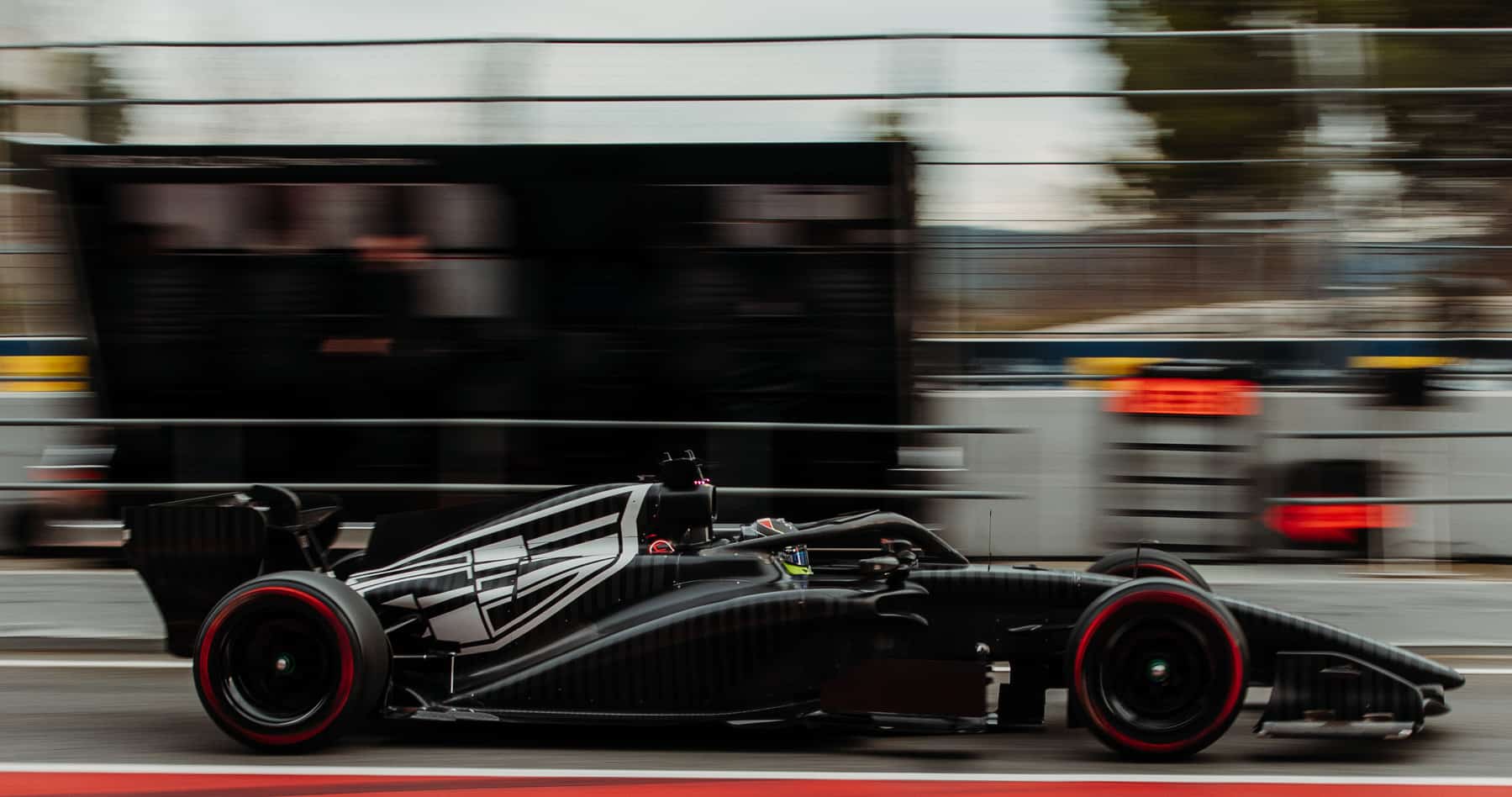
Unlike Haas, which outsourced chassis design to Dallara and bought as many parts as regulations allowed from Ferrari, Cadillac is developing its own car from scratch.
Symonds revealed the team already had a prototype chassis built to prepare for FIA homologation, evidence of progress despite the compressed timeline.
Ferrari will supply engines and gearboxes through 2028, giving Cadillac breathing room as it develops its own power unit for the 2029 season.
That three-year customer period represents both opportunity and risk. On one hand, it allows Cadillac to focus resources on chassis development and team infrastructure. On the other, it creates a delayed works team advantage that could leave Cadillac perpetually playing catch-up.
The technical partnership with Ferrari differs fundamentally from Haas’s arrangement. Where Haas maximised Ferrari parts to minimise development costs, Cadillac is using Ferrari power as a bridge to full independence.
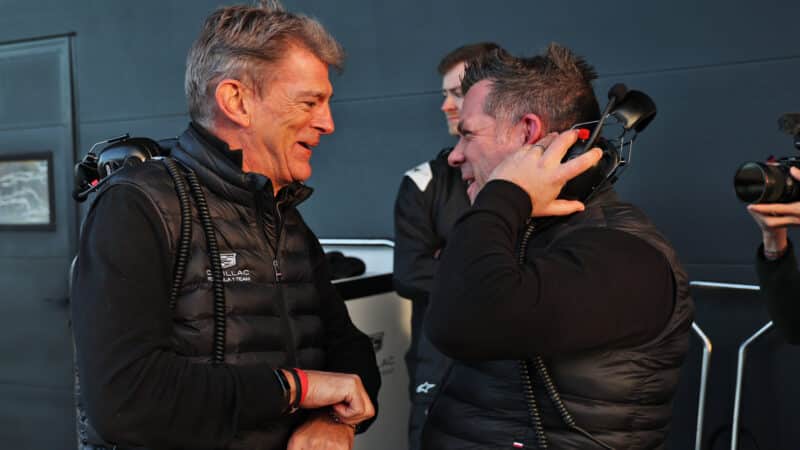
Lowdon has plenty of experience with new teams
Cadillac
The distinction matters: Cadillac’s long-term competitiveness depends on successfully making that transition in 2029, not on how well it performs as a customer in 2026.
Leadership with F1 pedigree
Team principal Graeme Lowdon brings experience from Virgin Racing and Marussia, teams that operated at the back of the grid during their time in Formula 1. His knowledge of building and managing underdog operations will prove valuable, though his track record includes more survival than success.
The technical leadership reads like a reunion of “Team Enstone” personnel, with Pat Symonds serving as executive engineering consultant, Nick Chester as chief technical officer, and Rob White in operations. These are people who have worked together before, who understand Formula 1’s demands, and who bring championship-winning experience from Renault’s mid-2000s success.
On the power unit side, Russ O’Blenes was named CEO of GM Performance Power Units LLC. His background includes powertrain development for championship racing teams and leading the GM Performance and Racing Center, positioning him to oversee the development of Cadillac’s own engine for 2029.
Dan Towriss serves as CEO of TWG Motorsports, the organisational force behind the team’s entry. His role in salvaging the project after Michael Andretti‘s departure and securing GM’s full commitment demonstrated both business acumen and persistence.
The organisational structure suggests a team built for the long term rather than immediate results.
The presence of so many Formula 1 veterans provides institutional knowledge, but also raises questions about whether this represents a forward-thinking approach or a reliance on familiar faces from a previous era.
The driver equation
Cadillac signed Sergio Perez and Valtteri Bottas as its inaugural driver line-up, prioritising experience over youth or American representation.
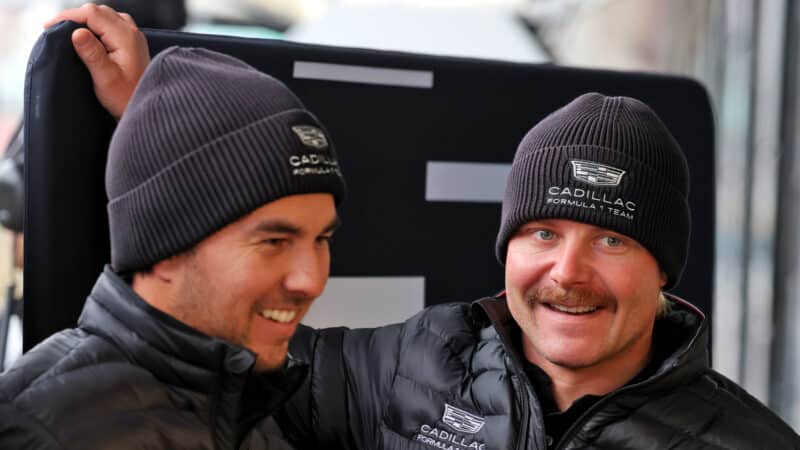
Perez and Bottas bring plenty of experience to Cadillac
Cadillac
The decision reflects pragmatism: building a new team requires drivers who can develop the car and provide meaningful feedback, not learn on the job.
Between them, Perez and Bottas bring over 500 combined grand prix starts, more than 100 podiums, and deep development expertise. Both spent 2025 on the sidelines, allowing them to arrive fresh and fully committed to the Cadillac project.
Yet both drivers arrive carrying baggage from difficult final seasons with their previous teams.
Perez’s struggles at Red Bull in 2023 and 2024 raised questions about his adaptation to cars with specific handling characteristics. Bottas endured multiple winless seasons at Alfa Romeo and Sauber, teams that lacked the resources to compete regularly.
The question is whether Cadillac will give them machinery that allows a late-career resurgence, or whether they will spend 2026 managing a difficult car at the back of the grid.
Colton Herta will serve as test driver while competing in Formula 2 with Hitech, keeping an American option available should the team want to make changes later.
Zhou Guanyu joined as reserve driver in January 2026, adding another experienced hand familiar with the challenges of operating at the back of the field.
The driver line-up signals that Cadillac understands 2026 will be a foundation year, not a breakthrough season.
Perez and Bottas are professionals who can help establish processes, develop the car, and represent the team credibly. But neither is likely to drag an uncompetitive car into the points through sheer talent, as bigger stars might occasionally manage.
Barcelona reveals reality
The Barcelona shakedown last month provided the first concrete evidence of where Cadillac stands, and the results confirmed what team principal Lowdon had been saying: this will be a learning year.
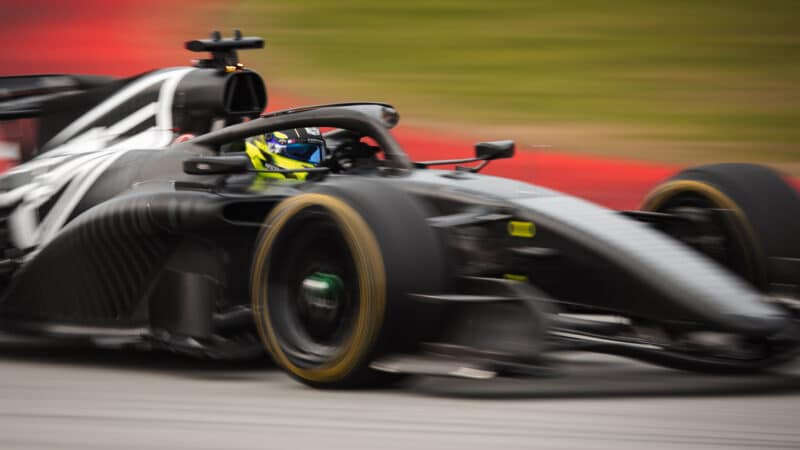
Cadillac was around four seconds off the pace in Barcelona
Cadillac
Cadillac managed 164 laps across its three allocated days of running at the Circuit de Barcelona-Catalunya, a respectable total given the team had just 323 days between gaining approval to enter Formula 1 and arriving at the test. The achievement becomes more impressive when considering the team had to assemble a 500-person operation from scratch.
But the lap count also revealed the gulf Cadillac faces. Mercedes completed 500 laps, Ferrari 442, and even fellow newcomer Audi managed 240. Only Aston Martin, which arrived late to the test with fundamental problems, completed fewer laps.
The laptimes told a similar story. Cadillac found itself near the bottom of the unofficial timesheets, ahead only of the troubled Aston Martin programme.
Bottas described the experience candidly, acknowledging the team has “a mountain to climb” before achieving competitiveness. His comments about managing battery deployment, adapting to reduced downforce in high-speed corners, and working through reliability issues painted a picture of a team in the early stages of understanding its car.
Yet the test also demonstrated genuine progress. The car ran, completed laps, and allowed both drivers meaningful time behind the wheel. For a team that didn’t exist 11 months earlier, simply arriving with a functioning car represented an accomplishment many new entries have failed to achieve.
Lowdon expressed satisfaction with the test, emphasising that the focus had been on reliability and systems validation rather than laptimes.
The Barcelona running revealed both the professionalism of Cadillac’s operation and the scale of the challenge ahead.
Realistic expectations and long-term thinking
Team principal Lowdon has warned that Cadillac will be running at the back of the pack in 2026, setting expectations appropriately low. That honesty contrasts with the often-unrealistic optimism that accompanies new F1 entries, and Barcelona validated his assessment.
Barcelona demonstrated that every team struggled with the new regulations to some degree. Bottas noted that “every team had issues” during the test, with the complexity of the new power units and aerodynamic packages creating challenges across the grid. But the established teams possessed the infrastructure and experience to diagnose and resolve problems more quickly.
The 2026 regulations represent both opportunity and added complexity. New engine rules, revised aerodynamics, and wholesale technical changes mean every team faces uncertainty. But for Cadillac, learning new regulations while simultaneously learning Formula 1 itself creates compounded difficulty.