
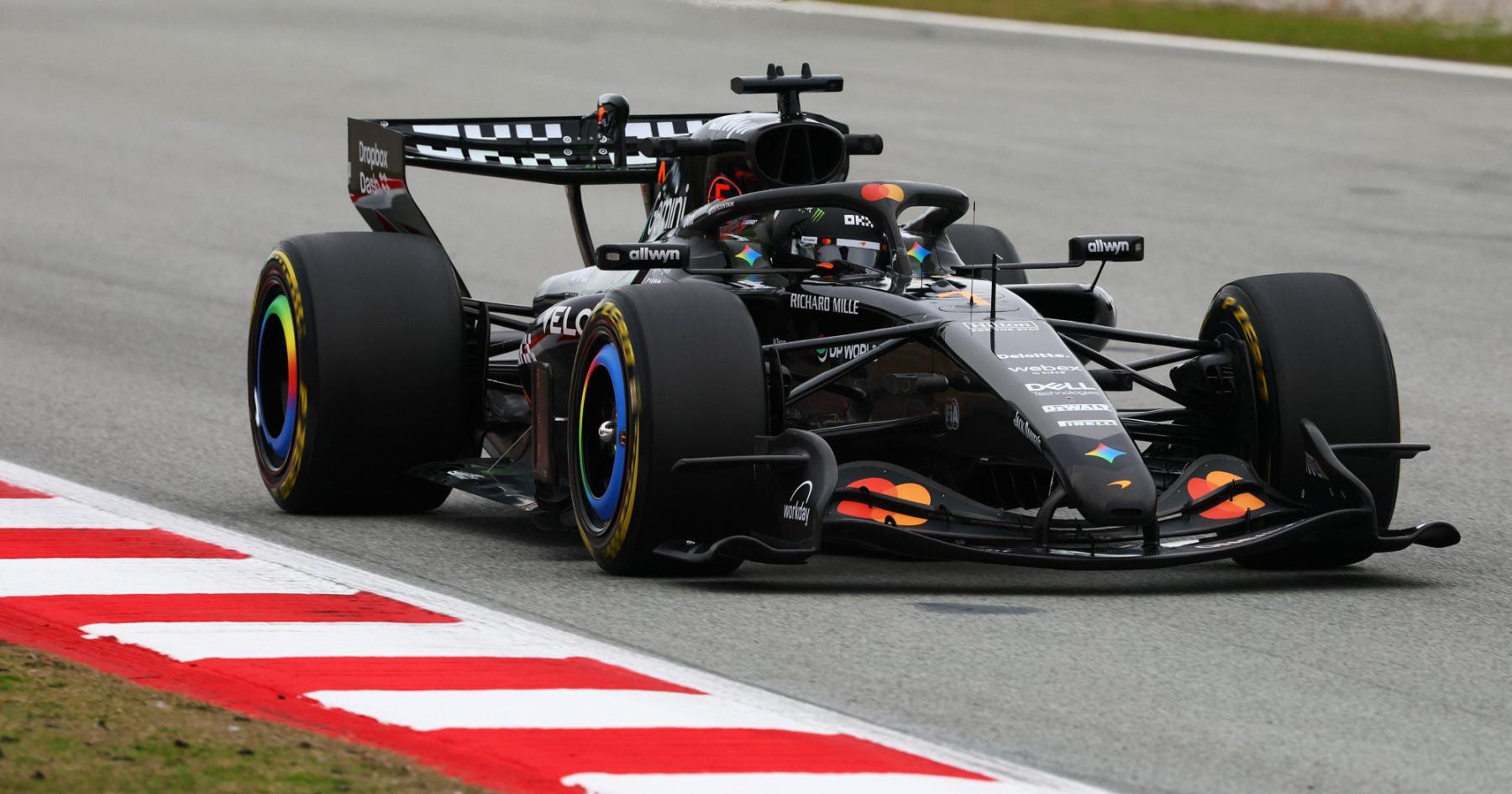
McLaren’s decision to prioritise understanding over rapid upgrades represents a calculated gamble that could define whether the reigning champions successfully defend its crown or fall victim to the most radical regulation shift in decades.
Team Principal Andrea Stella has repeatedly emphasised that the 2026 technical rules constitute a complete competitive reset, wiping clean any advantages carried over from their championship-winning season.
The team deliberately skipped day one and two of testing in Barcelona, a move Stella confirmed was “always plan A,” designed to maximise workshop development time rather than rush incomplete components onto the track.
This philosophy extends to their in-season strategy. Technical director Rob Marshall confirmed that significant updates between testing and the first race are unlikely, stating that understanding the fundamentally new car takes priority over aggressive development pushes.
Stella has described the challenge as “building an aeroplane while in flight,” acknowledging the complexity of mastering a machine that combines entirely new power units, chassis, and aerodynamics simultaneously.
As constructors’ champions, McLaren enters 2026 with only 70% of permitted wind tunnel hours, the lowest allocation on the grid. This structural handicap becomes particularly consequential during a regulation reset when aerodynamic testing time is critical.
If its baseline MCL40 specification proves fundamentally flawed, McLaren’s ability to pivot is severely limited compared to rivals with higher testing allowances.
McLaren’s approach is very different to the likes of Ferrari, who will introduce substantial new parts in the first three-day Bahrain test.
Is McLaren risking its title defence with its car development strategy?
Have your say by voting in the poll below!