
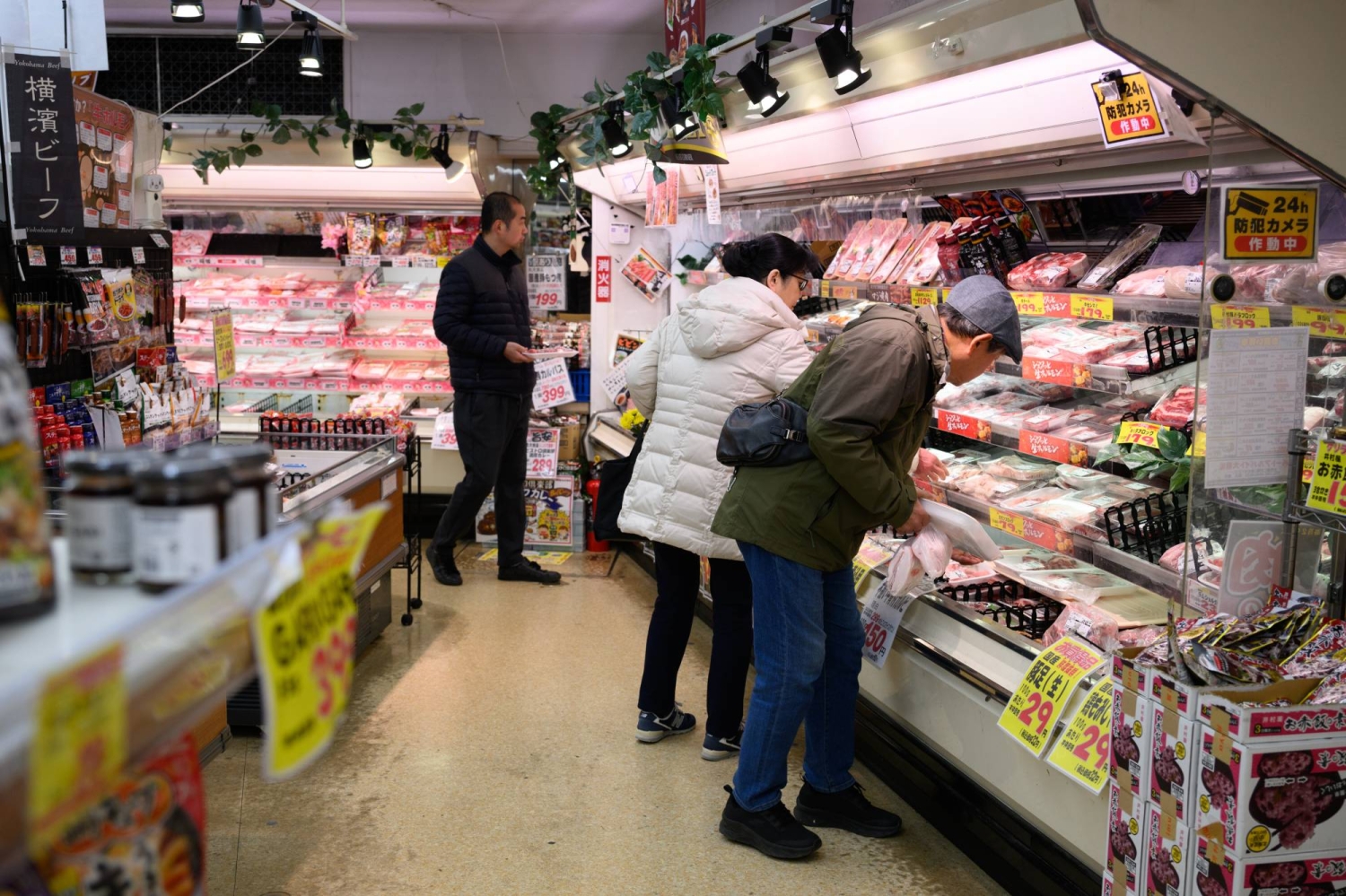
Japan’s ratio of household spending on food hit a 44-year high in 2025, reflecting elevated food prices, according to an internal affairs ministry survey.
According to the latest Family Income and Expenditure Survey released Friday, the ratio, known as the Engel’s coefficient, rose by 0.3 percentage point from the previous year to 28.6% among households with two or more members.
Total household spending averaged ¥314,001 per month, up 4.6% in nominal terms.
Spending on food grew 5.5% in nominal terms, outpacing the overall increase, but fell 1.2% in price-adjusted real terms. This suggests that consumers are becoming increasingly thrifty, choosing cheaper products and reducing their purchasing volume.
The Engel’s coefficient tends to fall when income levels rise on the back of economic growth, encouraging people to spend more money on education, entertainment and other nonfood items.
In Japan, the ratio dropped to 22.9% in 2005 but then began to rise due to low income growth amid a prolonged sluggish economy. Its rise has accelerated since 2022, as the yen’s weakening boosted import prices.
In the 2025 survey, the proportion of utility bills in household spending also increased, while the shares of expenditures on clothes, furniture and other items fell.
Last November, the country’s real wages marked the 11th consecutive month of decline.
Hideo Kumano, chief economist at Dai-ichi Life Research Institute, said, “In order to lessen (financial) burdens on households, the Japanese government must ensure stable growth in real wages by rectifying the weak yen and supporting the growth of smaller companies.”