
The latest decision from the government has sparked fury from campaigners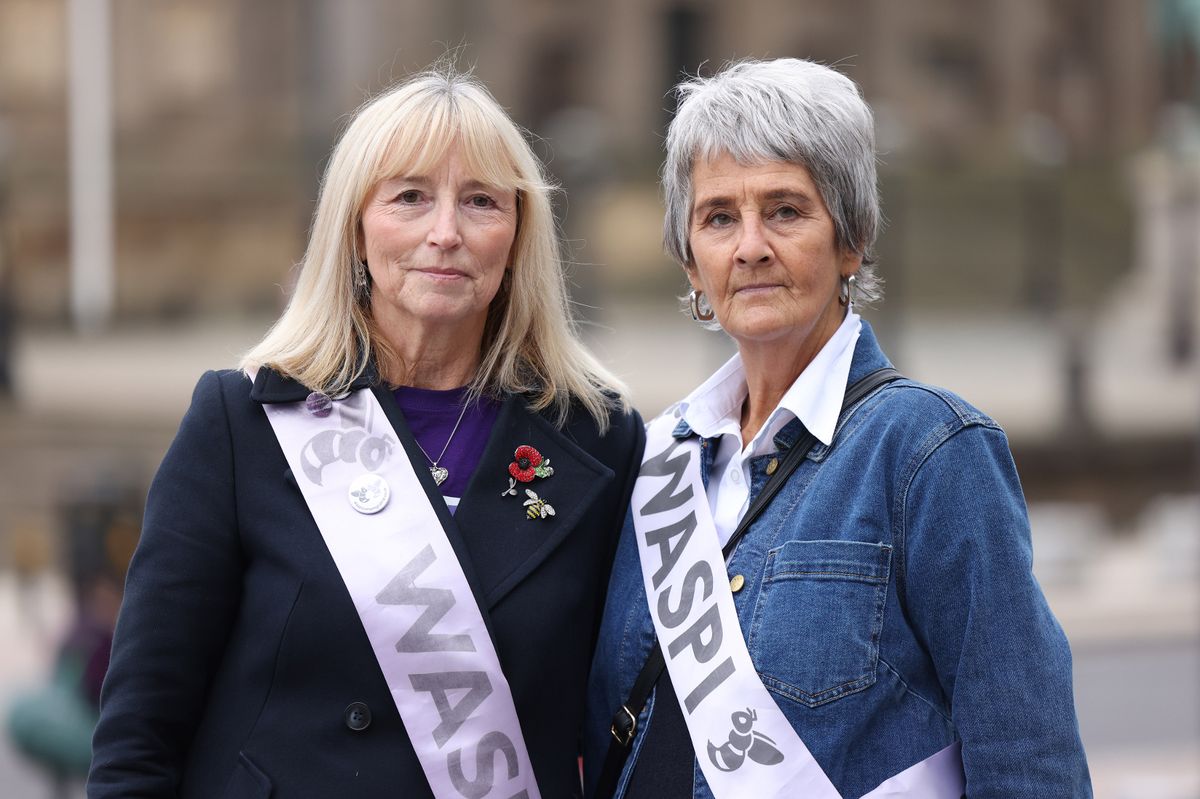
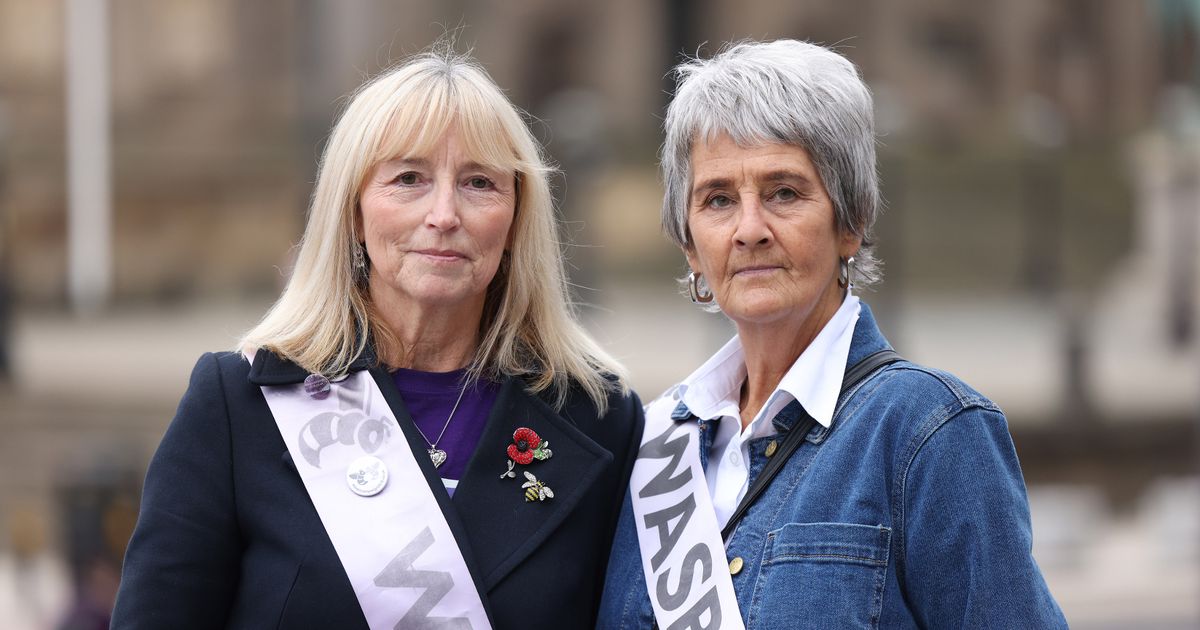
Anne Keen and Teresa Stoddart at a WASPI demonstration outside Liverpool Lime Street Station last year(Image: Liverpool Echo)
Women have said their hard-earned retirement plans were thrown into disarray by changes to their pension. In 1995, the government announced women’s state pension age would be increased in phases from 2010 over ten years.
Around 3.5m women were affected by the changes. The decision to raise the women’s state pension age from 60 to 65 in line with men was made in the 1990s. But campaigners from Women Against State Pension Inequality (WASPI) say they were not properly informed of the changes.
A Parliamentary and Health Service Ombudsman report has previously suggested compensation between £1,000 and nearly £3,000 could be suitable for those affected by how the changes were communicated.
The campaign to reverse the changes began under the last Conservative government. In December 2024, the government said it would not be compensating millions of women who lost out through the changes to the state pension age.
In November 2025, it was announced the decision would be reviewed was raised but last week the government confirmed it would be maintaining its stance.
Campaigners from the Liverpool WASPI told the ECHO they feel let down by Labour as many of the party’s senior figures supported the campaign during their period in opposition.
Anne Keen, 72, from Rainhill, is an active member of the Liverpool WASPI group. Speaking to the ECHO, Anne said her savings she had been planning to use during her retirement have now been wiped out due to the changes to her pension.
Anne, who worked as a manager in a community centre, said: ”I had to wait an extra three years, eight months and six days for my pension. I was notified in 2012, a year before I expected my pension and planned for, so all my savings are gone.
“My husband is retired but he’s had to go to work because all our savings have gone. I wanted to spend time with my family, with my grandson, but all of that time I have been spent worrying. There was no financial security.
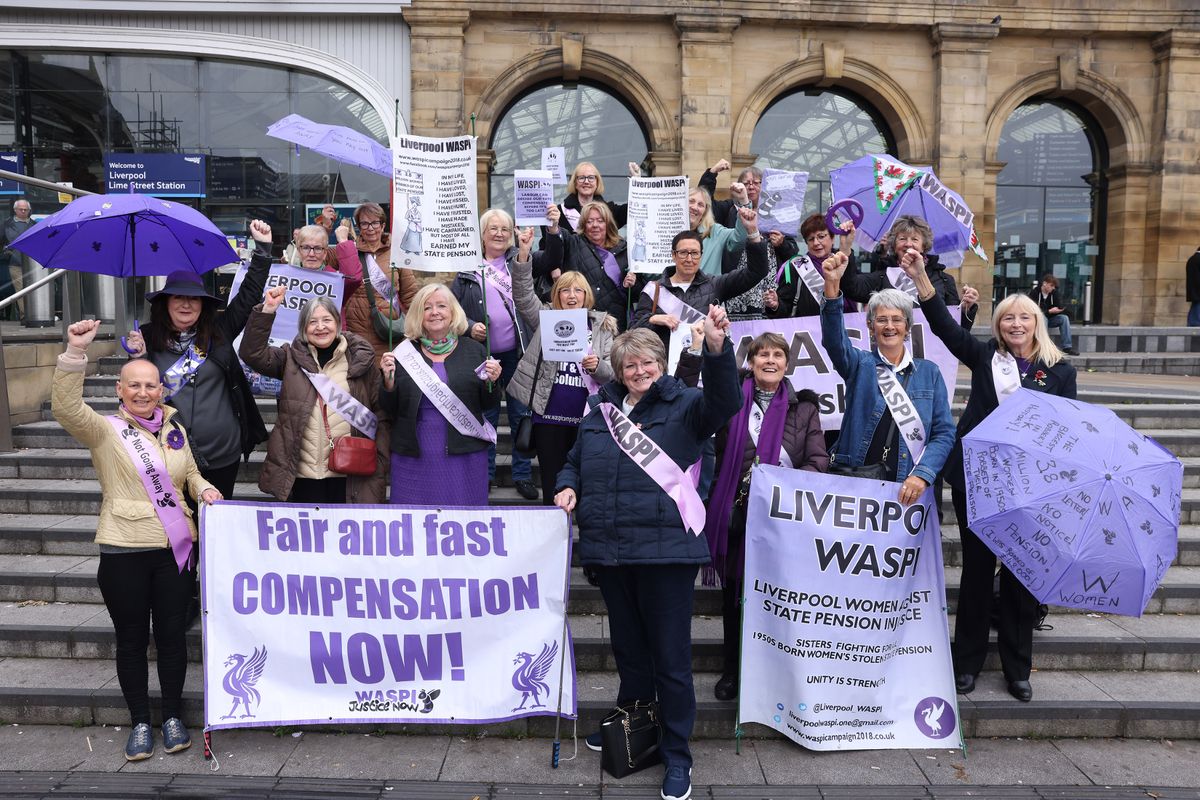
Liverpool has an active WASPI group(Image: Liverpool Echo)
“Me and my husband Mark were fortunate enough to take a year out in 2009, and we went to live in Greece. The plan was to retire and move to Greece.
“In 2012, my friend said, there’s a letter for you here, because we used her address when we were away (which told me about the changes).
“I couldn’t believe it, I felt physically sick. To have the rug pulled from under your feet after working for 40 odd years, it was devastating, absolutely devastating.”
Anne disputes the claims of Work and Pensions Secretary Pat McFadden. Mr McFadden said the evidence shows the vast majority of 1950s-born women already knew about the changes.
But Ann cited a Freedom of Information finding WASPI got from the government. It highlighted that DWP research from 2004 and 2006 recommended that information regarding pension changes should be “appropriately targeted”.
FOI responses confirmed that 16m letters were issued between 2003 and 2006, but these were largely general “pensions education” mailings rather than specific notifications to 1950s-born women about their personal increase in pension age.
In its 2019 election manifesto, Labour promised £58bn in compensation. However, this commitment was not present in the 2024 manifesto.
While the party leadership expressed sympathy for the “injustice” identified in the March 2024 Ombudsman report, with Prime Minister Keir Starmer and Chancellor Rachel Reeves, standing alongside campaigners, the party maintained a “wait and see” approach during the campaign rather than committing to the report’s recommended payouts of £1,000–£2,950 per person.
On how she felt hearing once again there would be no compensation from the government, Anne said: “I was quite surprised. Since WASPI was formed in 2015, they stood shoulder to shoulder with us. Now I’m horrified and shocked.”
This response was echoed by Margaret Boardman. Margaret, 71, said not getting the money she was expecting has been compounded by what she faced in her final years of work.
Her husband, Don Boardman, was diagnosed with pancreatic cancer and later died, while she suffered some health difficulties of her own.
Margaret, who worked in a variety of jobs including for a major energy company, said: “I was married for 34 years and my husband started being really ill when I was 58. He had pancreatic cancer, and I was left on my own then to run the house.
“I knew I’d need to carry on working, but I thought I was ready to retire at about 60 because that was what was told to me when I asked for a pension forecast.
“Then they said, no, you’re not finishing at 60, we’ll put you in line with men, which was 65. That’s the last I heard about it. I didn’t have any communication to say, no, you are working until 66, so it was quite a shock.
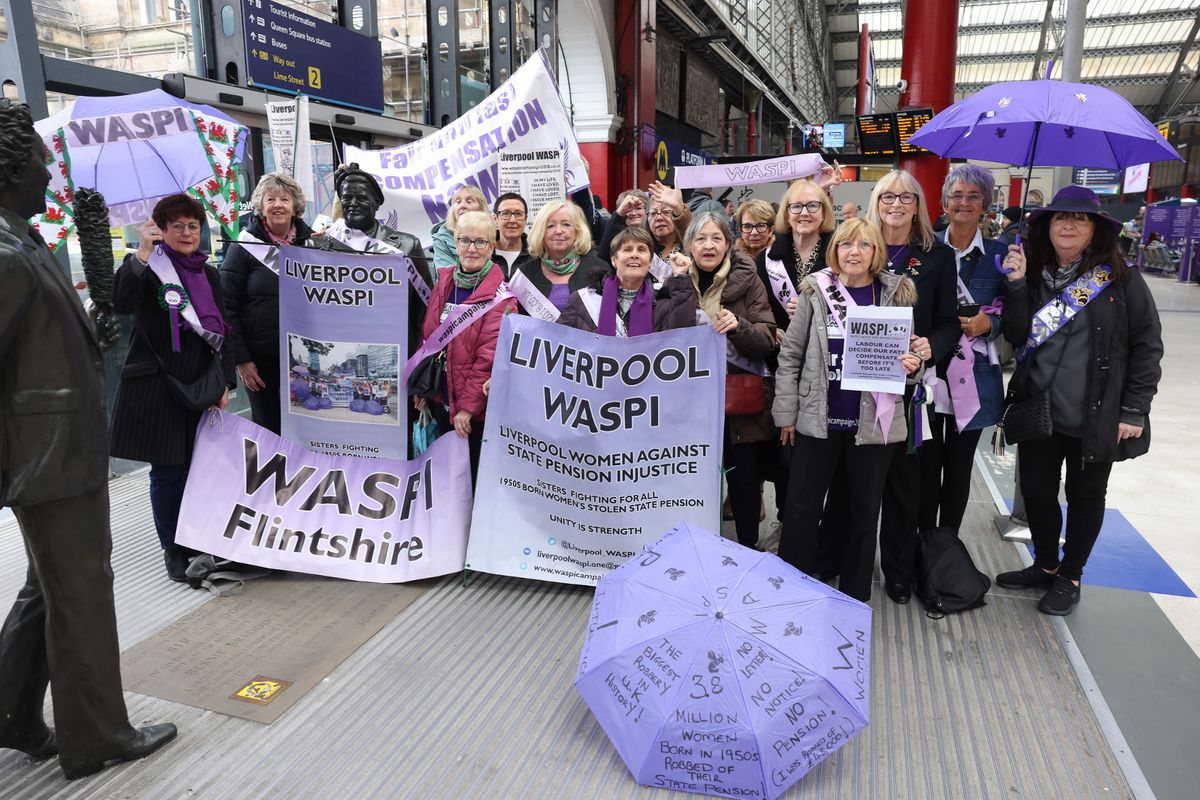
Campaigners hope the decision can be still be reversed(Image: Liverpool Echo)
“It was very difficult because I was on my own. I had to pay all the bills. I had a lot of time off work over (my health issues).
Margaret is from Bolton but joined Liverpool WASPI as it was the closest group she could join. She is still determined to keep fighting.
She said: “We will fight this all the way. My parents worked really hard. We didn’t have a lot of money. We were brought up to respect the hierarchy, work hard, pay your bills, pay your taxes. In return, we expected (the government to treat us with some respect) but we’re not getting that at all are we?”
Fellow campaigner Teresa Stoddart, 71, from Roby with Huyton, added: “We have fought this injustice with patience and dignity. We have seen Prime Ministers come and go. WASPI will not go away until we get justice for the 3.6m women who had their state pension stolen.”
Last week, Work and Pensions Secretary Pat McFadden said: “The evidence shows that the vast majority of 1950s-born women already knew the state pension age was increasing thanks to a wide range of public information, including through leaflets, education campaigns, information in GP surgeries, on TV, radio, cinema and online.”
He said a wider flat-rate scheme “would simply not be right or fair”, and to specifically compensate only those women who suffered injustice “would require a scheme that could reliably verify the individual circumstances of millions of women”.