
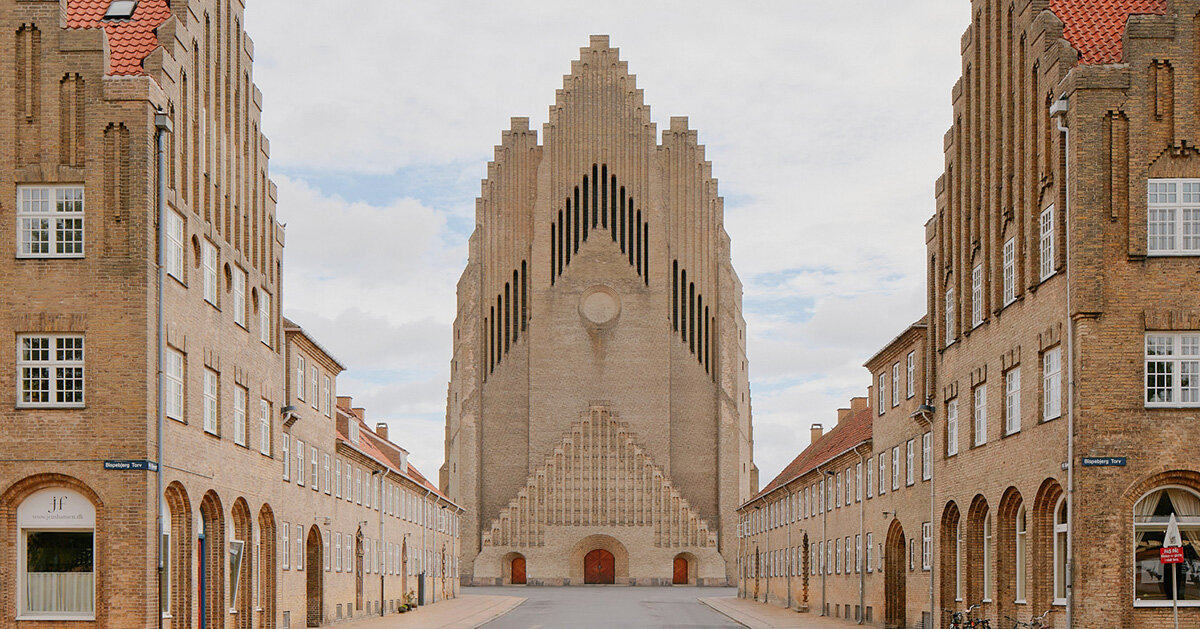
grundtvig’s church through the lens of david altrath
Standing in the Bispebjerg district of Copenhagen, Grundtvigs Kirke, one of the most singular works of 20th-century ecclesiastical architecture, is the protagonist of David Altrath’s latest photography series. Designed by Peder Vilhelm Jensen-Klint and completed in 1940, the church translates the vertical ambition of Gothic architecture into an austere expressionist language built entirely from yellow Danish brick. Structure, surface, and ornament collapse into a single architectural system, where material discipline replaces decoration.
The west facade rises as a monumental sequence of stepped gables, a sculptural composition that sets the rhythm for the building as a whole. Inside, this cadence continues through pointed arches and soaring brick vaults, forming an interior that feels both monumental and measured. Light filters gently across the textured masonry, revealing subtle shifts in tone and depth, while repetition and proportion guide movement through the nave. The absence of applied ornament sharpens attention to craftsmanship, scale, and the expressive potential of brick itself.
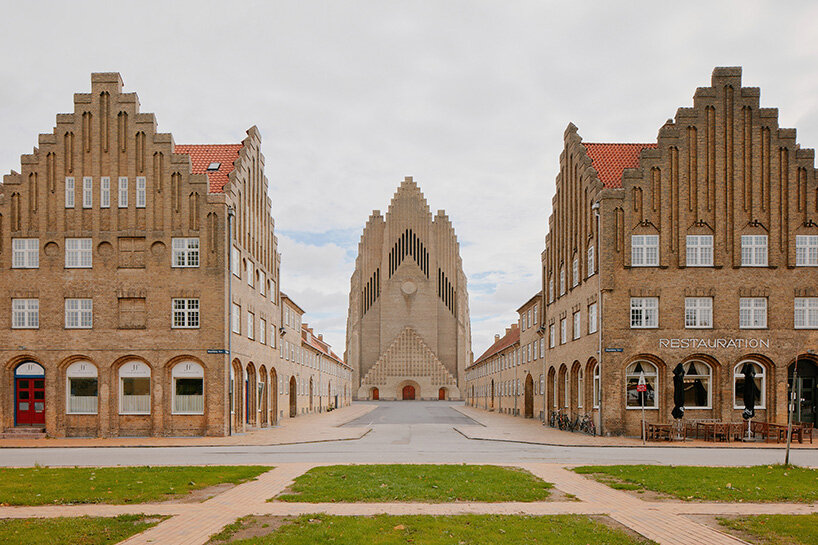
all images by David Altrath
stillness as a spatial condition
Altrath’s work consistently explores how built form, material, and atmosphere interact over time. Here, his lens frames Grundtvig’s Church not as a monumental icon, but as a lived space of stillness, where brick, light, and proportion quietly hold the architecture together.
In this photographic series, Hamburg-based photographer David Altrath approaches Grundtvig’s Church as an architecture of restraint and concentration. His images focus on moments of pause: light grazing a wall, the alignment of arches, the quiet tension between mass and void. Rather than dramatizing the space, the photographs emphasize its calm intensity, allowing the expressionist abstraction of the architecture to coexist with its sacred function.
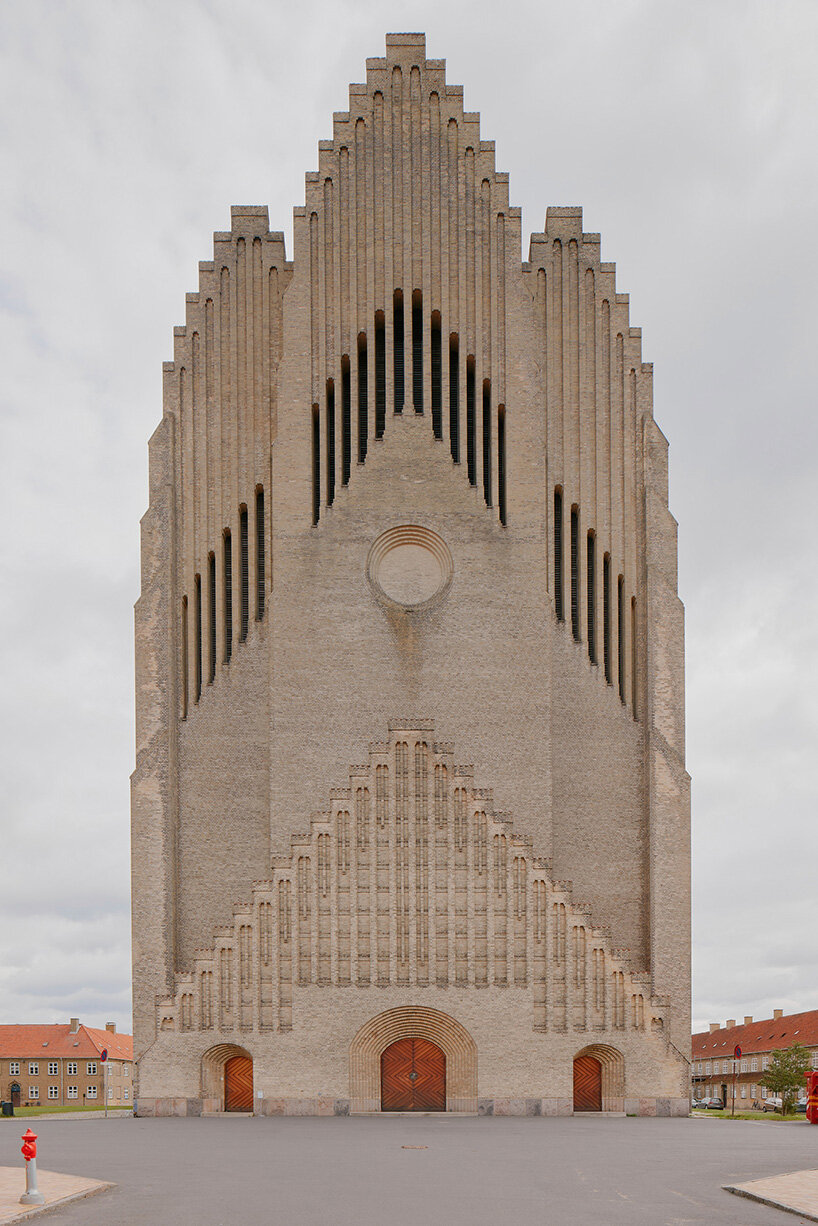
a sculptural composition of yellow brick
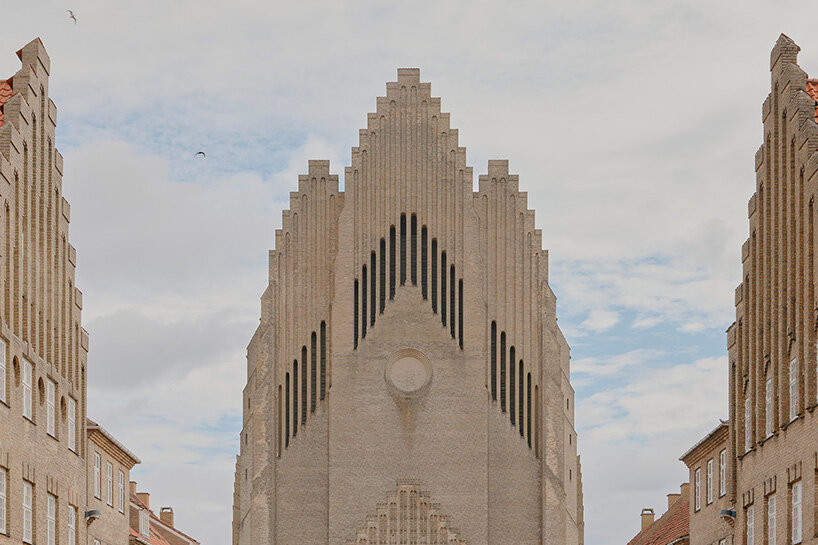
the stepped gable west facade
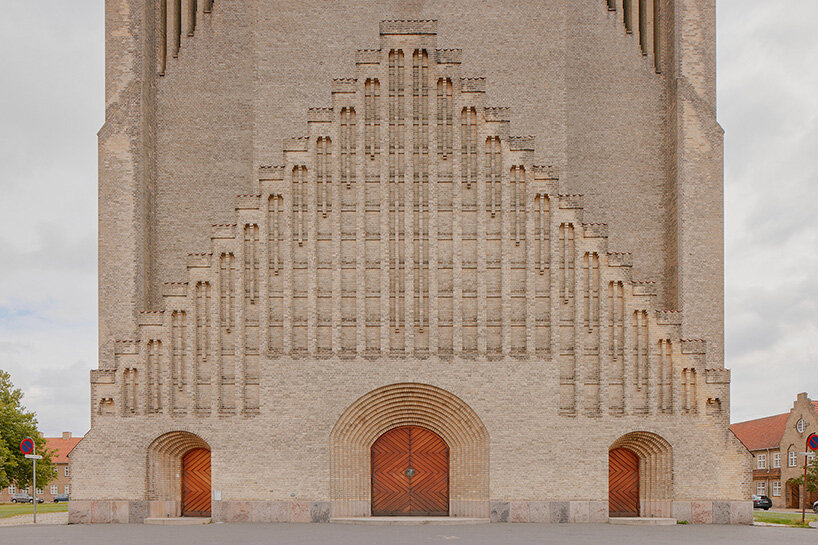
a closer view reveals the layered brick relief articulating the main entrance
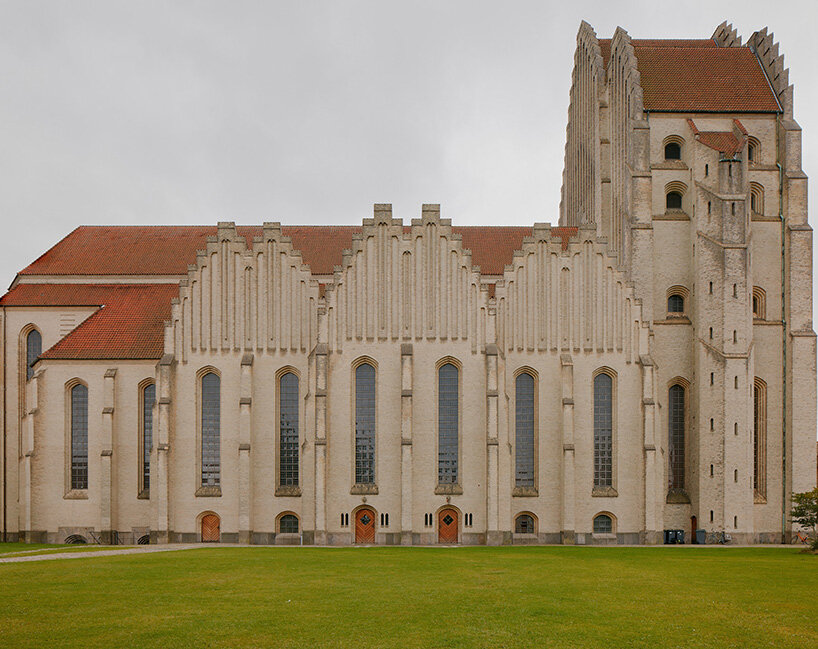
the church’s long side elevation unfolds through repeated vertical bays and pointed windows