

Listen to this article
Estimated 3 minutes
The audio version of this article is generated by AI-based technology. Mispronunciations can occur. We are working with our partners to continually review and improve the results.
Amanda Dyke of Jeddore, N.S., likes to feed birds in the winter, but when she noticed a colourful new bird perched on her deck recently, she didn’t know what kind it was.
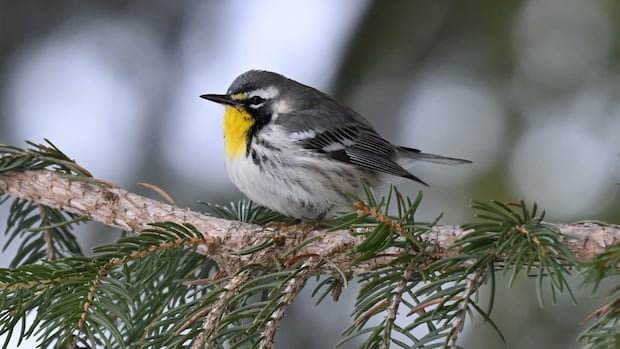
The small animal had a mostly black and white plumage, except for a bright yellow splash on its throat.
To figure out what kind it was, she took out a book on Nova Scotia birds from the library, but there was no match.
Hoping to identify the species, Dyke posted a video of the bird on social media.
“Sure enough, all the experts knew exactly what he was and that he’s not really supposed to be here,” said Dyke.
The bird was a yellow-throated warbler, a species that typically resides in Mexico and Central America. In the summer months, it heads to the southeastern United States. It rarely makes its way this far north, especially at this time of year.
Shortly after her post, people asked Dyke if they could come and see the bird in person.
“I thought he was, you know, just a cute little bird,” said Dyke. “I didn’t know he would become so popular. He had lots of visitors coming from far and wide.”
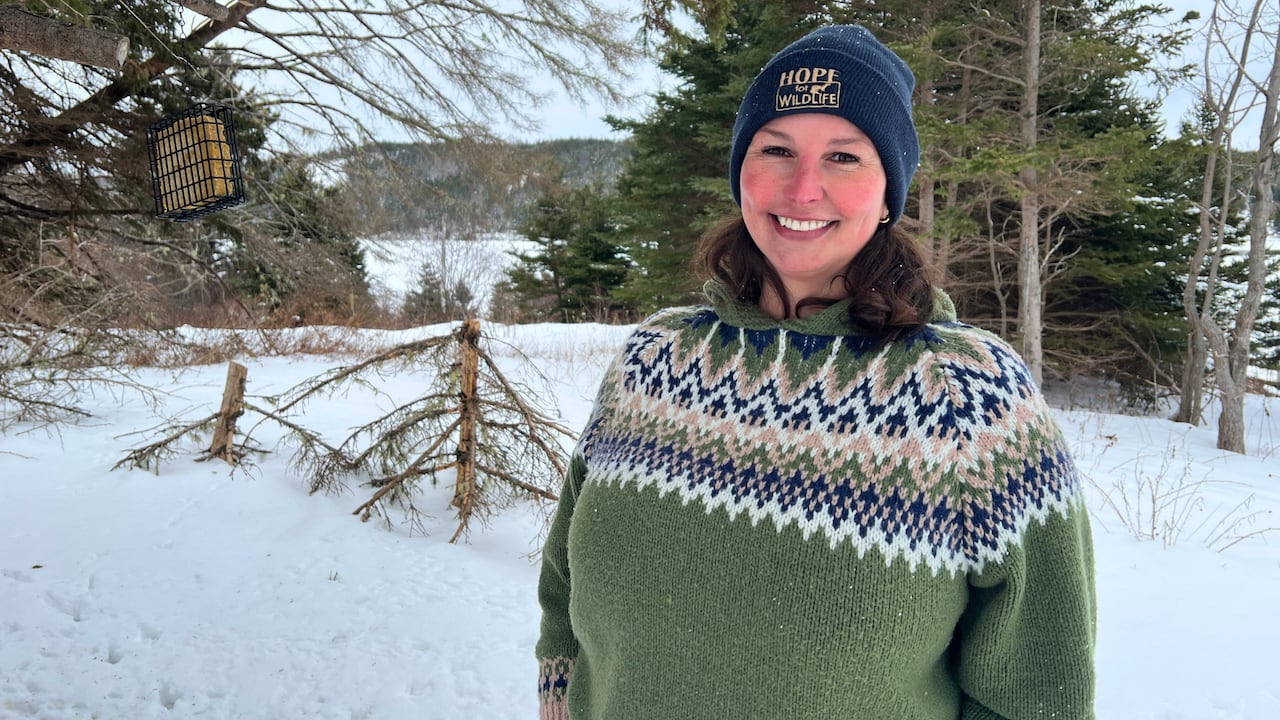 Amanda Dyke, a Jeddore, N.S., resident, says she saw the bird on her deck and was intrigued by it. (Giuliana Grillo de Lambarri/CBC)
Emerson Fiske, a retiree from Sackville, N.S., said he drove for around an hour to get to Dyke’s house.
He said when he arrived, there were another three birders in the yard, all trying to get a glimpse of the warbler.
“Anytime you see a splash of colour this time of year, it’s always nice to see,” said Fiske.
He said one of the challenges of having a tropical bird in the winter is finding appropriate food, as many of the insects yellow-throated warblers would eat are not around.
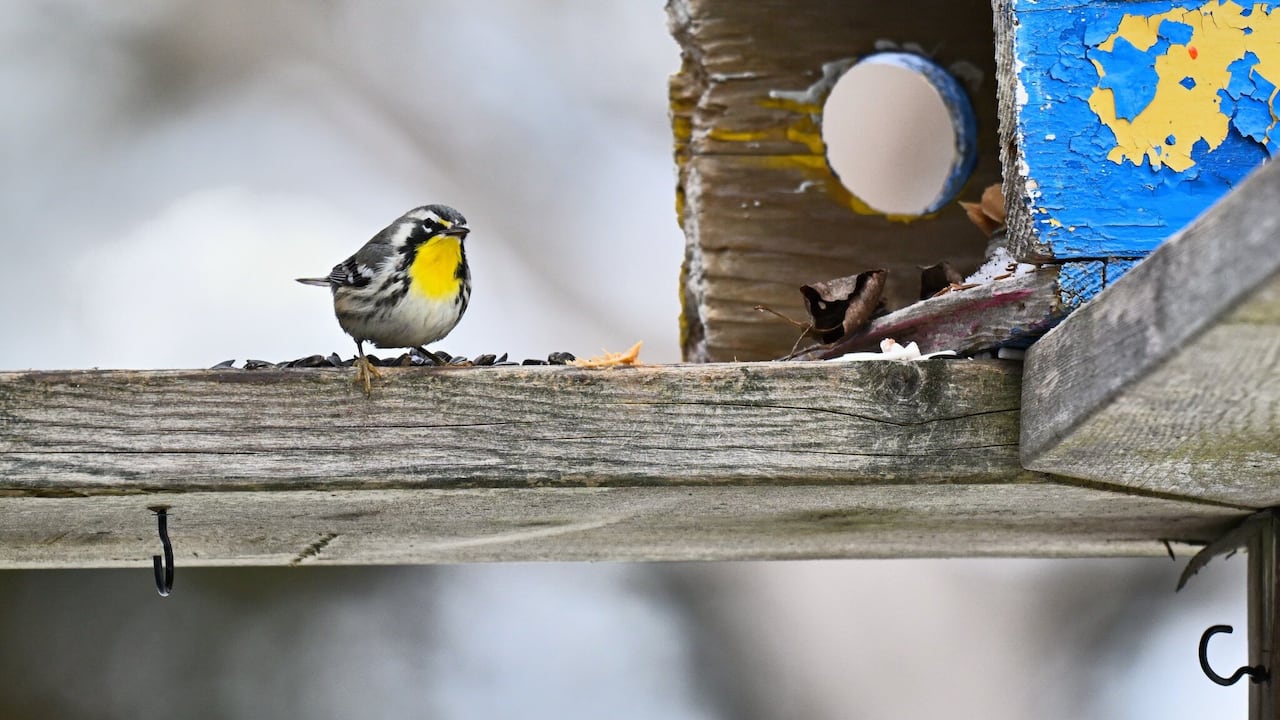 Many people have been heading to Dyke’s home to get a glimpse at Butters. (Submitted by Emerson Fiske)
Dyke said she started feeding the bird peanut butter — and after seeing how much the bird seemed to like it — she named it Butters.
“I got him a little addicted to peanut butter in the beginning, but now he’s on the right diet with mealworms and all the proper nutrition, so I’m hoping he makes it through,” she said, adding that some of the visiting birders left her with advice and some bird food for Butters.
Dyke even made Butters a small “mud cake” with worms and peanut butter, which he seemed to enjoy.
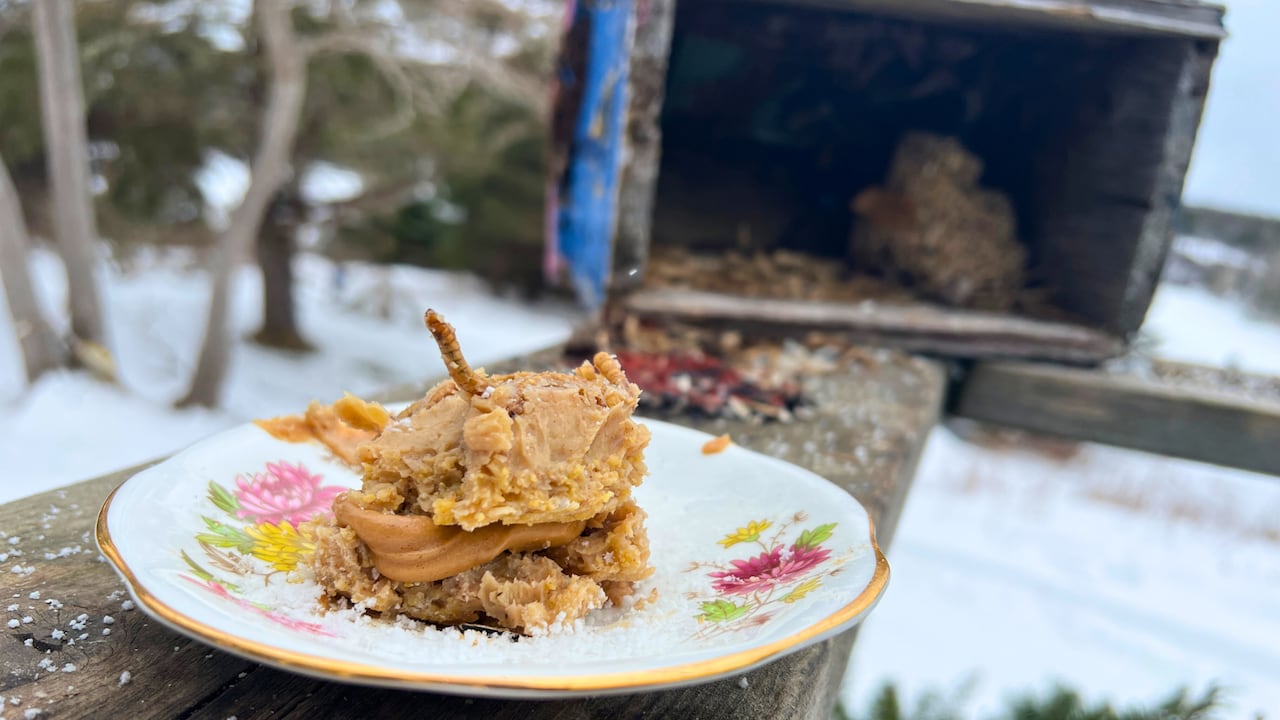 Butters the bird seems to like peanut butter, which is why it was given that name. (Giuliana Grillo de Lambarri/CBC)
Dyke said she called the Department of Natural Resources to let them know about the sighting. She also said she will call wildlife groups to ask what the next best steps are.
Tony Millard, president of the Nova Scotia Bird Society, said these birds are very adaptable, and as long as it gets food and shelter for the colder nights, it should be able to make it through the winter.
“She’s doing about all she can do,” said Millard about Dyke’s care of the Butters.
“It’s a lovely bird and they are quite spectacular.”
MORE TOP STORIES