
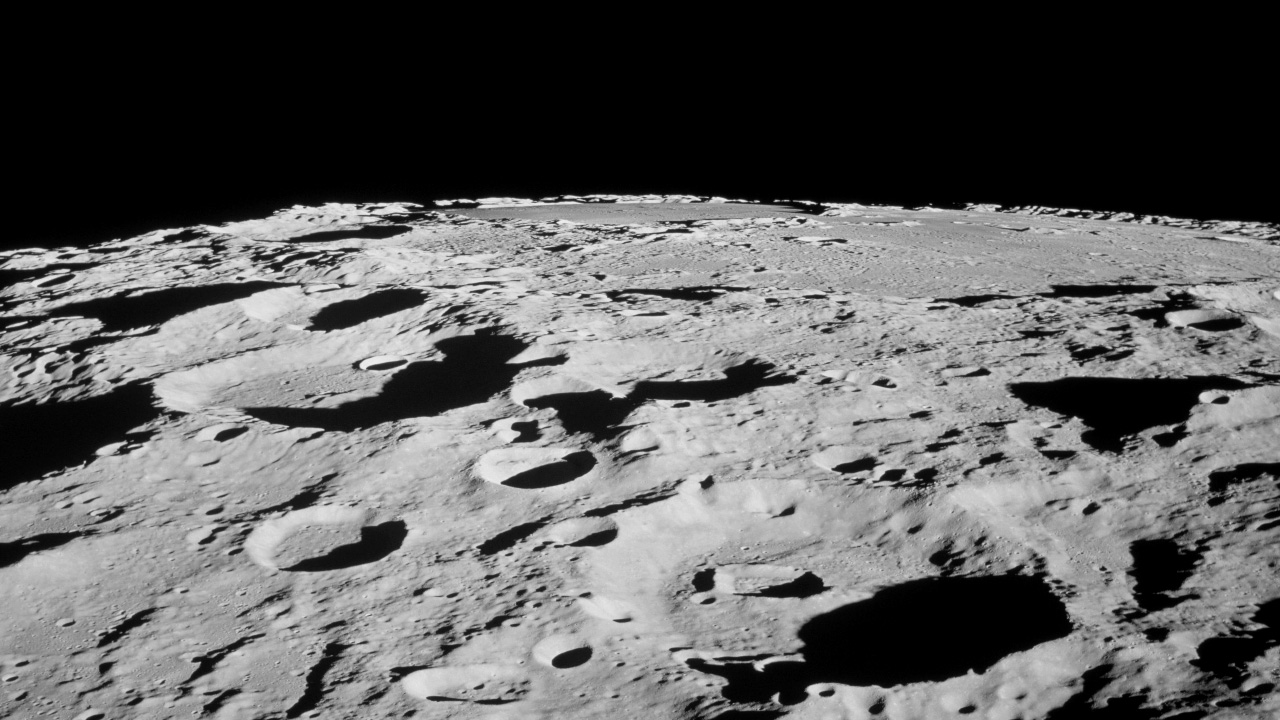
In order to better study Earth’s radiation patterns, some scientists are now suggesting a turn to lunar observations. Scientists from the Institute of Atmospheric Physics (IAP) in the Chinese Academy of Sciences (CAS) recently conducted a study to back this new suggestion.
Turning To The Moon To Study Earth’s Radiation Patterns
There exists a problem with the current methods used to study the radiation patterns of the Earth. Currently, most scientists turn to using low Earth orbiting (LEO) satellites, which, according to some Chinese scientists, are limited and not consistent.
To tackle this challenge, some scientists embarked on a study to reveal the best way to study Earth’s radiation patterns. From their study, they have found that the Moon offers a better angle for observing the Earth to learn more about its radiation patterns.
Speaking on why the Moon will be a good ground to study Earth’s radiation patterns, Dr Ye Hanlin, first author of the study, had a few things to share. Unlike observations from Earth, Hanlin says, “From the moon, Earth appears as a complete disk, allowing us to extract planet-scale dominant signals while suppressing small-scale weather noise.”
So instead of viewing the Earth in parts, lunar observations will enable scientists to view the Earth as a whole, enabling them to better study its radiation patterns. It also eliminates the issue of localised weather events hindering proper viewing of the Earth’s radiation patterns.
The study also highlights the role of spherical harmonic functions in Earth’s radiation patterns. This function enables scientists to pinpoint larger radiation patterns, hence filtering out the smaller patterns for more accurate observation.
Lunar Observations Hold Long-Term Potential
According to Professor Guo Huadong, “A moon-based platform provides a new, long-lasting, holistic view of Earth, which is highly unique.” Huadong is also the corresponding author of the study from the Aerospace Information Research Institute at CAS.
By using lunar observations in place of Earth-based observation systems, scientists will be able to observe the Earth’s radiation long-term. Long-term observation will provide scientists with more accurate data, which will in turn help track the gradual changes in Earth’s climate.