

Two Vancouver high school students just snagged $5,000 in prize money for developing a device that could help prevent floods.
Sameer Assanie and Bobby Yang, two Grade 12 students at Stratford Hall, entered and won the Youth Innovation Showcase for Airlume, a device they’ve created that detects when catch basins are clogged.
When catch basins (also known as storm drains or drain gates) get clogged with leaves and other debris, it prevents rainwater from draining and can result in floods and garbage washing into nearby waterways.
Currently, the City of Vancouver relies on volunteers to monitor and clean out catch basins through its “adopt a catch basin” program. It has 40,000 “adoptable” catch basins, and needs 30,000 of those adopted.
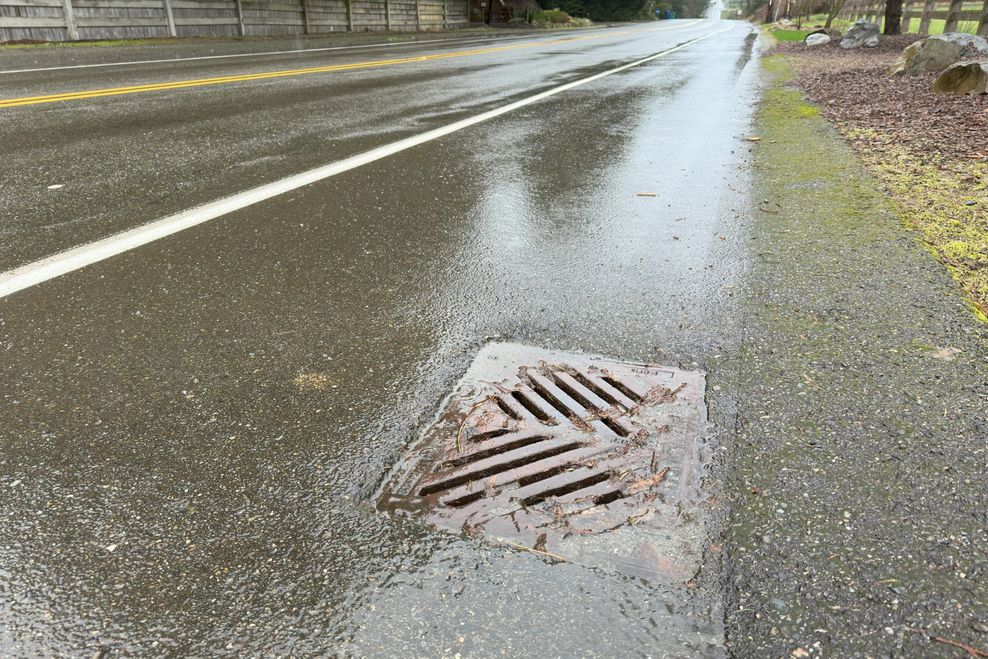
sgarbacik/Shutterstock
Assanie and Yang realized that clogged storm drains were a problem in October 2024, when there was a heavy atmospheric river. They had friends and family members whose basements were flooded.
“It caused lots of damages. And that’s really when we first noticed that this problem of drain grates being clogged,” said Assanie.
The students already had an interest in “making stuff” (they founded a tech club in their school) and wanted to create a solution.
They started with the problem, and then “a lot of hypotheticals,” said Assanie.
It wasn’t easy: it took a lot of time after school and on weekends, trial and error, and working with City officials to learn what they needed.
“It’s definitely taken a lot out of us,” added Assanie.
The students learned that they couldn’t attach Airlume to the outside of the drain grate, as someone could dismantle or vandalize it, and so they needed to figure out how to attach their device to the inside of one.
They also had to find a way to make sure that water wouldn’t get into the device, “which kind of seems like it’s obvious, but it’s more difficult and more challenging to achieve,” said Assanie.
And they’ve been working on bringing down costs and maintenance.
“So that it’s actually a viable solution for the local government,” said Yang.
Then there’s the manufacturing of the product. Without anything similar already existing, they had to figure out what kind of sensors and electronics to use and find a way to test them out.
They bought a small drain grate off Amazon, attached Airlume to it, and tested it to see if the sensors would activate when the basin was clogged.
How does Airlume work?
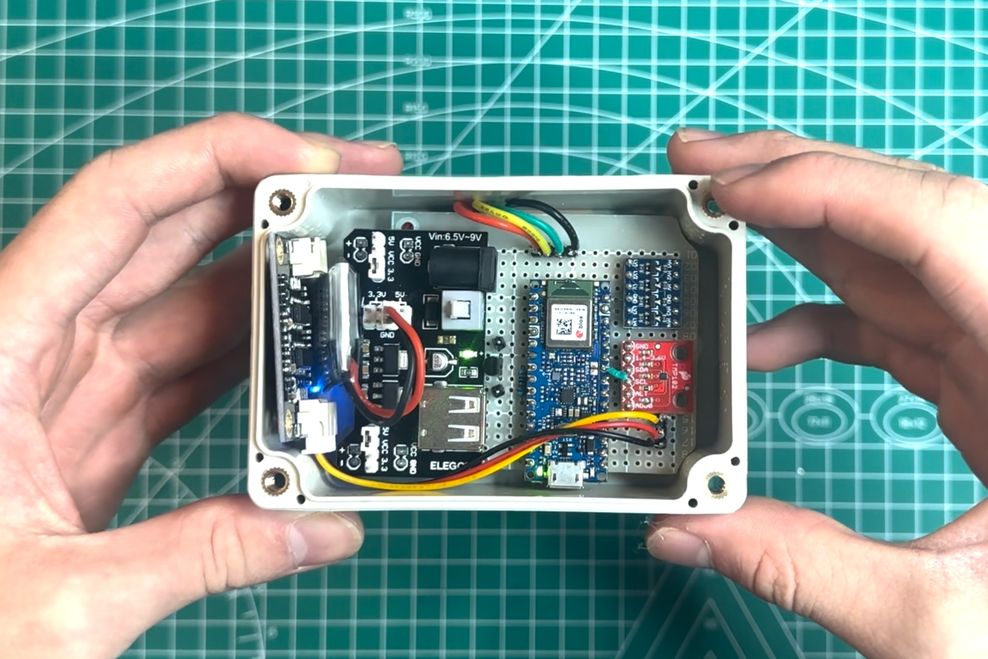
Sameer Assanie/Submitted
Airlume has a number of sensors that work in different ways to determine if a catch basin is clogged. The students hope that eventually they can install thousands of them across the city that could send live updates to municipalities.
“On their interface, they would just see like a map of, let’s say, red and green dots. And every red dot means a catch basin at risk, which they would be able to send out government workers or get volunteers to help unclog it,” said Yang.
The students said their next step will likely be working with the City of Delta to pilot their product on a catch basin in use.
“And then just collect data from that, see what needs to be improved, see what failed in our design, and just improve on that,” said Assanie.