
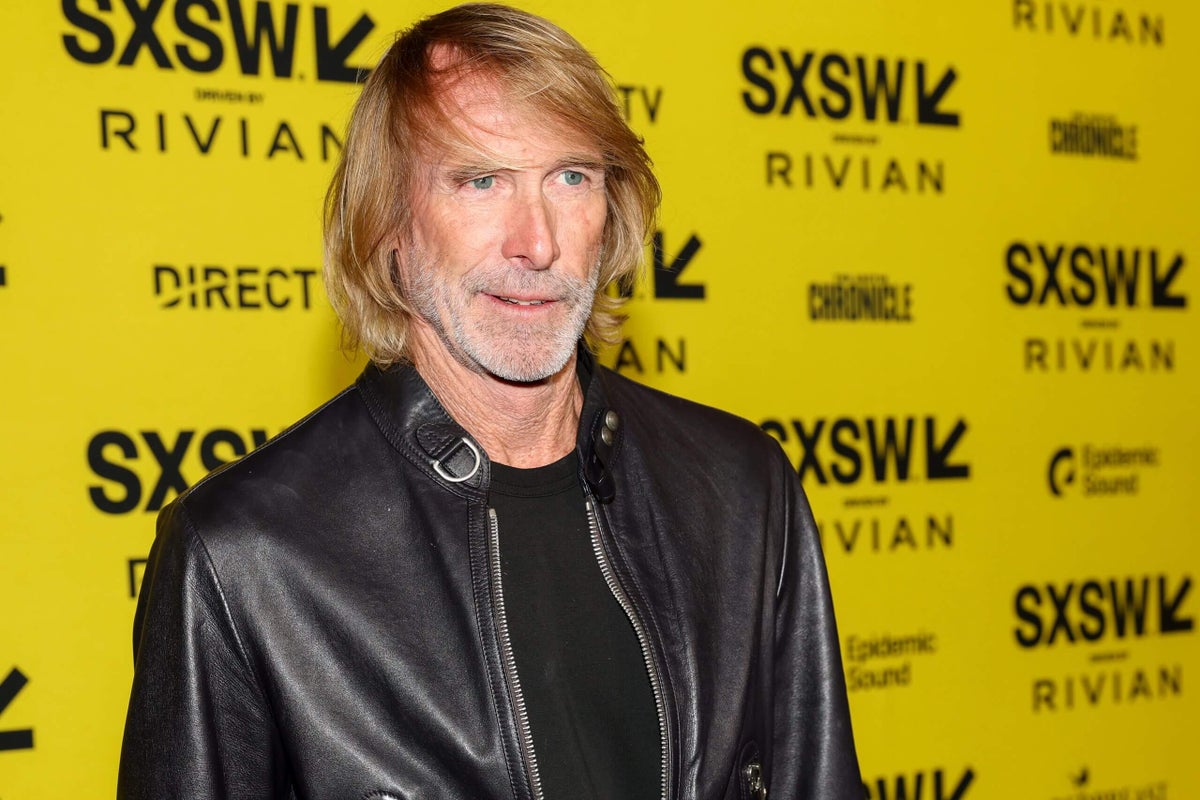
Renowned director Michael Bay has filed a $1.5-million lawsuit regarding Cadillac’s Formula 1 Super Bowl advertisement, claiming that Dan Towriss, the team’s CEO, and “his Cadillac F1 team have apparently stolen Bay’s ideas and work for the commercial, without paying for them,” according to the complaint recently filed in Los Angeles.
The Athletic obtained a copy of the breach-of-contract and fraud lawsuit, which was filed Friday. According to the complaint, Towriss approached Bay in November 2025 to request that Bay produce and direct the commercial. Bay, known for his films “Transformers” and “Armageddon,” has created Super Bowl advertisements before and has a 25-year-long relationship with the F1 team’s parent company, General Motors.
The purpose of the advertisement is to introduce Cadillac F1 in an “American” way, revealing the livery via a Super Bowl commercial and a Times Square multi-day activation. According to the complaint, “Towriss wanted to hire a renowned American director,” given that this is an American F1 team.
According to the complaint, during a Webex call before Bay was officially hired, Towriss mentioned different ideas to Bay, such as including a John F. Kennedy speech or whether the desert would be a good background. Bay, per the complaint, showed examples of work he has done that included these features, including “Transformers 3” and “Armageddon.” Bay claims that he presented his sales pitch two days later, and that Towriss allegedly said Bay was hired, saying, “OK, let’s get to work. I will let everyone know.”
Bay and his team began working on the project over the next week, and per the filing, “throughout this process, Defendants and their agents worked with Bay and Bay’s team as if Bay had in fact been hired for the project.”
But on Dec. 6, Bay’s team claims it was informed that Cadillac was going to “go in a different direction” with the project and have someone else produce the commercial. Bay alleges that the defendants in the lawsuit “stole” his ideas and concepts. Thus, Bay is suing for breach of contract and fraud, seeking “general and compensatory damages” that are in excess of $1.5 million.
“Michael Bay is a cinematic genius and we talked with him about directing our Super Bowl ad. But after two meetings, it became clear he couldn’t meet our timeline, and there ultimately wasn’t a path forward,” a spokesperson for Cadillac F1 said in a statement to The Athletic. “It’s unclear why he’s bringing this claim, since the concept and creative were already developed and we were only exploring him as a director. It’s also unusual to raise this now, given the ad hasn’t even been released.
“We’re confident this will be resolved appropriately. Even so, we still admire Michael Bay’s creative brilliance and would welcome the opportunity to work together in the future.”
The details of the lawsuit
Per the filing, Towriss discussed the Super Bowl project with Dave Leener during the 2025 Las Vegas GP weekend, and Leener suggested hiring Bay.
According to the documents, a one-hour Webex call took place on Nov. 28, 2025, between Bay, Towriss and Leener. Bay asked Towriss at one point whether he’d worked with an ad agency before, which Towriss allegedly “responded in the negative,” and Bay expressed concerns: “they hate direct client to director [communications]. They are middlemen, and they steal my ideas. They try to pick my brain and give these ideas to younger cheaper commercial directors.”
According to the complaint, “in response to Bay’s concerns, Towriss responded, “well, I’m paying for this Super Bowl commercial so Cadillac and I are in charge.” But Towriss contacted Translation, an ad agency, after the call with Bay, and the company sent “a personalized presentation for this commercial – just for Bay. In this presentation, Translation referenced the specific ideas discussed by Bay and Towriss during their first Webex,” per the filing.
A day later, Bay showed the ad agency clips of his previous movies for examples of what could be done for Cadillac F1’s Super Bowl ad, including editing styles and discussing how they’d propose using “specific shimmering visuals, planets with suns, and desert landscapes” in the ad.
Towriss and Bay met for a second time on Nov. 30, via Webex, and Leener was also on the call. The purpose was to present the sales pitch, with Bay showing nine prior commercials and films to demonstrate his capabilities.
During the presentation, Bay showed nine prior commercials and films, demonstrating different editing styles and visual approaches he envisioned for the advertisement, including how the F1 car would appear in desert settings.
Bay made it clear at the end of his presentation that he’s a “single bid” type of person and wouldn’t carry out any further work on the project until Towriss made his decision. It was later confirmed, in writing, by Bay’s producer/executive producer Scott Gardenhour, that the defendants “hired Bay to conceptualize, produce, and direct the commercial on a ‘single bid’ basis, i.e., no other competing producers or directors had been hired or would be hired for this project.”
The timeline was tight – the commercial needed to be completed by early February for the Feb. 8 Super Bowl and NFL approval.
According to the complaint, the proposed budget was approximately $3 million. Bay’s team began working on the project, putting together production schedules and planning filming locations. Bay’s team created a mock commercial using dialogue and music from other projects, which was presented to the defendants’ agents on Dec. 5.
The next day, however, Gardenhour received a message from Lecker, and they spoke by phone, with Lecker informing Gardenhour that the defendants intended to use someone else for the commercial. When Bay contacted Towriss directly about the matter, the CEO put the blame on Translation. Included in the filing is a photo of the alleged text from Towriss.
According to the filing, “Bay has since attempted to informally resolve this dispute with Defendants for the past two months, without success.” Bay claims in his lawsuit that Towriss and Cadillac “ wanted a “Michael Bay” commercial, in other words, at a bargain-basement price.”
The $1.5 million Bay is seeking equals the amount that his director’s and producer’s fees would be, for the work and costs incurred by him and his team, and he’s seeking punitive damages. The complaint covers four key areas: breach of verbal contract, breach of implied-in-fact contract, goods and services rendered and fraud.