
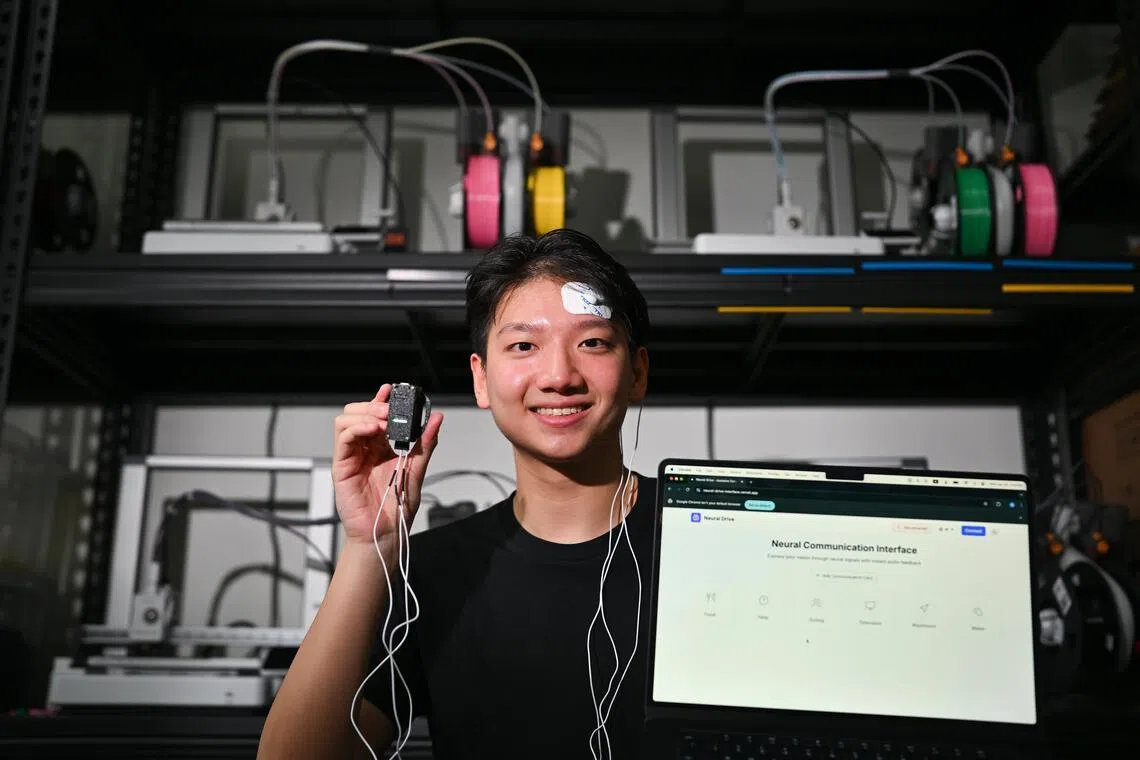
SINGAPORE – Mr Raymond Loong Ng’s first foray into entrepreneurship was buying snacks from a mamak shop to sell to his secondary schoolmates the next day.
“Because our break was only 10 minutes, many students were too lazy to go down to the canteen to buy food,” he recalled. “I realised that if I bought snacks in bulk and packaged them together, I could earn myself some extra pocket money.”
While Mr Ng’s first “venture” was quickly shut down by his teachers, he has enjoyed far greater success since.
Today, the 21-year-old full-time national serviceman (NSF) is the co-founder of two accessibility-focused start-ups that have collectively secured more than $200,000 in funding.
Beyond making profits, Mr Ng said he wants his start-ups to make a positive impact in people’s lives – a goal deeply shaped by his experience living between Vietnam and Singapore as the child of a cross-national marriage.
“While I was able to focus on academics and student clubs, my friends in Vietnam had to drop out of school early to help out in their family businesses,” said Mr Ng, who lived with his parents in Ho Chi Minh City until he was nine, before moving to Singapore permanently.
“I want to be able to expand access (to education) and increase opportunities for people the same way that moving to Singapore did for me.”
To pursue his dream of blending entrepreneurship with social good, Mr Ng enrolled in a diploma course in applied artificial intelligence (AI) and analytics at Singapore Polytechnic (SP) from 2021 to 2024.
He said: “I felt that tech, and especially AI, was the best tool to help entrepreneurship scale faster and reach more people in the digital world.”
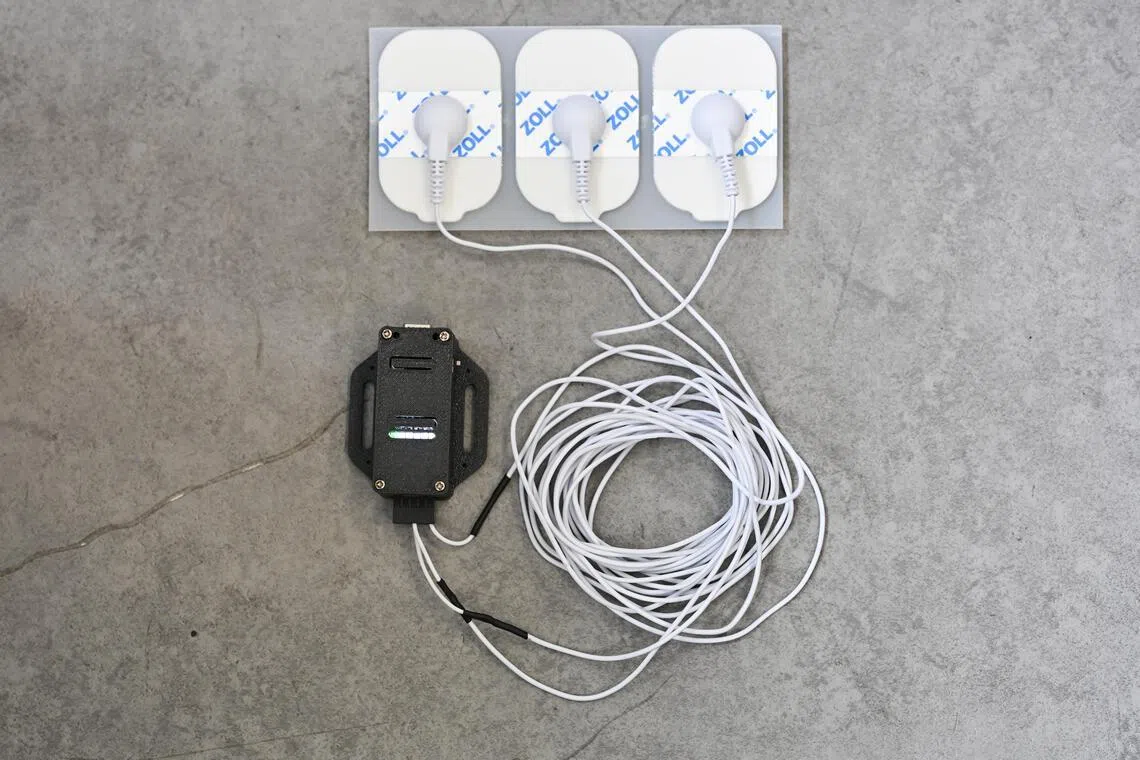
Neural Drive’s electrodes and headset allow patients with disabilities to communicate using eye movements and brainwaves.
ST PHOTO: LIM YAOHUI
Through his course, Mr Ng was introduced to hackathons, which helped kick-start his entrepreneurship journey.
“Being in a room of like-minded people motivating and competing with each other, you just can’t help but be inspired,” said Mr Ng, who has competed in 38 hackathons to date.
It was through one such hackathon that Mr Ng launched Resumify, a social enterprise that uses AI to help former offenders and people with disabilities create resumes.
He came up with the idea after helping a human resource start-up build an automated resume screening system as part of his final-year project.
“I realised that not everyone would be able to write their experiences in a way that would do well in my system, and I could use what I learnt to help those people,” said Mr Ng, who is Resumify’s chief executive.
Along with several SP schoolmates, he officially launched the social enterprise by taking part in the fifth edition of the Youth Action Challenge, a programme run by the National Youth Council that provides mentorship, guidance and funding to youth initiatives.
At the end of the programme in January 2024, Resumify was awarded $24,100. The start-up has since partnered with Yellow Ribbon Singapore and has been trialled by almost 100 former convicts.
Inspiration struck again in March 2025, when Mr Ng participated in a series of hackathons to co-found Neural Drive, which creates portable headsets that track eye movements and brainwaves to allow paralysed patients to communicate simple commands.
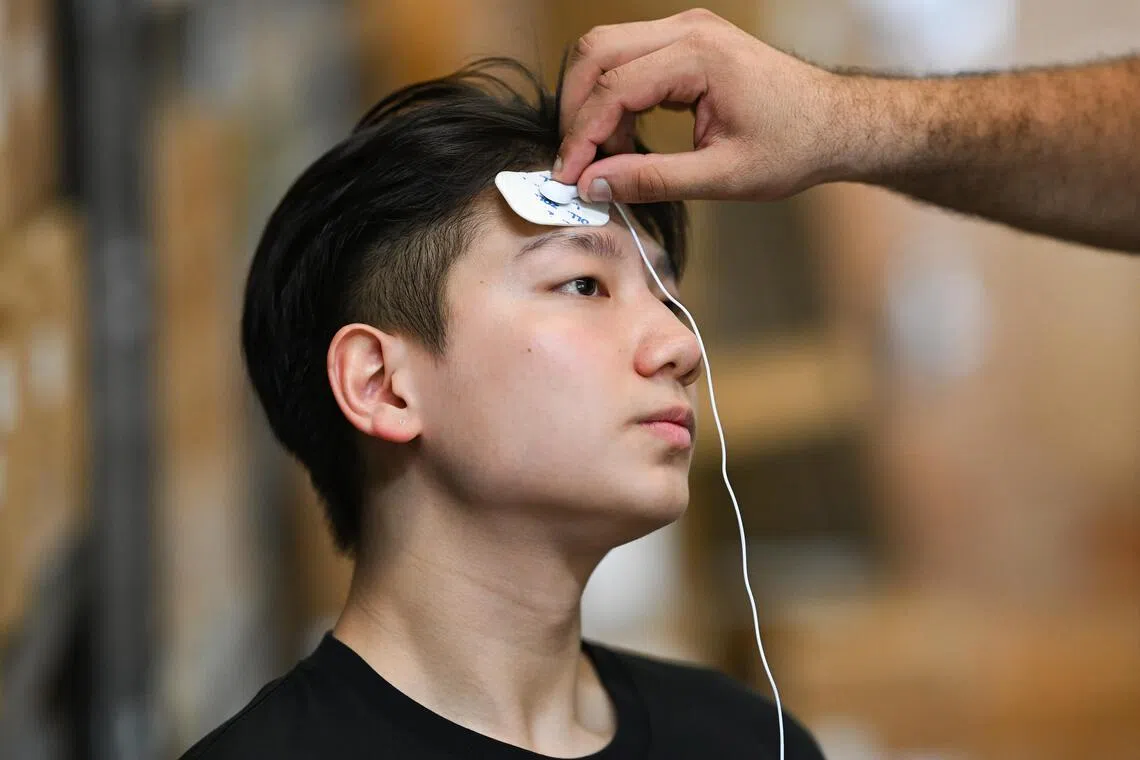
Neural Drive headsets allow patients with disabilities to communicate using eye movements and brainwaves.
ST PHOTO: LIM YAOHUI
“A friend I met through hackathons had a neighbour with cerebral palsy and wanted to build something to help her,” said Mr Ng, who is chief AI officer at Neural Drive.
“Currently, much of the (communication) hardware available for patients with disabilities is expensive, bulky and difficult to transport. We wanted to make something cheaper, portable and more practical.”
The co-founders currently bootstrap Neural Drive and raise funds mainly through grants and competitions.
It has received more than $180,000 in grants, such as those provided by SP and the Singapore University of Technology and Design, and competition funding.
While Neural Drive’s headsets have not been publicly released yet, the product is undergoing clinical testing with healthcare partners in the industry.
Mr Ng does not draw a salary from either of his start-up ventures. In his free time, he leads Singapore Youth AI, an initiative that organises peer-to-peer AI education programmes.
When asked about how he balances his time, the NSF said: “I spend most of my weekday nights and weekends working on these things. I’m able to dedicate so much time to these initiatives only because I truly enjoy what I’m doing.”
He plans to study computer science at university after national service while juggling his initiatives.
“I hope my products can make the lives of people around me meaningfully better,” he said.