
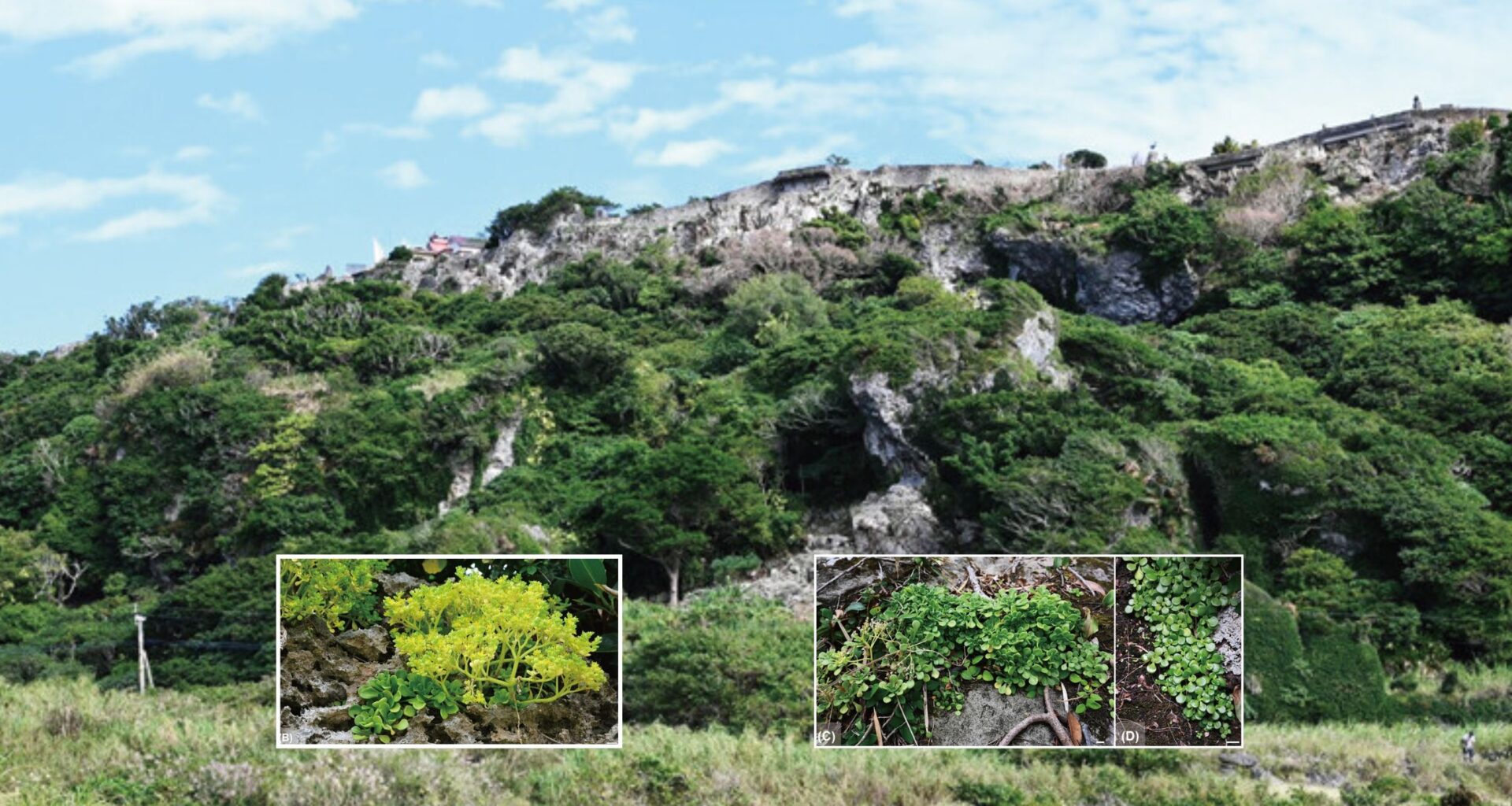
Botanists have confirmed that a small island succulent long treated as a familiar stonecrop has emerged as a distinct species.
The reclassification revises what scientists thought they knew about plant diversity on Japan’s southern islands and reveals how easily uncommon species can hide in plain sight.
How the plant stood out

On scattered cliffs and rocky slopes across a handful of remote islands, Sedum diversiflorum appeared familiar enough to escape notice for decades.
Due to persistent mismatches between its flowers and its assigned name, Takuro Ito at Tohoku University set out to document the plant directly in the field and through historical specimens.
The records showed a consistent pattern of autumn flowering and unusually variable blooms that did not align with any recognized stonecrop species.
The finding established clear boundaries between this plant and its nearest relatives, setting up the need to explain why its form resisted standard classification.
Why stonecrops fool our eyes
Stonecrops store water in fleshy leaves, and changes in sun and water can change their look enough to fool people.
That plastic look makes many Sedum species hard to separate by sight alone, even within a group of about 755 species.
On one island, the researchers flagged a late-fall bloom from October to December that local Sedum formosanum lacks.
Once that timing lined up with other physical clues, the old name stopped making sense for this plant.
Flowers that refuse a number
Counting flower parts usually gives botanists a steady signal, but this species kept breaking the pattern again and again.
Researchers measured 285 flowers from eight plants and found petals ranging from two to six on single individuals.
Those counts revealed unstable merosity, the number of parts in a flower, and the flowers looked mutant for good reason.
Such instability can emerge when two lineages mix, because the plant’s development must resolve conflicting genetic instructions that shape how its flowers form.
DNA tells two histories
Genetic clues pulled the plant in two different directions, hinting at a complicated past rather than a clean family tree.
Some of its DNA aligned with one close relative, while another set pointed to a different one, a split that often appears when plants interbreed long ago and carry forward mixed genetic instructions.
That blended history also shows up in the plant itself, which combines flowering timing from one lineage with color traits from another.
Together, those signals explain why the plant resisted neat classification and lingered under the wrong name for so long.
Where the new species lives
In the wild, the species turns up only in a small chain of southern Japanese islands, where populations are scattered and easy to miss.
Some grow on sun-exposed coastal rock, while others cling to rough slopes shaped by forests and roads.
Pressed specimens collected decades ago suggest the plant once appeared on additional nearby islands, even where living plants are no longer easy to find.
That patchy record reflects how difficult these places are to survey, and how easily a rare species can slip past notice rather than disappear entirely.
When flowers split their roles
In some blooms, this plant acted like females or males, rather than doing both jobs at once.
Researchers observed flowers that formed seeds but no pollen, alongside others that made pollen but lacked seed parts.
Most Sedum flowers carry both sets of organs, so this split hinted at unusual flexibility in development.
The ecological payoff remains unclear so far, and small populations limit what anyone can measure in nature.
Old specimens, new attention
Dried specimens collected decades ago had sat in museums, quietly preserving evidence that the island plant was different.
One voucher from August 1921 showed the plant on Yoron-jima, long before anyone suspected a separate species.
Matching those old samples with living plants sharpened taxonomy, how scientists name and group living things, into a real-world decision.
Each correction also changes maps of biodiversity, and it can redirect conservation work toward places that looked fully cataloged.
A conservation label with teeth
The authors assessed the plant under the Red List Categories and Criteria, a global rulebook for extinction risk used worldwide.
They classified it as “Vulnerable” after estimating fewer than 1,000 mature plants, spread over an area under 8 square miles.
Known populations held under 30 mature plants each, and the islands span about 211 miles from end-to-end.
With so little room to recover, a single road project, storm, or collecting surge could erase a whole population.
What researchers can do next
Future surveys will need access to hard-to-reach sites, especially on uninhabited islands and steep coastal rock faces.
More DNA work across many genes could test whether crossbreeding happened once or kept recurring over generations.
Botanical gardens can also grow backup plants, because living collections protect genetics that tiny wild patches cannot spare.
Clear naming will matter in the long run, since land managers usually act faster when a plant has its own identity.
Reclassifying one stonecrop shows how island isolation and old hybrid history can hide diversity inside what looks familiar.
Protecting the few known populations will require steady fieldwork, careful cultivation, and patience with plants that break the rules.
The study is published in the Nordic Journal of Botany.
—–
Like what you read? Subscribe to our newsletter for engaging articles, exclusive content, and the latest updates.
Check us out on EarthSnap, a free app brought to you by Eric Ralls and Earth.com.
—–