
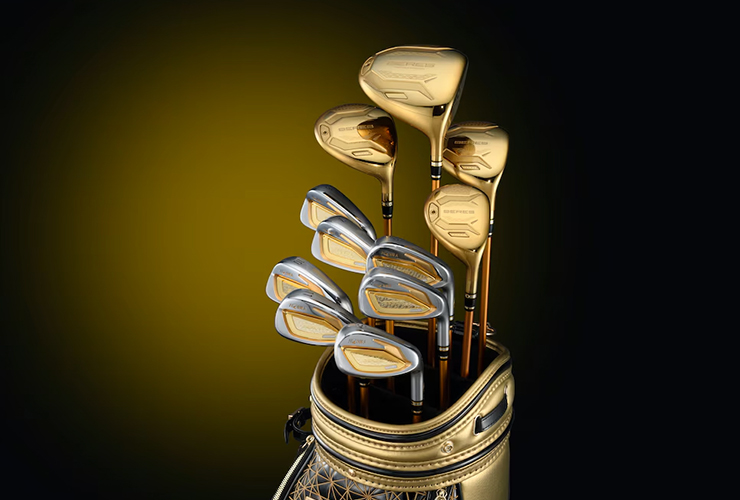
WHAT YOU NEED TO KNOW: The new Honma Beres 10 lineup of driver, fairway woods, hybrids and irons continues the company’s legacy of luxury golf club design that mixes gold accents and traditional Japanese art techniques with equipment technology that involves multiple high-flexing titanium and steel alloy faces, subtle draw-bias and ultralight components. The series again will be offered in three price levels based on the manufacturing complexity, including unique metallic interpretations of classic Japanese glass-cutting techniques and the amount of gold used in each design. Those price points reach $5,000 per club at the 5-Star level, meaning a full set could run more than $65,000 (bag and putter extra), but Honma’s primary Beres 10 5-Star offering is for 10 clubs (driver, fairway wood, two hybrids, four irons, wedge and bag) for just over $45,000.
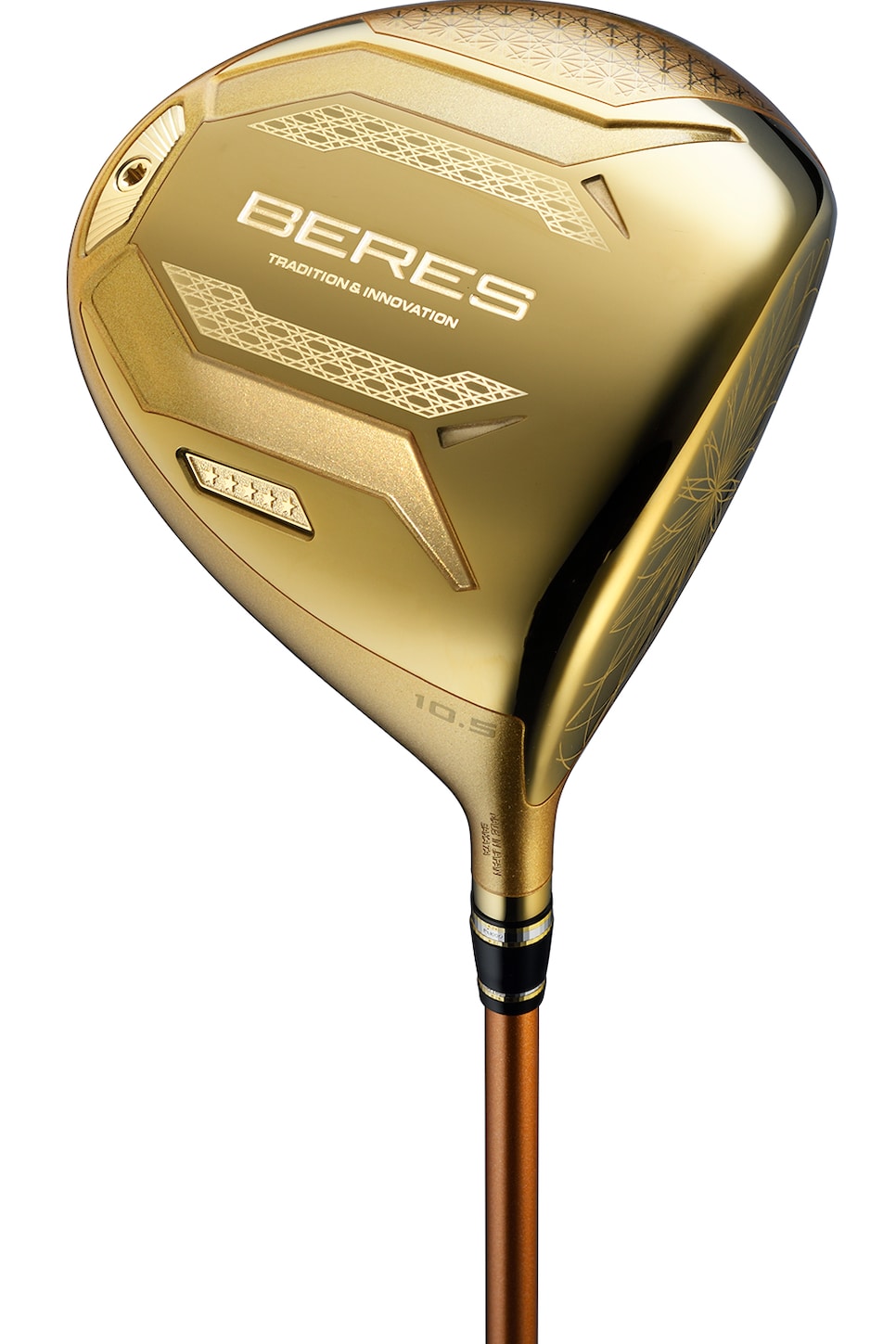
PRICE: Driver: 9, 10.5, 11.5 degrees (3-star: $1,200, 4-star: $2,000, 5-star: $5,000). Fairway wood: 15, 18, 21 degrees (3-Star $800, 4-Star: $1,500, 5-star: $5,000. Hybrid: 19, 22, 25, 28, 30 degrees (3-star: $600, 4-star: $1,400, 5 Star: $5,000). Irons: 5-11 iron, AW, SW; 7-iron: 27 degrees (3-star: $550 per iron, 4 Star: $1,350 per iron; 5 Star: $5,000 per iron.)
1. New speed for the long clubs. The Beres 10 drivers, fairway woods and hybrids feature new variable thickness designs and thin, high-strength alloys aimed at creating more flex across a wider area of the face for higher ball speeds. On the driver, the cup face wraps around the crown, sole and skirt for a broader range of the highest ball speeds. The HMT titanium alloy in the face allows for 14 different regions of four different thicknesses, getting as thin as two millimetres.
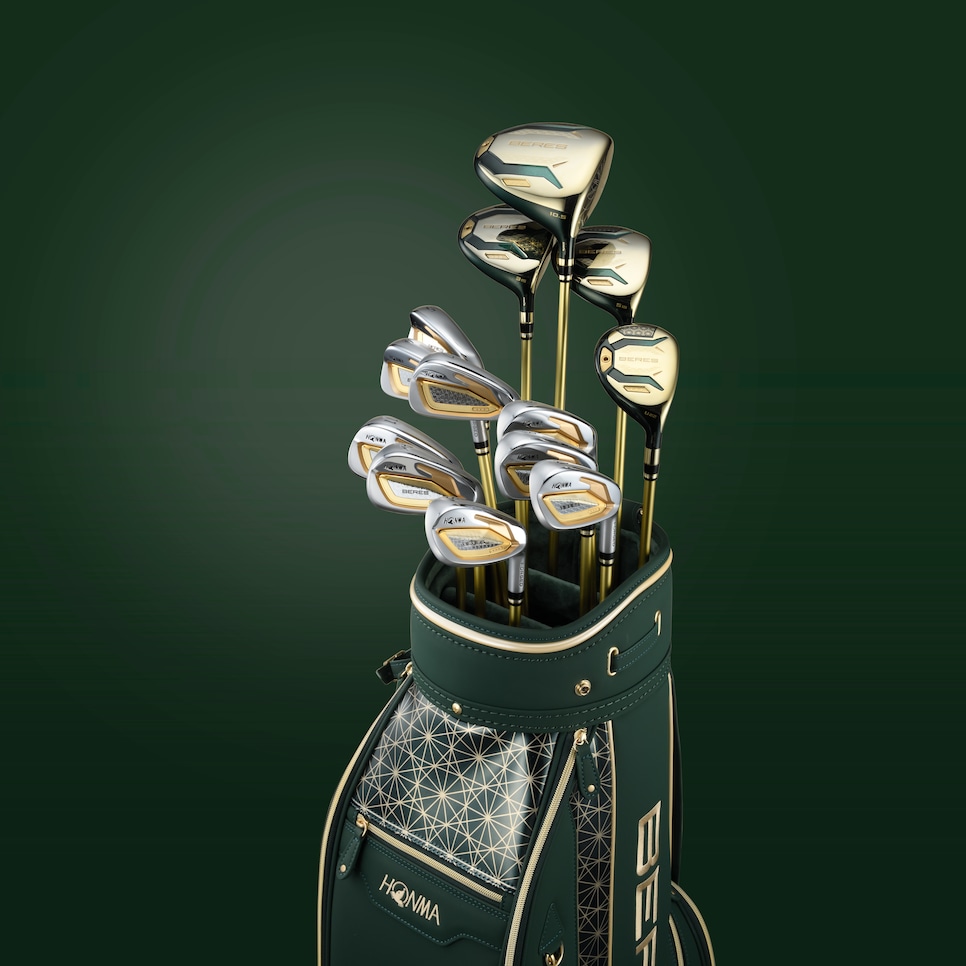
Beres 10, 3-Star
On both the Beres 10 fairway woods and hybrids, a high-strength 465 steel is used in the face, which is a full cup face on the fairway woods and face insert on the hybrids. The fairway woods and hybrids also both feature internal weight pads toward the front to help to better align the centre of gravity’s projection to the centre of the face for easier and more efficient launch.
Like the driver, which features a 9-gram rear perimeter sole weight, the fairway woods and hybrids also incorporate rear sole weights for extra stability and higher launch. Both use a 10-gram sole weight in the larger frame designs, which include a 185cc 3-wood and a full range of hybrids up to a 7-hybrid with each at 136cc.

2. New heights for approach shots. Honma Beres clubs have been aimed at helping moderate speed golfers generate more distance and height and the Beres 10 irons take on that challenge with a new face design and new shaping to promote easier launch. The irons utilise a variable thickness L-shaped face insert that wraps around the leading edge and sole. That design and the variable thickness pattern that’s focused on the lower half of the face are geared to provide more flex for impacts lower on the face, which is where most shots are hit. The face is made from a high-strength AM355P steel alloy.
Another key change from past designs that is aimed at producing higher flight is a reshaping of the body of the iron. By thinning the taper of the top line and top half of the iron and pushing more mass toward the bottom half of the club, the CG is 1 percent lower and 2 percent farther back to provide higher launch and more stability.
A special proprietary ARMRQ Flight shaft also aids in higher launch. The composite design weaves two axes of aluminium fibre with three layers of carbon, including a mesh of Torayca 1100G. The design aims to strengthen the butt region of the shaft for more stability and control with the lightest weight (as little as 45 grams, or barely the weight of a golf ball.
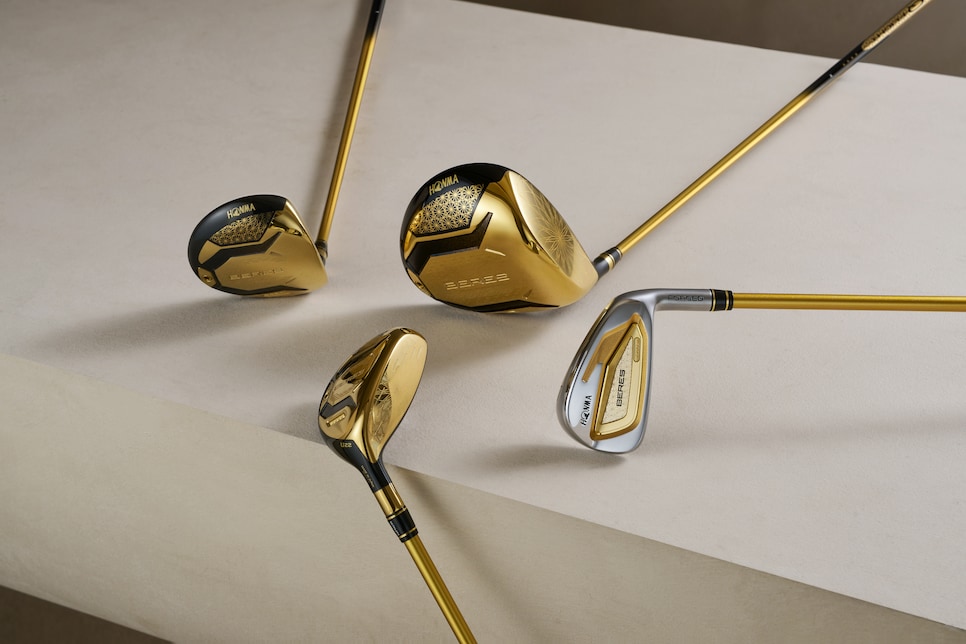
Beres 10, 4-Star
3. Old art for a new look. Honma Beres clubs place an almost equal emphasis on the artistry of the craftsman that are behind the company’s designs. While the majority of that artistry lies in the subtle edges and curves of the designs, which often are hand-carved and then scanned and converted to computer-assisted design templates, that artistry also extends to the aesthetics that decorate the crowns and soles of the woods and the back cavities on the irons. In the Beres 10 models, the fine painted lines reflect an homage to the traditional Japanese art of finely cut glass, known as Edo Kiriko and Kiko-Tsunagi. Developed during the Edo shogunate period from the 1830s, the style is reflected in the crown details on the Beres 10 woods and cavity on the irons, which use a paint coating technique that features subtle hue highlights as the angle of the sun changes. Further enhancing the luxe look, at the 5-Star level, the entire head and crown are coated in 14-karat gold.
Follow Golf Digest Middle East on social media
Main Image: Honma