
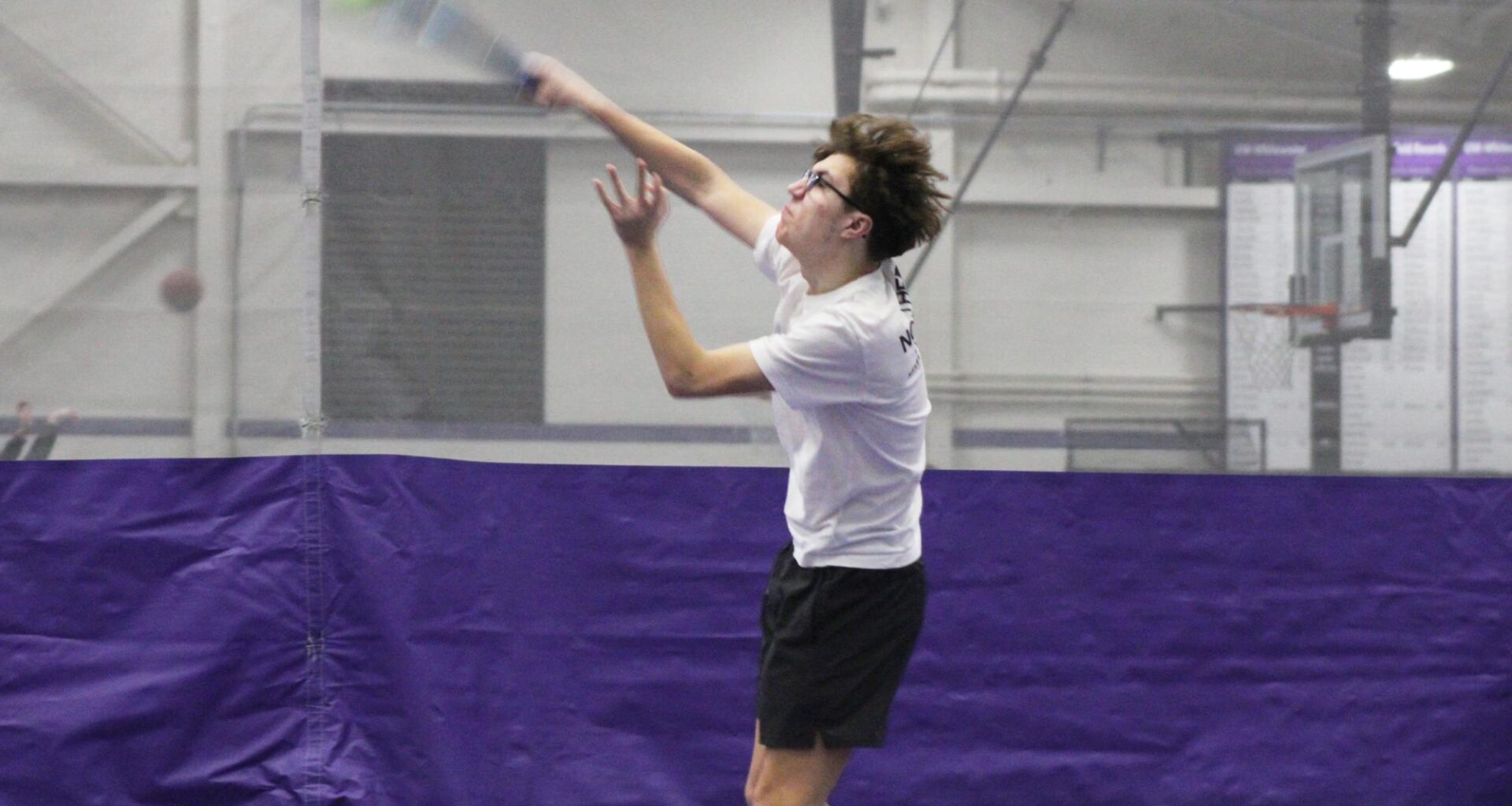
As the day winds down, club tennis players trade lecture halls for courts and group chats for rushed huddles around the net. Practices are built around both consistency and active communication, filled with players pushing one another through hard drills and plays. What brings them back each week is simple: competition, connection and a shared love for tennis. But within the tennis club, those ideas rarely exist on their own.
That overlap was on full display during a Feb. 6-8 tournament weekend in Madison, Wisconsin, where the club faced nationally-competitive teams. For returning players, the trip represented a fun, familiar rhythm of traveling, competing and connecting away from campus.
“I always love going to Madison,” tennis club president Kyle Helmenstine said. “We stay at my house back in Sun Prairie and these overnight tournaments always give us a good chance to know the members of the club.”
For newer members, it marked something different. It served as an introduction to the broader club tennis world and the pressure that comes with it. For freshmen like Adam Teske, the weekend carried both excitement and nerves.
“Focusing on the upcoming tournament in Madison, I would say I am a little nervous to play but also very excited to play against other clubs across the country,” Teske said.
Despite those nerves, when looking back, Teske measures his experience with only positive things to say.
“The most rewarding moment this year so far is all the great friendships I have made on the court at practices and even at tournaments,” Teske said.
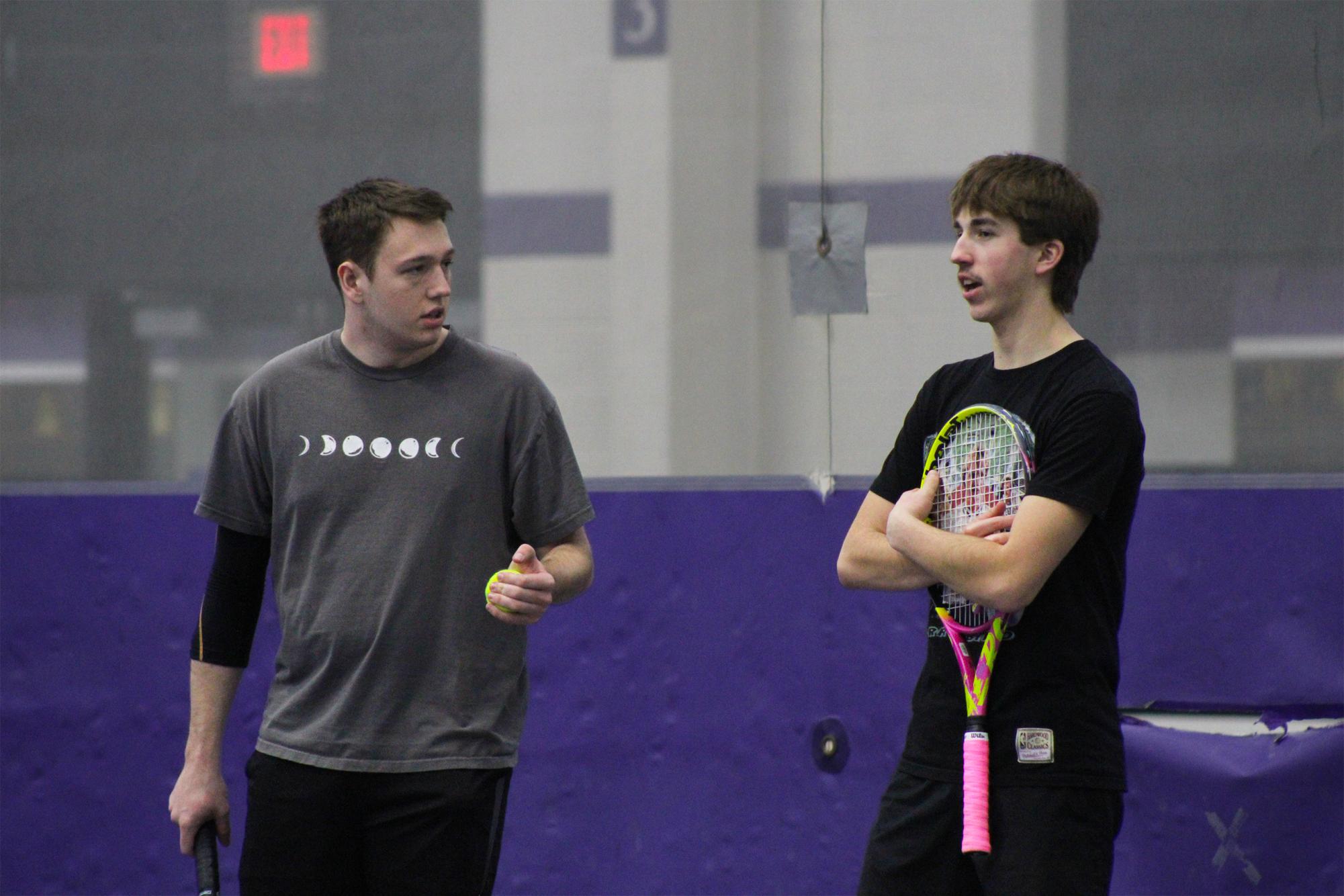 Two club tennis members strategize a drill during team practice Feb. 4. (Chase Keller)
In preparation for an event like this, everyone has their own tips on staying focused, especially in high-pressure moments.
“I just tell myself to be clearheaded and to leave it all on the court. Give it all I got,” Helmenstine said.
For some, focus comes in fleeting moments, when instinct takes over and the outside noise fades.
“I feel the most locked in when I am in the middle of a point,” Seaver said. “It’s like my mind clears up and my body just moves to where it needs to be.”
Maintaining that clarity isn’t always easy. The sport’s obvious competitive nature can heighten frustration just as quickly as it fuels motivation, forcing players to constantly walk a fine line between ambition and fun.
“I often find myself getting frustrated with myself for not playing to where I want to be,” Seaver said. “This, I’ve found, normally leads to more mistakes and gets me more frustrated, and it repeats. I remind myself that I am playing the sport because I find it fun.”
The competition itself proved to be demanding as expected, but the team measures success beyond just these scores. Tournaments like Madison highlight what personal growth players are looking for and how that translates into overall team development. There’s a lot to be learned about yourself as an individual athlete and as a player on a team during these competitions. Especially when they are designed at a high intensity.
“I am aiming to change most of my game,” Seaver said. “I believe that this will make me worse in the short term, but once I get used to the changes, I will be much more improved. One specific thing I want to change is my service motion. I want to make it more fluid, so I have more power.”
That same long-term goal thinking extends into leadership within the club. Helmenstine views organization and structure as key to helping the team beyond just the spring season.
“My goals for the club as a whole this semester is to make sure I leave it in a way to where it’s able to prosper with the incoming leadership,” Helmenstine said. “My personal goal kind of runs hand-in-hand with that. Just to get some general organization of practice. Sometimes it feels all over the place.”
Reflection is crucial in any type of competitive environment, especially when you’ve been doing it for years. As you grow up, your love for the sport also shifts, letting you redefine why you’re even doing it.
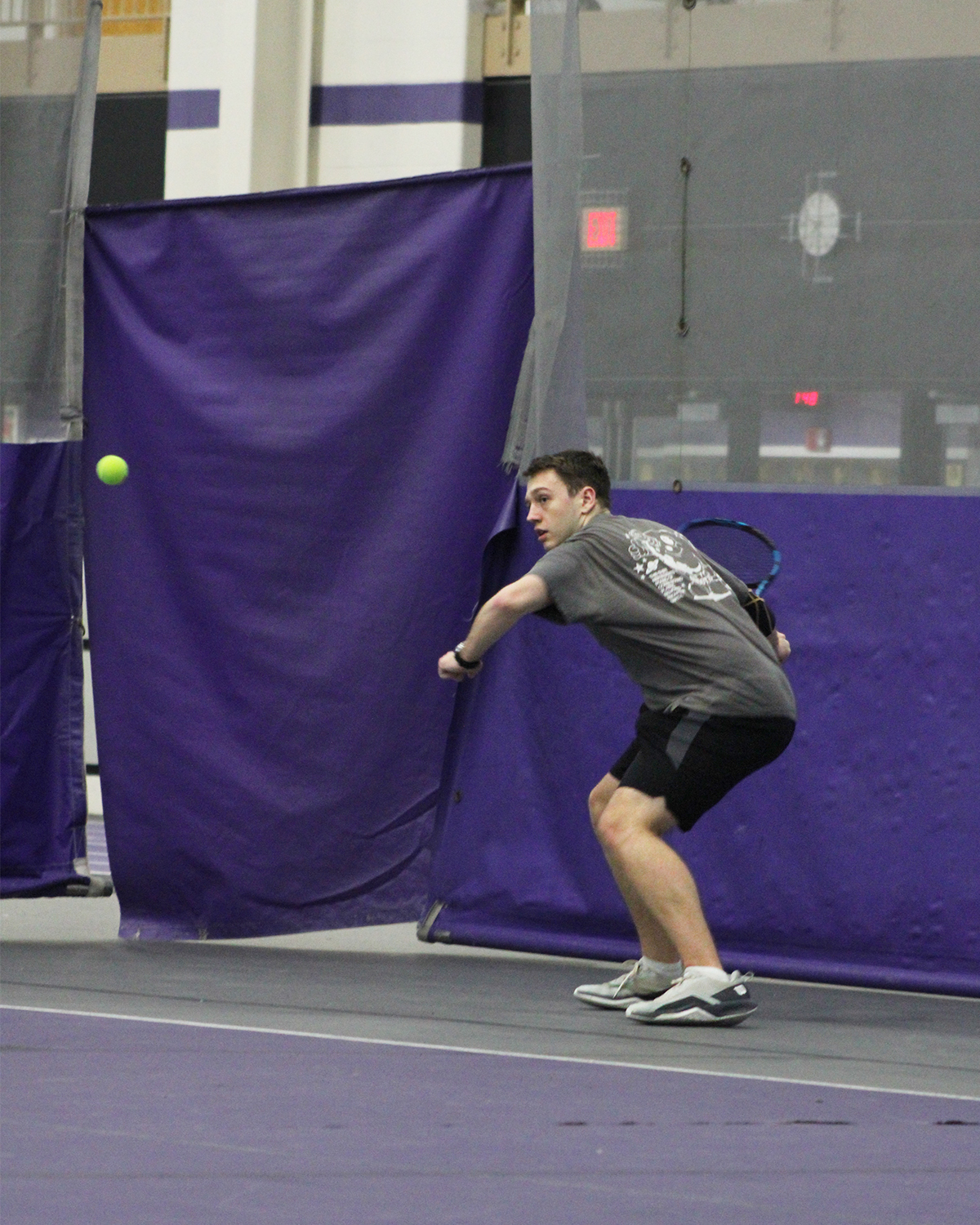 A club tennis member winds up to return a ball during a team practice Feb. 4. (Chase Keller)
“My dad started teaching me when I was a little kid,” Helmentstine said. “But my relationship is much different now. I appreciate it way more now that I run practices and see how much work it takes to make tournaments happen.”
For Seaver, that relationship with tennis has evolved even more dramatically since he first picked up a racket. As he grew to despise soccer, the sport his dad put him in, he needed a new option to switch to. Since his mom played tennis in high school, he fell back on that. However, his love for tennis wasn’t immediate either.
“My relationship now with tennis is far different from when I started,” Seaver said. “I remember that when I started, I would sit to the side during practices because I didn’t want to play and get tired. Now I’m frantically looking to find people who are willing to play at any time that I’m available.”
While competition may drive the team, the atmosphere is much softer than that. When you form a group that’s bonded over something they’re passionate about, it becomes less of a workout or practice and starts to take form as a fun hangout.
“Just seeing everyone smile, it is rewarding to know that I have found a group of people that enjoy tennis just as much as I do,” Seaver said.