
Between Monday’s announcement of an India-US trade deal and Saturday’s joint statement with finer details, a big question, worth $500 billion, remained. While US tariffs on Indian produce were reduced from 50 per cent to 18 per cent, it was not clear what India would import from the United States. However, that has now been answered.
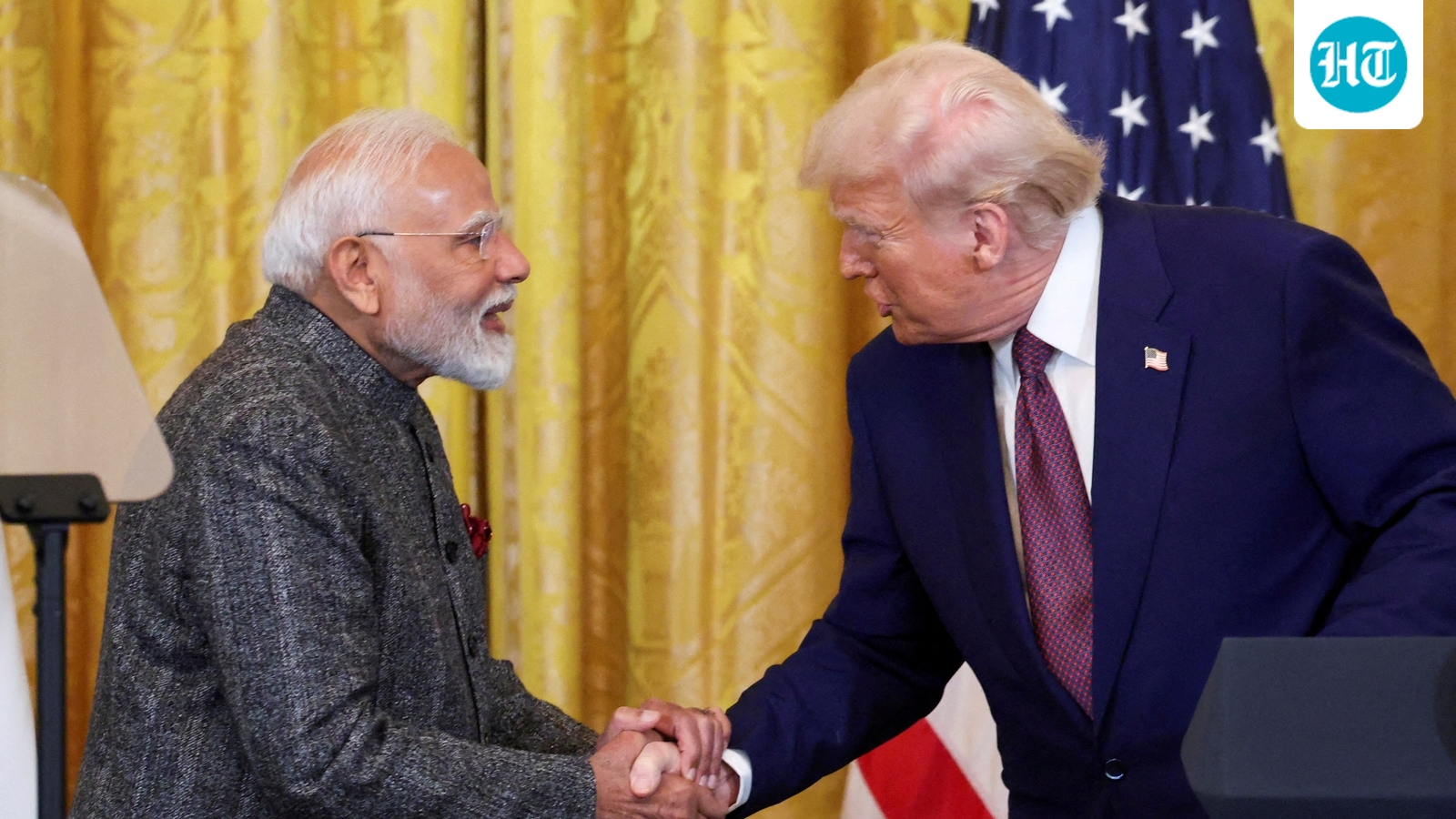
US President Donald Trump and Prime Minister Narendra Modi announced the India-US trade deal on Monday. (Reuters)
A detailed framework for an interim trade deal was released in a joint statement on Saturday, confirming reduced US tariffs, both countries’ commitment to zero duties on select products, market-opening measures, and an overall deeper economic relationship.
ALSO READ | What does the trade deal with US mean for India? Key points for Delhi in the details so far
The trade deal also gives India a competitive edge over other countries, such as China, Vietnam, Indonesia, Bangladesh and Pakistan, all of which have higher tariffs than New Delhi.
China’s products carry tariffs of 33 per cent, Vietnam and Bangladesh 20 per cent, and Indonesia and Pakistan at 19 per cent. Now, only India has an 18 per cent tariff on its exports.
Commerce minister Piyush Goyal on Saturday called it a “historic” framework and a “very fair, equitable and balanced agreement”.
He said that a huge potential will open up for Indian exports in the world’s largest economy, providing opportunities for MSMEs, farmers, fishermen, youth, women, and skilled workers in India.
What will India import?
In return for the relief India is set to receive from the US under the trade agreement, New Delhi has committed to purchasing $500 billion in American goods over five years.
According to the joint statement, India will purchase energy products, aircraft and aircraft parts, precious metals, technology products such as graphics processing units (GPUs) used in artificial intelligence (AI) applications and data centres, and coking coal.
India “intends to purchase” these goods, with the US taking the commitment “with its best endeavour to meet the obligation”, said the joint statement.
ALSO READ | HT Decodes: India-US joint statement on trade deal
Commerce ministry officials noted that while most of these are already imported by India, imports of such products are currently worth $300 billion annually, with imports growing 8 to 10 per cent each year, HT reported earlier.
They said that the demand for these products, however, could jump to $2 trillion over the next years, adding that such a thing would make it a “win-win situation”.
India will import products that are not grown sufficiently in the country, Goyal said, adding that there will also be zero US tariffs on a wide range of agricultural products, benefiting domestic growers.
These products include Indian spices, tea, coffee, copra, areca, cashew, chestnuts, specified fruits and vegetables, avocadoes, bananas, guava, mango, papaya and pineapples, the minister said.
How India benefits from US deal?
The reduced tariffs, especially, mean a lot for a range of labour-intensive sectors, such as textiles and apparel, leather and footwear, plastics and rubber. These sectors were still trying to wrap their heads around the 50 per cent cumulative tariffs when the trade pact announcement came through. The 32 percentage-point drop has restored the competitiveness of these sectors against rivals in Bangladesh, China and Vietnam in the US market.
The trade deal also allows zero duties on Indian exports like gems and diamonds, generic pharmaceuticals, and aircraft parts as soon as March this year, when the agreement will be officially signed.
ALSO READ | ‘Big thanks’: PM Modi’s first remarks after Trump announces India-US trade deal
India will also get opportunities for its MSMEs, farmers, fishermen, the youth, women, and the talented and skilled people of the country.
Additionally, New Delhi will get relief under Section 232 on aircraft parts, a preferential tariff quote on auto parts, and negotiated outcomes on generic pharmaceuticals, resulting in tangible export gains in these sectors, Goyal said.
He further stated that the framework will also present massive opportunities for Indian gem and jewellery, machinery parts, toys, leather and footwear, home decor, smartphones and several other agricultural items.
Goyal affirmed that the framework also “fully protected” Indian farmers through “carefully crafted exceptions”, shielding sensitive agricultural and dairy products from butter.
‘Mission 500’
The light that the joint statement shed on the trade agreement shows the work being done towards the ‘Mission 500’ goal, which was declared by Prime Minister Narendra Modi and US President Donald Trump after the former’s visit to the United States on February 13, 2025.
‘Mission 500’ is aiming to more than double total bilateral trade to $500 by 2030.
ALSO READ | India will safeguard farmers’ interests; ‘no concessions’ on US soy, dairy: Piyush Goyal
“We have put in motion” our goal of achieving $500 billion bilateral trade annually, Goyal affirmed.
Further, India and the US also added a safeguard for themselves in the statement, protecting their countries against unilateral decisions on trade matters.
“In the event of any changes to the agreed-upon tariffs of either country, the United States and India agree that the other country may modify its commitments,” ensuring both sides can respond to protect their interests.
(With inputs from Rajeev Jayaswal, Zia Haq)