
Children in families who participate in a home visitation program in Maskwacîs are six times more likely to get their childhood vaccines than others in the First Nations community, according to new research from the University of Alberta.
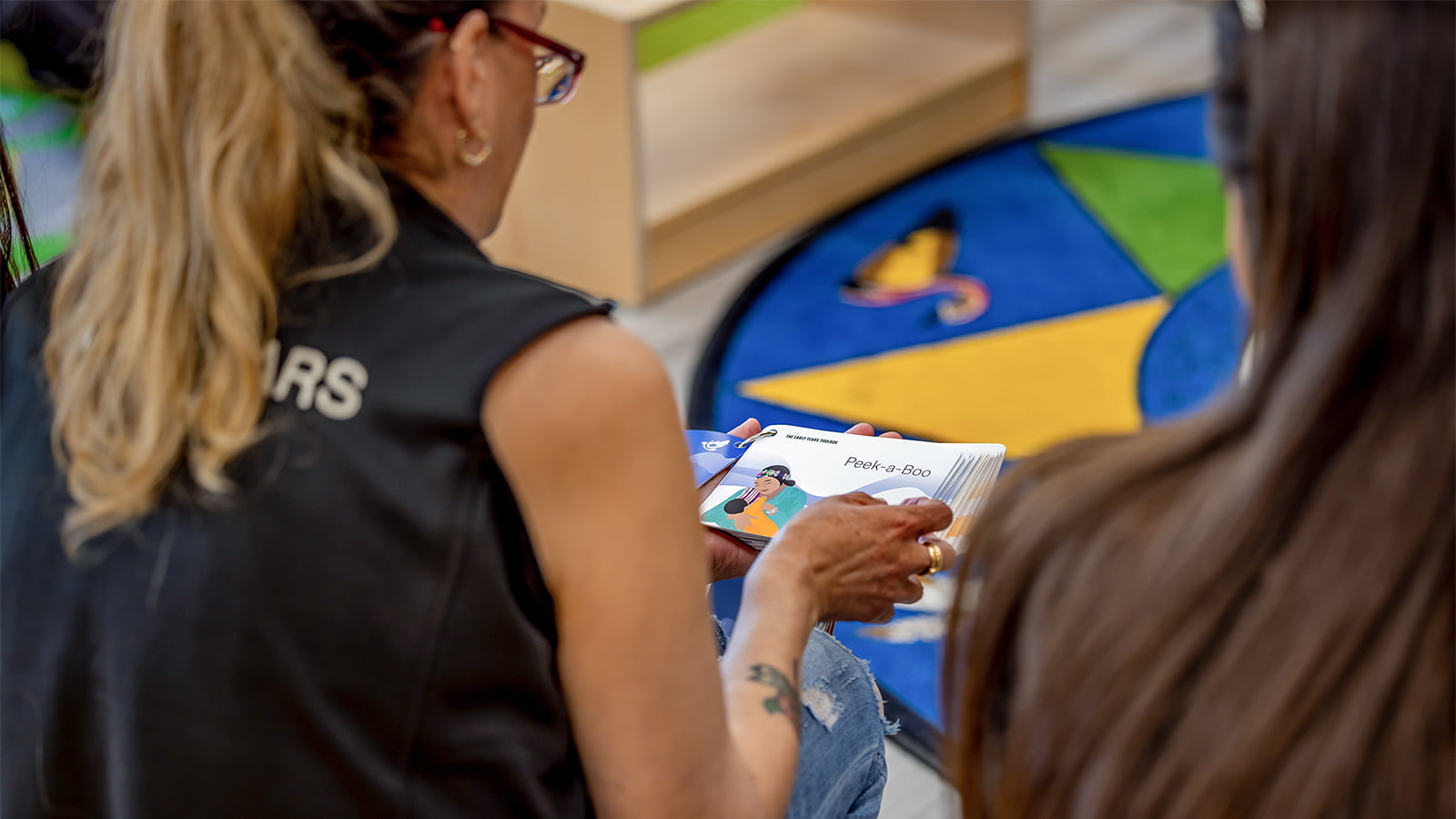
The Early Years is a community-led prenatal to preschool program aimed at strengthening maternal and family wellness, school readiness and cultural pride. Trained home visitors meet with families of young children weekly, using conversation cards on nearly 200 topics — including immunization — to listen, offer supportive guidance and connect them with services.
The improved vaccination rates are an unexpected but very tangible benefit of the program, says registered nurse Charlene Rattlesnake, family and cultural co-ordinator with The Early Years and co-investigator on the research project.
“It was not really a surprise,” says Rattlesnake. “It just proves how relationship building between our home visitors and parents is the basis for all of the benefits of Early Years.”
The researchers report that 45 per cent of children in the Early Years program had all of their scheduled vaccines between the ages of two months and 18 months, compared with eight per cent for the broader Maskwacîs community.
The research team interviewed 23 parents, surveyed 18 visitors and health-care staff members, and reviewed notes from more than 800 home visits, identifying how Early Years is helping families overcome key barriers to immunization.
Families faced a range of system-level and logistical barriers. For example, some parents had limited access to a cellphone or an internet connection to make the appointment. Others needed transportation or child care for siblings to get to the clinic. Others had received no information or only misinformation about immunization, and some were cautious to engage with the health-care system because of past experiences of racism.
The home visitors are members of the community, often parents themselves, with no formal health-care training but meaningful lived experience along with a drive to help.
“I have to emphasize how skilled the visitors are and how committed,” says principal investigator Melissa Tremblay, a Métis scholar and associate professor of educational psychology who leads the CARE Lab. “You can’t do this work as a visitor unless you care so much about your community and about children and families.”
“The home visitors use a card about immunizations as a conversation starter: ‘Hey, are you interested in immunization? Can I get you more information? Can we figure out together if your child is up to date?’” explains Rattlesnake. “We never go into a family visit with the attitude of ‘I’m the one who knows everything.’ And we never push.”
“In many health-care settings, parents might be provided with a pamphlet about vaccinations, or a provider might briefly touch on vaccinations in a very time-constrained environment,” explains first author Jessica Haight, a PhD candidate in the School of Public Health.
“In this setting, parents have built relationships already and they’re able to have these conversations at home, take their time with it, with someone they trust and who has had shared experiences.”
The Early Years also provides cultural events, a preschool program for children aged two to four, and practical support such as transportation to appointments.
The program’s underlying principle is that parents are a child’s first, best and most important teachers.
“What we see is that this culturally grounded, relationship-based and individualized support is what is needed” to support both vaccination and broader child development, says Haight.
The Early Years program began as a pilot project in 2018 in Maskwacîs in partnership with the Martin Family Initiative.Today, MFI Early Years works with Indigenous-led organizations across Canada to co-develop programs that are grounded in community priorities and ways of knowing and offer relationship-based support to young families. Early Years now serves Ermineskin Cree Nation families through Kanawemahwasowin Kamik Inc.
Tremblay continues her research on child development within Indigenous communities. She is partnering with the Maskwacîs Early Years program and early childhood educators to develop new ways of understanding children’s health and developmental progress from Indigenous perspectives, since most assessment tools were not developed by and for Indigenous families.
Melissa Tremblay’s research is funded by the Canadian Institutes of Health Research. This research project received funding from the Stollery Children’s Hospital Foundation through the Women and Children’s Health Research Institute at the U of A.