
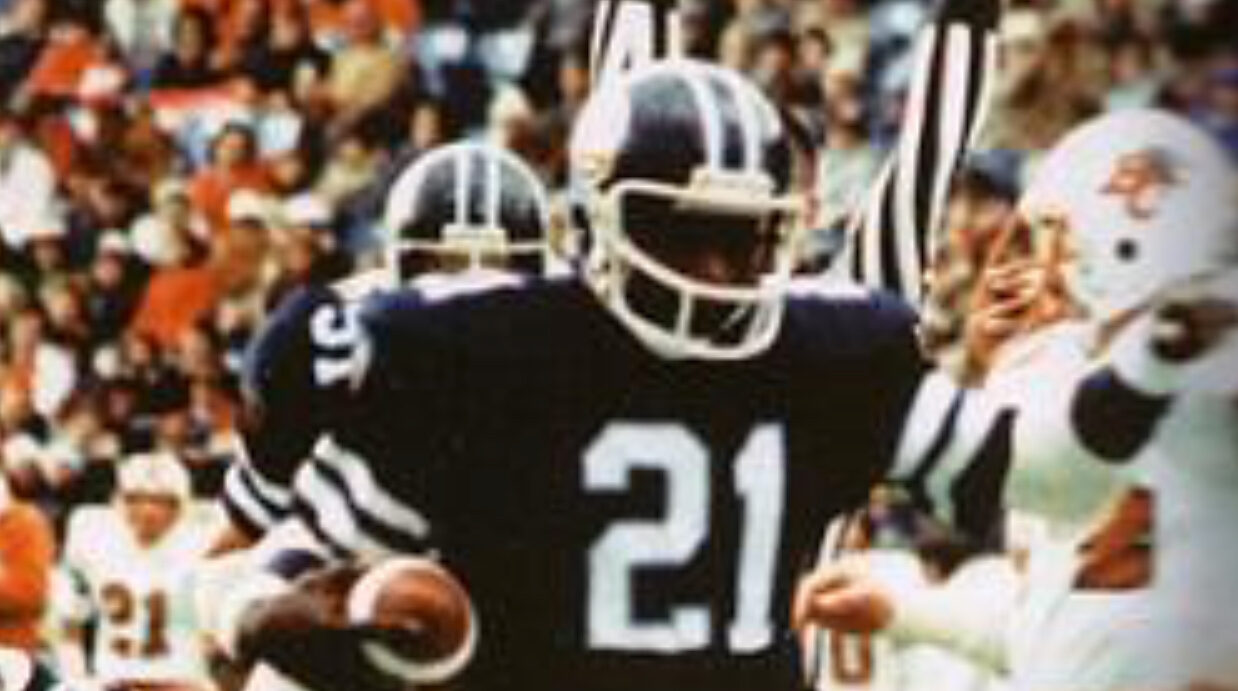
In the modern history of the Toronto Argonauts, two signings were more jaw dropping than any other; Raghib “Rocket” Ismail and Terry “Sweet Feet” Metcalf.
Ismail, the electrifying receiver/returner from Notre Dame, was a superstar at the college level but had yet to prove himself in the pros when he shockingly signed with the Argos. Conversely, Metcalf was a bona fide NFL star; a three-time Pro Bowler, an All-Pro, and the man who set the NFL single-season record for all-purpose yards in a season.
But after a Pro Bowl season in 1977, Metcalf and the St. Louis Cardinals were at a contractual impasse, and he had played out his option.
“I was trying to go to the Baltimore Colts, I also wanted to go to the Oakland Raiders,” Metcalf recalled for Argonauts.ca in a telephone conversation from his home in Seattle. “But every team that my lawyer tried to get a deal with, they all quoted the same price.”
The lack of a bidding war for the star was frustrating. He knew he should have been in demand by virtually every NFL team.
“From my understanding, I was the number one free agent coming out that year,” he explained. “But what they were offering me was not sufficient for what I did and what I was doing. So, I was actually going to sit out and wait, then my lawyer called me and told me he had talked to Toronto, and Toronto wanted to give us what we wanted. That’s how it started.”
Metcalf was a remarkable combination of speed and agility. He could catch the ball, run through contact, and was an exceptional returner; all skills that would translate beautifully to the wide field of the CFL.
But most importantly, the Argos paid him what he was worth.
“I was getting to a point where there were people getting paid more money than I was and doing half of what I did. I didn’t think that was fair.”
The move to Canada was more about family and less about ego. At some point Metcalf decided that while the NFL was great, the business side of the sport made moving north a relatively easy decision.
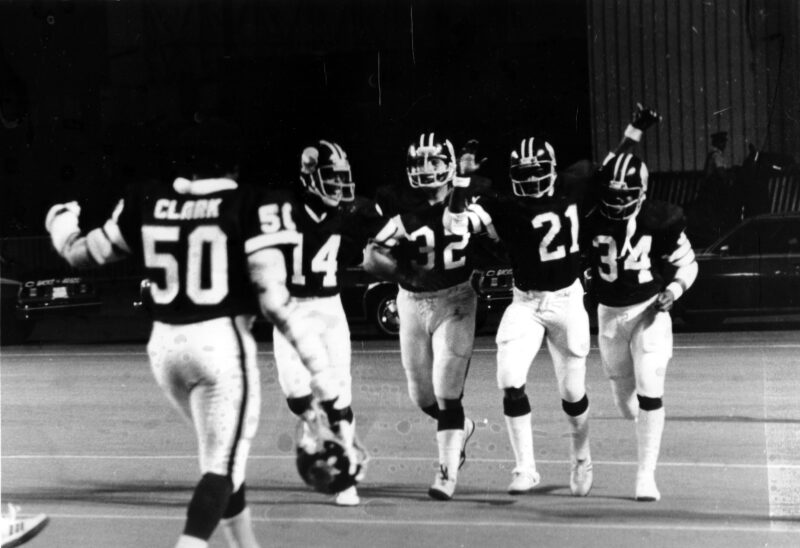
“I accomplished a lot in the NFL; statistically, accolades, things of that nature,” said the product of Long Beach State. “The only things I hadn’t done at that point was win a league MVP (he finished second in 1974 and third in ’75) and get a Super Bowl ring, so those were missing from my resume. But I was thinking of my family and what I could do financially to help them. That was one of the big motivators for me coming to Toronto.”
A New York Times story about his move north reported the star was making around $80,000 per year with St. Louis. The Argo deal was for a reported $100,000 guaranteed with added incentives to potentially make another $150,000 per year based on his performance. The story added that he was asking between $200,000 and $300,000 per year from NFL teams.
For perspective, the average NFL salary in 1978 was between $55-60,000, with the league having the lowest average salary of any of the “big four” sports.
So, it was off to Toronto, which surprisingly felt like home.
“I had never been to the Eastern part of Canada,” said the Pacific northwesterner. “It reminded me a lot of Seattle because the city is on the water. Seattle had the Space Needle; Toronto had the CN Tower which was twice as tall. The city itself was enticing; it was clean, I had no bad feelings about moving to that city. I just unfortunately had to go through four coaches in three years.”
Oh ya, that.
Metcalf was to become a great player on, shall we politely say, a Grey Cup non-contender. He was to be the saviour, a player whose talents were perfect for the bigger field and more wide-open game, especially in that era.
But the Argos weren’t good and were struggling to find the right combination of athletes, or more honestly, just better athletes. That didn’t help Terry Metcalf play like, well, Terry Metcalf.
“You know how it works; they bring in American players but if they can’t cut it, they’re gone,” Metcalf explained. “In my first year it wasn’t so much the calibre that I was playing against that I was worried about; it was more or less the team being competitive. There was a 33-man roster, and we went through 133 players my first year. I don’t think I had the same offensive line for two weeks or longer.”
The running back wasn’t throwing his teammates under the bus, he just admitted the obvious, the Argos just didn’t have enough talent, nor enough talented Canadians.
“We had some good ballplayers up there,” he noted. “It just wasn’t consistent enough to establish something. We weren’t solid enough at that time and that may have been the coaching, not being able to get the guys all thinking the same way.”
In 1978 the Argos had Leo Cahill as head coach for nine games (3-6) before he was fired and replaced by Bud Riley, who went 1-6 the rest of the way. After that it was Forrest Gregg in 1980, then Willie Wood for 1981.
It was one of the darkest eras in Argo history, despite some pretty good frontline talent.
“The overall organization wasn’t what I was expecting it to be, I was expecting it to be a lot better,” said Metcalf. “I loved the team and loved being there, I just wish we were able to solidify the coaching staff and the roster. We had some good athletes: Chuck Ealey was there, Peter Muller was there, Bruce Smith was there. We had some pieces, we just didn’t…for me, a coach has got to be able to put the pieces together.”
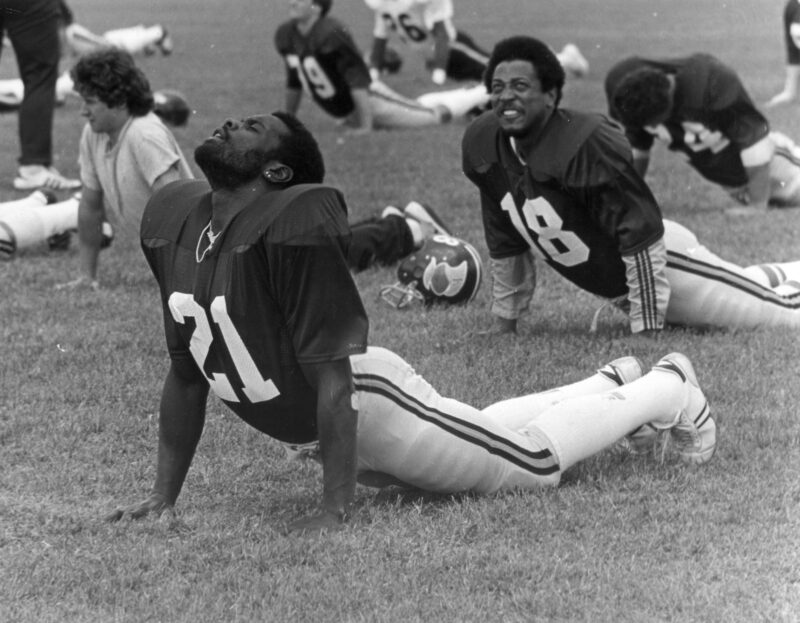
It didn’t help that the season started off on a sour note for the CFL newbie.
“I was a workaholic,” he explained. “I was running a mile before each practice, two-a-days, then some guy went at my knee in training camp and that sat me out for a couple of weeks. That put a damper on my roll because I was ready to go. I don’t know if I ever regrouped from that. The knee was okay, but the mental state of being ready like I want to be ready. In St. Louis I used to run 10 miles a day and play basketball twice a day, lift weights once or twice a day. I was a workaholic.”
Despite the injury and the less-than-ideal roster, Metcalf didn’t totally disappoint. In his three years he racked up over 3,100 yards from scrimmage, adding some spot punt returning in his first couple of years.
It was still short of the lofty and likely unfair expectations most had when he signed with the Double Blue.
The final two seasons were led by Gregg and Wood, former teammates with Vince Lombardi’s Packers, reunited by their selections to the Pro Football Hall of Fame. But while the pair achieved its highest goals in the NFL, their CFL careers were forgettable; Gregg was 5-11 in one season as a head coach, Wood 6-20 in just over a year and a half.
Metcalf was disappointed that they didn’t achieve more, but he came to realize why they didn’t. Argonauts.ca asked him specifically about Gregg and whether the player was surprised that success didn’t come the coach’s way.
“Yes, it did, but I don’t think he knew the game as well as he knew the American game. It is different. I’m not saying it was so different, you’d have to take your time to really learn the game and learn the intricacies of the game, and I don’t think Forrest had enough time to do that.”
He continued by talking about Gregg’s successor, Wood.
“I think it’s the same for him. It’s one thing to come in with your philosophy, but your philosophy has to fit this game because it’s a different game. It’s different enough that it impacts how you approach the game and how you gameplan and I think that’s what was lacking. It’s not a put down, it’s just a reality. I’m thinking about that now, at the time I was thinking about why can’t y’all coach? (laughs)”
After his third season with the Argos, it was back to the NFL for a season with Washington. Joe Gibbs – who was the running backs coach in St. Louis for all four of Metcalf’s years there – was named the head coach.
After that season Metcalf took the cleats off his sweet feet for good.
He was able to extend his football career vicariously through his son. Eric played in the NFL for over a decade, also as a running back/returner, also wearing #21, and just like his dad, was named to three Pro Bowls.
Terry earned a doctorate in theology, but his main post-football career has been working with kids. After retiring, he stayed in the D.C. area and worked with “Super Teams,” a rather remarkable drug prevention program. After moving back to Seattle in 1990 he became a teacher and a high-school football coach.
Metcalf is now 74 and continues to teach kindergarten in Seattle, noting “There’s the one thing I don’t do, I don’t do recess (laughs).”
His signing made such an impact in Toronto that when the team celebrated its 150th anniversary in 2023, his arrival ranked as the 74th most memorable moment in franchise history.
The last word went to the man himself.
“The only thing about Toronto, I wish my time there was longer and I wish my time was more successful. It’s a very beautiful city and I wouldn’t have minded retiring there.”