
Not having best-on-best competition at the Olympics for two cycles was a blow to all hockey fans. But for a specific crew of Canadian hockey players, it was a real gut punch.
It’s very easy to glean, based on how they react upon being named to a national team, that representing their country is hugely meaningful for players. The unfortunate counter to that is losing your best chance to do so just because your career peak coincided with the 2018 and/or 2022 Olympic Winter Games, when NHLers didn’t participate.
As excitement builds toward the start of the men’s tournament in Italy, there is surely a group of Canadian NHLers who will be tuned in from warm locales thinking, “I should have had my turn to do this.”
The goal here is to identify a bunch of guys who have the biggest claim to that sentiment. Being part of any Canadian Olympic team in the past — even as an extra forward or third goalie — makes you ineligible for this list.
To be clear, we’re not talking about snubs for the 2026 squad. As disappointing as it is for Connor Bedard not to get his chance this time out, he’ll surely be there in the future.
This is about recognizing Canadian players who, had there been Olympics with NHLers in 2018 or ’22, would have stood a great chance to make one or both of those squads. At this point, though, they’re either retired or at a juncture in their career where — especially if you’re trying to crack Team Canada — the Olympic dream has passed them by.
With that in mind, let’s get to some names.
To be honest, Stamkos’ situation doesn’t truly capture the spirit of what we’re after here, but it’s worth addressing and clarifying that out of the chute. Stamkos would have been a go-to player on the 2014 team for the Sochi Games had he not broken his leg in November of the 2013-14 season. Career timing didn’t deny him an Olympic shot; an ill-timed injury did.
Injuries, of course, remained a storyline during Stamkos’ career and — in 2017-18, when the Olympics were held in South Korea without NHLers — he netted a modest 27 goals on the heels of being limited to just 17 games the season prior. That said, when the Olympic Winter Games were held in China in 2022 without NHLers, Stamkos had a career-high 106-point season in Tampa and surely would have carved out a spot on that roster at age 31.
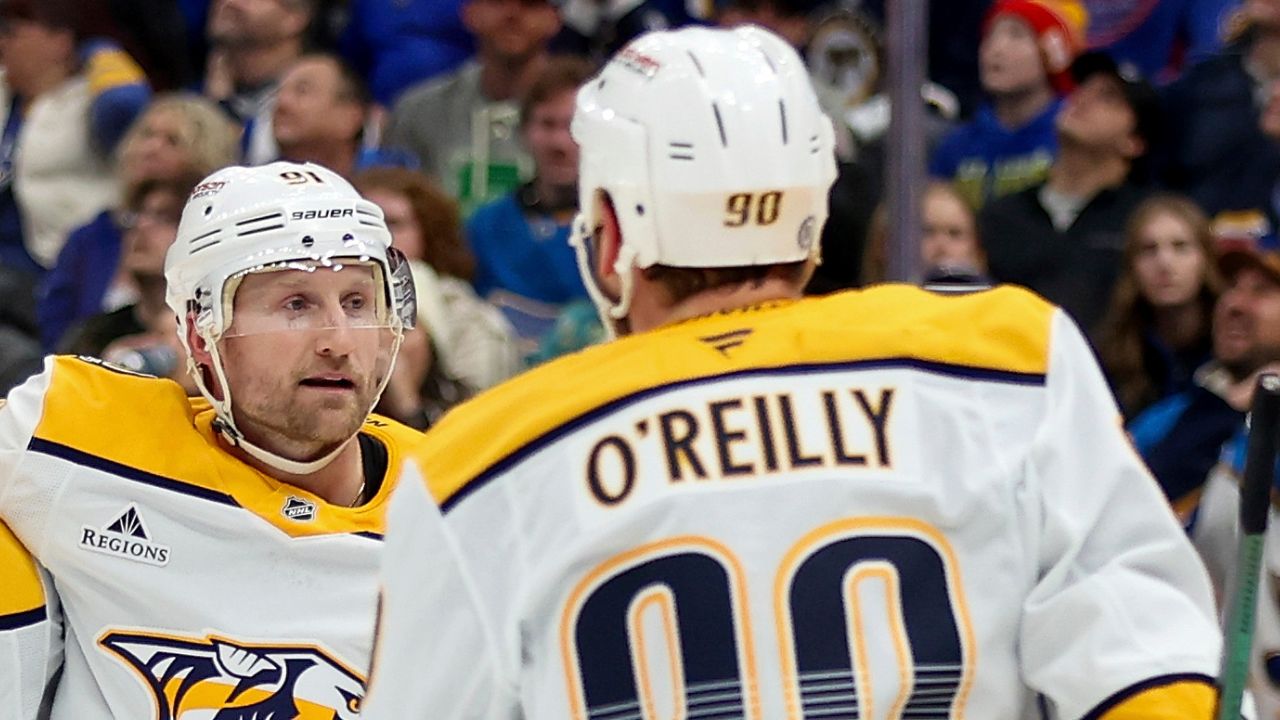
O’Reilly was turning 27 just as the 2018 Winter Olympics were firing up. He’d already built a sparkling reputation for himself as a two-way centre, and you know how much the people who pick national teams love responsible players who can play a defensive role on a roster packed with superstars. Sixteen months after the PyeongChang Games, O’Reilly won a Conn Smythe Trophy with the St. Louis Blues that took his reputation as a do-it-all centre to an entirely different level. In 2022, he was still in his prime and would have brought all kinds of big-game experience to China. Heck, in a pinch, couldn’t you see O’Reilly still doing the job on the ’26 team at 35 years old?
We’ll start with Holtby, but use this as a catch-all space to talk about a couple of other puckstoppers.
Holtby established himself as one of the best goalies in the league in the season after the ’14 Games and won the 2016 Vezina. Though he took a bit of a step back during the 2017-18 campaign and actually lost his starter’s job in Washington, he wound up leading the Caps to the Cup that spring. His body of work would have made him a very likely candidate for a spot on the 2018 squad.
Another goalie who was riding high in that moment was Matt Murray. Coming off two straight Cups with the Penguins in 2016 and ’17, Murray’s big-game credentials were indisputable.
It’s worth mentioning, too, that Corey Crawford — a two-time Cup winner with Chicago — was one of the best goalies in the league in 2017-18, but that’s the winter he began to struggle with vertigo. If not for that condition, he too would have garnered serious consideration to fill out the net behind the guy who won gold in 2014, Carey Price.
As for 2022, when Price was ostensibly done thanks to a knee injury, the goalies in the mix — Marc-Andre Fleury, Mike Smith, Darcy Kuemper, Jordan Binnington — don’t qualify for our list here because they all got an Olympic nod in either 2010 (Fleury), 2014 (Smith) or this time out for Italy (Binnington, Kuemper).
Burns basically played his entire 20s without getting any Norris Trophy consideration, partially because he sometimes lined up at forward during that stage of his career. Between 2014 and ’18, though, Burns’ game on the back end elevated, and people began to really appreciate what he brought. He was a Norris finalist in 2016 and won the trophy the following year. By 2018, you have to think the big, right-shot blue-liner — a member of Canada’s 2016 World Cup squad — would have carved out a spot for himself on the Olympic team.
Even more so than Burns, Giordano was a late bloomer who didn’t have his best NHL years until his 30s. He was knocking on the door by 2014 and only got better after that. In 2019, one season after the Olympic Winter Games in South Korea, Giordano won the Norris Trophy at age 35. His all-world skating and ability to play in any situation may have made him a perfect third pair or seventh D-man for the 2018 Olympics.
Giroux was a point-per-game stud in his mid-20s in 2014, but that is sometimes still not enough to crack Team Canada. Four years later, though, Giroux was a legit MVP candidate — he finished fourth in Hart Trophy voting in 2017-18 — who posted a career-best 102-point season. It’s hard to imagine that, at 30 years old, he wouldn’t have found a spot on one of Canada’s scoring lines in the winter of 2018.
Logan Couture, centre/wing
A responsible, two-way forward, Couture posted a career-best 34 goals at age 28 in 2017-18. Couture was a member of Canada’s 2016 World Cup squad, and at the height of his powers, he could have been a top-line winger on the Olympic club, the fourth-line centre or anything in between.
Hall had the best year of his career during the 2017-18 season, earning him a Hart Trophy win at the end of the campaign. On balance, the first-overall pick from 2010 hasn’t produced the way we may have expected he would way back when, but his best showing in the NHL coincided with an Olympic year and Hall — especially with that high-draft pedigree — surely would have squeezed onto the 2018 Canadian team at age 26.
Couturier’s offensive breakout season occurred during 2017-18, when he notched 31 goals and 76 points at age 25. He also finished second in Selke Trophy voting that year, a testament to his smothering abilities as a checker. Two years later, he won the award. It would be tough sledding competing with the likes of Patrice Bergeron, Ryan O’Reilly and Logan Couture for that do-it-all, responsible-guy role on the team, but one thing Couturier had over those other guys is his six-foot-four frame. He would have gotten a long, hard look in 2018.
Letang was a high-profile player in 2014, having won the 2009 Cup in Pittsburgh. At the time, though, people still worried about defensive warts in his game. By 2018, Letang had built a much stronger resume thanks to a fantastic post-season showing in 2016, when the Penguins won their second title of the Sid-Geno-Letang Era. Letang would have pressed hard for a spot in 2018, when he was 30 years old.
Seguin’s offensive breakout came in the 2013-14 season, but at 22 years old, he still wasn’t nudging onto the ’14 team. By 2018, at 26, he was firmly established as a top-notch offensive player in the NHL. His ability to play centre and wing would have helped him, but it would still have been a battle to make that ’18 roster.
Don’t let recency bias wipe from your mind how productive Huberdeau was during his final year in Florida. The only Canadian player in 2021-22 who wound up with more points than Huberdeau’s 115 was Connor McDavid at 123, and nobody from any country topped his 85 assists. Huberdeau — who was 28 when the 2022 Olympic Winter Games were held — was a big, playmaking winger who could have brought a serious offensive dimension to one of Canada’s top two or three lines.
We’ll close with Scheifele as a sort of bookend to Stamkos because, by letter of the law, Scheifele doesn’t perfectly fit the definition of what we’re after with this list. It’s not that Scheifele’s game peaked when NHLers stayed home — he’s on pace for a career-best 99 points right now at age 32 — it’s just that he hasn’t been able to grab a roster spot on Canada either for the 4 Nations Face-Off or this time out for the Olympics.
Still, you have to think — with two more cracks at it in 2018 and ’22 — Scheifele would have gained a spot.
Who knows? Maybe he’ll still be going strong in 2032 at age 36 and finally get to live out the Olympic dream.