
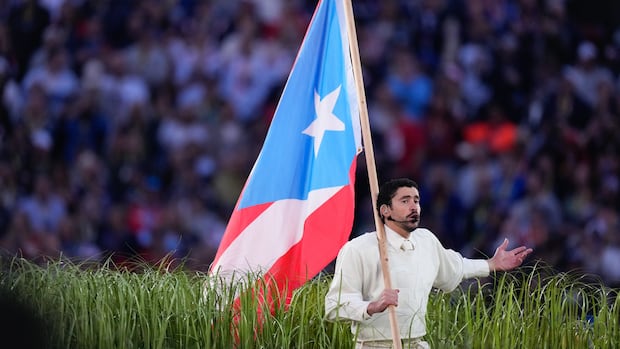
A viejito and a jibaro in a pava walk into a bar.…
No, seriously, Bad Bunny’s 13-minute Super Bowl halftime performance was jam-packed with references to Puerto Rican life and Latino culture more broadly.
The Spanish-language performance by the 31-year-old singer — born Benito Antonio Martínez Ocasio — was highly anticipated by fans eager to see what songs, symbols and guests the artist might showcase, as well as by political watchers for any possibly charged statements, given Bad Bunny’s comments about ICE at the Grammy Awards last weekend.
There was a lot going on on the sprawling, dynamic set. Here are some of the key references the Puerto Rican superstar fit into his performance in case you missed them, as well as the meaning behind them.
WATCH | Bad Bunny wows fans, irks MAGA with Super Bowl halftime show: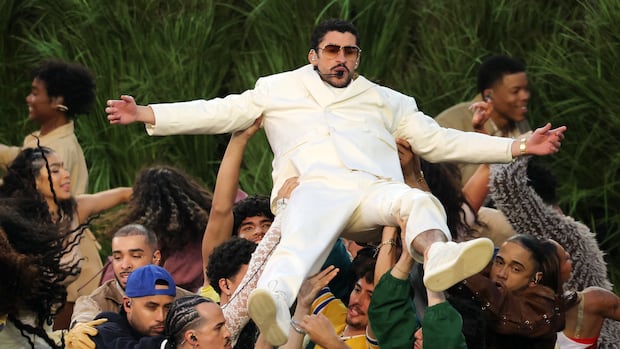
Bad Bunny wows fans, irks MAGA with Super Bowl halftime show
Puerto Rican music sensation, and longtime Trump critic, Bad Bunny, delivered a passionate Spanish-language Super Bowl halftime show that many in the MAGA movement derided as “too woke” before it even took place. Sugar cane fields
The singer and rapper opened the night in a scene resembling a field of sugar cane, surrounded by farmers hacking at the stalks.
The production and trade of sugar has coloured Puerto Rico’s history. Enslaved people were made to cultivate sugar cane starting in the 1500s, and crops were sold abroad by settlers who colonized the Caribbean islands.
Sugar cane production endured for centuries even after slavery was outlawed in the territory, and as of 1964, accounted for nearly half of all agricultural production in Puerto Rico. Viewers at home picked up on the symbolism in Bad Bunny’s performance, and took it as a reminder of the island’s colonial history.
On a less political note, viewers had a laugh when they realized some of the greenery on the set was actually people dressed up as stalks of grass. According to Wired, some 380 people dressed up as plants in a creative workaround to include all the props the artist wanted, given the NFL has rules around how many carts can enter the field in order to protect the playing surface.
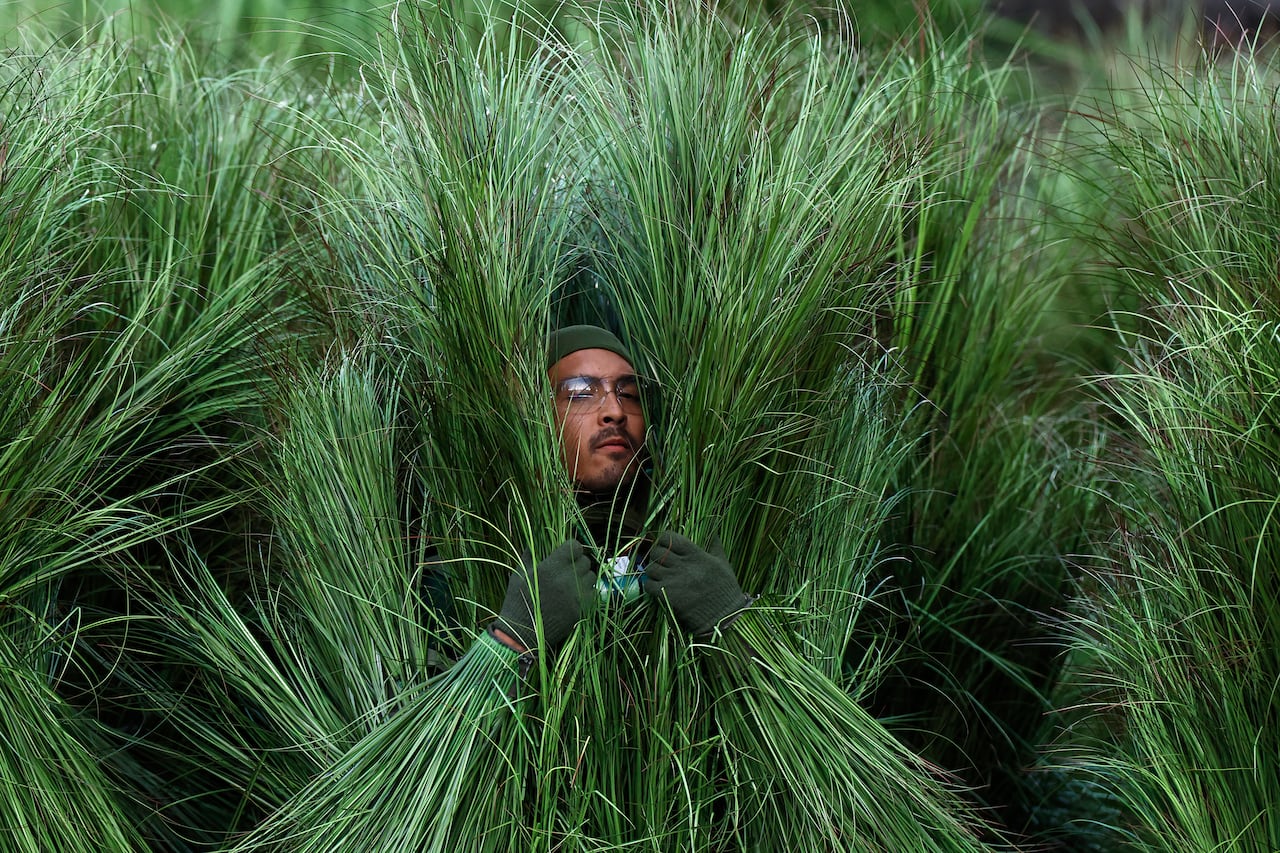 A dancer in Bad Bunny’s halftime show dressed as shrubbery emerges from part of his costume. Some 380 dancers were tapped to perform in similar costumes to help make some of the greenery-filled set. (Carlos Avila Gonzalez/San Francisco Chronicle/Associated Press)Pava hats
The farmers chopping down sugar cane (or jibaros, a term that refers specifically to rural subsistence farmers) also donned a very Puerto Rican hat, called a pava. The hats are made of woven grass and are usually worn by those in the agriculture industry.
The hat has become much more than a way for workers to protect themselves from the sun — it’s now a symbol of rural life and Puerto Rican identity. The tie is so deep that political parties on the island have even adopted the pava as a symbol.
In the past, Bad Bunny himself has worn a pava, too. The star made headlines last year when he paired a version of the hat with a matching brown suit at what is arguably fashion’s biggest night, the Met Gala.
Electricity poles
For a rendition of one of his more political songs, Benito and a handful of backup dancers climbed sparking electricity poles as the stadium lights flashed.
The song, El Apagón, which translates to “The Blackout,” reflects socioeconomic issues on the singer’s home island, especially the frequent blackouts that occur there due to an unreliable power grid. The sparks and intermittent lights in the set design helped drive home the pointed message in the song.
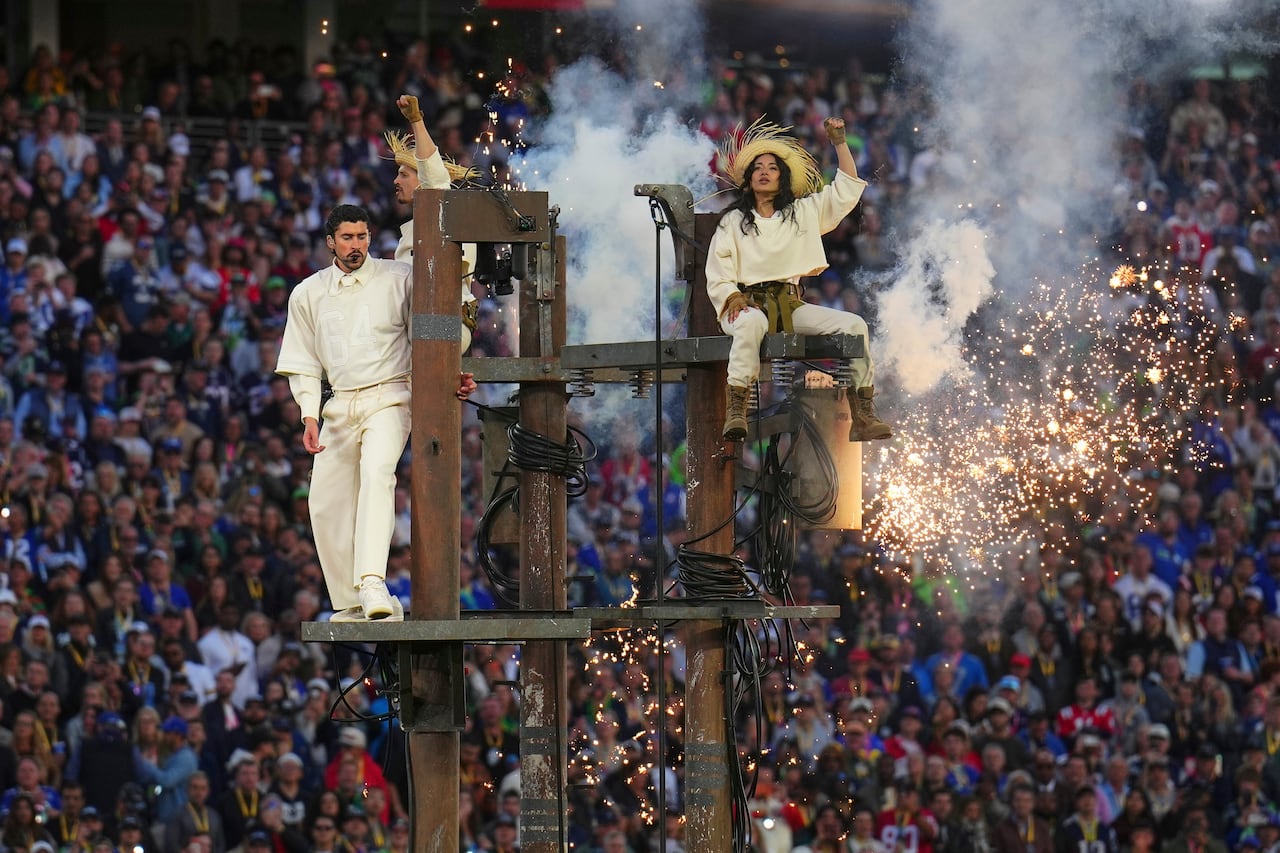 Bad Bunny, left, performs his song El Apagón during halftime of Sunday’s Super Bowl. While he didn’t make any explicit political statements, this song about the blackouts in Puerto Rico lent a political element to the show. (Godofredo A. Vásquez/The Associated Press)An alternative Puerto Rican flag
You might recognize the Puerto Rican flag with its red and white stripes, blue triangle and white star in the middle. But did you notice the subtle difference in the flag last night?
Some close watchers of the performance who know a thing or two about Puerto Rico’s history spotted that the flag Benito brought out during his performance of El Apagón appears to have a light blue triangle rather than the typical dark blue.
The design and lighter colour was originally used by those in the pro-independence movement when the U.S. sought control of the island. In order to quell the movement, the U.S.-appointed government of the island passed a law in 1948 that made it illegal to display the Puerto Rican flag.
While the flag was later adopted as the official flag of the island, the colour of the triangle was changed to match the blue in the U.S. flag. And as a result, the light blue flag is still often associated with the independence movement and anti-colonial sentiment.
Bad Bunny has sung about his fears of gentrification and colonization (just check out the lyrics of the song LO QUE LE PASÓ A HAWAii, which Ricky Martin performed last night) and previously backed a political party that seeks independence from the U.S., so bringing out the light blue flag makes some sense from him.
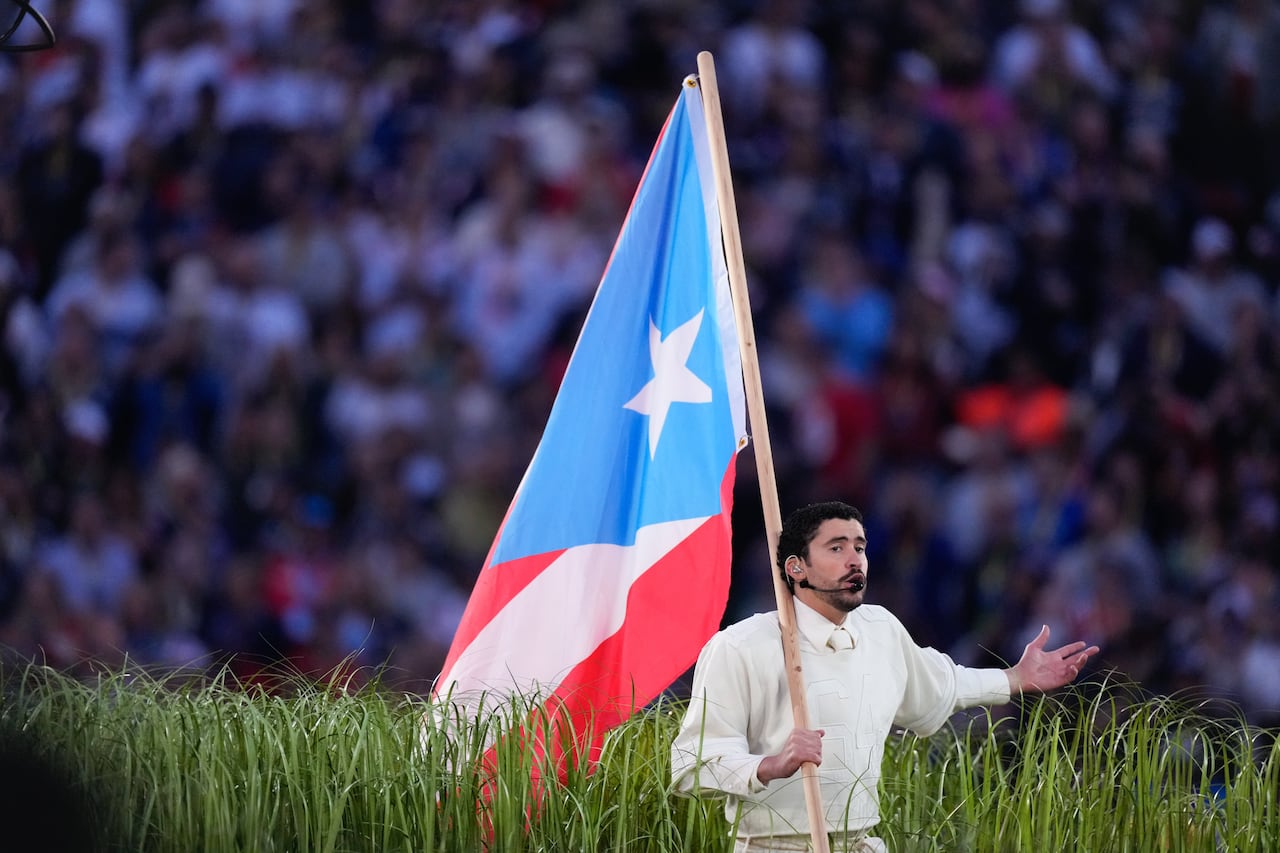 Bad Bunny performs during halftime of the NFL Super Bowl 60 football game between the New England Patriots and the Seattle Seahawks, Sunday, Feb. 8, 2026, in Santa Clara, Calif. (Mark J. Terrill/Associated Press)Toñita makes a cameo
Partway through the set, Benito stops by a bar and takes a shot from a grinning older woman in a bright blue jacket.
Members of the Puerto Rican diaspora in New York will recognize those blond curls and bold jewelry. Maria Antonia (Toñita) Cay started the Caribbean Social Club in Williamsburg, a neighbourhood in New York City, in the 1970s as a members-only hangout for the community baseball team.
The club has since become a full-fledged bar and restaurant serving as a hub for the New Yor-ican diaspora community, with Toñita serving as the matriarch of the group.
Bad Bunny has shouted out the New York establishment before, in his song NUEVAYoL, which is all about the Puerto Rican diaspora in New York City.
As the English translation of the lyrics go, “A shot of Cañita at Toñita’s house and PR feels close.”
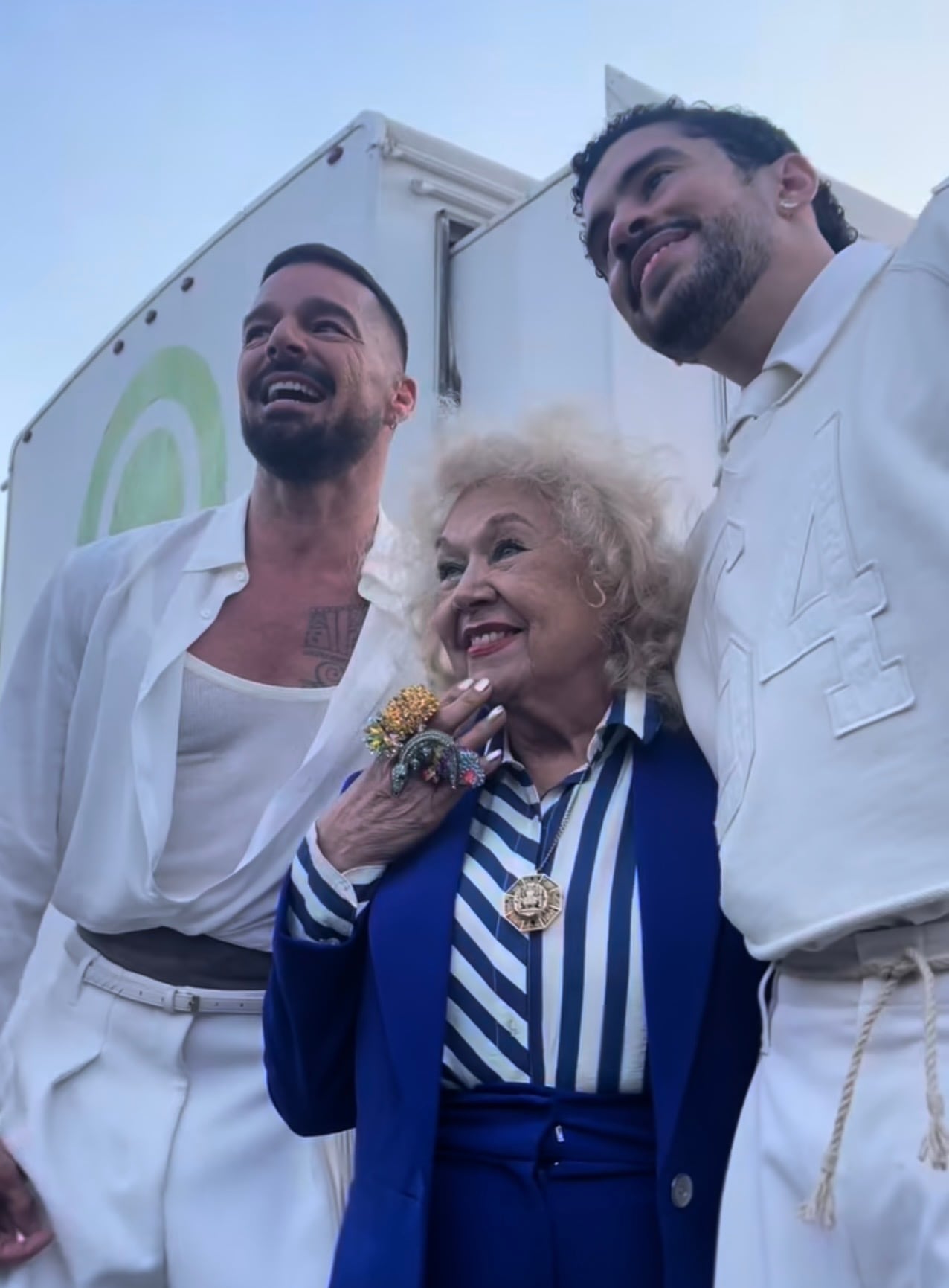 Toñita, centre, stands alongside Bad Bunny and guest halftime show performer Ricky Martin, left, outside the Super Bowl stadium in California on Sunday. (@Tonitasny/Instagram)That wedding? It was real
About five minutes into the performance, the camera shifted to a wedding scene. A man and a woman, both in white, are pronounced husband and wife by an officiant before sharing a kiss — and parting to reveal a secret guest performer, Lady Gaga.
The artist goes on to perform a salsa version of her love song with Bruno Mars, Die With A Smile, before breaking into a dance with Benito at a wedding reception-esque scene. It’s complete with party guests dancing the salsa, a kid falling asleep on plastic chairs while their parents dance the night away (a common childhood experience among Latino kids, observers are noting), and an actual cake cutting by the couple.
After the show, Bad Bunny’s representative confirmed to media that the couple had actually been married during the show. The unnamed husband and wife had invited Bad Bunny to their wedding, but he said they should instead be part of his halftime show.
The artist served as a witness and signed their marriage certificate.
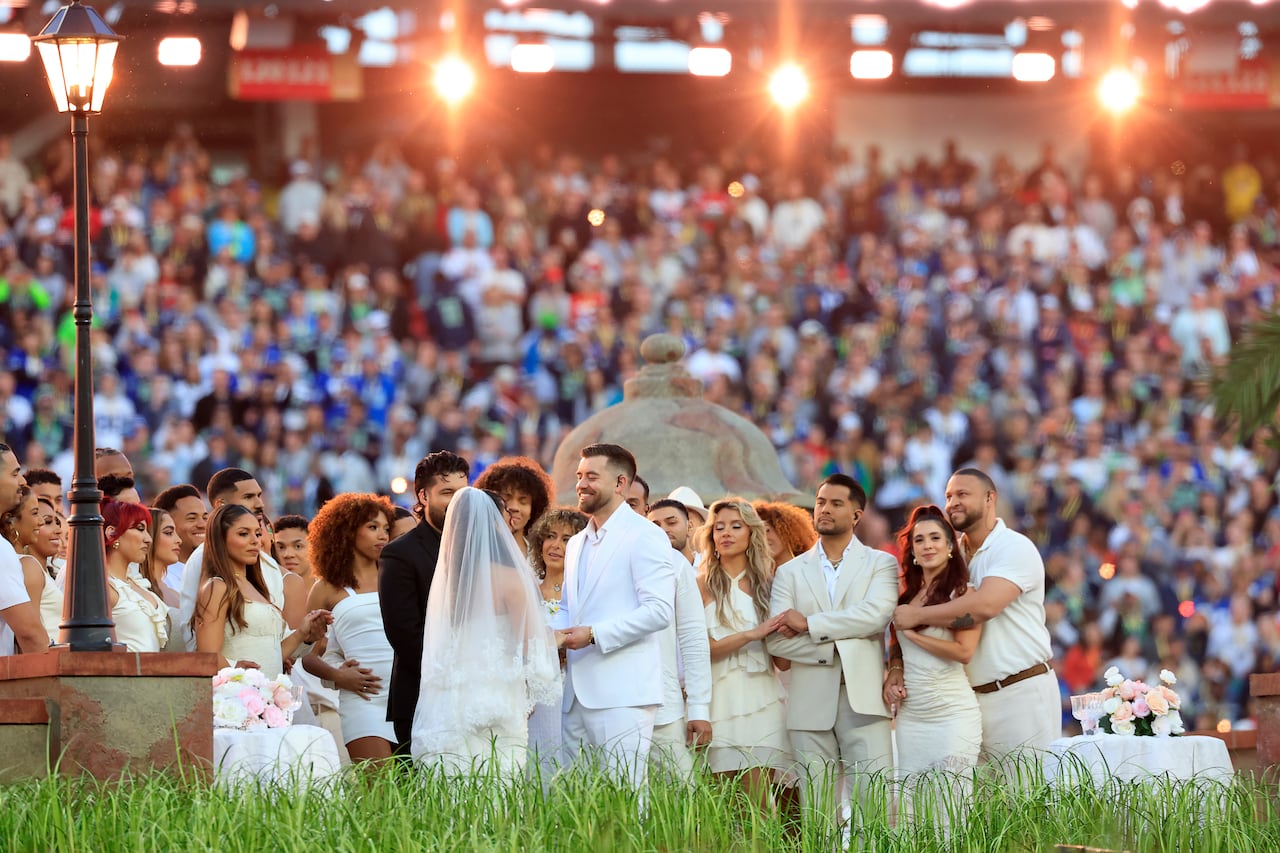 A couple gets married in a real ceremony during the halftime show of Super Bowl 60 in Santa Clara, Calif., Sunday, Feb. 8, 2026. (Carlos Avila Gonzalez/San Francisco Chronicle/Associated Press)Lady Gaga sports a meaningful flower
Speaking of Gaga, the guest star sported some Puerto Rican symbolism of her own. Standing out against a light blue salsa dress was a brooch with a bright red flor de maga, the official flower of Puerto Rico.
Puerto Ricans see the flower that’s native to the island as a symbol of strength, resilience and beauty.
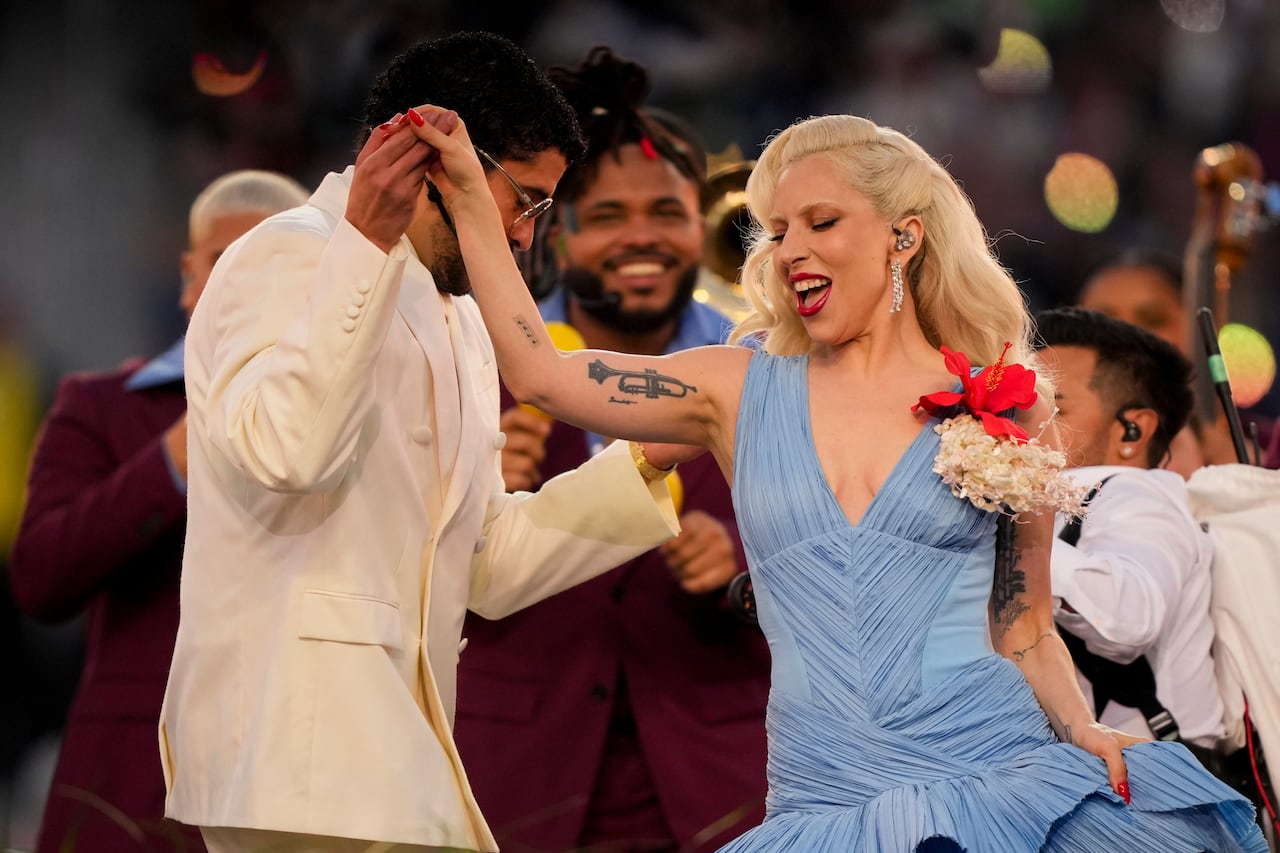 Bad Bunny and Lady Gaga perform during halftime of the NFL Super Bowl 60. The red flower on Gaga’s brooch is the official flower of Puerto Rico. (Brynn Anderson/Associated Press)Lots of Latino imagery — but no Liam Ramos
Despite online speculation, Liam Ramos — the five-year-old boy in the bright blue bunny hat who made international news when he and his dad were detained by U.S. Immigration and Customs Enforcement (ICE) last month — was not, in fact, the little boy who Bad Bunny handed a Grammy award to.
Partway through the performance, Bad Bunny bent down to hand off the golden gramophone statue to a small child, who seemed to represent a younger version of the star himself, or perhaps the next generation of Puerto Rican artists.
Some viewers speculated the little boy was Liam, and shared side-by-side photos of the similar-looking children.
The kid who took part in the halftime performance was actually five-year-old Argentinian Egyptian actor Lincoln Fox. He posted a clip from the show to his Instagram, thanking Bad Bunny for including him.
“I’ll remember this day forever!” Fox wrote.
The message on the football
If you blinked, you would have missed it. Right at the end of the performance, Bad Bunny spoke a few words in English to say “God bless America” — but it wasn’t in the usual way you’d think about the phrase.
The singer went on to list countries of the Americas: Argentina, Uruguay, Paraguay, Colombia, Venezuela and many more — plus the U.S. and Canada at the very end.
With flags of those nations in the background, Benito held out the football he’d been clutching tight to his chest for much of the performance, to show a message written in white — “Together, we are America.”
While “God Bless America” is usually taken to mean love for the United States, the performer’s message subverted the U.S.-first sentiment and highlighted the other countries that make up the North, Central and South America.
Observers online took the words as a message of unity and love to close out a high-energy show.