


Scott-SRAM has a seven-figure budget, but has to stretch it to cover salaries and logistics for a 10-round series from April to October.

Scott-SRAM, Kramon
On race day, cross-country mountain biking compresses lung-bursting climbs, technical descents, and split-second decisions into a brutal 90-minute battle. It’s rider versus rider from start to finish. But for the teams behind the athletes, the race begins long before the first pedal stroke. Months of booking flights, managing salaries, and navigating sponsor demands lay the groundwork for what fans eventually see on race day.
But what actually goes on behind the scenes, and more importantly, how does a team provide a return to the brands financially supporting them? Cycling teams can’t lean on ticket sales or merch profits as other sports do. And that means sponsors are footing the bill without a clear path to see a return on their financial investment.
XC’s visibility problem
Professional racing is, and always will be, a marketing tool. The saying “Win on Sunday, sell on Monday” has long guided brands investing in competitive sport. But that only works if the racing actually gives sponsors somewhere to be seen.
Road cycling, particularly the WorldTour, offers that visibility in relative abundance. Teams with around 30 riders race almost non-stop for 10 months. That’s more than 180 race days – just at the WorldTour level. Many of these events also provide highlight coverage on TV or YouTube, further expanding their reach.
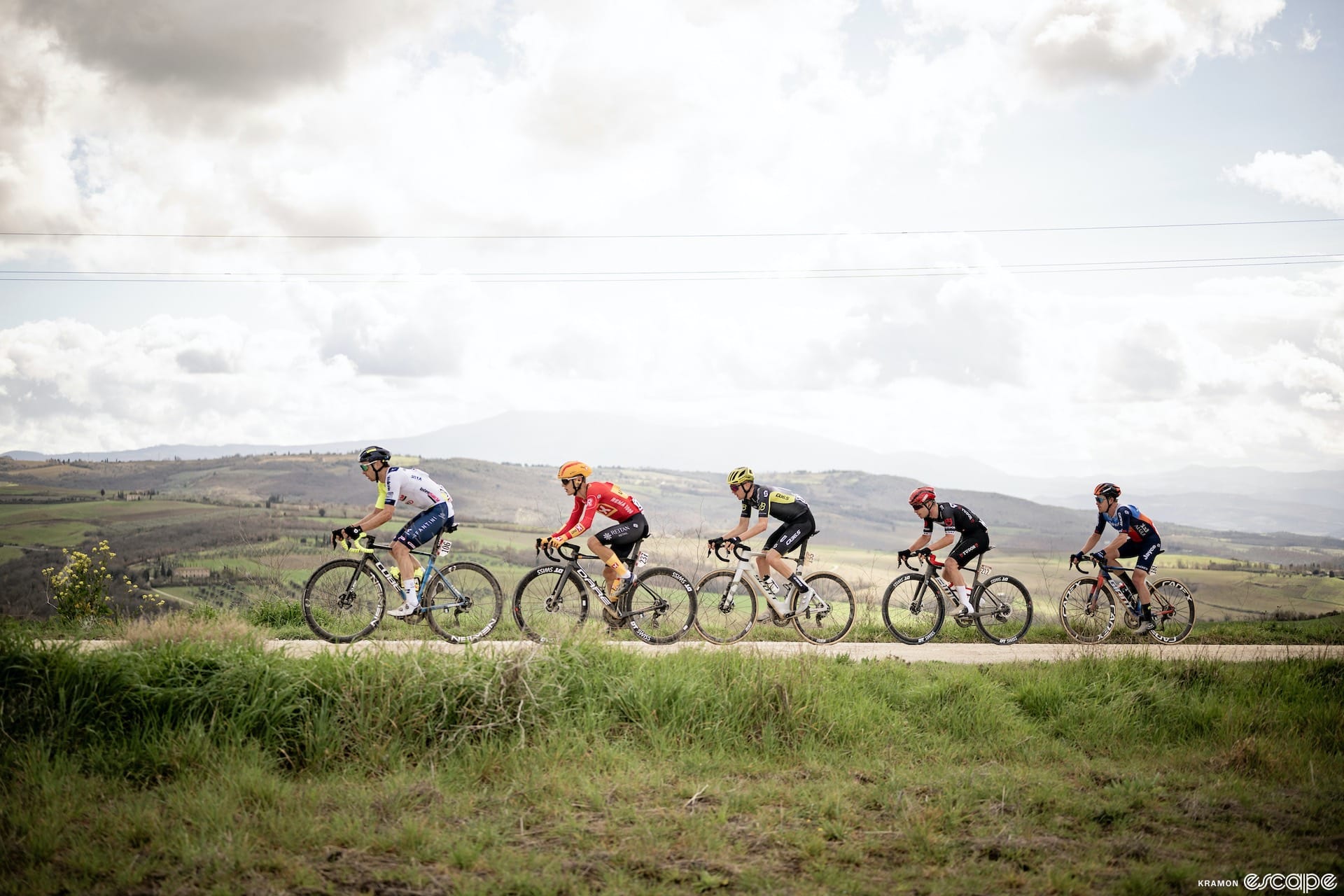 Multi-hour breakaway exposure throughout the year gives road racing a significant media advantage when compared to XC mountain biking.
Over the season, brands like Specialized, Ineos, Intermarché, Lease a Bike, and Lidl appear on air for hours at a time, day after day. Every race offers multiple opportunities to translate exposure into media coverage. Even teams that are unlikely to win can justify sponsor investment with breakaway appearances and a few mentions in commentary.
How XC courses are made: Inside the art, politics, and pressure of modern World Cup track design
World Cup XC courses are no longer just about testing riders. They’re designed for TV, built under tight constraints, and shaped by forces most fans will never see.
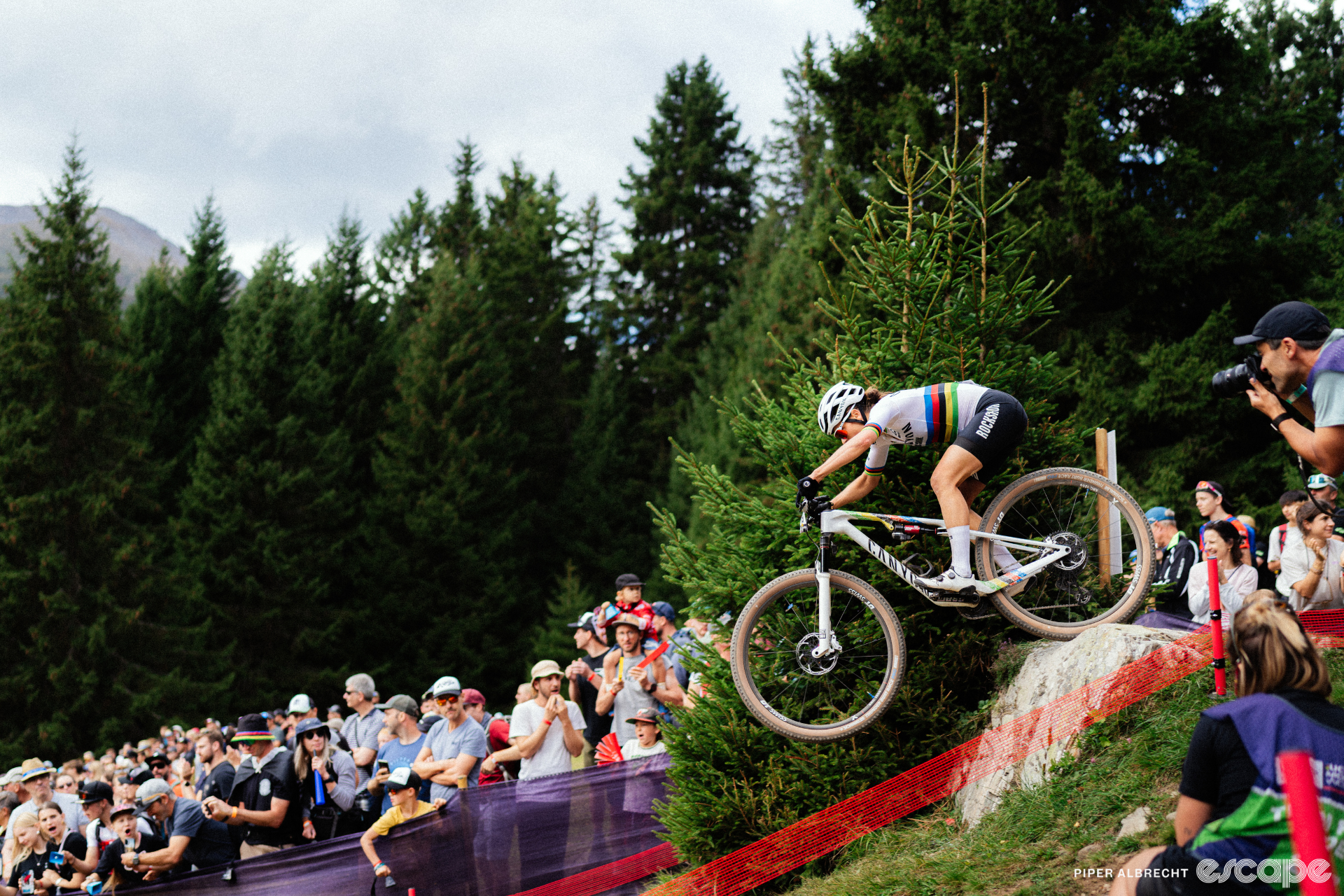
When it comes to cross-country mountain biking, the landscape is far less generous. In 2025, the longest World Cup season since 1997, 10 rounds offered just 20 chances for men and women to claim victory. Due to the constraints of broadcasting XC racing, only the top 10–15 riders typically receive meaningful airtime, while paywalls restrict viewing access for many fans. This makes it difficult to justify the cost of financing a global team. As Scott’s global team lead for bike marketing, Julian Wagner explains, “We had 10 World Cup races plus World Championships. The room for increased brand awareness around races is not huge, and it’s not guaranteed.”
So what goes into running a team, and how do brands justify the outlay, in a world where racing has to compete with narrative-driven media and influencer marketing? To find out, I turned to one of the longest-running and most successful XC teams in the business, Scott-SRAM.
This post is for paying subscribers only
Subscribe now
Already have an account? Sign in
Did we do a good job with this story?
👍Yep
👎Nope