

The Infinix Note Edge has a pretty impressive display, at least on paper. It is large at 6.78 inches, has a refresh rate of 120Hz and advertises some pretty solid brightness figures – 700 nits typical, 1,600 nits max for the whole display and 4,500 peak.
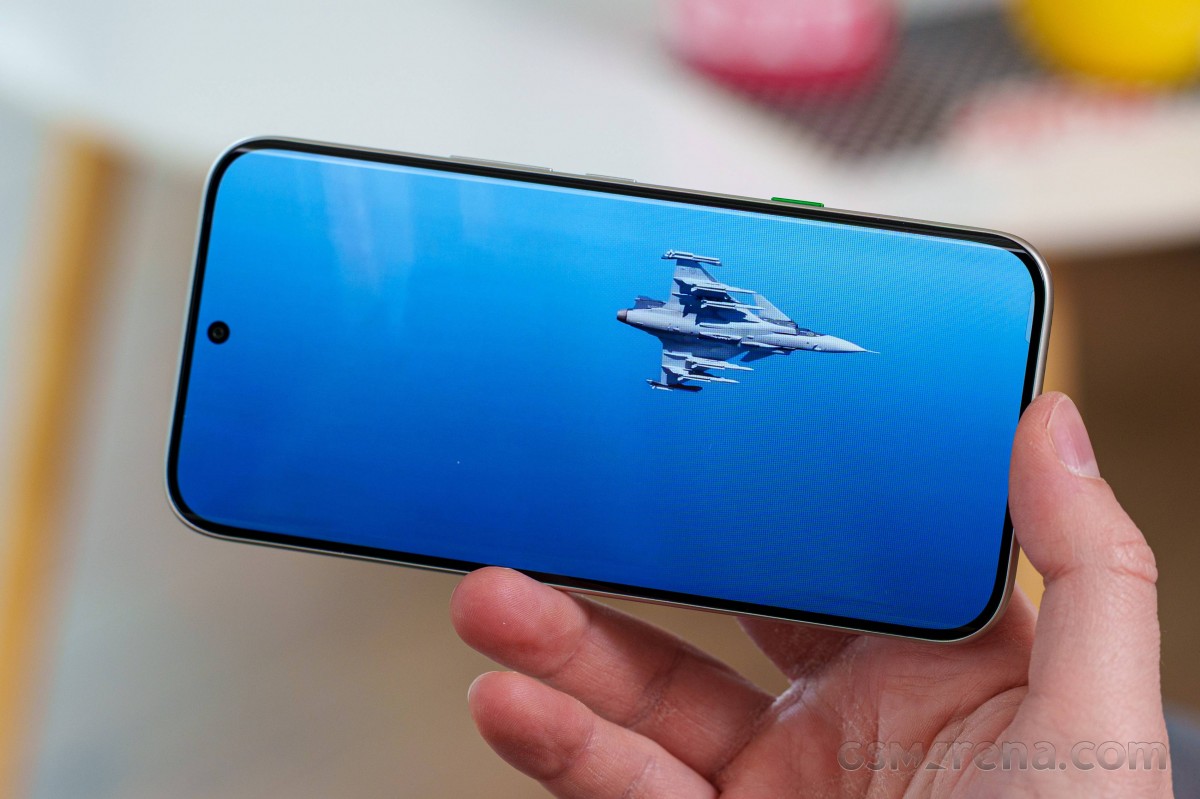
We ran our standardized tests and got some solid results. Maxing out the slider in Manual brightness mode resulted in around 747 nits of max brightness, which was boosted rather significantly by enabling the extra brightness toggle and exposing the phone to bright light. That way, we measured 1,342 nits.
Measuring a 10% window, the Note Edge managed an okay 1,662 nits, which is quite alright for the price segment but not HDR-friendly. You should be just fine using the phone outdoors, even in bright sunlight.
As mentioned, the Note Edge has a 120Hz display refresh rate. The phone actually supports 30Hz, 60Hz, 90Hz and 120Hz modes. In terms of settings, you can set the phone to “Standard” refresh rate, which locks it to 60Hz. Then there is the default “Auto-Switch” option, which, as the name suggests, does some automatic switching between refresh rates and pretty dynamically at that. Most of the time, while interacting with the phone, you will get 90Hz, and when nothing is happening on screen, 60Hz.
We never actually saw the 30Hz mode being utilized in practice. As for the 120Hz mode, the only way to get that seems to be to select “High” in refresh rate settings. Then, on occasion, the phone will, indeed, go up to 120Hz when it deems necessary.
Infinix also includes a per-app settings option that lets you theoretically force 120Hz on a given app or game. However, the system mostly ignores these settings and still only goes up to 90Hz and doesn’t even reliably stick to that in most apps and games we tried. So, overall, a nice attempt from Infinix, but a poor execution. High refresh rate gaming is not really a reliable option here.
Unfortunately, the Infinix Note Edge lacks HDR video support. Some concessions had to be made in the name of price. On a more positive note, it does support the highest possible Google Widevine L1 DRM, allowing apps like Netflix to offer up FullHD streams.
We did our standard array of battery life tests, and frankly, we expected more from the large 6,500 mAh battery inside the Infinix Note Edge. It managed an almost twelve-hour Active Use Score, which is not bad, but not great either.
Perhaps the new MediaTek Dimensity 7100 suffers from some efficiency issues, and maybe the display does as well. Regardless of the cause, we were particularly surprised to see only six hours of gaming time (and that’s at 60Hz) and just 11 or so hours of web browsing.
The Infinix Note Edge supports 45W charging via the company’s proprietary standard. Infinix will happily throw a charger in the box for you in pretty much every market outside the EU, where that is not allowed. Keep track of said charger and the corresponding cable since it is proprietary with an extra pin as well.
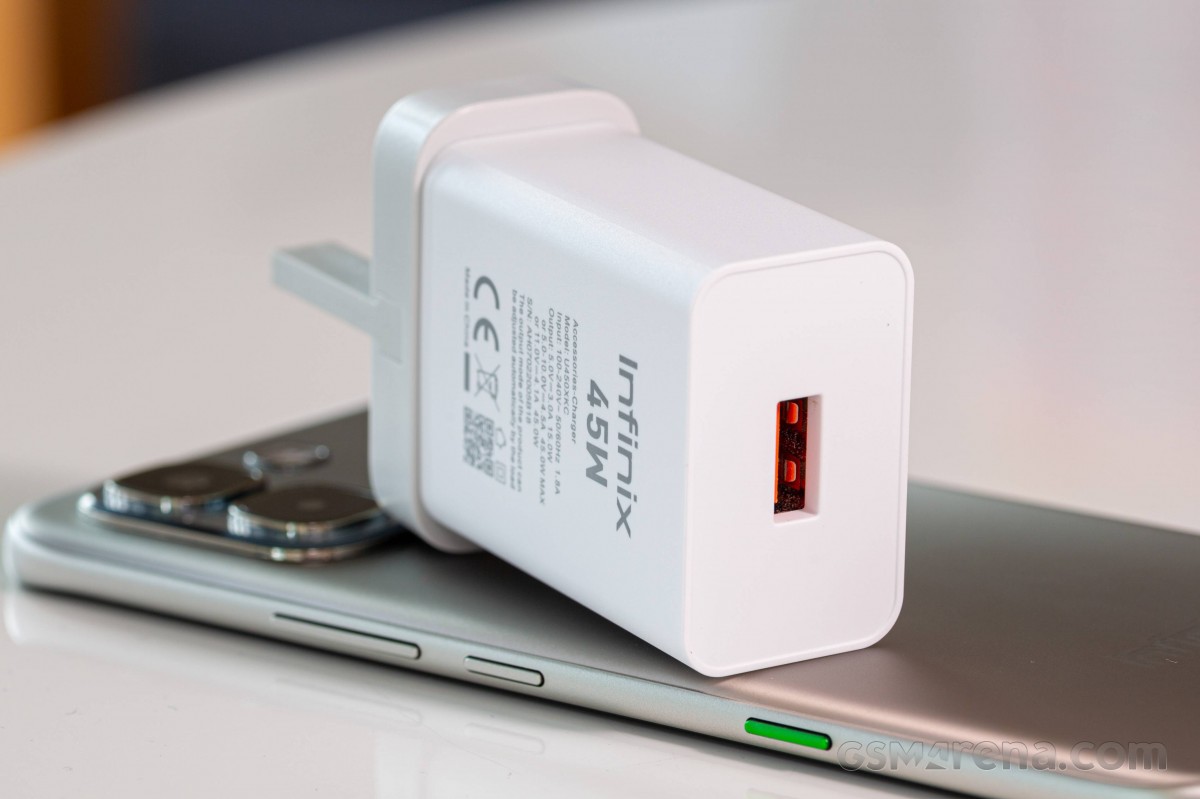
In terms of charging speed, the Note Edge is far from speedy in absolute terms but still holds its own well amid its peers. We managed to get from 1% to 24% in fifteen minutes and then 44% in thirty minutes. A full charge took an hour and fourteen minutes.
Speakers – loudness and quality
The Note Edge has a stereo speaker setup – one speaker on the top and another on the bottom. It is well-balanced, and the output sounds nice and symmetrical. The phone gets really loud and does so with little distortion, which is impressive. The sound stage is fairly wide and rich as well. Mids generally sound clear, and there is practically no bass, as expected.
Still, the speakers are one of the highlights of the Infinix Note Edge. They are tuned by JBL, and there is also a DTS equalizer on board, complete with presets as well as a full-featured manual mode.
Use the Playback controls to listen to the phone sample recordings (best use headphones). We measure the average loudness of the speakers in LUFS. A lower absolute value means a louder sound. A look at the frequency response chart will tell you how far off the ideal “0db” flat line is the reproduction of the bass, treble, and mid frequencies. You can add more phones to compare how they differ. The scores and ratings are not comparable with our older loudspeaker test. Learn more about how we test here.
Connectivity
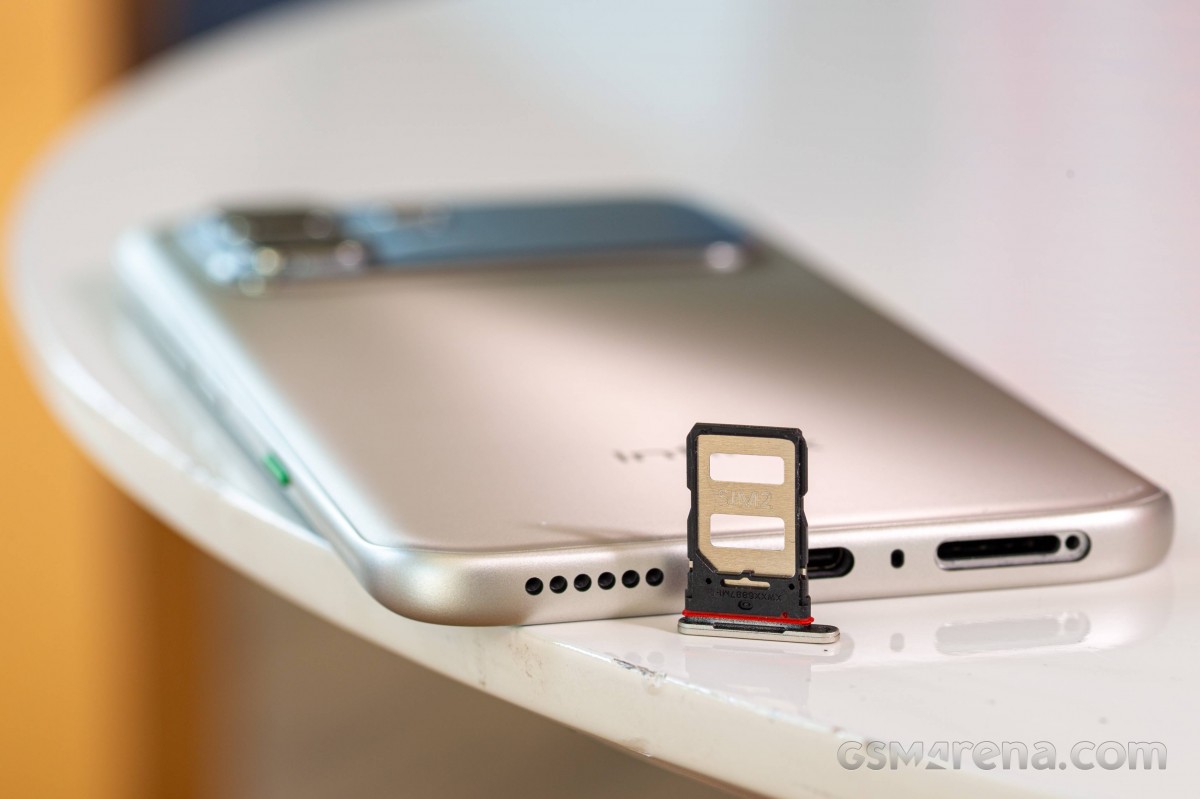
The Infinix Note Edge is a 5G device with support for SA/NSA Sub-6 connectivity simultaneously on both of its Nano-SIM slots. To sweeten the deal further, it also has eSIM support. As expected, enabling it turns off the second SIM slot.
For location, the Note Edge has GPS, GALILEO, GLONASS and QZSS support. Local connectivity is handled by dual-band Wi-Fi ac, plus Bluetooth 5.4 with LE support. There is also an FM radio receiver on board, as well as NFC and an IR blaster.
The only thing really missing is a 3.5mm audio jack. The Type-C port is backed up by a simple USB 2.0 connection, which means a theoretical maximum data throughput of 480 Mbps. There is OTH/Host support, but nothing fancier like video out over USB Alt mode.
The Infinix Note Edge has a pretty complete set of onboard sensors. There is an ST lsm6dso accelerometer and gyroscope combo, a qst qmc6308 magnetometer and compass combo, and a sensortek stk3335x light and proximity combo. It is frankly rather surprising to see an actual hardware proximity sensor on such a budget device. There is no barometer.