
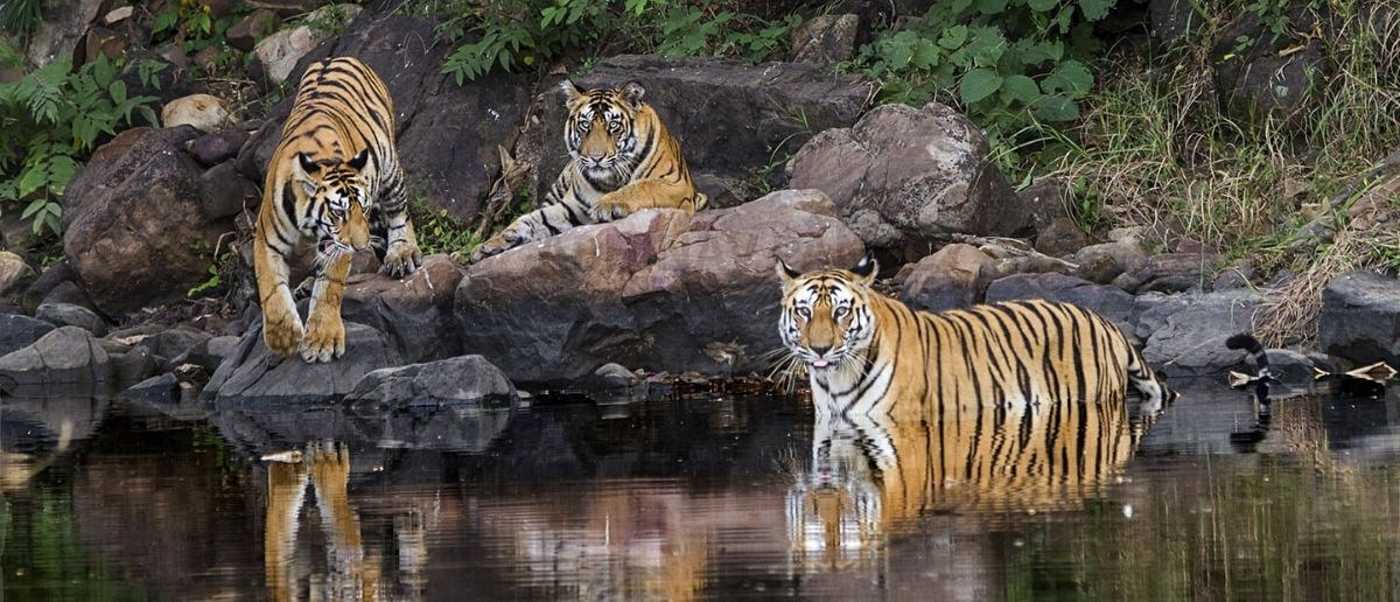
 Panna Tiger Reserve
Conservation in India successfully doubled the native population of tigers in the decade before the COVID-19 pandemic, a new study reveals.
In 2010, the nations that make up the remaining range countries of the tiger set a target to double the number of wild tigers worldwide—a goal called Tx2—10 at the St. Petersburg International summit on tiger conservation.
The idea was that by 2022—the Year of the Tiger in the Chinese zodiac, the countries across the Indo-Pacific, East and South Asia, and Russia, would have enough time to effectively support tiger conservation.
By 2022, the objective was estimated to have been achieved when measured across the animal’s whole range, but within that achievement were several localized triumphs even more impressive—Nepal, but also India, had seen their native populations of tiger double.
Despite being the world’s most populous state, Indian governments were able to make room for tigers across 53,360 square miles. By 2018, India’s native tiger population clawed its way above 3,600. Along with being 75% of the world’s tiger population, it was twice as many as the best estimates guessed in 2006.
Published in a study in Science recently, extensive monitoring of the big cat across 20 Indian states every 4 years revealed this increase in the number of tigers, but also the amount of protected-tiger habitat.
As well as there being twice as many tigers since 2006, there is 30% more habitat where they live. The study presents findings that tigers do better in areas of higher economic development where locals and visitors can afford tiger-tourism and governments compensate for tiger-related losses. In contrast, poorer states see increases of human-tiger conflict that make it difficult for the world’s largest cat to endure.
TIGER TIMES: ‘The Javan tiger still exists’ – DNA Found May Herald an ‘Extinct Species’ Comeback
Sharing land with the growing Indian population is increasingly difficult for both man and tiger, but conflict isn’t as common as you might think.
“We lose 35 people to tiger attacks every year, 150 to leopards, and the same number to wild pigs. Additionally, 50,000 people die from snake bites,” Yadvendradev Vikramsinh Jhala, the study’s lead author, told the BBC. “In fact, within tiger reserves, you’re more likely to die from a car accident than from a tiger attack.”
TIGERS TIMES TWO: Amur Tigers Are Back From the Brink in China – Thanks to Government Policies
The WWF, which was very involved with the Tx2 goal, published an article late last year entitled “5 reasons for hope for Tigers in 2025, detailing how the cats were spreading naturally into the forests of northern Thailand, northeast China, and northern Myanmar, as well as the extensive preparations made by Kazakhstan for the reintroduction of the tiger in the south of that country where it has been extinct for over a century.
They didn’t include that camera traps in Sumatra recently recorded 3-times as many sightings of the Sumatran tiger subspecies than ever before.
SHARE This Great News For The World’s Largest Cat With Your Friends…