
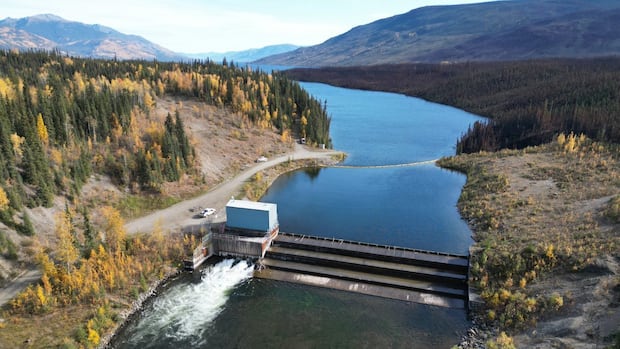
Fluctuating water levels, throttled salmon migrations, questionable structural stability.
Effects from the Mayo hydroelectric dam aren’t a thing of the past — like they have for decades, they’re happening daily, the chief of the First Nation of Na-Cho Nyäk Dun says.
“Ultimately, we all understand that we need power,” said Chief Dawna Hope. “But it can’t come at the cost of our environment, or our fish, our wildlife, our culture.”
Yukon Energy wants a new license for the 75-year-old dam. First, it needs the go-ahead from the Yukon Water Board, which recently hosted a week-long hearing in Whitehorse. The corporation made its case to operate the facility for five more years, proposing several tweaks.
Many seek to lessen the dam’s environmental impacts — how to help, for instance, animals like chinook salmon, whose numbers have hit record lows.
To the Na-Cho Nyäk Dun, some of those measures don’t go far enough.
“We have yet to see any meaningful changes in governance or decision making structures,” said Gavin Winter-Sinnot, a Na-Cho Nyäk Dun citizen and a fish and wildlife officer with the Nation.
“[Yukon Energy] is actively blocking the fish going up and chopping up the fish going down … but this process here is a good opportunity to build trust between all of us, and maybe give something back to the fish.”
Joe MacGillivray, Yukon Energy’s president and CEO, acknowledged the dam’s legacy, and what it represents to some of the First Nation’s citizens.
“We recognize that things haven’t always been perfect, and the progress can sometimes feel slow,” he said, “but we are committed to moving forward together. We recognize that rebuilding confidence requires visible action, not simply assurances.”
Still, MacGillivray called on the board to be judicious.
“Overly rigid licence conditions that place sole responsibility on Yukon Energy for outcomes outside our control risk undermining that collaborative work required to move forward and our ability to meet those conditions.”
Environmental impacts don’t exist in a vacuum
Nuri Frame, the First Nation’s lawyer, said the board can’t look at environmental impacts in isolation: they intersect with the First Nation’s use of the land, on which worldviews, language and identity rely.
Then there are constitutionally protected rights.
Frame accused the territorial government and Yukon Energy of failing to uphold their duty to consult during the process. The corporation has met with the First Nation, he said, but little has changed.
Frame said it’s up to the board to set things right.
“To act within its jurisdiction to impose meaningful and robust terms and conditions in this licence that will serve to some extent, to ameliorate, to mitigate those adverse impacts and to accommodate the adverse impacts on [Na-Cho Nyäk Dun’s] constitutionally protected rights,” he said.
What is the First Nation seeking?
It wants the dam’s environmental footprint shrunk.
A big part of that involves upstream fish passage, which the dam has never had. Fish, including salmon, have been literally stonewalled from Mayo Lake and beyond.
Two dams span the Mayo River. There’s the control structure, which allows for water storage in the lake so that electricity can be generated in the wintertime. Downstream is the Wareham dam, where the turbines are located.
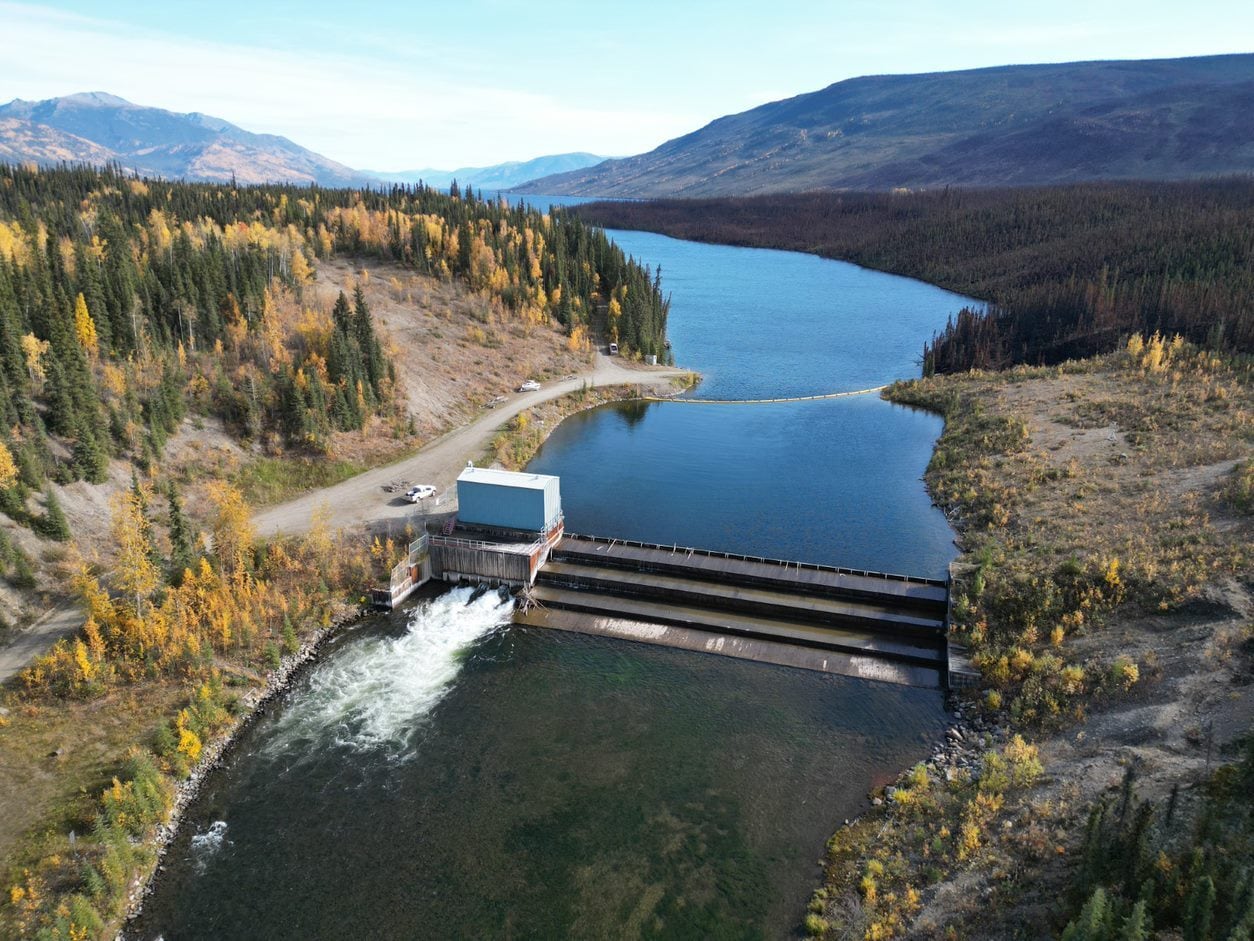 The control structure at Mayo Lake is part of Yukon Energy’s Mayo dam complex. The company is currently seeking a new license for the facility. (Yukon Energy)
Yukon Energy originally proposed replacing the control structure and intsalling fishway. Upstream fish passage at the Wareham wasn’t included in those plans, because Yukon Energy said it was too expensive.
That’s changed, to a degree.
Late last year, the Yukon government greenlit an environmental assessment of the project, ordering Yukon Energy to work with Na-Cho Nyäk Dun to look into salmon rebuilding and upstream fish passage at the Wareham dam.
At the hearing, the First Nation said there are no timelines attached and urged the board to enforce them.
That’s why the Na-Cho Nyäk Dun is calling for fully costed and detailed plans within three years of the next licence term. It also wants a chinook rebuilding plan completed in the same timeframe.
Nearly every tributary has placer miners operating on them, said members of First Nation’s technical team, which urged for tighter regulations to make way for the future re-entry of salmon into the area.
As part of its relicensing application, Yukon Energy has proposed what it calls trial mitigations. They include adjusting flows so that water levels don’t become too low so they dry out lake trout eggs, or too high that they flood a vast wetlands complex called the Roop.
Dam safety
In 2020, high water levels damaged the chute of the spillway, where excess water goes. Since then, Yukon Energy has made a series of repairs. The territory said it can’t be patched up anymore, though, and the spillway needs to be replaced at a likely cost of more than $150 million.
With Mayo just downstream, the First Nation is concerned about the structural integrity of the dam, whether there’s risk of failure.
Tess McLeod, with the First Nation, drew a parallel between the dam and the Eagle mine, which failed catastrophically in 2024.
“We now live in the shadow of another potential threat to our land and people,” she said. “This is an acceptable risk and a situation that should have never been allowed to occur.”
MacGillivray, the president and CEO of Yukon Energy, said the corporation has launched an independent audit into the stability of the dam, noting it will be submitted to the board by the end of the year.
It’s now up to the board to figure out what to do next. Members must now determine whether to issue a new licence. The chair didn’t say when, exactly, that would happen.