
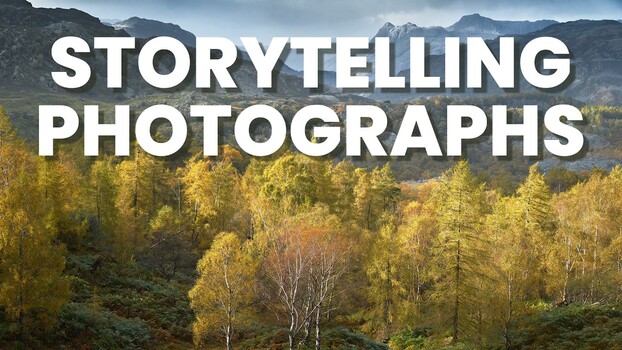
Strong photographs of trees rarely come from technique alone. They come from paying attention to what happened in that place before you arrived, and from staying long enough to feel it rather than smoothing it over.
Coming to you from Simon Baxter, this thoughtful video continues a four-part series built around an exhibition of printed woodland photographs. Baxter and Cornish talk through specific prints rather than general ideas, which keeps the conversation grounded. The discussion centers on stories carried by fire, forestry, and long human use of land, not just visual appeal. You hear how meaning shifts once individual images are grouped and curated rather than seen alone. The emphasis stays on real locations with real consequences, including a fire-damaged woodland that changed how the images were made.
One sequence focuses on a fire site photographed in square format, chosen to hold together scenes that were chaotic and hard to read. The burned wood is mostly tonal, heavy with dark shadow, broken by pale birch trunks that refuse to disappear. Printing images like that forces uncomfortable decisions because deep shadow behaves differently on paper than on a screen. Processing had to move away from Baxter’s usual restraint, pushing contrast and clarity to match the experience of standing there. The story behind the fire matters here, especially knowing it was caused by human carelessness rather than natural forces.
The video also moves into clearcut plantation woodland, where the emotional impact comes from absence as much as presence. Birch trees left standing become survivors rather than decoration. Power lines appear in-frame and stay there, marking human need instead of pretending it does not exist. The compositional balance relies on structure inside disorder rather than clean foregrounds or dramatic skies. You see how careful framing can acknowledge damage without turning it into spectacle.
Another section shifts tone with a ruined stone building now occupied by mature birch trees. Soft, direct light replaces mist, and the image works without theatrical atmosphere. Subtle repetition of arcs and shapes keeps the frame unified while leaving space to breathe. The story sits in the relationship between the trees and the remaining structure, not in dramatic contrast. It is calm without being passive, and personal without explanation layered on top.
The conversation then looks back to an older landscape photograph. Quarry remnants in the Lake District reveal how deeply the land was altered and how completely nature has moved back in. Trees of different ages climb slopes once stripped bare, and time becomes visible through spacing, scale, and density. The point is not nostalgia for older cameras, but perspective on how little final print quality depends on chasing new gear. The print holds up because the decisions behind it still hold. Check out the video above for the full rundown from Baxter and Cornish.