
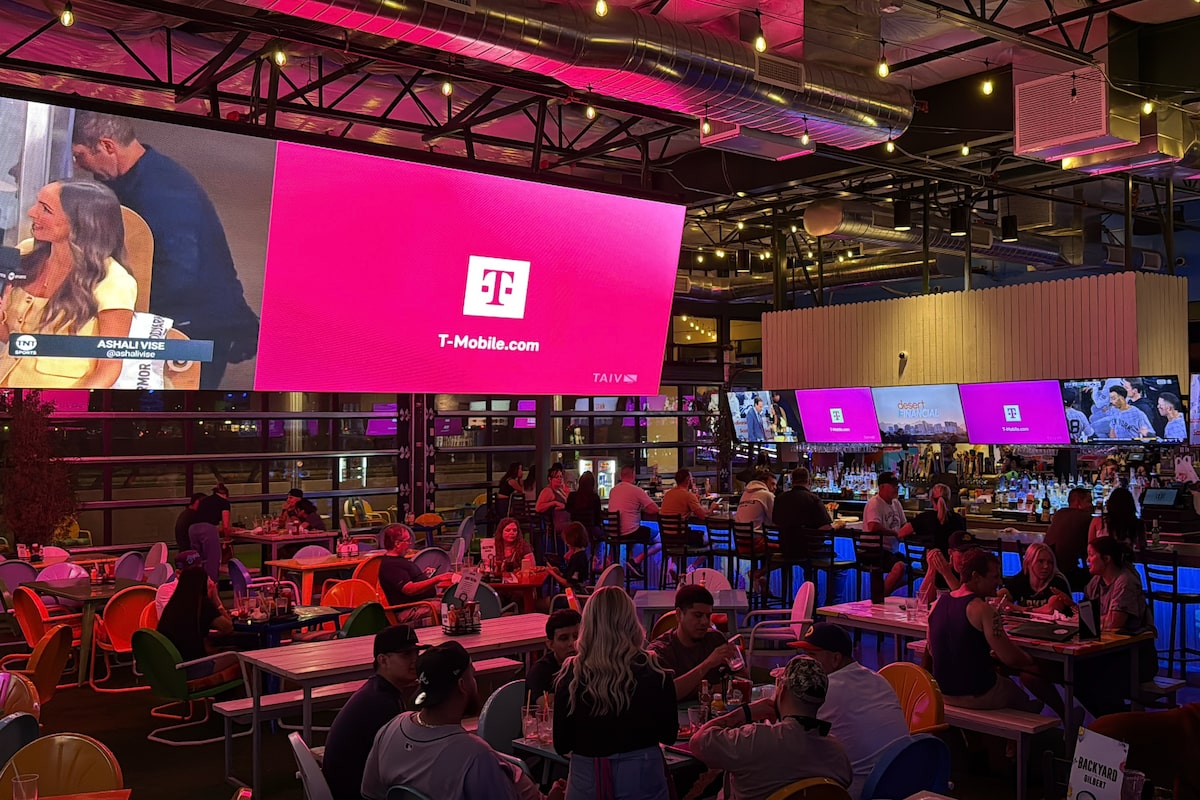
Taiv, a platform that circumvents TV ads to the preferences of local bar owners, is live in 4,200 primarily U.S. venues, and plans to expand across Canada in 2027.Supplied
Noah Palansky was sitting in a Winnipeg bar with his future wife in the spring of 2018 watching a Jets game when he saw an ad on an overhead TV screen. It was for a nearby rival establishment that was charging less for beer. The idea that a bar could unwittingly undercut its own business struck Mr. Palansky as a problem many establishments would love to solve.
The company that grew from that out-of-the-cable-box idea, Taiv Inc., is now one of Canada’s hottest tech companies and the most promising startup to emerge from Winnipeg since SkipTheDishes. Taiv’s three-year revenue growth rate of 7,432 per cent through the end of 2024 placed it fourth on Deloitte’s list of Canada’s fastest-growing companies.
Opinion: Two burrito bowls with a side of guilt, please
On Tuesday, Taiv, led by Mr. Palansky, its chief executive officer, said it had raised US$13-million in equity and debt, valuing the company just shy of US$100-million. That’s 60-per-cent higher than when it raised US$10.5-million last June. Copenhagen-based IDC Ventures and Emerging Ventures of Los Angeles co-led both rounds; the latest deal was also backed by past investors Y Combinator, Pioneer Funds and Garage Capital, plus Winnipeg’s Trillick Ventures and Women’s Equity Lab.
Taiv’s offering puts venue owners in control of what airs during commercial breaks on their TVs. Its system features a black box wired in between the TV and the cable box and connected to the cloud. Taiv uses artificial intelligence (TAIV stands for “putting the AI in TV”) to switch from a live TV feed when it goes to commercial break to a customized roll of ads sold by the company. Venue managers can control which ads air through an online portal.
Taiv has trained its AI model on short-form videos that can understand the context of what is happening on screen, allowing it to better determine which ads to serve up, to whom, and when. “An advertiser can be like, ‘I only want to turn this on when in front of a happy audience whose team is about to win,’” Mr. Palansky said. “We have all sorts of granular, real-time classification that is running.”
Venue owners can also run their own in-house content such as menu specials.
Taiv provides the system to venue owners for free and earns most of its revenues through its own ad sales from brands such as Pepsi, Google, T-Mobile and FanDuel. BMW circumvented the fact it was blocked from advertising on TV during the National Basketball Association playoffs one year by using Taiv instead. A Bacardi campaign to promote spiced rum on Taiv screens served up 50 million impressions and led to a 287-per-cent increase in sales and a 28-per-cent decrease for rival Captain Morgan at participating venues over four months, Taiv says.
During customer reference calls “we didn’t find anyone that didn’t like the product,” said Miami-based IDC partner Max Reiff. “They said, ‘How can I not like this? I get access to TV to advertise drink specials and trivia nights. It simplifies my life and it pays me.’ They were like, ‘It’s crazy this even exists.’”
Liz Lombardo Stark, director of marketing and public relations with Chicago-based Gibsons Restaurant Group, said “it really seemed like a no-brainer” when Taiv pitched her company. “There was nothing we needed to do and it was seamless. It is a great platform for us to get our messaging across to a captive audience.” Gibsons now has seven of its 14 locations using Taiv.
Taiv is now in 4,200 locations in 31 U.S. markets as well as Winnipeg, its only Canadian market so far. “The more restaurants we have, the more valuable this product is for advertisers because they can run bigger campaigns and be more granular with the targeting,” Mr. Palansky said. This, in turn, will increase the revenues Taiv can share with restaurants. “Those network effects are the true moat,” he said.
World Cup contracts turn Toronto and Vancouver bylaw staff into FIFA’s brand police
Mr. Palansky started his entrepreneurial career in an unconventional way in his early teens, raising money for cancer after his mother passed away, helped by his younger sister, Lexi Palansky, now Taiv’s vice-president of media sales.
He studied marketing and computer science specializing in AI and founded a short-lived appointment booking app before co-founding Taiv in 2018 with chief revenue officer Avi Stoller and chief technology officer Jordan Davis. Mr. Stoller is one of several Taiv executives who previously worked at SkipTheDishes.
The founders planned to launch in Canada but COVID-19 restrictions forced them to change plans, picking Florida after the state was early to ease pandemic measures. Its first venue was up by April, 2021, and Taiv was in 100 venues 11 months later. Taiv hit 1,000 venues in September, 2024, and 2,000 five months later. It plans to expand to 75 markets this year and across Canada in 2027.
With a report from Joe Castaldo