
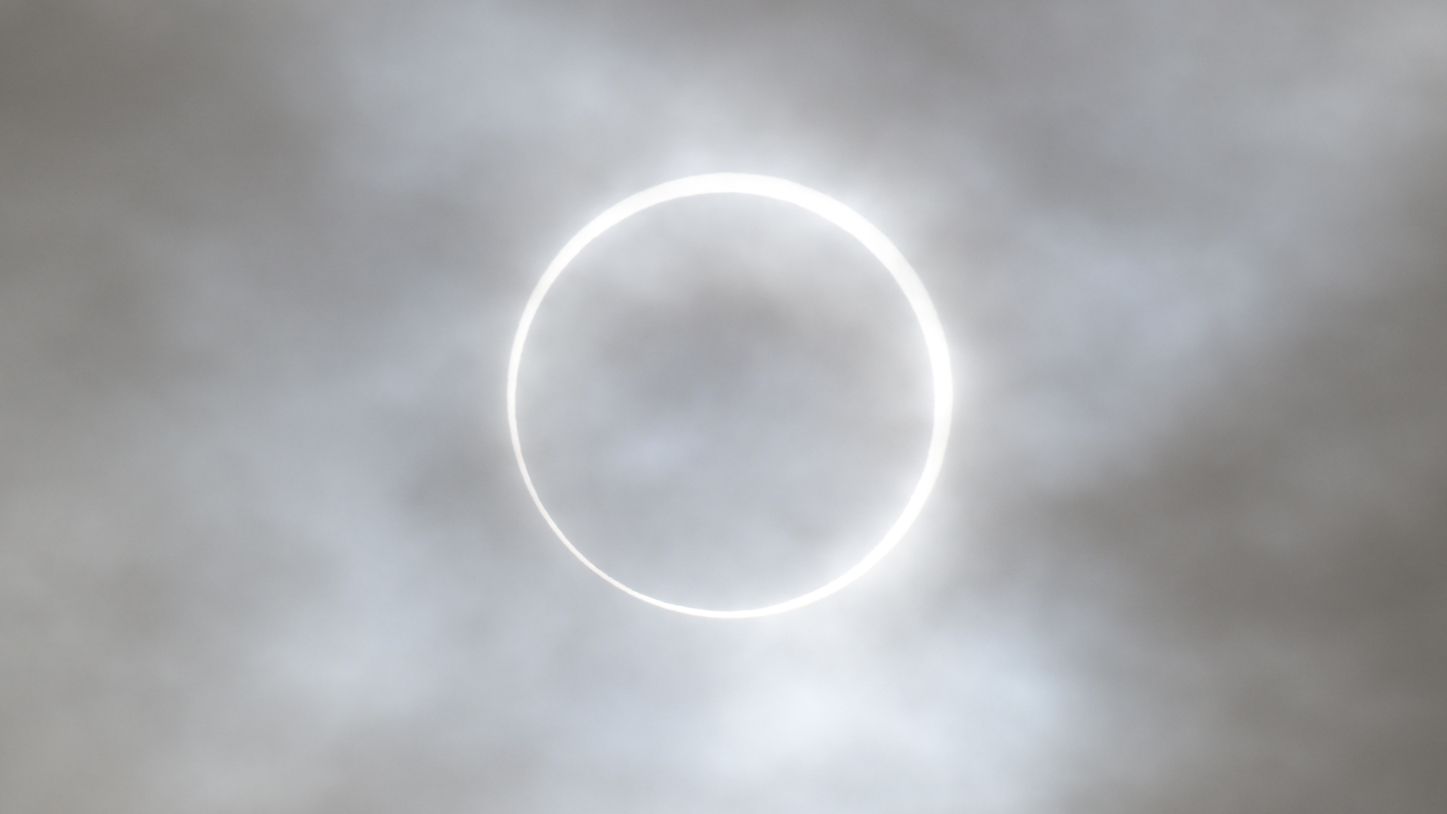
We’re just one week away from the first solar eclipse of 2026! Here’s what you need to know before a dramatic “ring of fire” annular eclipse darkens the sky over Antarctica on Feb. 17, likely confusing millions of penguins.
The eerie dimming is possible thanks to an extraordinary bit of celestial geometry. Earth’s moon is 400 times smaller than the sun, which happens to be, on average, 400 times farther from our planet than its natural satellite — a wondrous cosmic coincidence that causes both celestial objects to appear the same size in our sky.
You may like
When is the next solar eclipse?
Feb. 17 will see a spectacular annular solar eclipse unfold over a swathe of Antarctica, as the moon glides between the sun and Earth, occulting the vast majority of our parent star while leaving its outer rim visible to form a burning halo in the southern sky.
The period of maximum eclipse — an event known as annularity — is set to begin at 7:12 a.m. EST (1212 GMT) and will last for 1 minute and 52 seconds, after which the moon’s silhouette will slide inexorably off the solar disk.
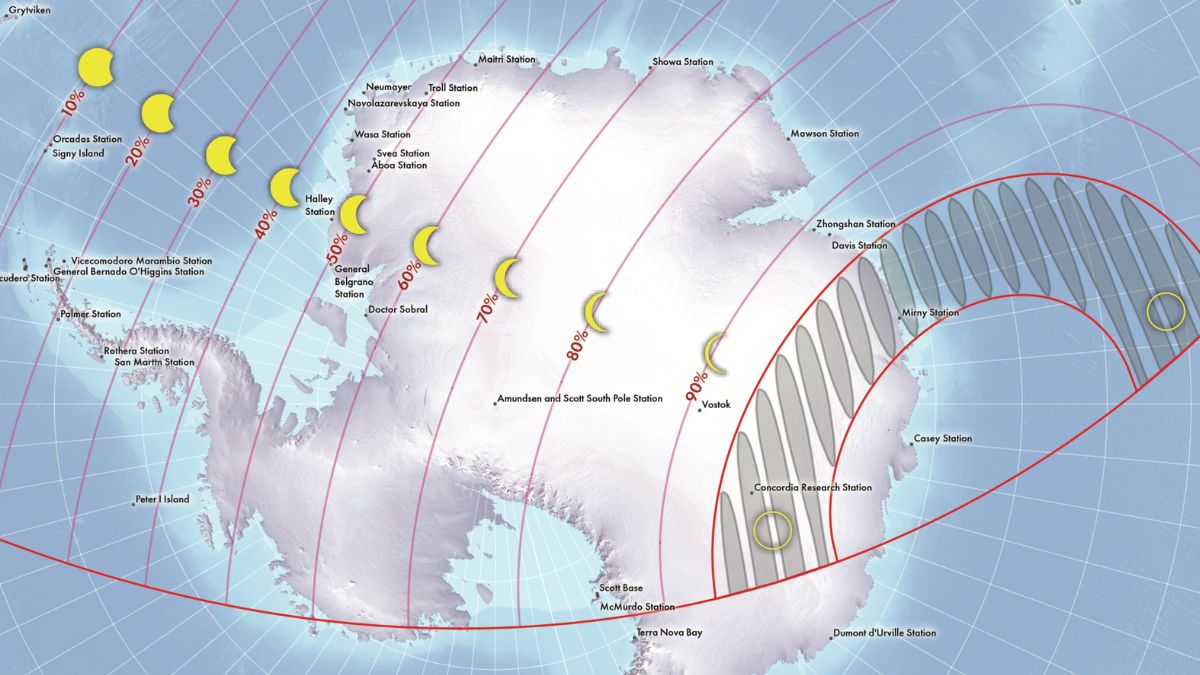
The path of the annular solar eclipse on Feb. 17, 2026. (Image credit: Michael Zeiler/EclipseAtlas.com)
Sadly, the full ring of fire will only be witnessed by the few human beings inhabiting research stations in the path of annularity, along with the millions of penguins who call the frozen continent home. Skywatchers in the southern extreme of South America, southeastern Africa and in parts of the Pacific, Atlantic and Indian Ocean will also bear witness to a lesser— yet still breathtaking — partial solar eclipse, during which the lunar disk will be seen to take a “bite” out of the sun.
Today’s best solar eclipse viewing glasses deals
Remember, it’s never safe to stare at the sun with the naked eye, even for a second, as doing so risks immediate and permanent damage to your eyes. To observe the sun safely, you’ll need a pair of eclipse glasses designed to block out the lion’s share of the harmful ultraviolet and infrared solar radiation, or — for a closer look — a pair of dedicated solar binoculars, like the Lunt SUNoculars and Celestron Eclipsmart. And with the upcoming total solar eclipse coming on Aug. 12, it’s never too early to get all your solar viewing equipment ready!
Editor’s Note: If you capture a photo of the Feb. 17 solar eclipse and want to share it with Space.com’s readers, then please send your photo(s), comments, and your name and location to spacephotos@space.com.