
A remarkable discovery has been made on the isolated island of St. Helena, located in the South Atlantic Ocean, where two new spider species have been identified, including one that is entirely eyeless. While this find is exciting, there is a catch, both species may already be extinct. The realization that these creatures could have disappeared before being fully understood adds a bittersweet note to the discovery.
St. Helena, a small British Overseas Territory, is home to a wealth of unique wildlife, with 507 confirmed species of spiders alone. Its isolation has fostered an environment where species evolve in ways that are often strange and completely different from what we see elsewhere. Recently, scientists discovered two new eight-legged creatures, one of which is smaller than a grain of rice, by examining old museum specimens. These new species could already be gone, having not been seen in the wild for over 30 years.
The Christy Jo Goblin Spider: A Peculiar Armor
The first of the two new species is the Christy Jo goblin spider (Ischnothyreus christyjoae), a creature with thick, protective armor on its abdomen. This feature allows it to shield itself from predators, giving it an almost armored appearance that seems more mythical than real. This discovery was made by Dr. Danni Sherwood, an arachnologist, while studying old museum collections. As she compared the spider’s anatomy with other species, she realized its genitalia were completely unique, confirming it as a new species.
“I discover new species both in the wild and in museums all the time, so it is somewhat routine,” Dr. Sherwood shared with BBC Wildlife, “but these discoveries never lose their sparkle.”
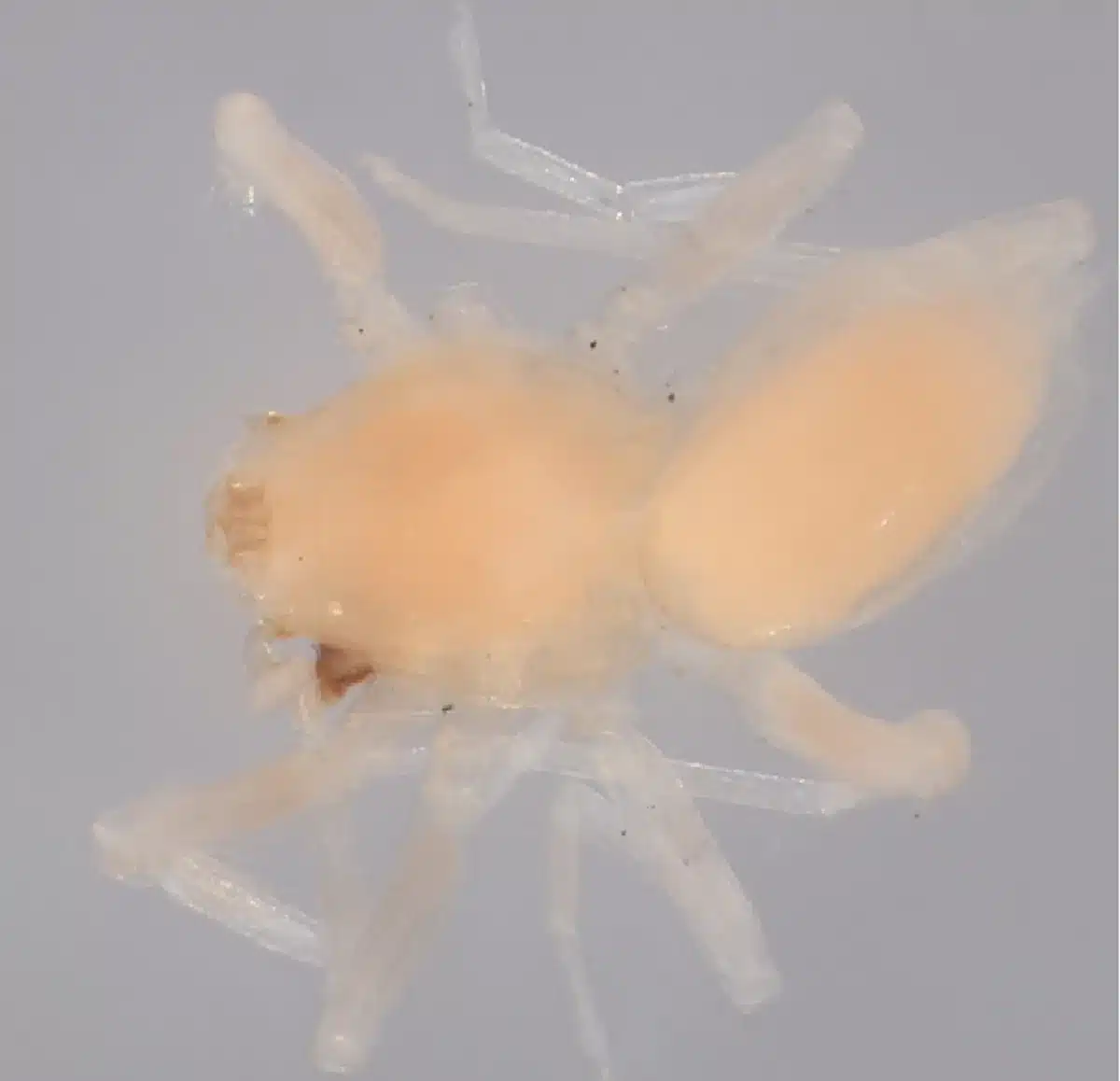 The Christy Jo goblin spider (Ischnothyreus christyjoae). Credit: Dr Danni Sherwood
The Martina Miniscule Spider: Eyeless and Mysterious
The second newly identified species is the Martina miniscule spider (Anapistula martinae), which is so tiny it is barely visible to the naked eye. This arachnid measures less than half a millimeter long. What makes this spider especially intriguing, however, is its lack of eyes.
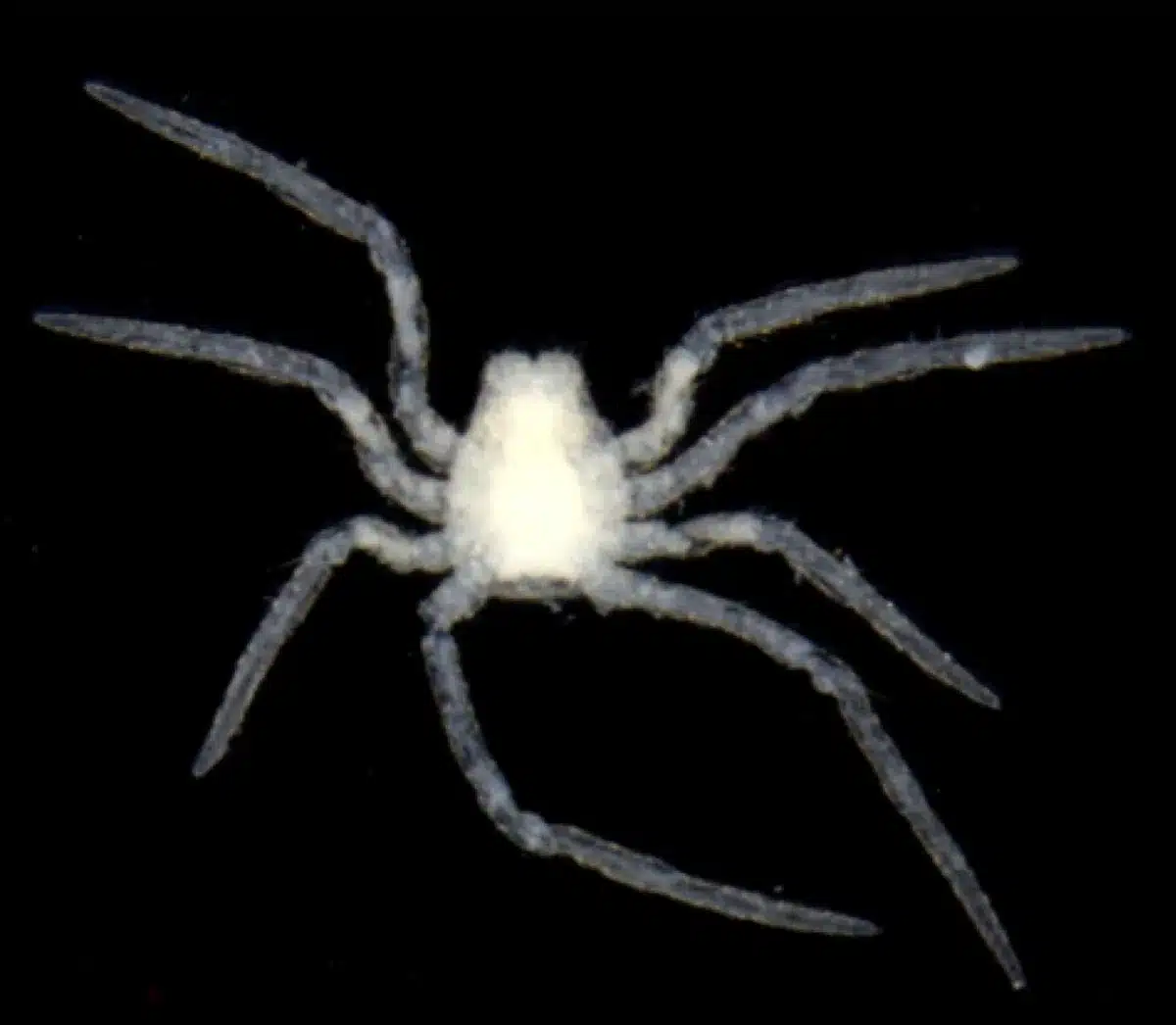 The Martina miniscule spider (Anapistula martinae). Credit: Dr Danni Sherwood
A rare trait for a species that doesn’t live in total darkness, like caves or deep underground. Most eyeless species evolve in places where light doesn’t reach, but this eight-legged creature seems to have developed this unique trait in a more open environment. Dr. Sherwood speculated that the Martina miniscule spider might live in tight crevices between rocks, though its eyelessness remains a mystery.
“We are not quite sure about its lack of eyes.” she added, “It could be that it occurs in crevices in rocks, or something entirely else has happened.”
St. Helena’s Wildlife: On the Brink of Extinction
Both the Christy Jo goblin spider and the Martina miniscule spider haven’t been seen in the wild for decades, and their possible extinction highlights some of the struggles St. Helena is facing. Despite being so remote, the island isn’t immune to problems like invasive species and habitat loss. These challenges are even harder to tackle given the island’s isolation and its rich biodiversity.
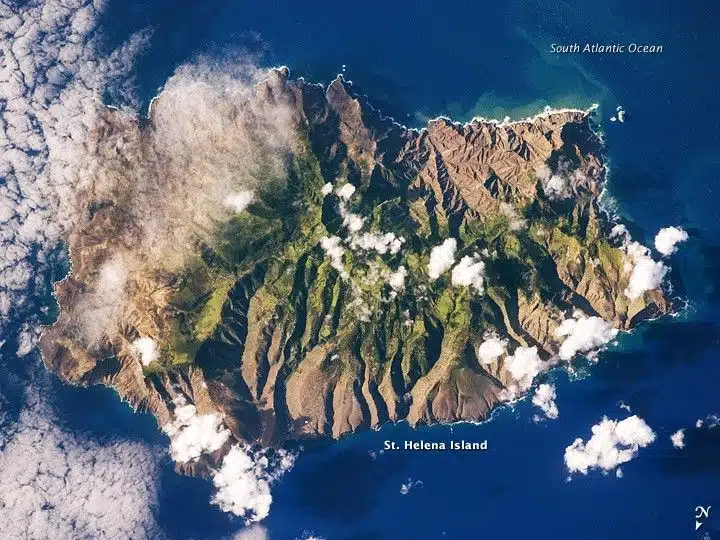 Aerial view of St. Helena Island. Credit: NASA
Deforestation has especially taken a toll on many of the island’s unique species. Researchers like Dr. Sherwood are worried that the fact these web-spinners were found in museum collections, instead of out in the wild, might mean they’ve already disappeared for good.