
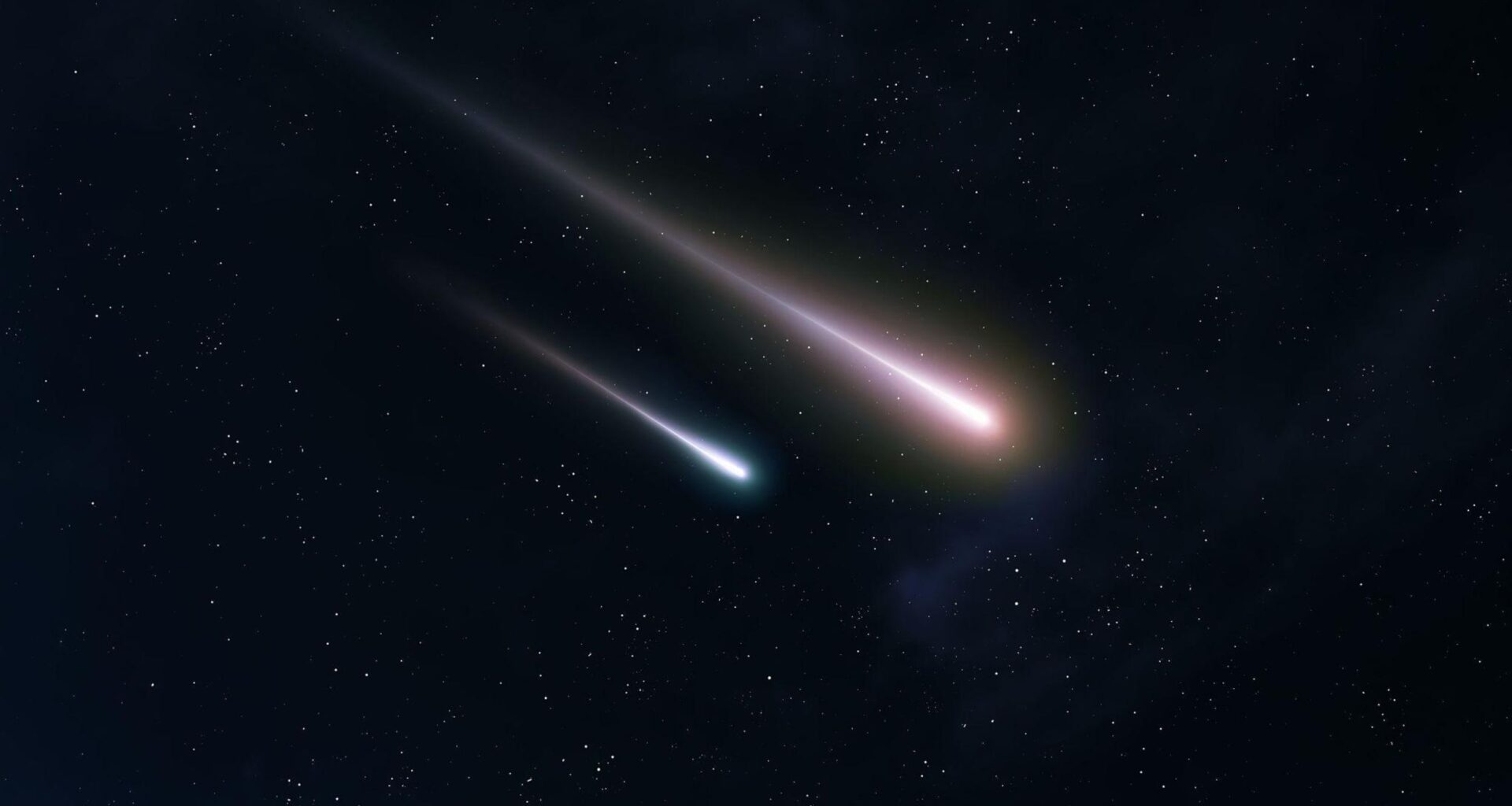
Seismic sensors used in earthquake monitoring equipment have have demonstrated that they can also track sonic booms from space debris entering Earth’s atmosphere. This new method allows scientists to pin down an object’s flight path with greater accuracy.
That ability reframes how scientists and safety officials can locate falling spacecraft in the critical moments when their paths matter most.
Tracking space debris with sonic booms

The evidence came from a nighttime reentry over Southern California, when a discarded spacecraft module shattered high in the atmosphere and left no confirmed debris on the ground.
By reading sonic boom signals captured across more than 120 earthquake sensors, Benjamin Fernando at Johns Hopkins University (JHU) documented a flight path that fell nearly 20 miles south of where orbital tracking had placed it, a shift large enough to change search priorities.
The same signals also recorded how the object broke apart in stages as it raced overhead, extending the usable tracking window beyond the point where radar and optical systems failed.
That narrow window defines both the promise and the limit of this approach, setting up why the mechanics of breakup and detection speed matter in what follows.
Heat disrupts tracking
Radar follows objects in orbit, but a reentry wraps them in plasma, a hot gas with free electrons. NASA reentry guidance puts breakups between 45 and 52 miles up, when drag overwhelms a vehicle’s structure.
Once fragments start peeling off, each piece slows differently, so the predicted ground track can slide sideways within minutes.
Seismic listening steps in during that messy phase, because it uses what the atmosphere already sends to Earth.
Shockwaves move ground
A sonic boom is not just noise, because its pressure front can push downward on soil and concrete. Seismometers record that push as an N wave, a fast down-up wiggle in the ground signal.
Stations closest to the flight line see simpler pulses, while stations farther away catch extra arrivals from scattered fragments.
Those differences turn a one-time boom into data, as long as researchers separate it from real earthquakes.
Timing turns noise into direction
Across a dense network, each station feels the boom at a slightly different time, and that pattern encodes direction.
In the study, software matched first arrivals and traced the debris line without waiting for classified radar.
With enough stations, the same timing can also pin down speed, because faster objects sweep their booms across ground sooner.
That approach can deliver a map within minutes, which matters most when search crews need to move quickly.
Breakup leaves signatures
The booms did not arrive as one clean hit, which let the team read how the module broke apart. Each fragment produced its own shock, so seismometers captured clusters of short pulses instead of a single wave.
The paper described a fragmentation cascade, a chain of breakups that releases smaller bursts of energy over seconds.
When a breakup unfolds that way, a few sturdier pieces can survive longer, so fallout zones need careful searches.
Fast maps aid safety crews
Recovery teams cannot chase rumors across a whole state, and a tighter track line cuts wasted time.
Some spacecraft carry toxic propellants or radioactive power sources, so NASA and local officials may need to find fragments before people handle them.
Seismic tracking cannot warn anyone ahead of impact, because the debris outruns the boom that reveals its location.
Even so, rapid post-impact maps can speed environmental checks and cleanups, especially when responders work in remote terrain.
Crowded orbits raise risk
Launches keep stacking up, as a European Space Agency report lists about 40,000 tracked objects in orbit. Only about 11,000 count as active payloads, meaning most of what circles Earth is dead hardware waiting to fall.
A 2025 analysis found that major airspace regions faced a 26% yearly chance of disruption from uncontrolled spacecraft reentries.
“There are thousands, tens of thousands, more satellites in orbit than there were 10 years ago,” said Fernando.
Wind and geography matter
Winds can push lightweight fragments sideways after breakup, so the ground footprint drifts even when the original path is known.
Researchers plan to refine the calculations by adding wind data, which could tighten predictions for future uncontrolled entries.
Sparse oceans pose a harder test, yet infrasound, sound too low-pitched for human hearing, could still capture the same shock signatures.
Better handling of weather and geography would make seismic tracking more portable, and NASA could plug it into hazard planning.
Future of space debris tracking
Beyond the Chinese Shenzhou-15 case, the JHU team already traced dozens of other reentries using public seismic records from around the world.
Those tests included debris from three failed SpaceX Starship flights in Texas, showing that the signals appear in messy real life.
Finding no confirmed fragments on the ground kept the Shenzhou-15 result untested, so future events will need better validation.
Outside reviewers have pushed for shorter delays between breakup and path estimates, which could make this tool truly useful.
Seismic listening turns a brief burst of sound into a practical map, linking space tracking to ground safety work.
As satellite traffic grows, faster automated analysis and better wind handling will decide whether this approach becomes routine.
The study is published in Science.
—–
Like what you read? Subscribe to our newsletter for engaging articles, exclusive content, and the latest updates.
Check us out on EarthSnap, a free app brought to you by Eric Ralls and Earth.com.
—–