
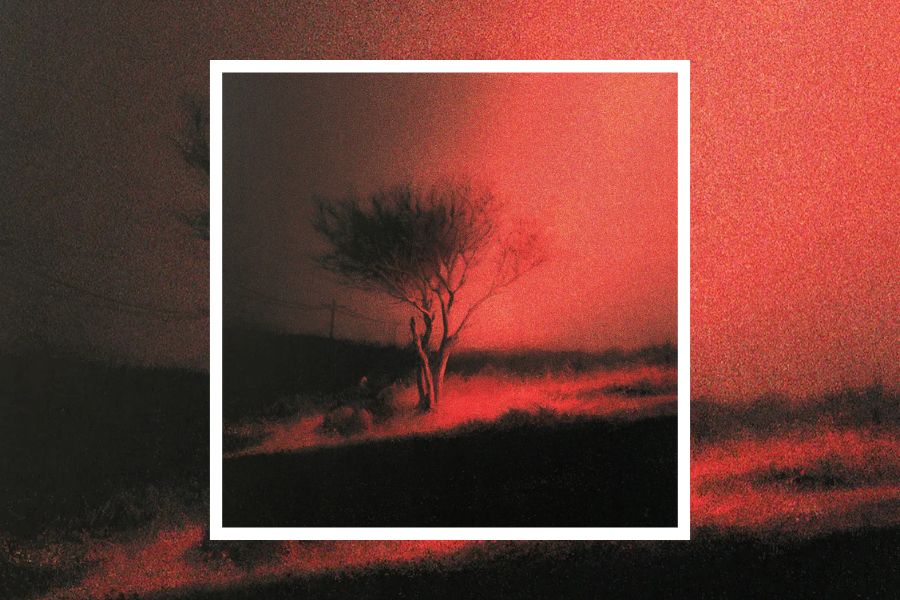
Joji — turning loneliness into something beautiful.
In the quiet, restless hours of lockdown, I was listening to Joji’s dreamy songs. As a preteen stuck in my room, his music offered a sense of normality when everything else felt disrupted.
Departing from the sound that first drew me in, Japanese-Australian songwriter and producer George Kusunoki Miller, also known as Joji, released his explicitly titled album Feb. 6. The record mirrors my own relationship with his ever changing music: complex and layered. Not every track landed for me, but that inconsistency didn’t distract from the album’s brilliance.
Joji’s music resonates as the pulse of growing up. As his music continuously changes with experimentation, so do I. His compositions are full of heartbreak, profound longing and insecurity. He switches between passion and aggression — a key blend in this new album.
The record opens with “PIXELATED KISSES,” a heavy and edgy song. His eagerness is expressed through the flickering drumtrack and bursting synthesizer. Joji circulates in thought, talking directly to his lover who’s out of reach.
Track three, “Last of a Dying Breed,” opens with a prolonged melody. The synthesizers reflect a desperate yearning – synonymous to the complex, human experience of love. The splitting drum track accompanied with the organ piano creates a grounded yet fleeting rhythm, which compliments his lyrics of flying well.
Track four, “LOVE YOU LESS,” is another star track. Featuring a real drum kit and lulling rhythm, it resembles the indie rock anthems I’m a sucker for. The lyrics, “If I love you less, will you love me more?” caught my attention as the thesis for the album, his main internal dilemma.
Beyond the opening tracks, songs like the tender “Hotel California,” the transient “Love Me Better,” the rippling, almost magical “Sojourn” and closing track “Dior” further solidify the album’s emotional intimacy. Without a doubt, this is Joji’s most experimental project yet. From blown-out bass lines to complex, restless beats, the album reveals a new shade of his melancholy — one edged with angst.
Still, the album isn’t without flaws. Despite its lengthy tracklist, several songs like “Silhouette Man” feel fleeting, functioning more like drawn-out interludes than fully conveyed ideas.
Setting aside its shortcomings, Joji’s new album was impressive and experimental, leaving me excited to see what comes next. The record feels honest. It’s indecisive and restless, much like adolescence itself. As I continue to grow alongside his evolving sound, this album stands as a reminder that change is not something to fear, but something to feel through. Joji remains an artist who understands what it means to be alone — and how to make that loneliness beautiful.