
Updated February 10, 2026 10:04AM
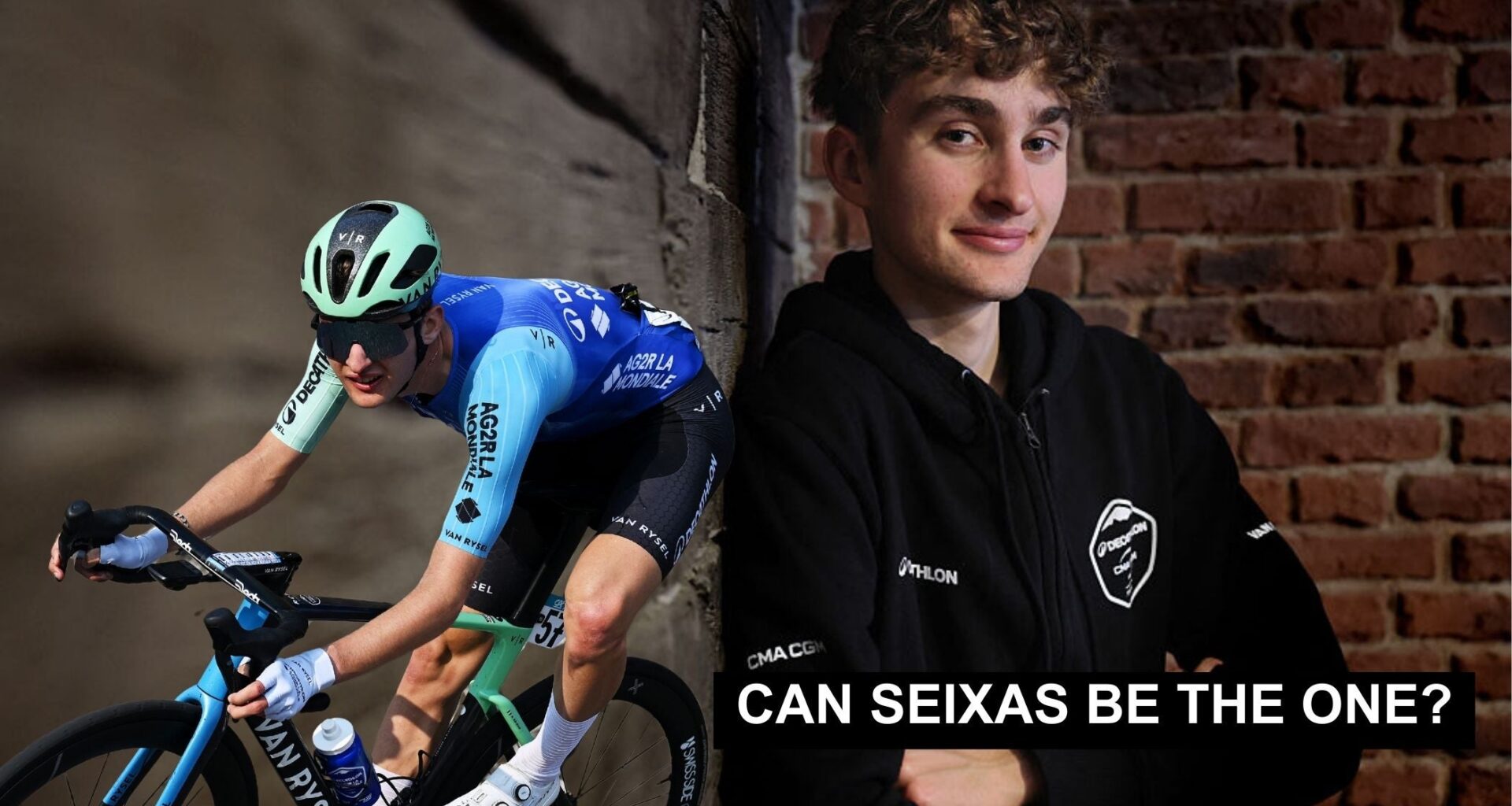
Will all the hype and expectations piled onto the slender shoulders of Paul Seixas be too much?
The cycling world will soon find out.
The 19-year-old singlehandedly revived the hopes of an entire cycling-crazed nation with his promising rookie season and rekindled the Tour de France hopes of Europe’s sleeping giant in France.
His 2025 results sheet is enough to set any long-suffering French fan’s heart fluttering: fifth at GP La Marseillaise, runner-up at Paris-Camembert, winner of the points jersey at the Tour of the Alps, eighth overall at the Critérium du Dauphiné, and a dominant overall victory at the Tour de l’Avenir.
And all that came before a European championships podium alongside cycling gods Tadej Pogačar and Remco Evenepoel.
No wonder France is all goo-goo over their latest next big thing.
“Obviously when you follow these guys once, it gives you a lot of confidence,” Seixas told AFP during an altitude training camp this week in Spain.
“Being much younger than them, I tell myself that if last year at the end of the season, I managed to keep up with them, that means that if I progress further,” he said, “I will be able to close this gap.”
That’s just the kind of cool panache that French fans have been waiting for, well, since the 1980s.
Not killing the golden goose
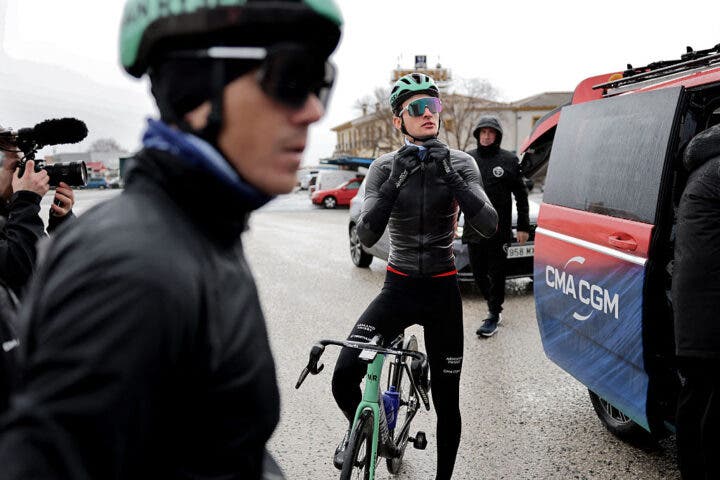 Seixas is growing accustomed to the media spotlight. (Photo: Thomas COEX / AFP via Getty Images)
Seixas now carries the weight of expectations that have buried one generation of French riders after another, all chasing the same elusive prize: becoming the first French male Tour winner since Bernard Hinault in 1985.
Unlike many who came before him, Seixas appears to possess that je-ne-sais-quoi quality that sets apart pure talent from pack-fill.
He’s got the motor, the climbing and time trial chops, and a killer instinct.
Nearly everyone who’s come close to him has said the same thing: Yes, he could win the Tour de France some day.
But that was also said about nearly every rising French prospect who’s come down the pipe ever since “The Badger” hung up the cleats.
Generation after generation have raced and eventually succumbed to the weight of cycling’s biggest unfulfilled destiny.
The challenge for Seixas is to try to put that hype and pressure to one side, and focus on racing.
After all, he’s only 19.
Too much, too soon?
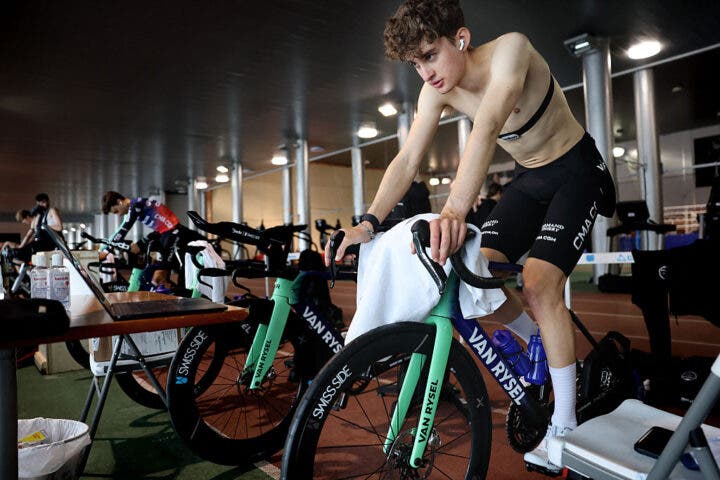 Seixas rides the trainer at an altitude camp ahead of his season debut. (Photo: Thomas COEX / AFP via Getty Images)
The hype train has already left the station. Every French media — from L’Equipe to Vélo Magazine to a phalanx of radio and TV reporters, YouTubers and Instagrammers — will follow his every move in 2026.
So much so, Decathlon CMA CGM has even brought on a full-time press attaché to deal solely with requests about the French prodigy.
Everyone around Seixas is trying to protect their young protege.
From Decathlon staffers to teammates, everyone can see how the pressure is already building.
Aurelien Paret-Peintre said he hopes everyone will give him room to improve and progress.
“The media are overdoing it, but he’s a guy with exceptional talent,” Paret-Peintre told Cyclism’Actu. “To do what he did at 19 last year, there’s not much you can criticize about his physical maturity. He’s already at the very top after just one year as a professional, so you have to give him time.”
Decathlon’s brain trust is walking cycling’s ultimate tight rope. Team brass want to give Seixas space to grow, but they’re piling on realistic opportunities.
For his sophomore season, it’s about building on the momentum of 2025, and putting a few wins on the board. No one’s talking yellow jerseys just yet.
Sport director Sébastien Joly said the team is putting circles around two major spring dates: Strade Bianche and Liège-Bastogne-Liège.
That puts him on a collision course with Pogačar and Evenepoel, and reflects how much confidence they have in their young steed.
“The Tour of Algarve and the Ardèche Classic will be concrete opportunities to aim for victory,” Joly said last month. “Paul is entering his second season in the WorldTour, and the idea is to offer him a balanced schedule while allowing him to progress against the world’s best.”
Against the world’s best means Seixas will be crossing swords with Pogačar, Evenepoel and Co. all season long.
Is it too much, too soon?
Threading the needle of expectations
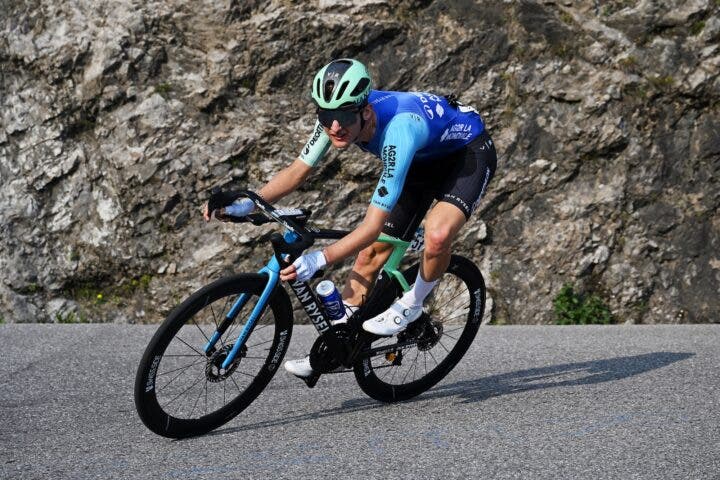 Seixas, shown here at last year’s Il Lombardia, debuts at the Volta ao Algarve. (Photo: Dario Belingheri/Getty Images)
Of course, the big hype will be around the Tour de France debut.
Everyone is waiting to see if Decathlon will take him to the Tour in 2026. Team brass said a decision won’t be made until May.
“It would definitely be a dream, but it’s not my goal this year,” Seixas told AFP this week.
“But it makes me want to push myself in training to succeed in the race.”
The Tour is, and will be, part of his racing future. The question is when the timing is right.
The central debate is whether going to the Tour too early could hurt more than help his progression.
Anything less than a spectacular debut might be framed as a disappointment. Yet history shows it can take several tries to crack the Tour code, meaning an early start could also have its upside.
Decathlon performance director Jean-Baptiste Quiclet talked to Vélo Magazine about the quandary.
One option is to bring Seixas to the Tour without expectations. Let him race freely, jump into a few breaks, test himself in the time trial, and absorb the pressure, speed, and demands of the race that will define his future.
That is broadly the approach Groupama-FDJ took last year with France’s other hyped prospect, Lenny Martinez.
The son of Olympic mountain bike gold medalist Miguel Martinez and the grandson of a Tour de France stage winner, “Mini Lenny” did not impress in his Tour debut, and some were quick to write him off, so it is a double-edged sword.
“There are two opposing views. The first is somewhat similar to the ‘Lenny Martinez project,’” Quiclet said. “Developing the skills to be a leader in a grand tour is a long continuum. And to achieve this, you need to aim for consistency, daily concentration and self-sacrifice, which builds you up from your first grand tour.”
Quiclet said it will be a balancing act because right now Seixas is quite good at everything.
He can handle himself in one-days, monuments, classics, and the worlds — proven by his third behind Pogačar and Evenepoel at the European championships — and he can race GC under the weight of expectations. His Tour de l’Avenir win in 2025 confirmed that.
The team doesn’t want to hold him back either.
“We don’t want to break the positive momentum, because with each passing month, we see a new Paul,” Quiclet said.
“Whatever Paul does, all eyes are on him,” he said of a possible Tour start. “We won’t be able to protect him from the pressure even if he rides in a free role. What matters is what he thinks is most relevant to his future quest for the general classification.”
Packing the right stuff
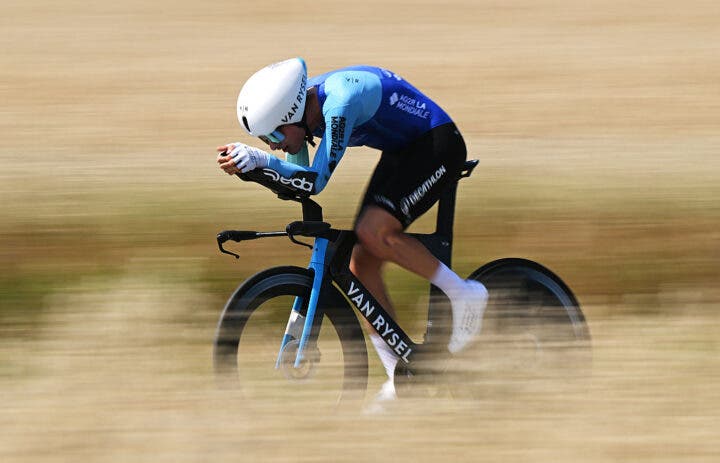 Many view Seixas’ time trialing ability as the key asset to his skillset. (Photo: Dario Belingheri/Getty Images)
Seixas is the most complete French talent in years, bringing an all-around skillset that riders like Romain Bardet, David Gaudu, and Thibau Pinot never quite had, especially against the clock.
At the Dauphiné’s race of truth last summer, he was 10th, more than 1 minute slower than TT king Evenepoel, but within a fistful of seconds of former world time trial champion Tobias Foss and Tour de France podium finisher Florian Lipowitz.
Seixas grew up in the northern suburbs of Lyon, with a mixed heritage featuring both Portuguese and Czech roots. Seixas is pure French, and he spent summer afternoons watching the Tour with his grand father, and learned about discipline from his father, a national-level karate champion.
“What I love is winning races. But even if I manage to achieve my dreams, that won’t stop me. It just makes me want to push myself further in training to succeed in races,” he told AFP. “And winning a race is still an indescribable, priceless feeling.”
That’s music to the ears of France’s old guard, who’ve sometimes slagged off subsequent generations as lacking the killer instinct or not putting in the hard work.
Groupama-FDJ boss Marc Madiot told CyclismActu that Seixas is the prototype of a new generation of French riders who are taking the latest in science, training, nutrition, and coaching, and layering it on top of the deep French tradition.
“If you placed Bernard Hinault in today’s generation, he would have had the same abilities as Paul Seixas,” Groupama-FDJ boss Madiot said to CyclismActu. “That gives you an idea of his level. Riders today are better prepared, better trained, better educated. They’re ready to perform much younger.”
Madiot — who Paris-Roubaix twice and raced alongside Hinault — said Seixas brings a winning attitude that he hasn’t seen in years for a French rider.
“He has that attitude, that desire to win, that inner fire. That’s what sets champions apart,” he said. “We don’t see that very often anymore.”
No talk of yellow – yet
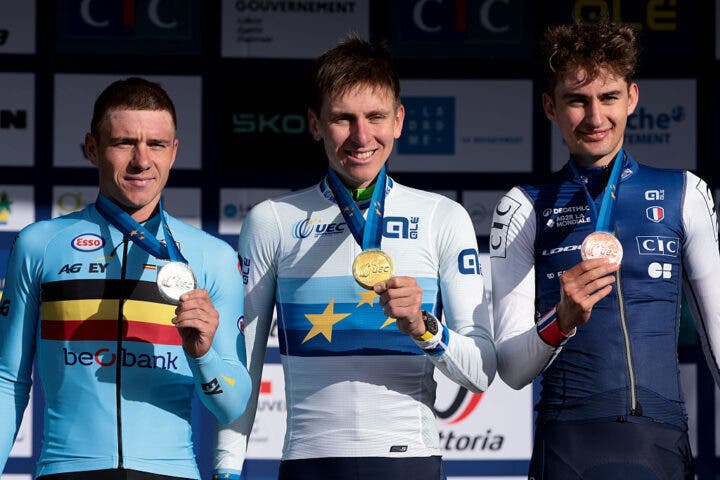 Seixas shared the podium with the peloton’s superstars at the European championships. (Photo: Jean Catuffe/Getty Images)
It will always be about the Tour de France for Seixas, whether he likes it or not.
No French rider has won any grand tour since Laurent Jalabert won the 1995 Vuelta a España.
That’s a long, long wait for French fans.
Despite the incessant hype, Seixas is doing his best to keep his feet on the ground.
At just 19 — the age when most kids are entering university — he starts a new season as one of the central leaders at Decathlon CMA CGM.
“It’s been two months since I’ve seen my parents or my girlfriend, but we know why we’re doing it. These are the sacrifices we have to make for performance,” he said from Sierra Nevada. “When you come back down [from elevation], you really feel the difference.”
Seixas opens the year at the Volta ao Algarve (February 18-22) and his second-season goals are realistic. He wants to post some strong and consistent early season results, and ideally knock down his first pro win.
At 19, it’s an open road for Seixas.
France has been here before, and things can go either way.
If he’s as good as everyone says he is, he could quickly rise to the top. Any setbacks or brutal reality checks, however, could see the dreams of Tour de France salvation sputter out again.
France must thread the needle with its next big thing: If they don’t get it right, it could make that wait even longer.