
 Review at a glance
I’m a champion sleeper and an expert napper, but waking feeling properly refreshed has always been elusive.
The cycle of stress, poor sleep due to stress, and another day of feeling stressed and sleepy was proving impossible to break. That is, until I popped the Sona round my ear and let it tickle my vagus nerve into parasympathetic submission for ten minutes of an evening.
The biohackers and health data tracker obsessives are correct on this one. Chronic stress is incredibly bad for us, and vagus nerve stimulation is where it’s at if you want to dial it down and live longer.
Travelling from your brain to your gut, this long nerve is key to triggering your parasympathetic nervous system (PSNS) – kicking your system into ‘rest and digest’ rather than ‘fight or flight’.
I’ve been stimulating my vagus nerve the old-fashioned way for years, since a course of ACT (Acceptance and Commitment Therapy) opened my eyes to the combination of breathing exercises and activating the mammalian dive reflex to kick my vagus nerve into gear.
But there’s only so much cold-water swimming and sticking your face in bowls of ice water you can do before you become insufferable.
MindSpire
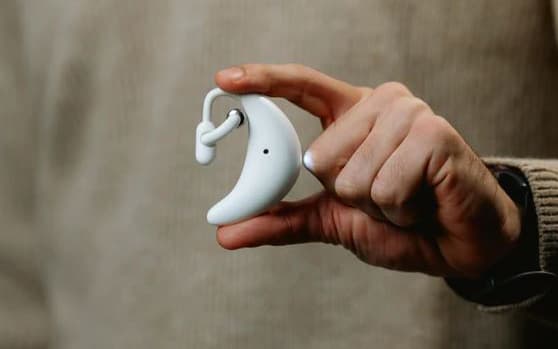
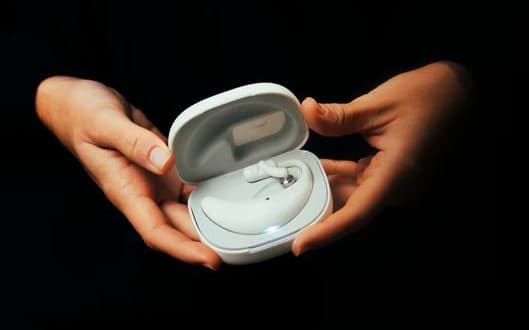
Sona is a slick and stylish option for vagus nerve stimulation, with an impressive amount of hardware tucked inside its ergonomic shell. It comes in a discrete charging case that’s a similar size and shape to a mouthguard case.
It’s surprisingly comfortable to wear, despite my having ridiculously small ears that reject most headphones (and a rook piercing). The kit also contains a conductive jelly you can apply to the points where the conductor touches your skin.
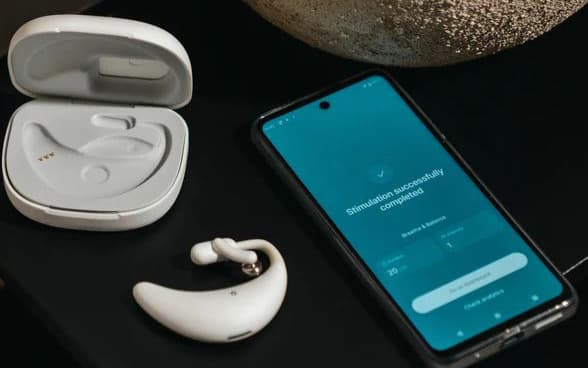
The lightweight wearable brackets your left ear, syncing with the MindSpire app to guide you through customised nerve stimulation and breathing routines. Built-in sensors track your heart rate and heart rate variable (HRV) in real-time, building up a bank of data the more you use it.
If you’re already an HRV devotee (high is good, meaning you’re in that good parasympathetic activation zone, low means your sympathetic system is activated and you’re stressed), you’ll know this is the good stuff. And yes, you can integrate your Oura or Whoop data with the Sona App.
There are already a handful of vagus nerve stimulators on the market, but Sona has leapfrogged them all by offering a host of AI-enabled goodies with its built-in chip. It syncs the pulses with your breathing — I felt it intensify at the bottom of my exhale — and banks those real-time stats for longer-term trend analysis.
By entering your long-term health goals and favourite activities, it builds you a customised programme to follow for long-term stress reduction.
I particularly appreciated the attention the Sona team clearly paid to the UX design. The MindSpire app has an appealing gamified approach, where you unlock ‘streaks’ with your sessions, gently nudging you towards that all-important consistency in your practice.
MindSpire
There were a few hiccups with Bluetooth pairing that initially saw my connection drop mid-session, keeping those streaks tantalisingly out of reach. Sona was incredibly responsive in getting my beta version properly bonded to my iPhone.
It also requires regular charging, but I am notoriously bad at keeping my tech juiced up. The travel case is very handy for when you’re on the move, but I found it best to keep it safe on my bedside table, near a plug.
But once I had got the hang of setting it up, there’s nothing more satisfying than getting a perfect score on the connectivity and trying out the huge variety of exercises on the app.
While the breathing exercises are ideal for instant calming, I was particularly interested in ‘stacking’ the beneficial effects by setting up a 20-minute nerve stimulation and letting it run as I read in bed before sleep. Not that relaxation should be rushed, but it made the Sona even easier to absorb into my existing nighttime routine, and helped me focus.
Price — is it worth the cost?
This isn’t a one-and-done business — you need to commit to daily use to see positive effects.
At £695 it’s a pricey piece of tech (onboard chips with enough AI compute will have pushed up the price), especially if you’ve already splurged on, say, an Oura 4.
But if you use it every day for a year, that’s less than £2 a day for incredible sleep and reduced stress. While a beach holiday might do the same thing in the short-term, the long term benefits make it an investment piece.
Free software updates are also included in the purchase price. Plus, early adopters will be able to access future programmes as they’re unlocked on the app, meaning you won’t get locked into an annoying subscription to keep using your expensive piece of tech.
While expensive, the Sona offers more bang for your buck than other vagus nerve stimulators currently on the market. It’s very easy to slot into your daily routine, and the improvement in my sleep and stress management was remarkable.
The ability to tinker with the duration and types of programme available means you don’t get bored running the same exercises each day — sometimes I did more than one, they were so pleasant.
Real-time feedback and long-term trend tracking with easy-to-parse charts is also appealing, so much so that I, a wearables refusenik, have begun investigating second-hand Oura rings so I can monitor my HRV at all times.
It’s not surprising that the first batch is already sold out, but if you’re fast you can secure yourself a Sona in the next batch due in March 2026.