
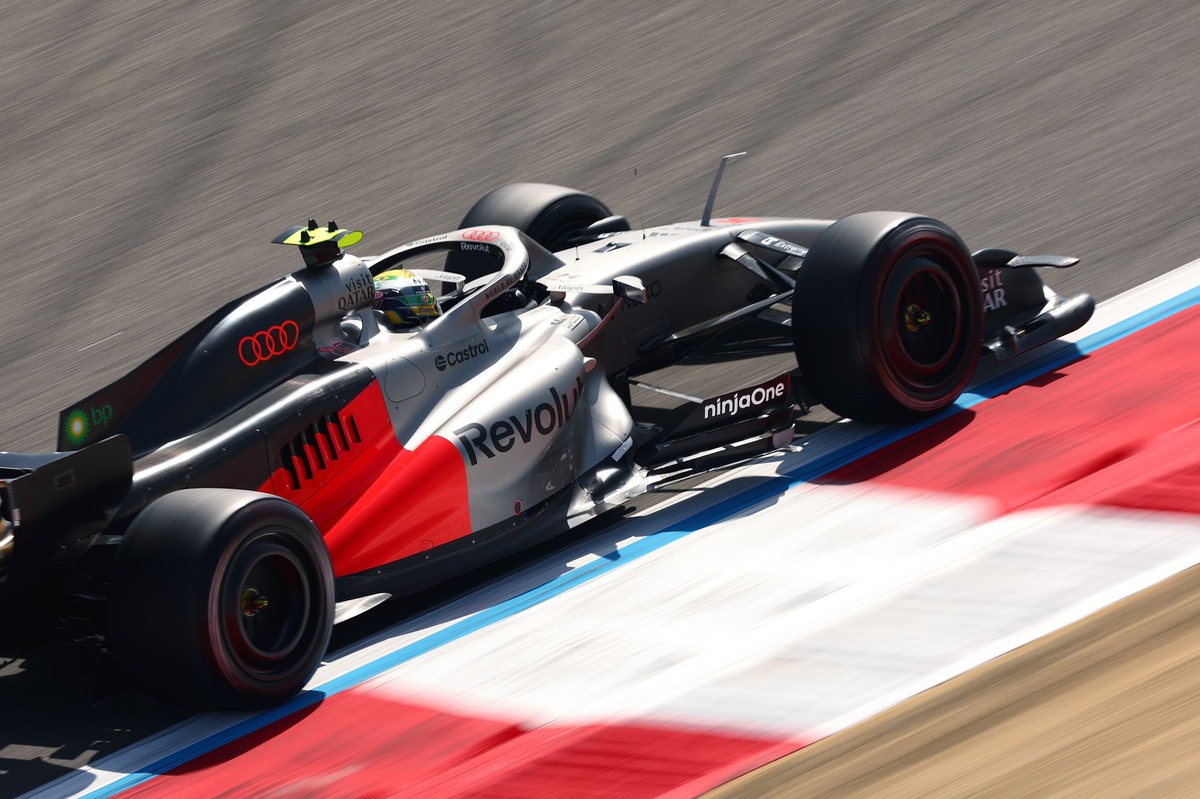
Audi’s R26 has been augmented with a very different sidepod design for the start of Bahrain’s Formula 1 testing ahead of the 2026 season, following the team’s conventional approach to the Barcelona running.
First seen with an inlet with a minor overbite in the Barcelona shakedown, the sidepods used there took more of an inwashing approach – the rear edge of the sidepods had been tucked in, with a smoother upper surface.
The Swiss-German outfit has introduced something far more complex in terms of topography for Bahrain. Firstly, the inlets have had their geometry changed to a narrower, taller intake alongside the flanks of the chassis.
This then flares out, with a ramped undercut to bring the airflow towards the edges of the floor. Furthermore, the top surface has had a channel introduced to ease the passage of airflow to the rear of the car. Reducing the length of this pathway ensures that the flow loses less energy as it transitions to the top of the diffuser surface.
The sidepods have been shrink-wrapped around the two side impact structures, with a small blister seen next to the mirror mounting for the upper crash structure, and the aforementioned undercut ramp for the lower structure.
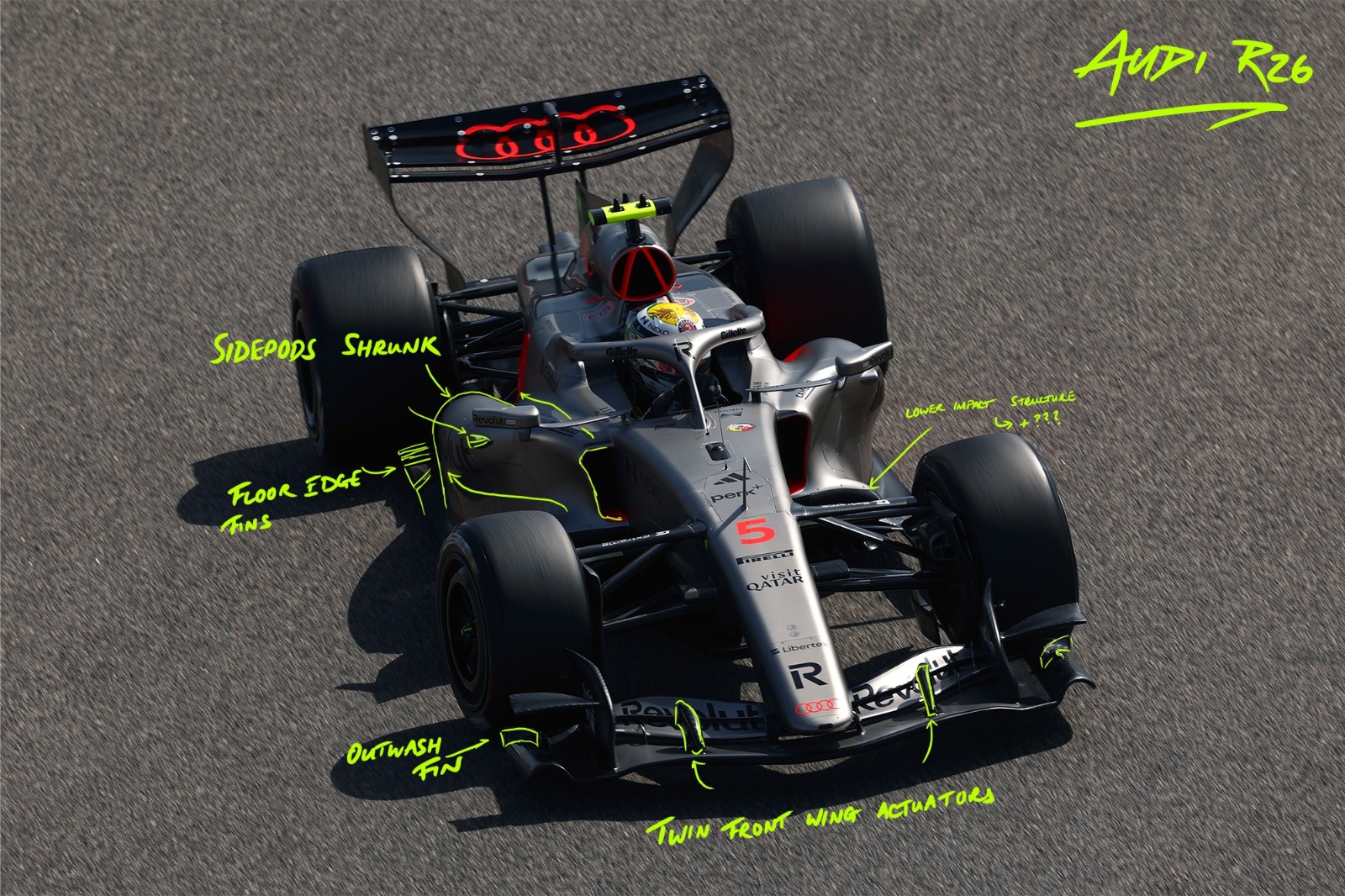
In addition to reducing the airflow’s travel, the positioning of the inlets should safeguard the cooling against the variance produced by tyre wake. The turbulence shed by the front tyre can make it more difficult to maintain a consistent mass flow rate of air through the inlets, so moving them inboard should ensure less turbulence gets in.
This is useful during cornering too, as the sidepods themselves can take greater responsibility for dealing with any airflow shed from the tyre.
With the images and TV footage available, it’s difficult to determine what Audi has done below the inlets; on first glance, it looks as though this might be a way to induce a bargeboard-like outwash effect to moderate the flow to the floor and with the wake boards. Hopefully, Autosport will have more definitive visual clues over the afternoon.
There are further new elements to the Audi around the front wing. The team has opted for the twin active-aero actuators, rather than the central actuator under the nose. This allows the team to lower the nose without creating too much blockage from the actuator housing.
Outwashing fins also sit atop the front wing’s vortex tunnels, which should allow for more interaction with the endplate winglets in turning airflow around the front tyres.
Read Also:
We want to hear from you!
Let us know what you would like to see from us in the future.
– The Autosport.com Team