
Published on Feb. 11, 2026, 11:00 AM
Extreme solar activity or even a software glitch could put us just days away from a satellite collision in low-Earth orbit.
As low-Earth orbit becomes more crowded, the risk of orbital collisions is on the rise, especially when those satellites lose the ability to avoid each other, or maneuver out of the path of space junk. The CRASH Clock, a new tracker developed by Canadian researchers, shows that we are fast approaching the ‘danger zone’ for these types of collisions in space.
In the 2013 film, Gravity, Dr. Ryan Stone, played by Sandra Bullock, sometimes literally claws her way through a nightmare scenario in space: an anti-satellite missile test produces an expanding cloud of debris sweeping around the planet, impacting more satellites, resulting in even more high-velocity debris, in a runaway chain reaction of cascading collisions. The end result of this is the complete collapse of low-Earth orbit, apparently claiming all satellites, spacecraft, and space stations in less than a day.
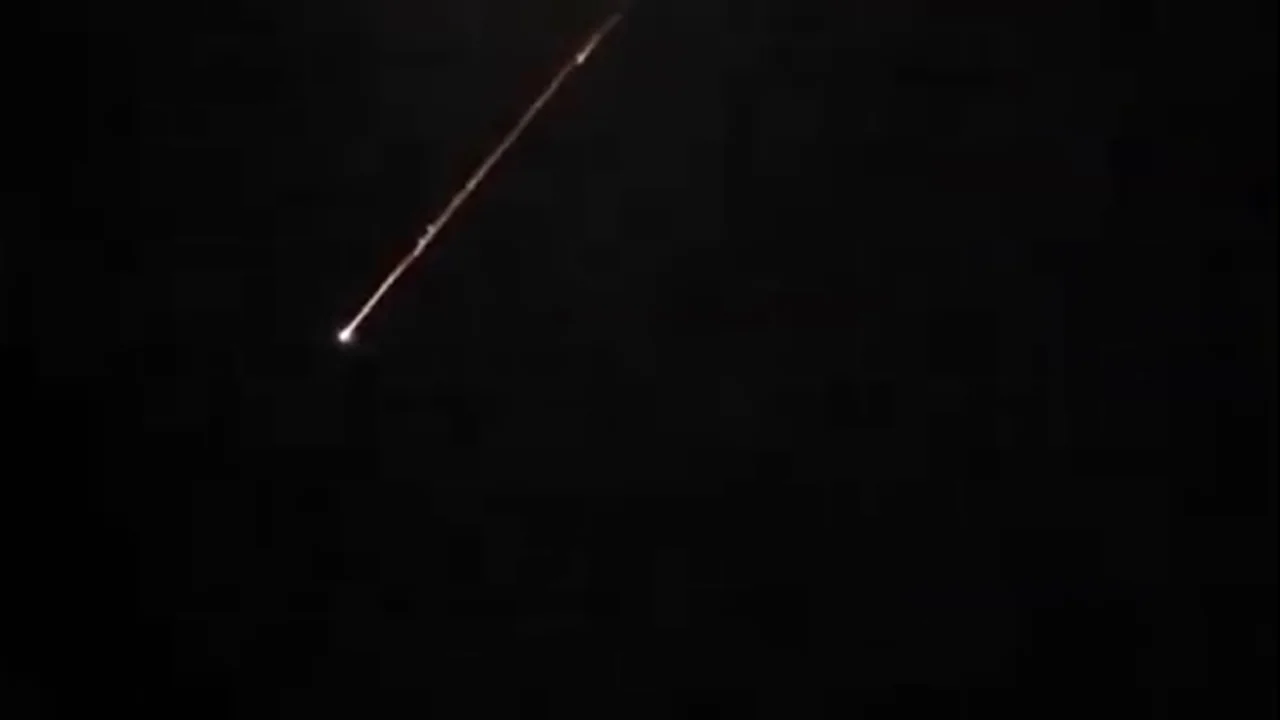
The Russian Kosmos 2551 satellite burns up during reentry over Michigan on October 29, 2021. (Brian Stalsonburg/AMS)
The movie was a work of fiction, of course, which ramped up the events to an extreme for the sake of drama. Even so, the scenario it depicts is one that real-world scientists have already studied.
Kessler syndrome was first described in 1978, as the point where low-Earth orbit (LEO) becomes so crowded that any significant collision would cause a cascade effect. Collision after collision would result in space debris growing exponentially.
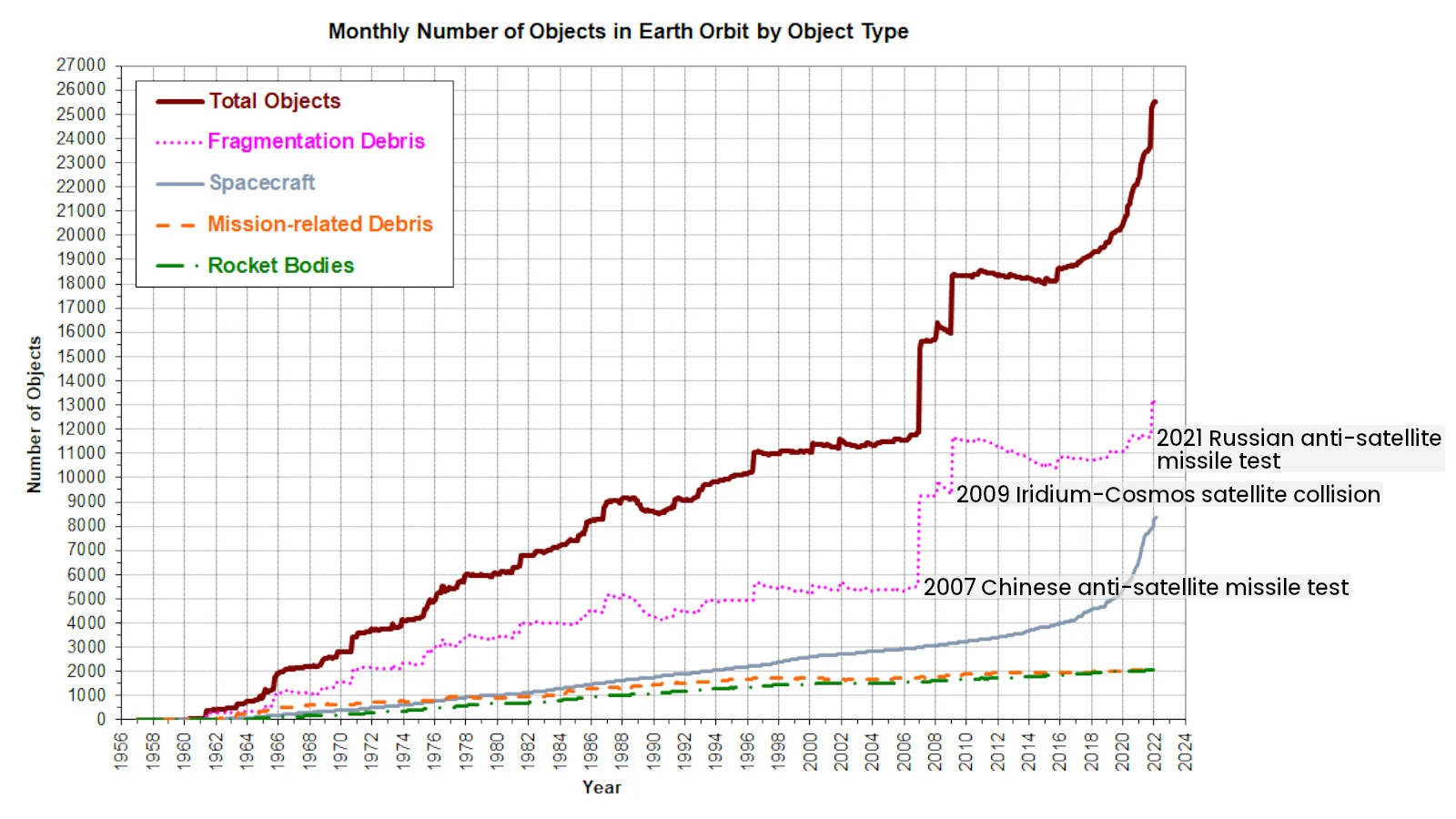
A graph of objects in orbit over time shows the steady increase of rocket bodies and spacecraft, while debris has remained the greatest population of objects, especially due to China’s 2007 anti-satellite test, the 2009 Iridium-Cosmos collision, and Russia’s 2021 anti-satellite test. (NASA Orbital Debris Program Office)
Although it would take a lot longer than it did in the plot of Gravity, the final impacts in the real world would be very similar. Beyond the loss of many, if not all, satellites and spacecraft in LEO, entire regions of Earth orbit could become so choked with debris that they would be unusable for future space missions. It’s even possible that the amount of debris could physically prevent us from safely launching any further satellites or spacecraft, for years or even decades to come.
We are still quite a ways off from this scenario. This is largely due to the ongoing efforts of ground controllers, as they identify potential close encounters and program in collision avoidance maneuvers to keep spacecraft safe.