

Listen to this article
Estimated 4 minutes
The audio version of this article is generated by AI-based technology. Mispronunciations can occur. We are working with our partners to continually review and improve the results.
After a summer that saw parts of New Brunswick experience one-in-50-year droughts, Saint John Water is working to protect its water supply before the warmer months arrive.
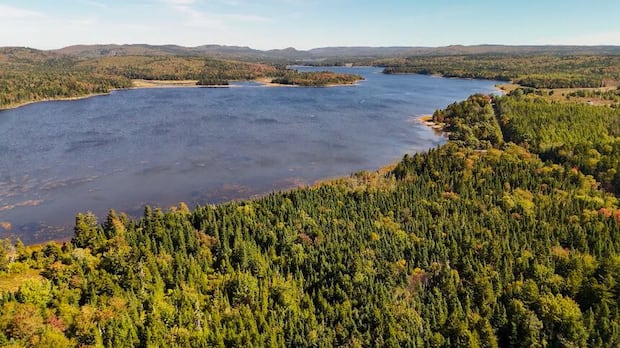
The city’s water utility will be dredging some of its surrounding lakes, starting with a narrow, shallow channel that connects two lakes — First Lake and Robertson Lake, both near the airport. The two lakes are part of the Loch Lomond watershed, which is the source of city’s drinking water.
“The channel [between] is fairly shallow. So that’s really the critical point that controls the amount of water that can flow to the city in the dry summer,” said Dean Price, the utility’s manager for source water protection, in an interview with Information Morning Saint John on Tuesday.
Dredging is a process which removes accumulated sand from the bottom of the lakes to improve water flow and reduce sediment build up. The work is intended as a preventative measure to mitigate the drought conditions of the previous year.
“Basically we’re going to be having a large excavator at the edge of the channel reach out and scrape the sand and gravel off of the bottom where we’ve noticed that it’s higher [than expected],” he said.
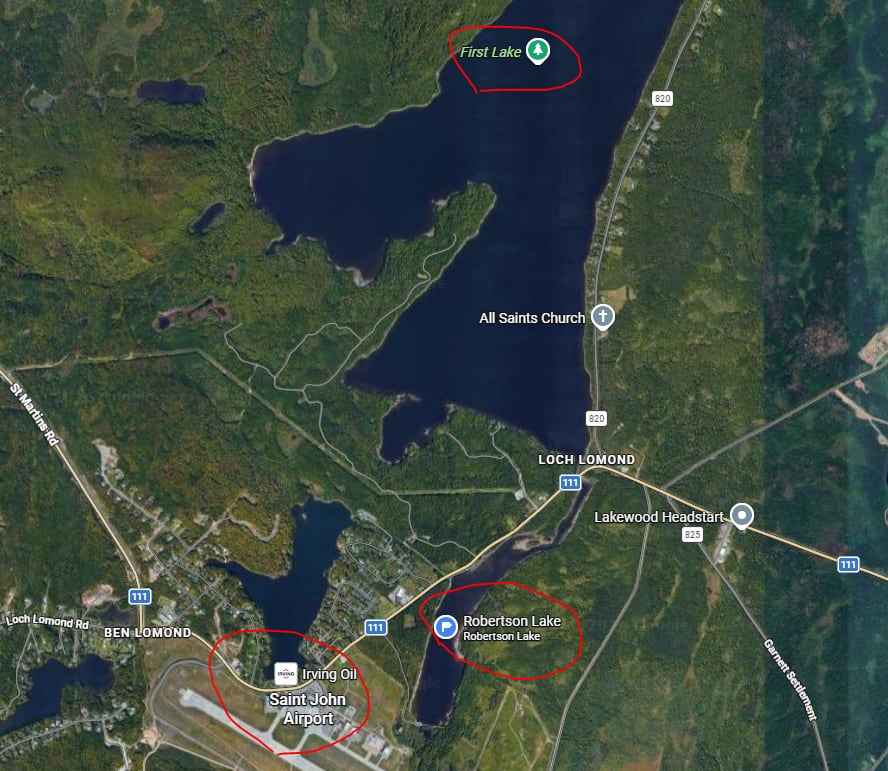 The work is starting with a narrow channel that connects First Lake and Robertson Lake. City staff advised residents to drive carefully on Barnesville Road (Route 820) and St. Martins Road (Route 111) while maintenance crews are onsite. (Google Maps)
Last year, the federal government reported that much of the Atlantic region was experiencing extreme drought conditions.
The Canadian Drought Monitor, managed by the federal Agriculture Canada, reported in September, that the entire eastern half of New Brunswick was in “extreme drought” and the region along the Bay of Fundy, east of Saint John, was in “exceptional drought” — the two highest ratings of drought intensity.
According to the federal monitor, “extreme” means a one in 20-year event and “exceptional” is one in 50 years.
Much of New Brunswick received below 25 per cent of normal precipitation and Saint John had its fourth driest August on record, according to Agriculture Canada’s report for that month.
The dry conditions prompted the city to ask residents to conserve water in September. The below-average rainfall, staff said on their website, was causing increased pressure on municipal water sources.
At the time, the city said it ceased all of its own non-essential water use to prioritize water for critical uses like fire protection and residential use.
Recently, the city announced through its social media pages that Saint John Water is building a gravel pad for large machinery that will be used for the upcoming maintenance.
Work aimed at avoiding emergency measures, water restrictions
Removing the buildup, which Price called “sand bars,” will prevent obstruction to the connective channels that “dictates” how much water can get from First Lake to Robertson Lake, which flows to the city.
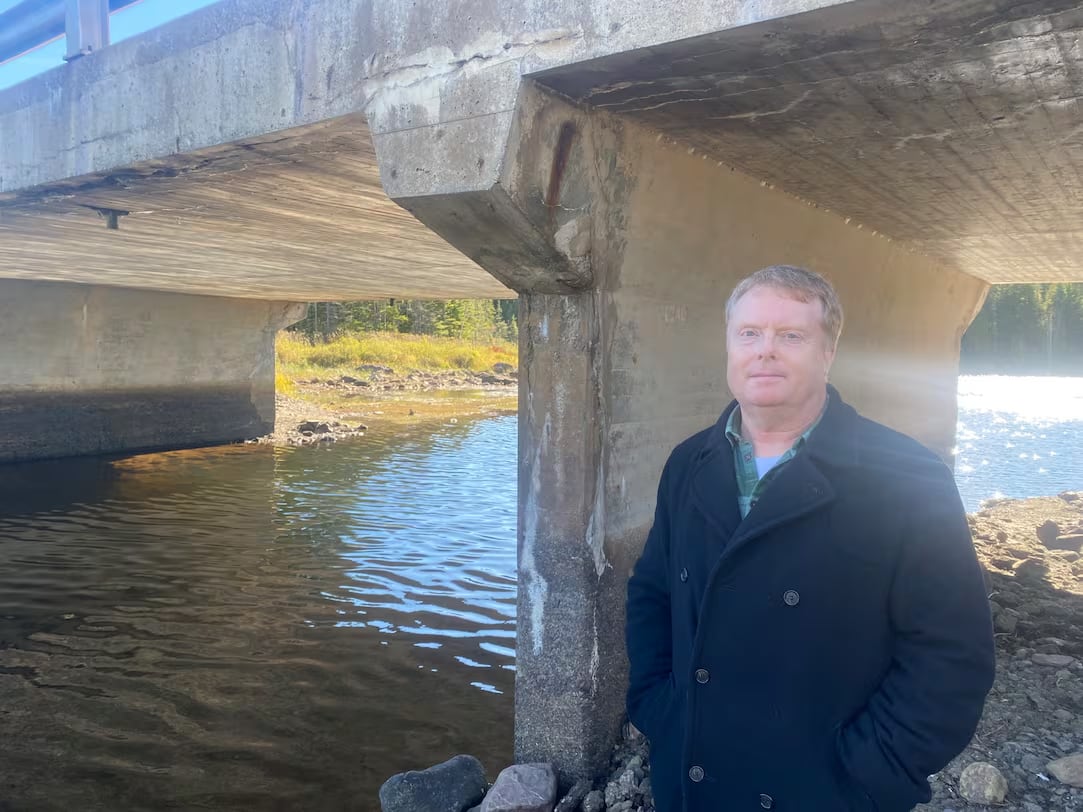 Dean Price, the manager of source water protection with Saint John Water, said the channel between the two lakes is a critical point that controls the amount of water that flows into the city. (Mark Leger/CBC)
If the channel was blocked, he said, the city would either need to dig a channel or do an “emergency pumping,” which would involve pumping water from one lake to another — a messy and expensive operation the water service wants to avoid.
“And having major water restrictions that are mandatory is also something we’re trying to avoid,” he said.
Price said residents don’t immediately need to be concerned about conserving water because the lakes are full, but it could become an issue later. He added that those who rely on well water should monitor their wells.
“Especially if it’s an older well that is only 30 or 40 feet deep as opposed to 100 feet deep,” Price said
Price doesn’t foresee any major issues with the dredging other than some cloudy water that would be filtered out by the Loch Lomond Drinking Water Treatment facility. But some wildlife might be disturbed. He said the city has environmental consultants to monitor the work to minimize impacts.
Saint John Water is also seeking permits to do the same work in four other spots further down the channel. Price said these areas include Baxter’s Corner, in a channel between First and Second Lake.
City staff advised residents in their announcement to drive carefully on Barnesville and St. Martins roads while maintenance crews are onsite.