
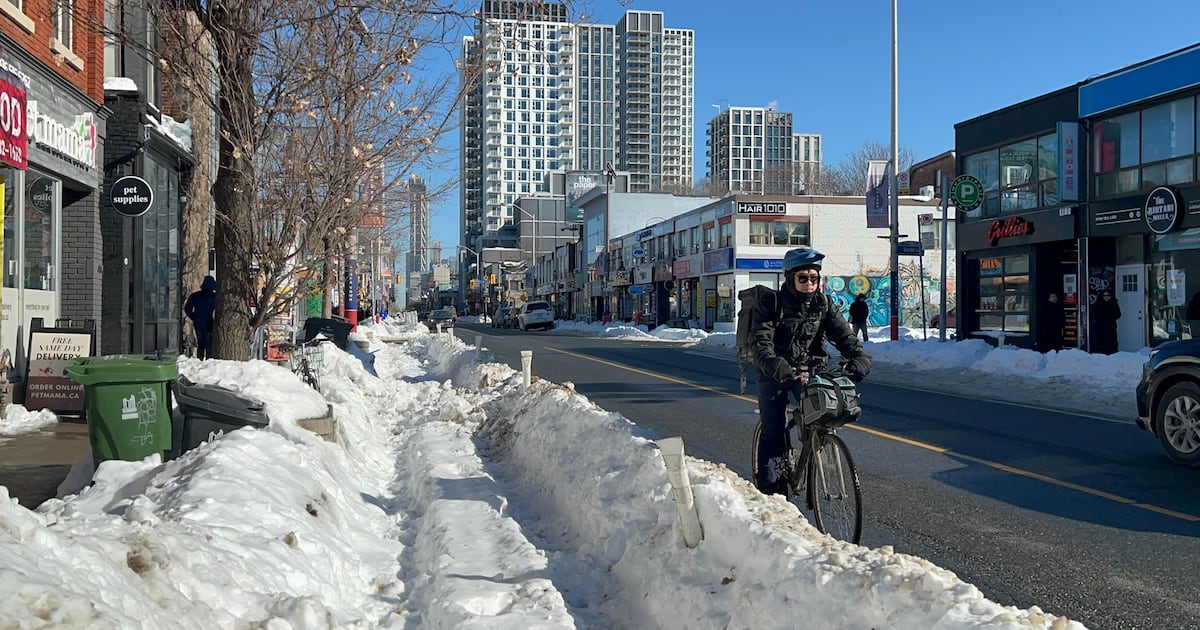
Evidence of the record-breaking snowstorm can still be seen along major thoroughfare across the city of Toronto, who seemingly cannot escape the icy clutches of Mother Nature’s grasp.
Underneath a mountain of snow, mired by slush and grime, lies a barely discernible bike lane at the intersection of Dundas Street East and Carlaw Avenue.
According to the X user who posted the photograph on Feb. 8, this snow mound is suggestive of the weeks-long backlog in the city’s snow-clearing efforts with regards to its bikeways.
In a post the week prior, the same user brought the same snow-laden intersection to 311’s attention.
“Not sure why everyone else has to pay for the removal – but if nothing is done this will be here until May,” the user wrote in a post published Jan. 30.
This is just one of the many snow-clad bikeways David Shellnutt, lawyer and cycling advocate, has encountered in the roughly two-and-a-half weeks since roughly 60 centimetres of snow dusted Toronto.
While Shellnutt acknowledged seeing major thoroughfares like Richmond and Adelaide streets being cleared, he notes the “vast majority of the (cycling) infrastructure was, for at least a week-and-a-half, unusable.”
“The City of Toronto did what Doug Ford couldn’t do, got rid of our bike lanes,” Shellnutt said, referring to the Ontario premier’s aim to scrap 19-kilometres of protected bike paths along University Avenue, as well as Bloor and Yonge streets.
Shellnutt says various cyclists throughout the city have shared photographs of heaps of snowfall still spotted blanketing bike lanes two weeks after Jan. 25, from Bloor Street to University Avenue to Harbord Street to Danforth Avenue.
“There are minimum maintenance standards that require the clearing of bicycle tracks, but those are superseded by when a municipality declares a Significant Weather Event, which is what they’ve done here,” Shellnutt said.
The city declared a Significant Weather Event amid the monumental snowstorm, exempting them from maintaining the provincial regulations for winter maintenance so Toronto can prioritize clearing snow in order of community safety.
Part of those regulations include how much time the city has to clear snowfall off cycling lanes, as typically the city is required to remove snow within 24 hours whenever a minimum threshold of eight centimrtres is reached.
A spokesperson for the city tells CTV News Toronto they have a process for snow removal after snow plowing has been completed, which started on Jan. 29, about four days after the winter storm.
“It is an intense, multi-step process that includes many crews and heavy machinery working at a safe and effective pace along priority routes,” Laura McQuillan, senior communications advisor with the City of Toronto, said in an email.
This process, McQuillan says, starts off with hospitals, before moving onto bridges, school zones and then streetcar routes. McQuillan said that most of those priority areas are now finished while streetcar routes are 95 per cent complete.
“We have been working to plow and remove snow from bike lanes while clearing and removing snow from the city’s major roads and sidewalks. However, we realize there are areas of the city where bike lanes have yet to be cleared,” McQuillan said.
Michael Longfield, Cycle Toronto’s executive director, says there has been understanding among the cycling community that the city has had to shovel out a record amount of snow since January’s snowstorm, though frustrations still persist.
“I think a lot of the concerns that we’re dealing with now are a result of them not having been prioritized or basically dealt with per the city’s existing service standards, and so now it’s kind of requiring this additional effort to get them cleared out,” Longfield said in an interview with CTV News Toronto.
“It’s a difficult task, and I think people are patient, but, certainly to some extent, a lot of this maybe could have been avoided if different things have been prioritized differently earlier on, or certainly if a lot of this had maybe been communicated from the outset.”
As of Feb. 9, the City of Toronto said it has removed 264,000 tonnes of snow from 1,100 kilometres of roads and sidewalks, as well as bike lanes.