
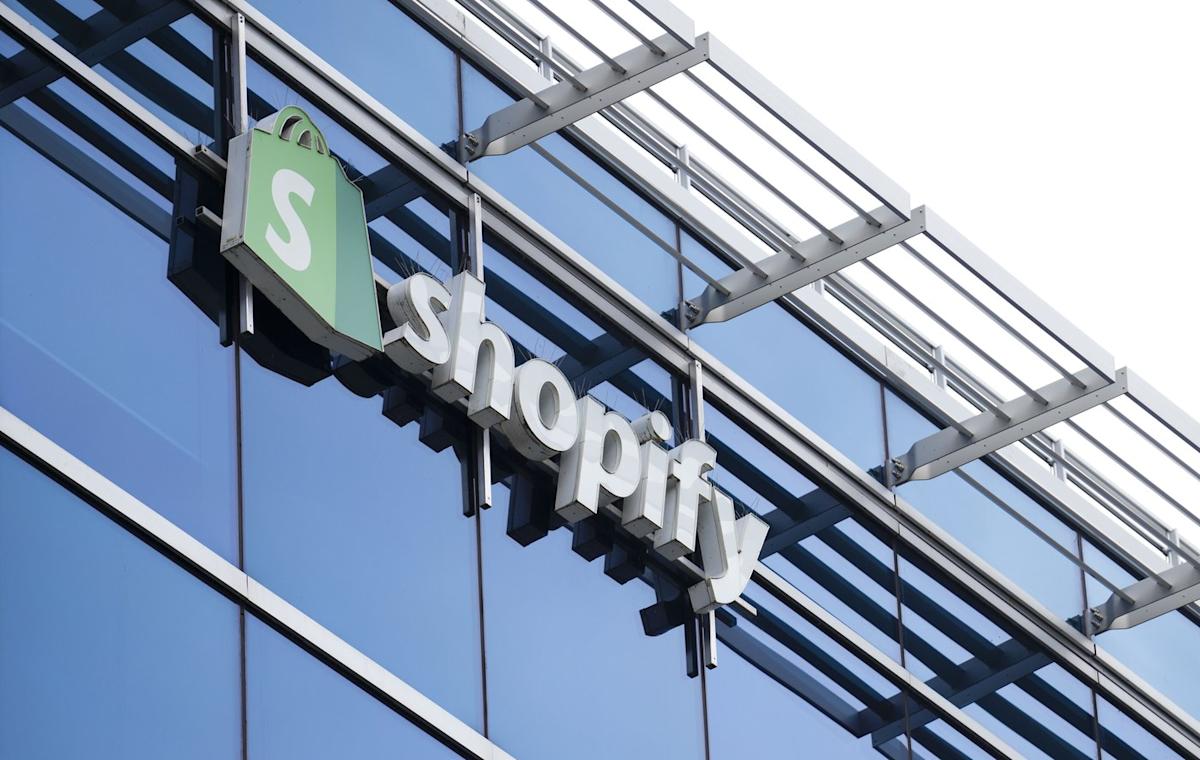
OTTAWA — Shopify Inc. is seeing signs that business owners are increasingly growing comfortable with artificial intelligence.
Harley Finkelstein, president of the software giant, said Wednesday that the company’s merchant customers have had almost 100 million conversations with its AI assistant Sidekick since it was launched.
Eight million of those chats came in October alone, signaling to Finkelstein that Sidekick is “quickly becoming the default way merchants get things done.”
“Five years ago, none of this would have been possible, and today, it’s a reflexive daily habit for many of them,” he said on a call with analysts.
Sidekick is just one of the AI tools merchants have at their fingertips but it’s perhaps the most powerful in Shopify’s suite. That’s because merchants can query the chatbot to examine things like what is behind fluctuations in their sales levels and then receive help setting up promotions or redesigning their online stores to address any issues.
In the third quarter alone, Finkelstein said more than 750,000 Shopify shops used Sidekick for the first time.
“At this scale, Sidekick will only get smarter and more powerful,” he said.
The insights around Sidekick come as Shopify is increasingly positioning AI as a company cornerstone.
Last year, CEO Tobi Lutke made the technology a “fundamental expectation” for all staff and declared it will be embedded into everything from performance reviews to product development at the company.
Months later, the firm announced a partnership with U.S. tech giant OpenAI allowing Shopify merchants to sell their products through ChatGPT.
The company’s AI-driven traffic to Shopify stores is now seven times what it was in January and orders linked to those searchers are 11 times higher than they were at the start of the year, Finkelstein said.
As he spoke, Shopify’s stock dropped by about 10 per cent to $154.49 in morning trading on the Toronto Stock Exchange.
Before his remarks, Shopify reported a fourth-quarter profit of US$743 million or 57 cents US per diluted share, which compared with a profit of US$1.29 billion or 99 cents US per diluted share in the last three months of 2024.
The e-commerce company, which keeps its books in U.S. dollars, said revenue for the quarter ended Dec. 31 rose 31 per cent to US$3.67 billion from US$2.81 billion a year earlier.
Merchant solutions revenue reached US$2.90 billion, up from US$2.15 billion a year earlier, while subscription solutions revenue amounted US$777 million, up from US$666 million.
In its outlook, Shopify said it expects revenue for the first quarter of 2026 to grow at a low-thirties percentage rate on a year-over-year basis, similar to the fourth quarter of 2025.
Shopify also announced its board of directors has authorized a share repurchase program of up to US$2 billion.
By buying back its shares, a company reduces its equity base, spreading profits over fewer shares. That increases its return on equity and earnings per share, two key ratios used to determine a company’s financial health and investment rating.
This report by The Canadian Press was first published Feb. 11, 2026.
Companies in this story: (TSX:SHOP)
Tara Deschamps, The Canadian Press