

Listen to this article
Estimated 4 minutes
The audio version of this article is generated by AI-based technology. Mispronunciations can occur. We are working with our partners to continually review and improve the results.
NATO’s newly launched Arctic initiative should become a permanent fixture of the Western military alliance’s activities, Canada’s foreign minister said Wednesday.
Anita Anand was the keynote speaker who kicked off the Arctic 360 conference, which is taking place in Toronto over the next two days.
In a statement early Wednesday, NATO’s supreme commander announced that the initiative known as Arctic Sentry had been launched and would provide an overall co-ordination of allied activities in the Far North, including military exercises being run by Denmark in Greenland and the annual Norwegian drill known as Cold Response.
“Arctic Sentry underscores the alliance’s commitment to safeguard its members and maintain stability in one of the world’s most strategically significant and environmentally challenging areas,” said the commander, U.S. Air Force Gen. Alexus G. Grynkewich, in a statement.
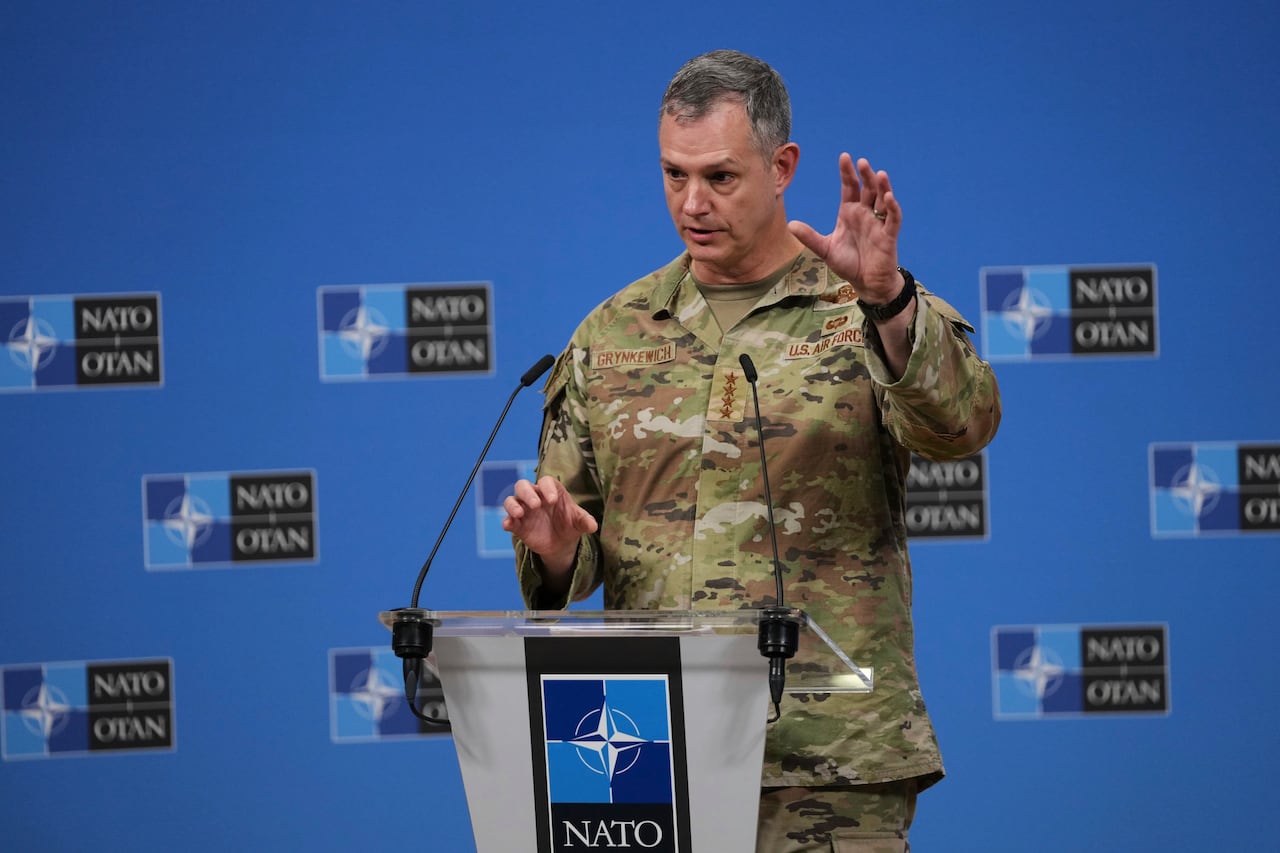 Supreme Allied Commander Europe Gen. Alexus G. Grynkewich said the Arctic Sentry plans were drawn up with input from Canada. (Virginia Mayo/The Associated Press)
“It will leverage NATO’s strength to protect our territory and ensure the Arctic and High North remains secure.”
Speaking at the conference a few hours later, Anand said Canada has long tried to get NATO interested in better defending the region, which is increasingly becoming the focus of geopolitical rivalry.
“We would like to see that initiative be permanent,” Anand said. “I am pushing NATO allies and the secretary-general to see this as a collective effort, not only an individual effort.”
She said she believes NATO has to look north for threats, not just to the east where Ukraine, which is not a member of the alliance, is almost in its fourth year of fighting a high-intensity war against Russia.
Anand was not clear what military resources Canada was willing to contribute toward the initiative, which is not a distinct military operation. It’s also unclear whether Canada’s routine military training exercises, notably Operation Nanook, could fall within the auspices of the NATO activities.
WATCH | Why Trump wants Greenland: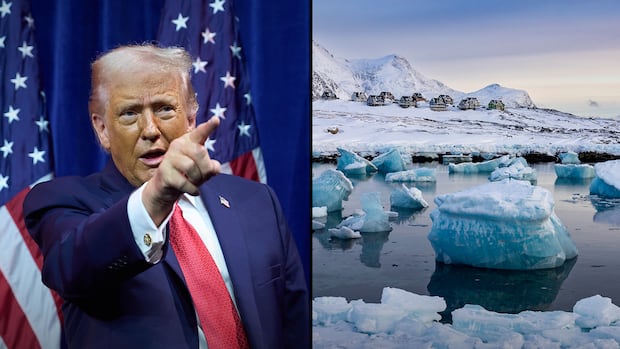
Why Trump wants Greenland
The Trump administration has made it clear it wants to take control of Greenland and it isn’t ruling out using military force. For The National, CBC’s Eli Glasner breaks down why the U.S. has labelled annexing the sparsely-populated island a ‘national security priority.’
While on paper the alliance initiative was created to guard against Russian and Chinese activities and influence in the region, it was a direct response to complaints by U.S. President Donald Trump that Greenland wasn’t being properly defended and the U.S. should annex the Danish territory.
Also Wednesday, ahead of a regular meeting of NATO defence ministers, Secretary General Mark Rutte said it was crucial that NATO do more.
“For the first time now, we will bring everything we do in the Arctic together under one command,” Rutte said.
“By doing that, we will not only leverage what we are doing much more effectively and have a bigger impact, we will also be able to assess which gaps there are, which we have to fill — and of course we will fill them.”
The crisis was averted when Trump said there was a framework deal that would allow the U.S. more access to Greenland for defence purposes, including improvements to North American missile defence systems, known as the Golden Dome.
Military experts have said that in the event of a conflict, Russian ballistic and hypersonic missiles would more than likely travel over Greenland toward North America and the U.S. radar and defence systems need improvement. Through a 1951 defence treaty, the United States already has all of the access it needs to critical sites in Greenland.
Interestingly, NATO’s Arctic Sentry initiative will be headquartered out of the alliance’s military command in Norfolk, Va.
The statement by the supreme commander said the plans for the Far North were drawn up in close co-ordination with all allied nations that have a stake in the Arctic, including the United States and Canada.