

Touch down in Lisbon city centre, and you are quickly reminded of two of Portugal’s footballing powerhouses.
Only Porto can rival the domestic success of Sporting CP and Benfica, but travel 25 minutes out of town to Sintra and you might just find the most upwardly mobile club in Portuguese football.
Sport Uniao (SU) Sintrense have never played top-tier football in their 115-year history. They sit eighth in Group D, one of four divisions of 14 teams in the fourth-tier Campeonato de Portugal, climbing away from relegation while being just seven points from promotion in a remarkably congested league table.
As a semi-professional club with a stadium capacity of 1,600, Sintrense might not have the resources of a Primeira Liga side. The most famous player to pass through their doors is arguably right-back Nelson Semedo, with the Portugal international spending his youth career in Sintra before notable spells at Benfica, Barcelona, Wolves, and Fenerbahce.
Still, new majority owner Felix Kruger is keen to inject a professionalism that few in Portugal’s fourth division can compete with.
Kruger was sporting co-ordinator at RB Leipzig from 2020 to 2024, working closely with then-director of sport Max Eberl — who has since taken up the same role at German champions Bayern Munich — to oversee the club’s football operations.
Leipzig enjoyed the most successful period in their history during Kruger’s time at the club, winning two DFB-Pokals (German Cup) and a German Super Cup. Having been involved in high-profile signings such as Josko Gvardiol, Andre Silva, and Xavi Simons, the 38-year-old German has developed a reputation for recruiting young talent.
Following his departure from Leipzig, Kruger — a fully qualified lawyer — founded his own investment company (Blue Ocean Group) and set his sights on acquiring a club. After talks with more than 20 clubs in the Portuguese pyramid and others across the world, he now owns a majority share (75 per cent) of Sintrense, taking over the football operations at the start of this year.
“When we came to Sintrense, it was quickly clear to us that we could do something here,” Kruger says. “We have our own stadium, our own training pitches, and the club is debt-free — which is very rare in the third and fourth divisions in Portugal.”
With strong existing infrastructure and its proximity to a capital city, Kruger identified Sintra as an area in Portugal that was filled with opportunities to develop a club with plenty of potential.
“We have four million tourists to Sintra per year — this is a huge market that we want to capture, monetise, and help the community. We want to make this club really special from top to bottom.”
“We closed the deal on January 7, and presented the first player that we identified on January 9. In 15 days, we brought in six new players and a new coach.”
“We’re not here to play in the fourth division forever. We are already in a good position, but next summer will be the first time that we can really shape the squad the way we want. If we don’t go up this season, next season we will attack promotion.”
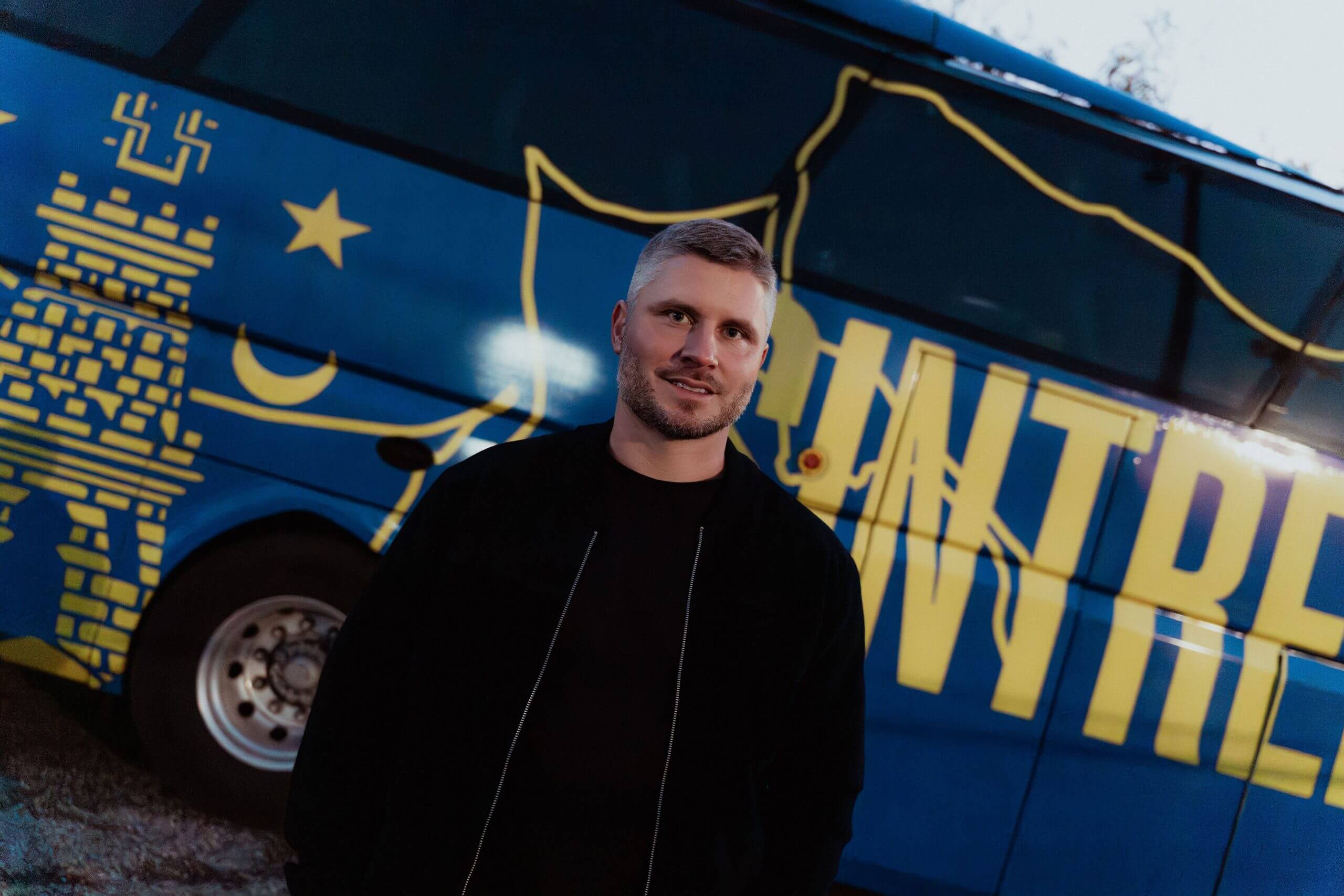
Felix Kruger is keen to transform the club (Mariana Tenorio)
Kruger has established a core group with experience from the higher reaches of European football to support him with his Portuguese project.
Dionny Macedo is the director of football operations, responsible for the day-to-day running of the club, having held roles at UEFA and Paris Saint-Germain. Luis Ferreira is the club’s technical director, responsible for live scouting and squad planning, having played in the third and fourth division in Portugal and developed in Sporting CP’s academy.
Finally, Tom Worville is acting head of data intelligence as part of his own football consultancy, Trivela Analytics. Worville worked at The Athletic for nearly two years before moving to work with Kruger as a data scout at Leipzig, and is responsible for the football analytics, data scouting and squad planning for this project.
The wider team also includes former Borussia Monchengladbach, Bayern Munich and Nice defender and Brazil international Dante, who is acting as a football advisor.
Since the new year, Sintrense have won three and lost one of their four games under new head coach Carlos Pinto, with the 36-year-old recruited for his ability to develop young players. A turnover of staff in the dugout and on the pitch might have been needed, but the new arrivals are indicative of the club’s fresh approach.
“Each one of our new signings tells their own story and shows how our group works,” Kruger says.
“One of them was identified using data, and another came from Luis’ live scouting. One player came through the connections I have with second division clubs in Portugal. Each player joined us because they believe in the project.”
The average wages might be similar between the third and fourth divisions, but Sintrense’s model favours brains over brawn when attracting new players in the transfer market.
“You could approach it from a financial perspective and just try to blow every other team out of the water, but that is unsustainable,” Worville says. “You can do that for some positions, but what is stronger is our story. We’re building a buzz in Portugal — players want to get on board with that.”
Portugal has more of a traditional approach to player recruitment, with Sintrense and third-division CD Mafra — whose owners have a majority share at data-led Danish club FC Midtjylland — among the exceptions outside of the Primeira Liga.
“The way we’re approaching recruitment and football decisions probably rivals what some teams are doing in the first division — I strongly believe that,” says Worville.
“Our access to data might not be the same, but it is embedded in our decision-making. Of course, we also rely on strong scouting and someone who knows the market well — and that’s why Luis is here. I don’t think we will have a project that recruits solely by the numbers. I believe that a blended approach is the correct one.”
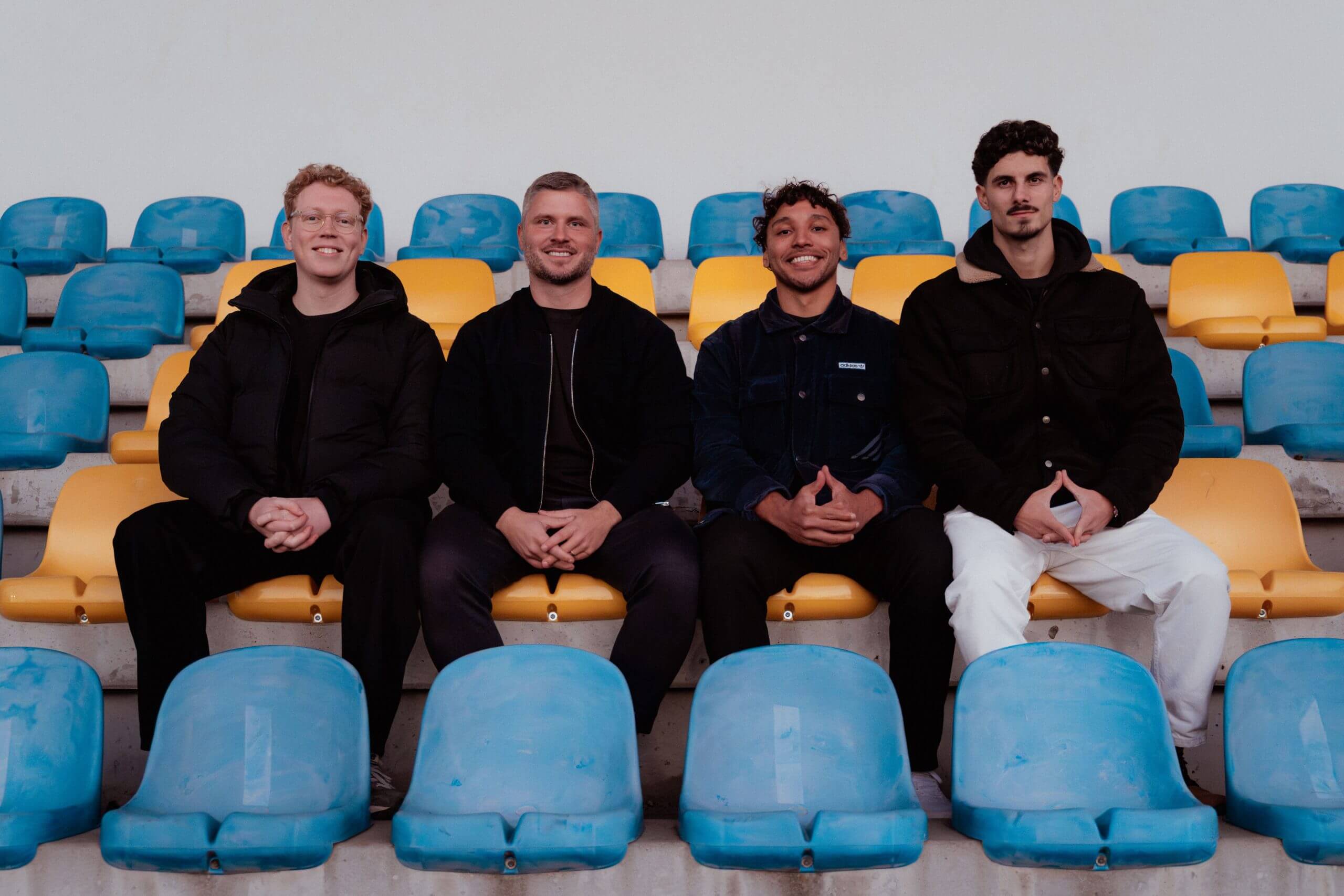
The four figures aiming to transform Sintrense (Mariana Tenorio)
Given the success that Kruger and Worville had during their Red Bull era, comparisons will naturally be made when projecting the style of play that Sintrense will impose — but the team have no intention of cloning their previous experiences.
“We’re not going to be as strict as the model at Leipzig with a 4-2-2-2 formation, gegenpress, high energy, style any time soon — firstly, we wanted a coach who we know is going to trust young players, and we have that,” Worville says.
“At the moment we play 3-4-3, but maybe next season we change to a 4-2-3-1 or a 4-3-3 — either way, I believe the principles of play will remain the same. What we are not is a 4-4-2, bang it long to two big strikers and play off them.”
Sintrense’s style of play will intrinsically link with the players they are looking to recruit. Lisbon is a hotbed for young talent, but the temptation to borrow academy players from two of Portugal’s biggest clubs is not part of the long-term approach.
The vision is to maximise the market elsewhere, with one of Kruger’s early successes being Gambian forward Matar Manga. The 21-year-old was brought to Portugal by Primeira Liga side Moreirense in 2023, before multiple short stints across the divisions saw him arrive at Sintrense in January.
“Of all the metrics we use to track the players’ profiles and impact on the pitch, Matar was absolutely top and flying,” Worville says. “We believe he’s probably a level above this league already. After we confirmed the deal, we picked him up in Felix’s car at the airport two days later, and he made an instant impact in the first game he played.”
An example of Manga’s skill set is shown below in Sintrense’s home match against Juventude Evora. After making an underlapping run, the tricky winger drops a shoulder, drives to the byline, and evades two opposition players before picking out a team-mate on the edge of the six-yard box.
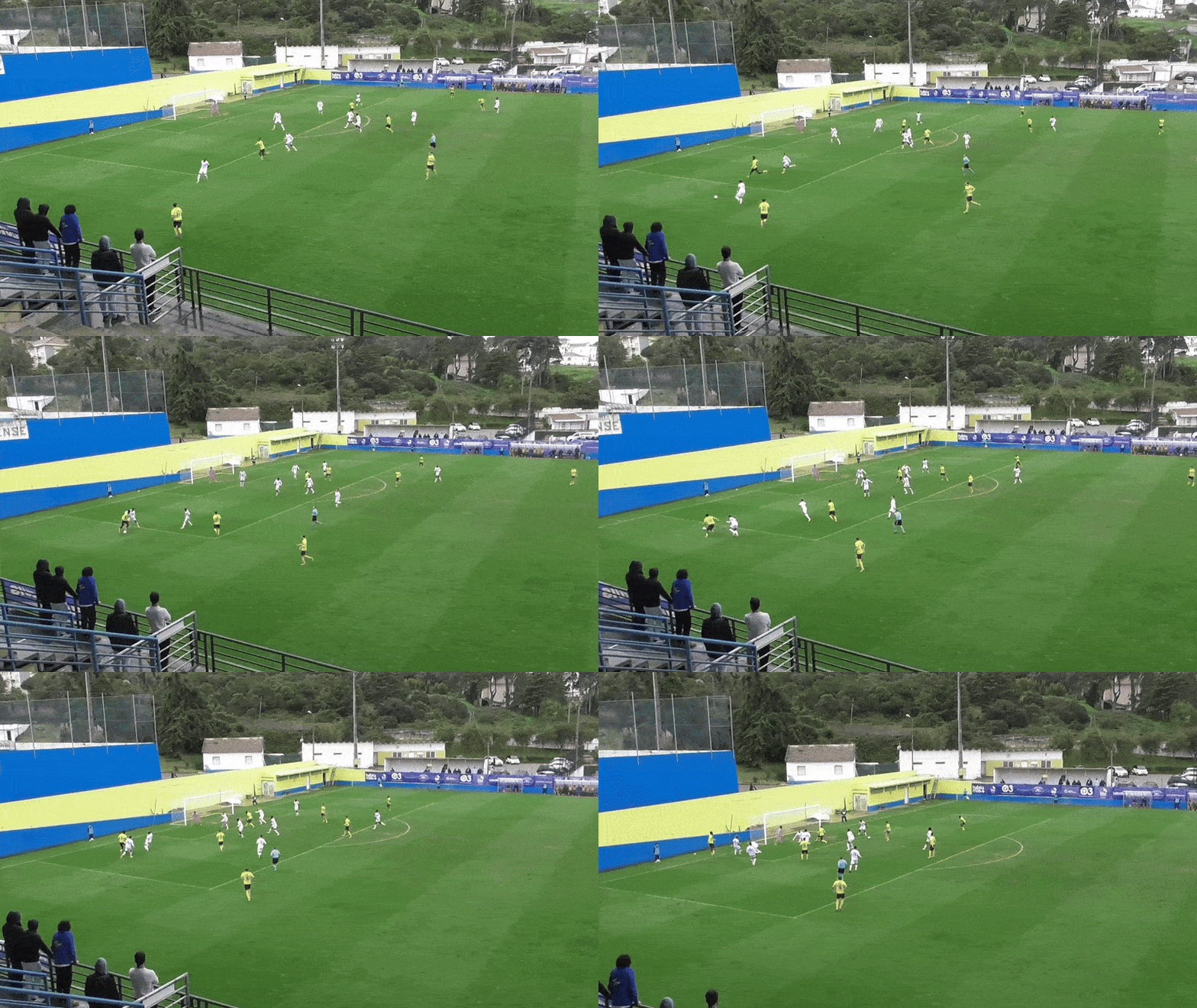
“Everyone knew straight away that we had a good one,” Worville says. “If he keeps playing the way he has, he will be the first success story for us.”
Finding good players is one thing, but Sintrense know where they stand in the football food chain. If one of their players is standing head and shoulders above their peers, Kruger is under no illusion that clubs in higher divisions will be circling.
“We always say that the biggest success for us is when they (the players) are successful,” Kruger says. “These were the stories that helped us in Leipzig. Why were we able to sign Xavi Simons? Because we could show him the same path as (Dominik) Szoboszlai, (Dani) Olmo, and (Christopher) Nkunku. I always tell the players that we’re never going to block talent.
“It’s never going to be an issue at this club because of a transfer fee. If we get an offer from a club in a higher division, I’m going to drive him there myself because this is the best story I can tell the next talent to join our club.”
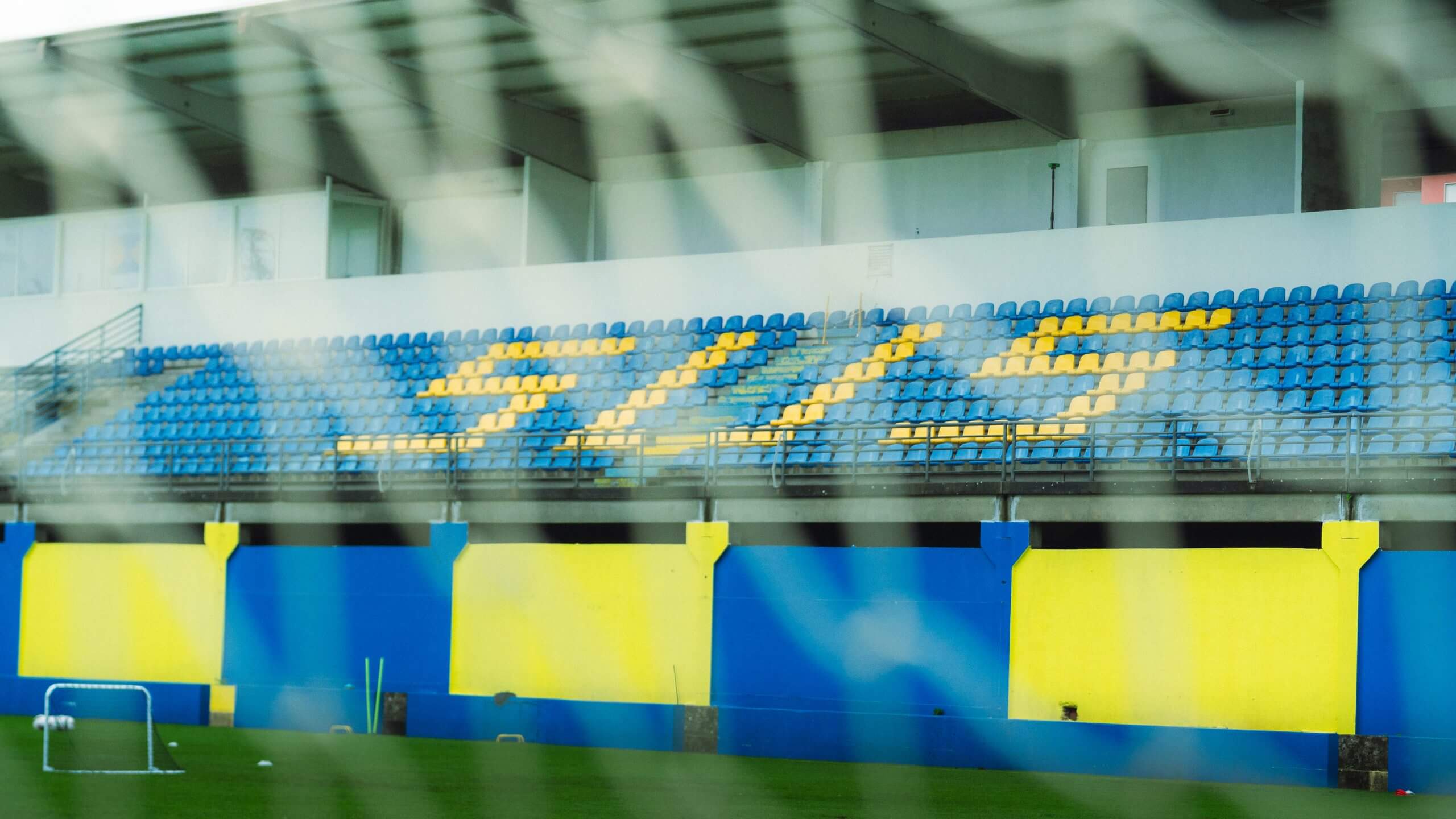
The club’s stadium has a capacity of 1,600 (Mariana Tenorio)
The budgets might be smaller than Europe’s elite, but personal relationships are important no matter what level you operate at. Whether it is picking up a player from the airport or driving three hours to simply have a coffee with another prospective player, Kruger knows the value of putting the human being first.
“I have learned from my career that going to a player’s home, having dinner with the family, and having a genuine connection really matters,” Kruger says.
“Players feel that. Working with some of Europe’s best talents gives us the perspective where we are right now in the fourth division.”
A strong start is exactly what Kruger would have wished for since arriving in January. If he has anything to say over matters, Sintrense will not be in Portugal’s fourth division for long.