
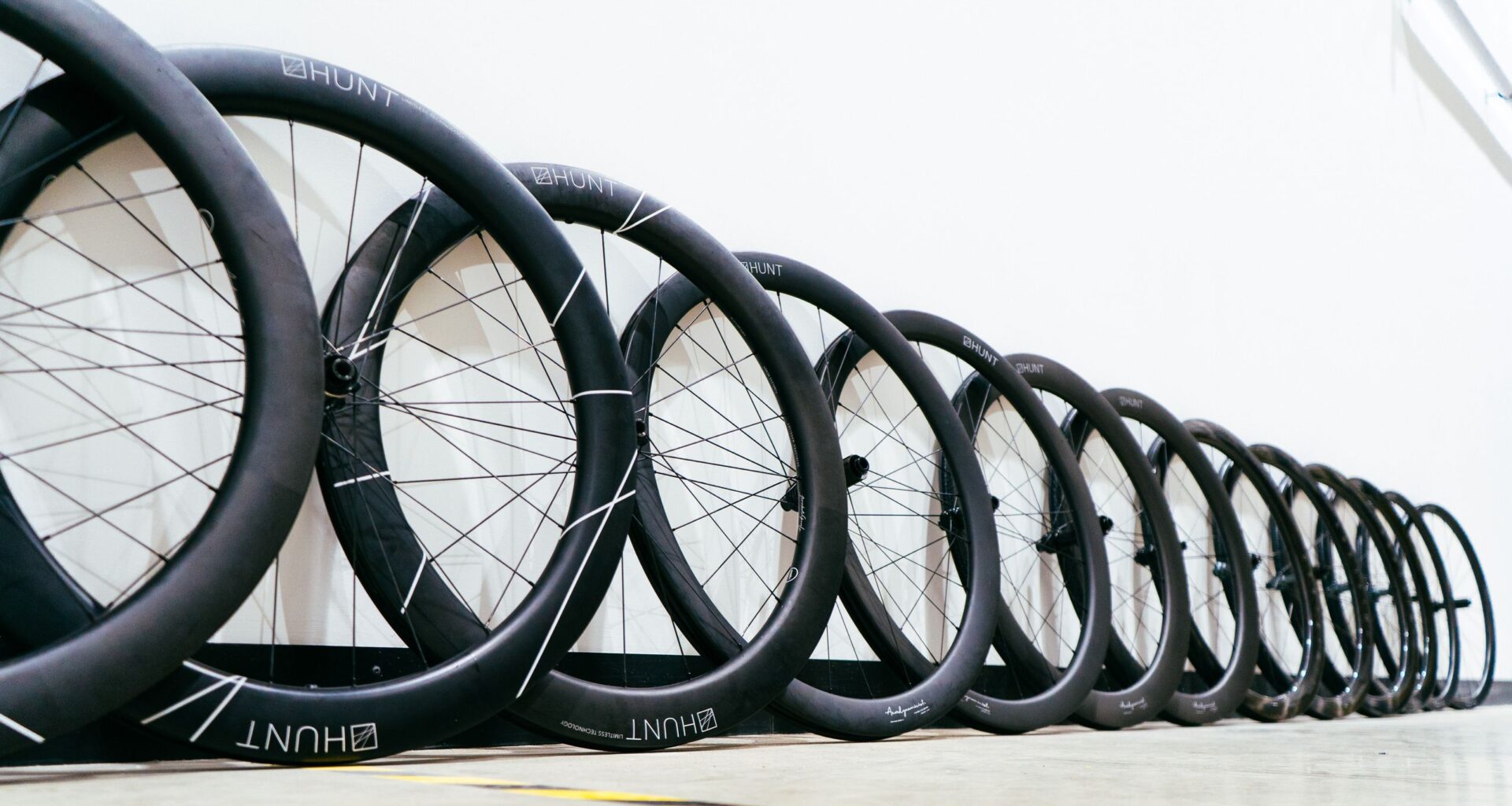
Upgrading your wheels is a rite of passage for many cyclists, and choosing which set to plump for – an outlay that can range from several hundred to several thousand dollars – can involve poring over spec sheets and trying to decipher marketing jargon.
We have tested a great many wheels in the wind tunnel already, to provide comparative data across a whole range of models, but we also wanted to interrogate how certain design factors, namely wheel depth, spoke count, and spoke material, affect speed.
The UCI context
Given the headline it’s prudent to outline the UCI ruling regarding wheel depth. In 2026 the sport’s governing body outlined a new maximum wheel depth of 65mm at all points of a wheel’s rim. This drew the ire of wheel brands, most prominently Swiss Side, which had to redevelop a new wheelset after it’s new Hadron3 68mm wheels fell foul of the ruling.
A subsequent clarification on the rules only outlines increased velocity as a risk factor, with no mention of wheel stability, despite the fact that Swiss Side’s ardent rebuttal to the ruling leans almost entirely on wheel stability.
As a general rule of thumb, deeper wheels (in our experience on the road) are generally harder to handle in crosswinds, and more prone to buffeting, which certainly is a safety factor that could justify a wheel depth rule, but it’s also true that not every deep wheel is harder to handle than every shallower wheel, and given that the UCI has only leant on the increased velocity in its documentation of the ruling it seems valid to test those claims in isolation and, if necessary, call them out.
Cyclingnews has contacted the UCI for clarification on the justification of the wheel depth rules in the context of the results outlined in the latter section of this article, given that (without wishing to spoil the party) we found very little difference in terms of speed when you only change wheel depth.
Jump to: Wheel depth
Our common test variables
(Image credit: Will Jones)
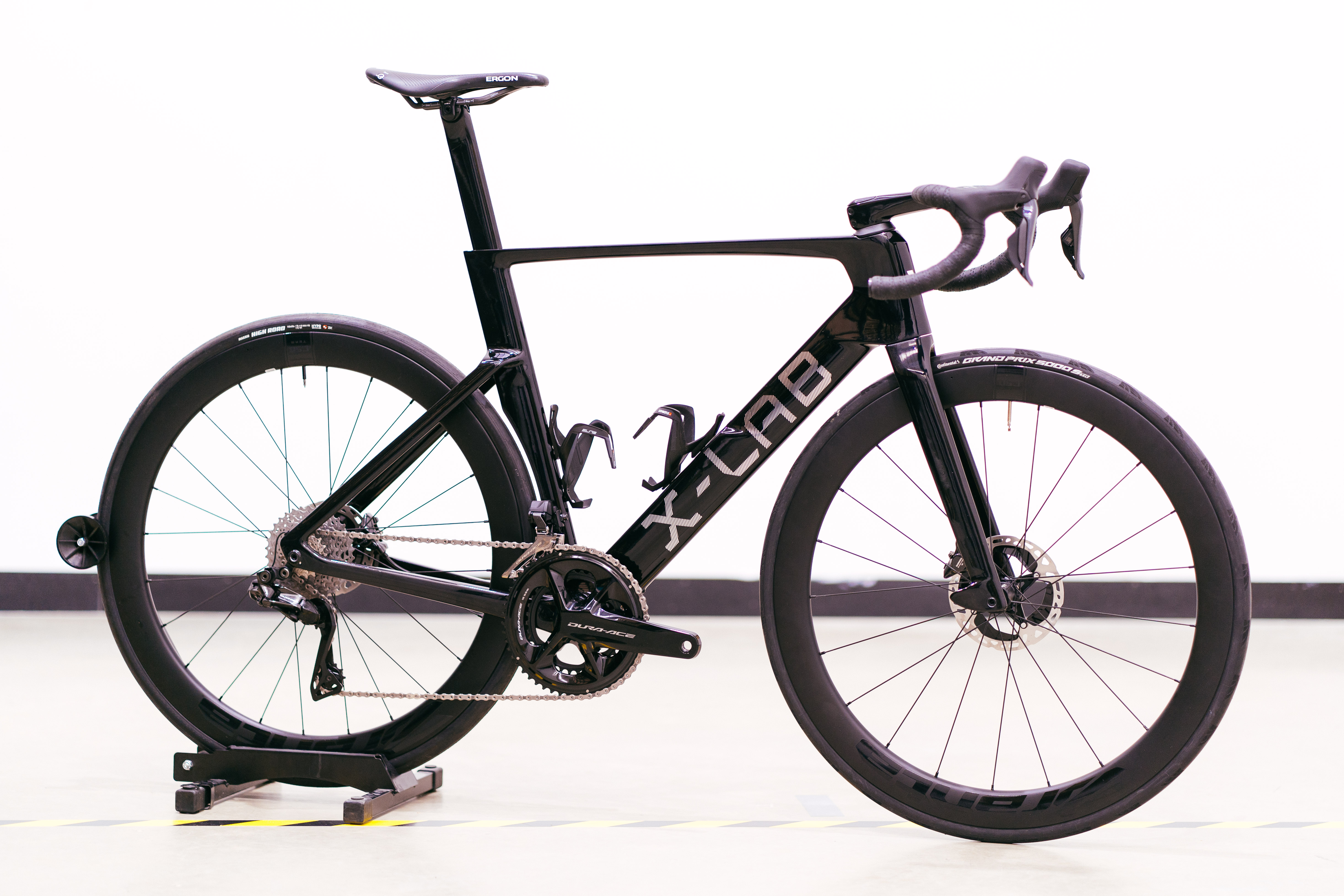
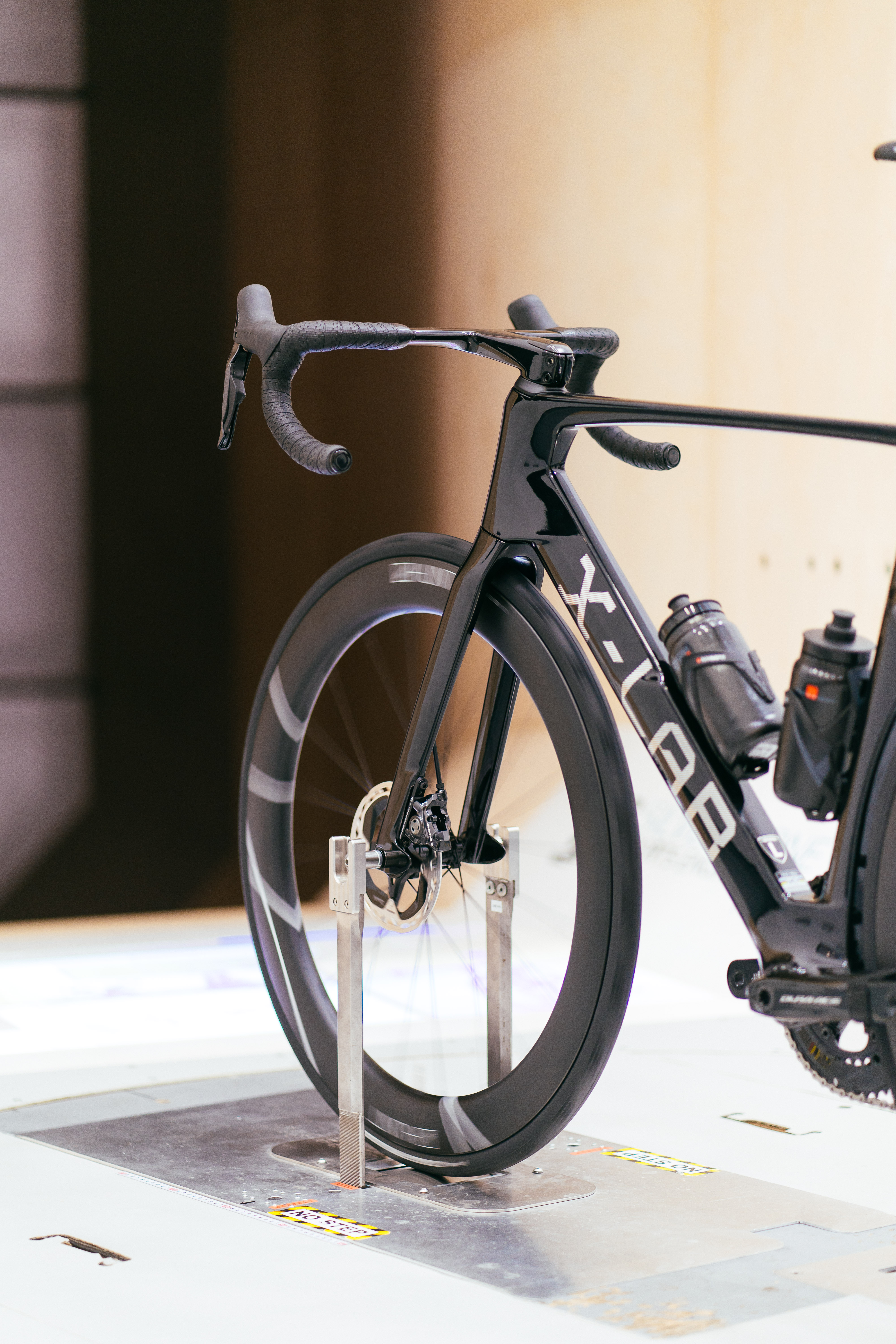
Each set of test wheels was mounted to an X-Lab AD9, which we happened to have on hand from aero testing earlier that day, and tested without a rider so as to provide the cleanest dataset possible. The differences were, we assumed, likely to be quite small, and so adding a rider would have provided a more realistic dataset, but the additional margin of error could well have overshadowed the differences and made the data effectively meaningless.
As usual, we tested across a sweep of yaw angles (the angle at which the wind hits the rider), from -15º to +15º in 5º increments. This, we feel, represents the majority of riding and racing scenarios for the performance cyclist. We tested at a single speed, 40km/h, which we feel represents a fast amateur race pace, or perhaps a breakaway day for higher-level competitors. It’s also fast enough to hopefully show sufficient differences, as aerodynamic differences scale with increasing magnitude, the faster one rides.
In order to account for any manufacturing differences across batches of the same tyre, not only was the same model of tyre used (a 28c Continental GP 5000 S TR), at the same pressure, but the exact same physical tyre was swapped across wheelsets just to be on the safe side.
We swapped both wheels to study the effect of a whole wheelset swap.
Our error margins are the same as our bike only tests, which we conducted on the same day, namely a CdA difference of 0.0007, or 0.58 watts at 40km/h.
The TestsAre carbon spoked wheels faster?
Image 1 of 2
 (Image credit: Will Jones)
 (Image credit: Will Jones)
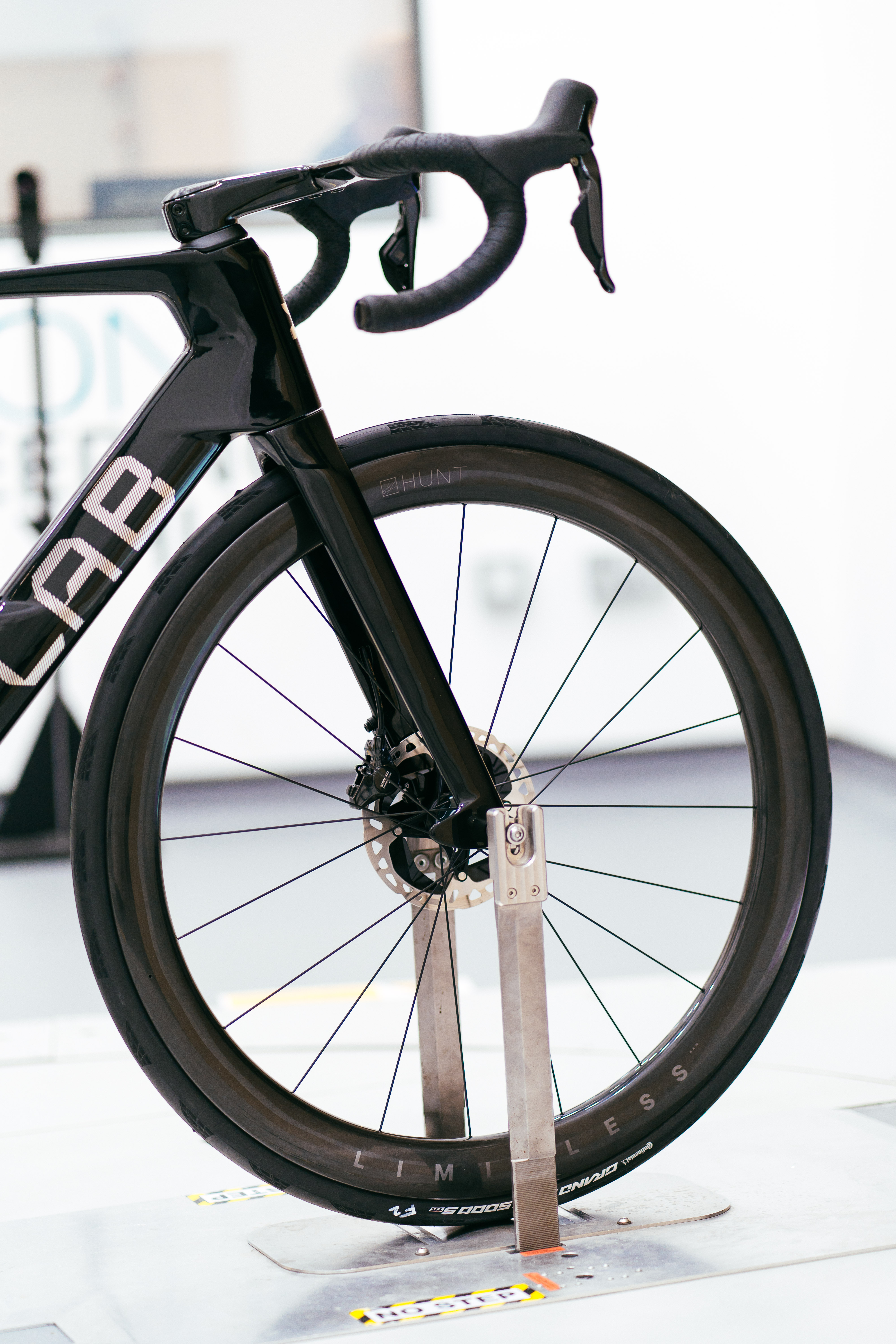
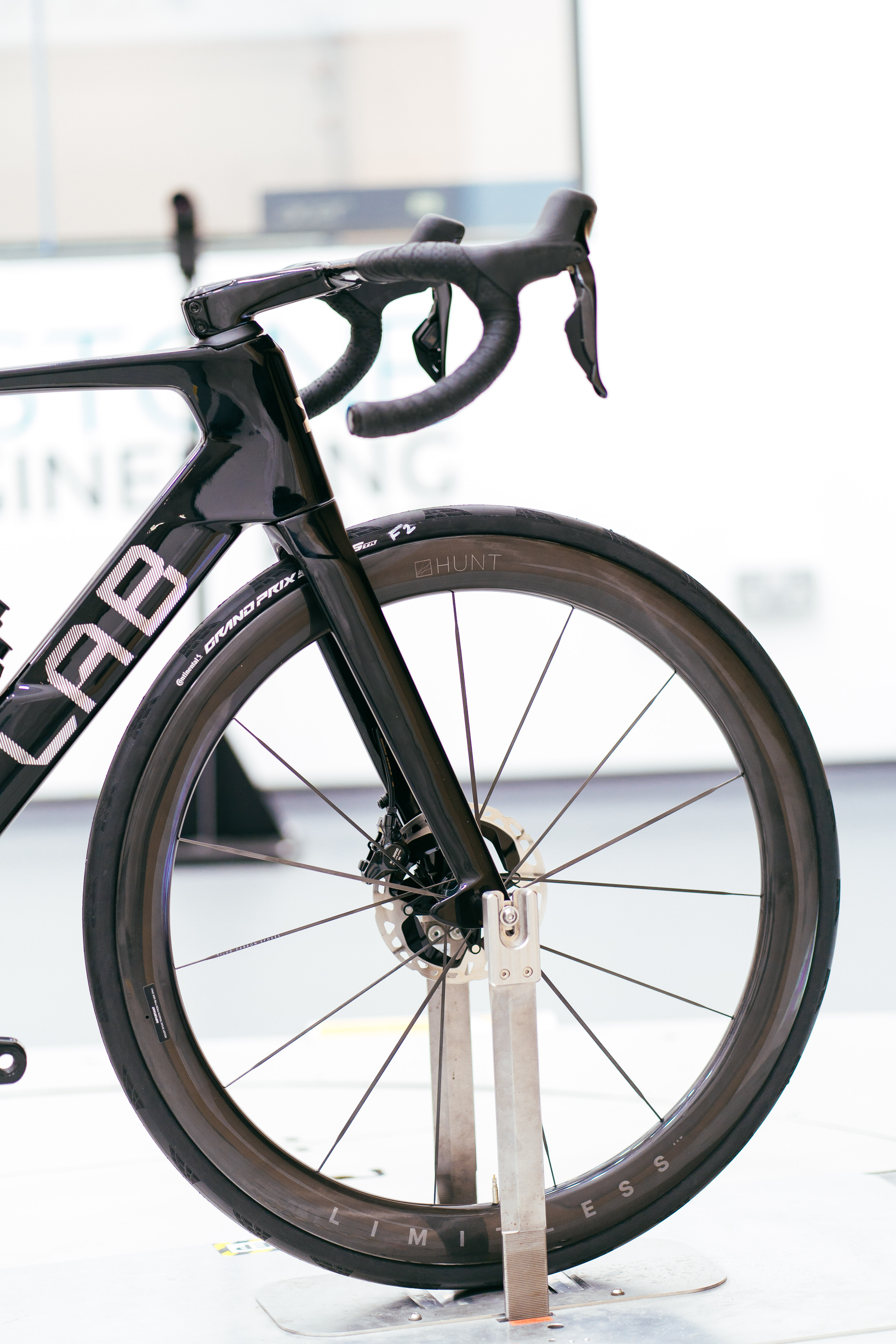
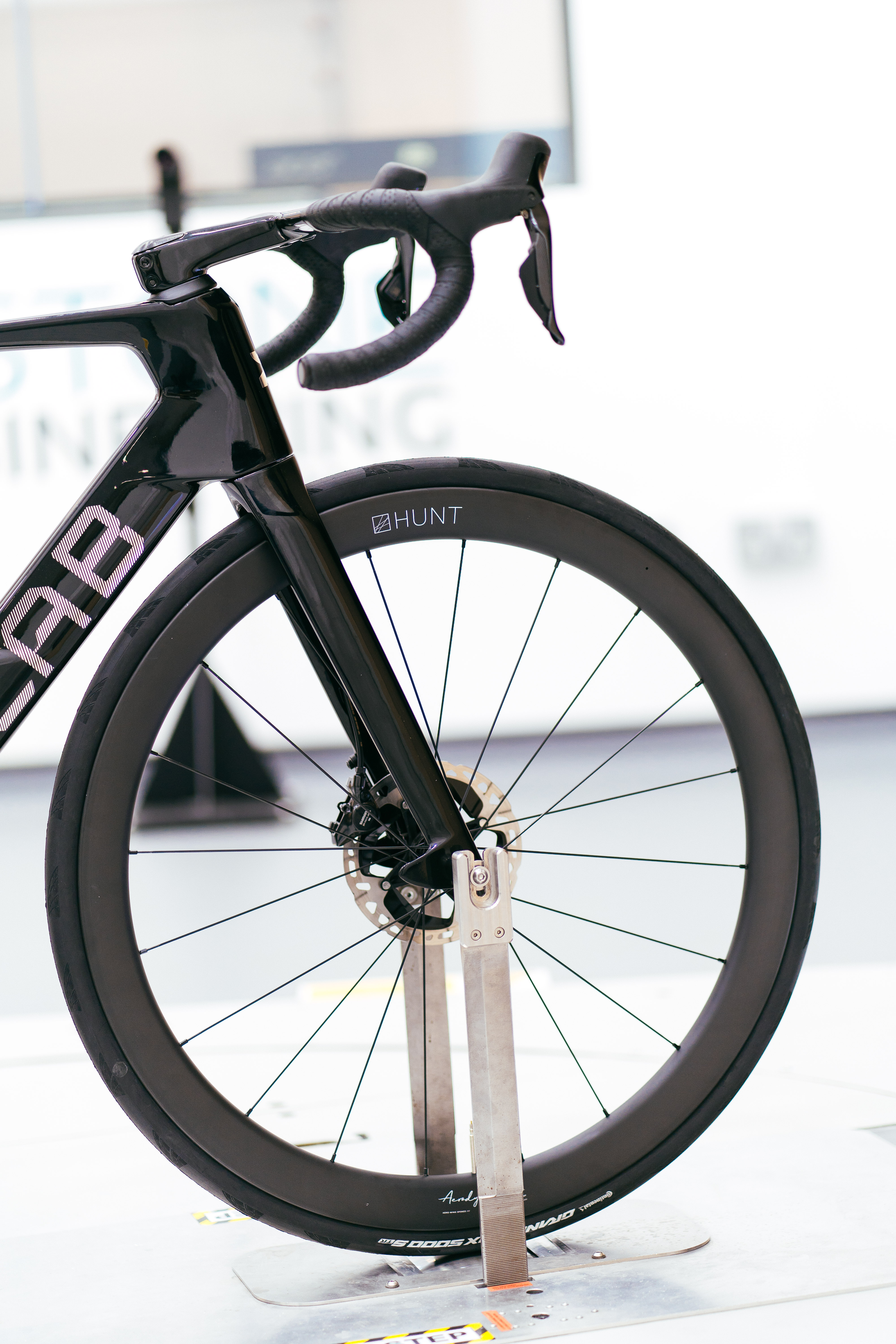
In order to see if carbon spokes are faster we ran two front wheels with identical rims, one with carbon bladed spokes, the other with round steel ones. The wheels, at the time of writing, are unreleased Hunt prototypes. They feature identical rim profiles, with the front being slightly deeper than the rear (49.5mm vs 47mm).
Carbon spokes allow you to reduce your spoke count due to their increased strength. For this test, the carbon spoke wheel had 15 spokes, while the steel one had 20. This introduces another variable, which we will investigate further shortly, but for two identical wheels from the same brand, it is likely that the carbon set will have fewer spokes, so it’s still a reasonable pair of options to test.
It is worth saying at this point that we are discussing material, but primarily the aerodynamic properties are down to shape, and while most carbon spokes are bladed, and most steel spokes are round, you can get bladed metal spokes and you can get round carbon ones.
Here’s what the results show:
You’d be forgiven for thinking this chart is just two equally sized rectangles. When we calculate a coefficient of drag (CdA) for both wheels, the resulting output is extremely similar, with a total difference of 0.0007.
What does this number mean in practice, though? Small aerodynamic differences can have measurable impacts, as we know. Using these CdA figures for each wheel, we can calculate the power required to propel each wheel (and an identical bike, onto which they are mounted) at various velocities:
Even as the velocity increases to speeds most of us only hit on alpine descents, we can see the power differential between the two spoke options is extremely minimal, only just getting over a single Watt at 50km/h, rising to 4.38 Watts at 80km/h.
How do these differences translate into what has become the standard hypothetical 40km time trial? Well, minimal differences are still the order of the day: If you’re riding at 250w, then you’ll have a seven-second differential between these wheelsets, dropping to 6s at 350w, and 5s at 450w.
These differences are extremely minimal, and certainly totally imperceptible in drag terms, even in back-to-back testing, but time trials have been won or lost by tighter margins. If we turn our maths to a 300m sprint at 1,500w, the winning margin (all else being equal) would be 0.026s.
This is all somewhat presented with a pinch of salt, given the differences measured are exactly the same as our margin of error, meaning the actual results could be half what is presented here, or half as much again. In any case, it’s a small difference.
How much difference does spoke count make?
Image 1 of 2
 (Image credit: Will Jones)
 (Image credit: Will Jones)
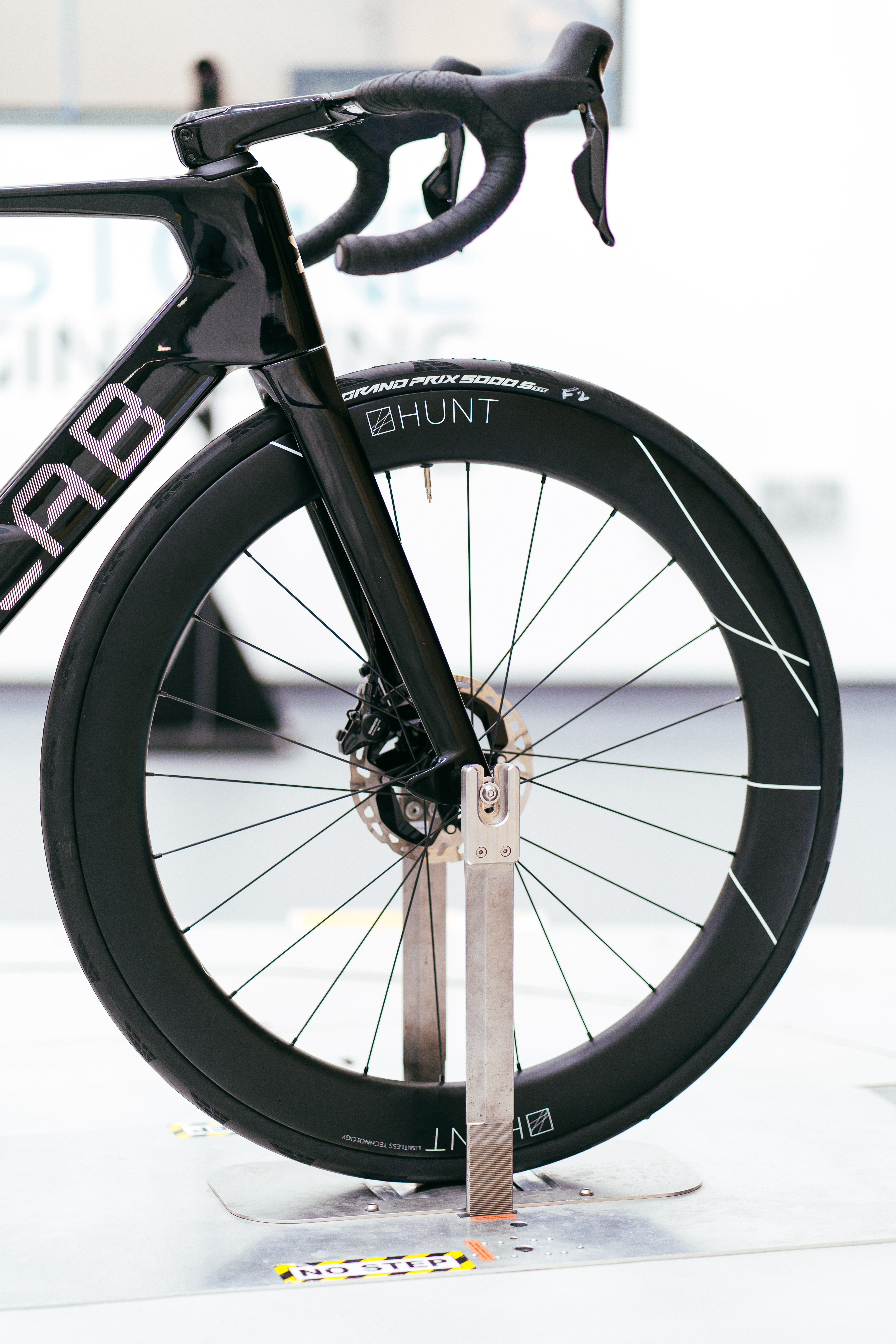
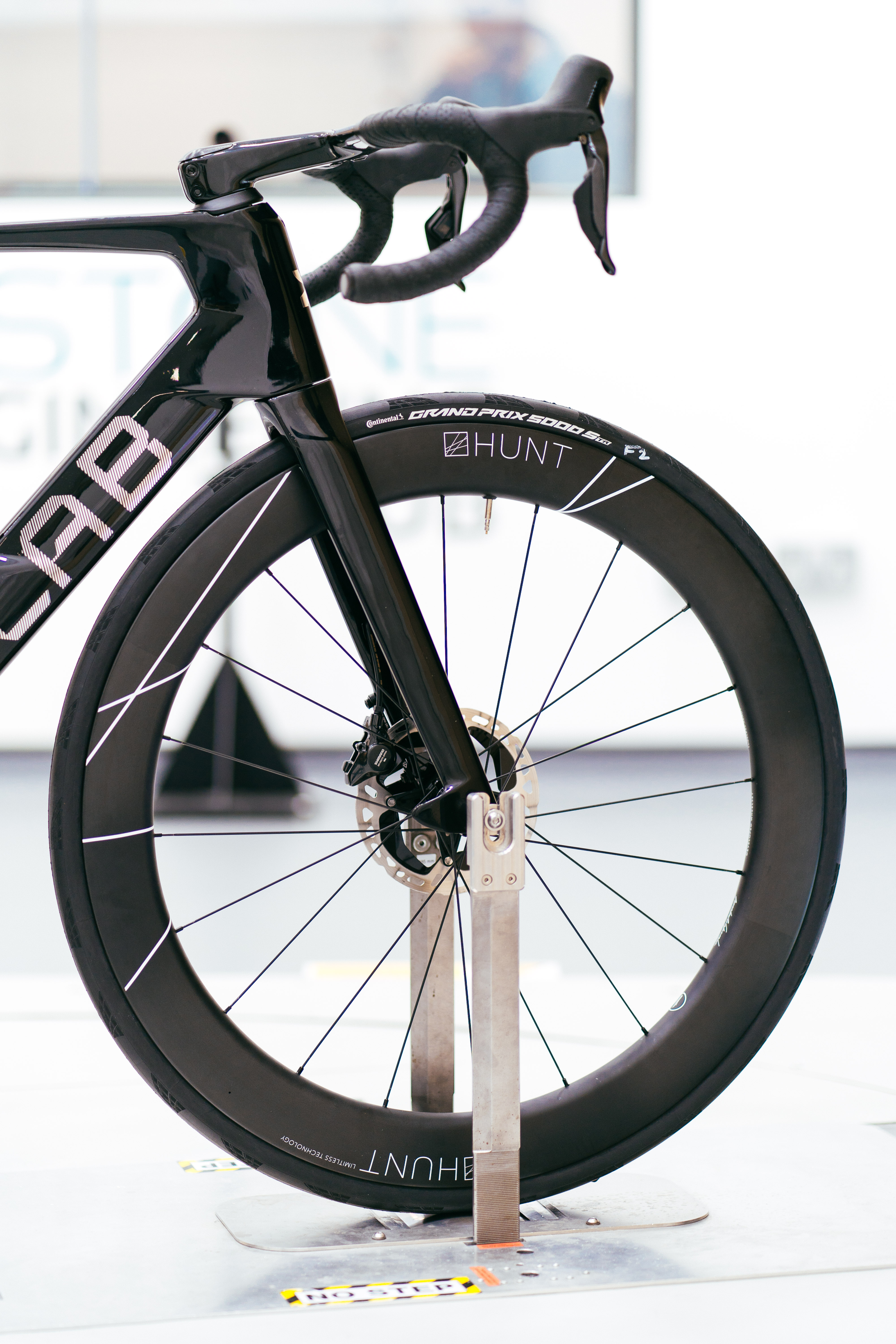
Given that the two prototype Hunt wheels we tested differed not only in spoke material but also spoke count, it was only prudent that we try to isolate the spoke count variable to see how much of an influence this was having on proceedings.
To this end, we tested a pair of Hunt 60 Limitless Aerodynamicist wheelsets, identical in every way besides one set having 24 spokes per wheel and the other 20 spokes per wheel. The resulting difference in CdA was even smaller at 0.0004. So as not to waste your time with two columns that appear identical, I’ll just give you the line graph below to see how things change with velocity; as you can probably tell, they’re basically indistinguishable.
Accounting for the error margin, the actual CdA difference could be next to nothing at its lowest, or a fraction more than what we measured for the spoke material, so again, take these with a pinch of salt.
A key takeaway is that the difference between changing spoke count is smaller than the difference between changing spoke material and spoke count, which means swapping from steel to carbon spokes is faster, independently of spoke count, if we discount the error margin. Naturally, if you swap from an extremely low spoke count steel spoked wheel to an extremely high spoke count carbon spoked wheel, your spoke material gains may be wiped out by your spoke count losses.
In any case, using the same parameters as before, you’d have to go 60km/h to measure a 1w difference (well, 0.99w, but I’m being kind). At 80km/h, you’re still only registering a 2.35-watt difference, not enough to even feel.
Using the time trial scenario, a 40km TT at 250 watts would net you a time gain of 3s if you lose 8 spokes in total (not accounting for the minimal weight loss, too). This remains the same even at 350 and 400 watts, and diving into the smaller fractions of time reveals thousandths of a second differences.
In a 300m sprint at 1,500 watts, your time difference over your identical twin using the same equipment, changing only the spoke count, is 14 hundredths of a second.
Do spokes matter, then?
(Image credit: Will Jones)
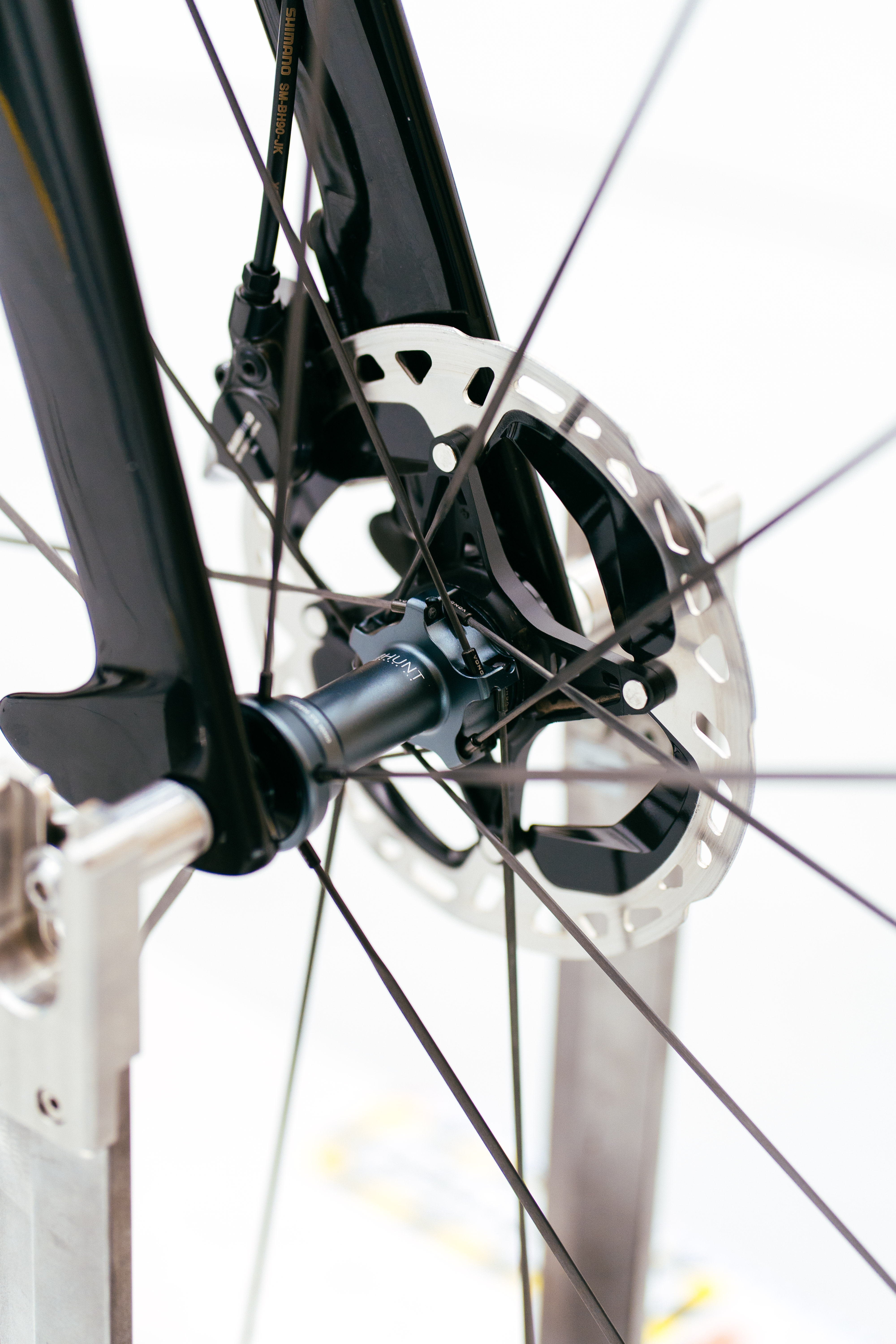
I think it’s worth taking a step back at this point and contextualising things. We have found in our testing of various wheelsets that carbon-spoked wheels tend to be faster than round-spoked alternatives, but when we actually drill into the measurable differences between the two when we only change the spokes, the differences are so minor that with the error margins in play, they’re effectively negligible.
If you happen to be a WorldTour professional reading this, and a single watt at 50km/h is worth having, then carbon spokes may well offer a small competitive advantage, but I suspect for the vast majority of you reading this, the benefits of carbon spokes – purely in aerodynamic terms at least – aren’t necessarily all that great. Suffice it to say that while carbon spokes may help a total wheel system be fast, they aren’t the major factor that separates a fast wheel from a slow one.
There are other things to consider, including wheelset stiffness and system weight, where carbon spokes may offer further gains beyond small aero ones, but these may be offset by the fact that carbon spokes are harder to come by, and perhaps harder to replace should they fail, and increased wheel stiffness has knock-on impacts on ride comfort.
Are deeper rims faster?
Image 1 of 3
 (Image credit: Will Jones)
 (Image credit: Will Jones)
 (Image credit: Will Jones)
The average depth of your ‘normal’ bicycle wheel for the performance oriented amateur has been creeping up over the years, with ‘all-rounder’ wheelsets sitting around the 50mm mark, with options in the 60mm depth and greater (but not that much greater, given the ever-present hand of the UCI rulebook) reserved for flat days, sprinters, and more all-out aero machines.
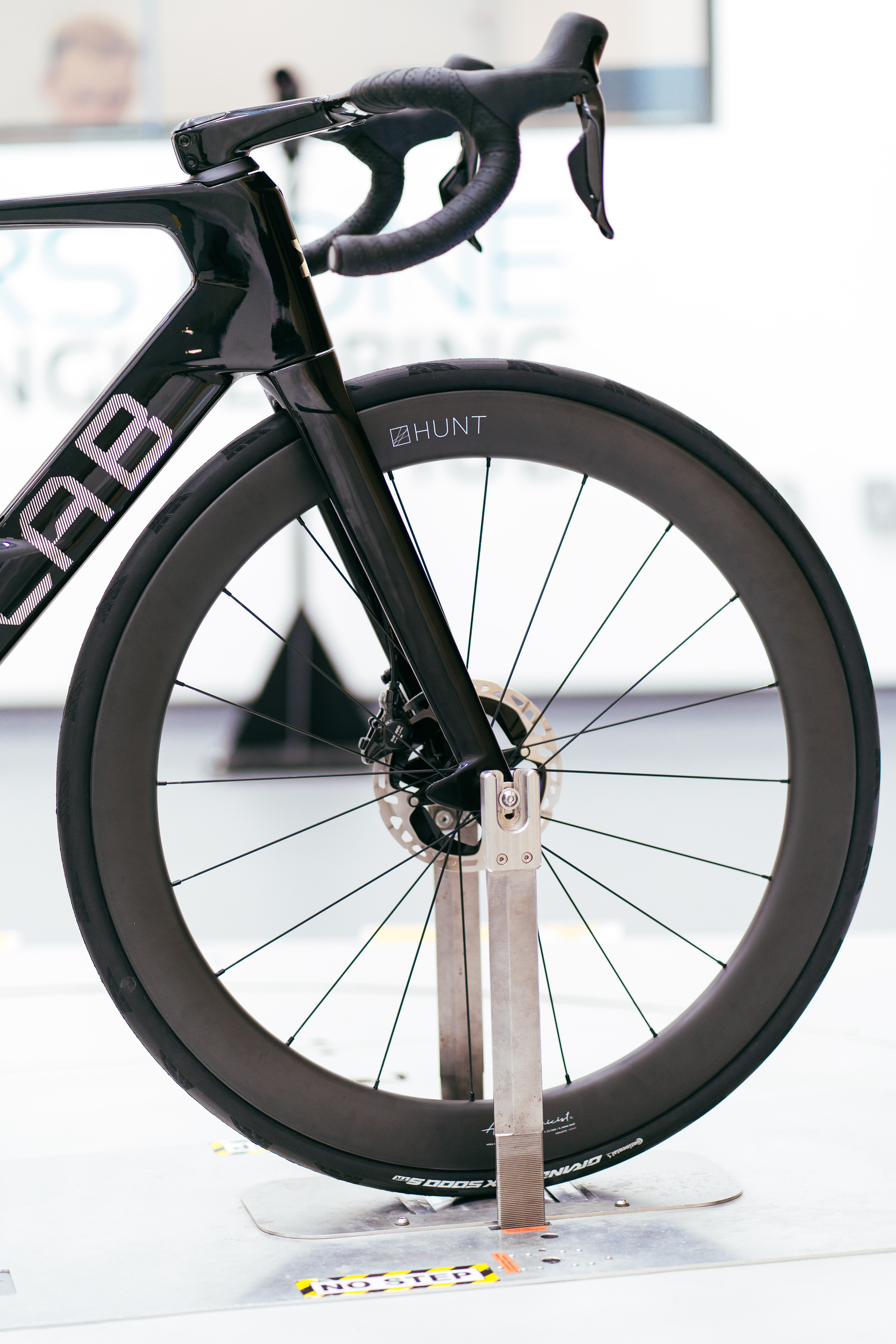
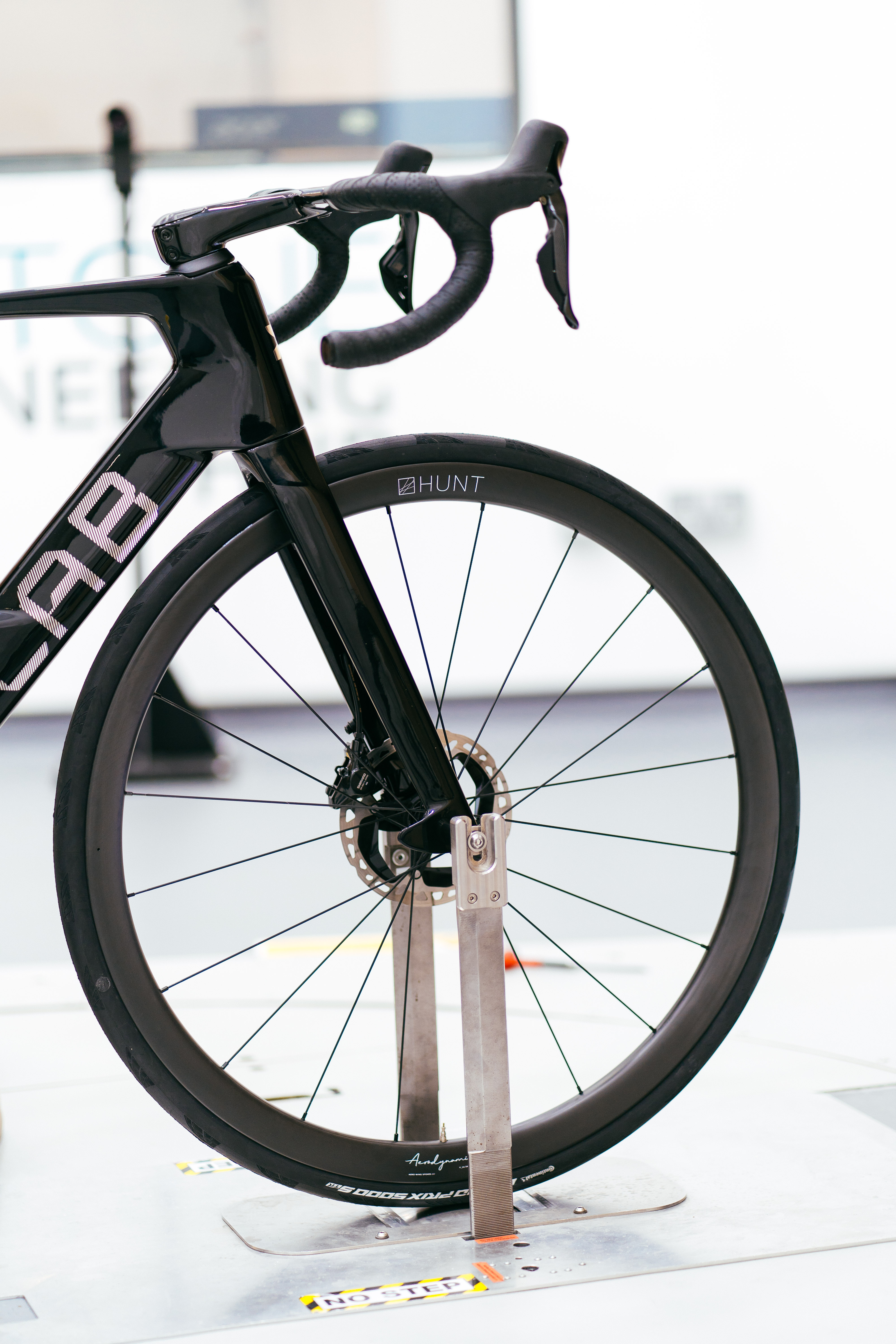
The general consensus is that deeper wheels are faster, but are they, and if so, what are the differences? To test this, we ran a set of three wheelsets through our testing protocol. Each was a Hunt Aerodynamicist wheelset, with the same hubs, the same spoke count, the same steel spokes, and the same rim profile, differing only in rim depths.
We tested 34/34, 44/46, and 54/58mm pairings.
The differences in CdA are bigger here than when we were simply tinkering with spokes, with a 0.033 swing from the shallowest to the deepest. How does this equate to wattage at different velocities?
As with everything aerodynamic, the differences are more pronounced at higher speeds, but at more attainable velocities for a lot of us (under 50km/h), the wattage differences are still relatively minimal, at around 5 watts at 50km/h and just over a single watt at 30km/h.
When we resolve this for speed, we can see that at 250 watts, there’s only a differential of 0.81km/h across the whole range. At higher wattages, this grows (a little bit) to 0.9 km/h at 350w, and 0.98km/h at 450w.
At very high wattages of 1,500w the speed differential is 1.47km/h. In all of these cases, you need to remember that this is for a bike only, which is why the velocities are higher than they would be if you had a rider on the bike actually outputting that power.
What does this mean for the UCI wheel depth rule?
(Image credit: Will Jones)
The UCI’s suite of new safety regulations, including mandating minimum handlebar widths that had scorn poured on them by bike fitters and female athletes alike, all revolve around trying to reduce the average speed of races. While we were unable to test a UCI-illegal wheel with an identical rim profile, we can extrapolate the data out.
It’s not a perfect solution, but adding a fourth illegal wheel into the test suite would have changed the ‘shape’ variable, which would render the data it produced somewhat useless.
Simplifying slightly, an increase in wheel depth from 33-56mm (taking the front wheel depth as the reference depth) results in a speed increase of less than 1km/h at WorldTour power levels.
If we take this data and flip it the other way, assuming the speed gains are linear, going from a UCI legal 56mm deep wheel to a very illegal 79mm deep rim, would again only show a gain of less than 1km/h.
This is an extreme scenario, and even when there was no minimum wheel depth rule, we didn’t regularly see pro riders cutting about on 80mm deep rims; they’re heavier and harder to handle in windy conditions. Distilling it down to a per-millimetre velocity gain: based on our limited dataset, every millimetre is worth 0.045km/h at 450 watts. Denying riders the use of a 68mm wheel, forcing them to use a 65mm equivalent (assuming they have access to such closely spaced wheel sizes), would create a speed differential of 0.135km/h, which I think we can all agree wouldn’t be enough to make a meaningful safety difference.
This isn’t just a hypothetical. Swiss Side developed a 68mm version of its Hadron 3 wheels, which were then affected by the ban, forcing the brand to develop a 65mm version. This would have caused a huge tooling cost to create the physical moulds, let alone the R&D and lost revenue from illegal wheels, all for 0.135km/h. Even with a wider swing, from the 55mm deep Hadron 3 to the illegal 68 version, the difference is a paltry 0.585km/h. Hitting the ground at 49.5km/h is going to suck just as much as it will at 49km/h.
Swiss Side itself claims the 68mm Hadron is has a 0.5w drag advantage over the 65mm deep version. I’m not sure what speed this was at, but assuming the industry standard-ish 40km/h, we can use this as a sense check on our extrapolations. Half a watt is half the difference we found at 40km/h between the mid-depth Hunts and the deeper Hunts, which itself resulted in a velocity difference at 450 watts of 0.36km/h. Inputting some hypothetical CdA figures to artificially create a 0.5w difference at 40km/h results in a 0.18km/h velocity differential, so our extrapolations are in the right ballpark.
While the law is well-intentioned, it is symptomatic of the UCI’s approach to safety: Regulate equipment, with less of a focus on course design and other systemic changes that could actually make meaningful improvements. Regulating wheel depth will slow riders down, but according to our data at least, it is to such a small degree as to be basically meaningless.
Thank yous
As ever, these tests couldn’t happen without the help of a good number of people.
Thanks must go to Hunt for providing the suite of test wheels, and to Continental for the use of its tyres. Hunt also provided Paddy Brown, its design engineer, who was on hand to answer any wheel questions and to muck in with tyre changes.
My colleague, Tom, made sure everything was properly set up, weighed, measured, and all above board, and for my part, I mostly manned a camera and tried to capture everything we were testing as the day progressed.
While we pay the full commercial rate for our wind tunnel access, thanks as ever go to the SSE team for helping to facilitate our testing days.
Finally, thanks to you, our subscribers. Without you, we wouldn’t be able to run these tests, so know that your membership fee is being put to good use.