

Early in February 2026, a grassroots backlash against ChatGPT began gaining steam online — not over the sunsetting of GPT-4o or outages, but as a political and ethical protest movement.
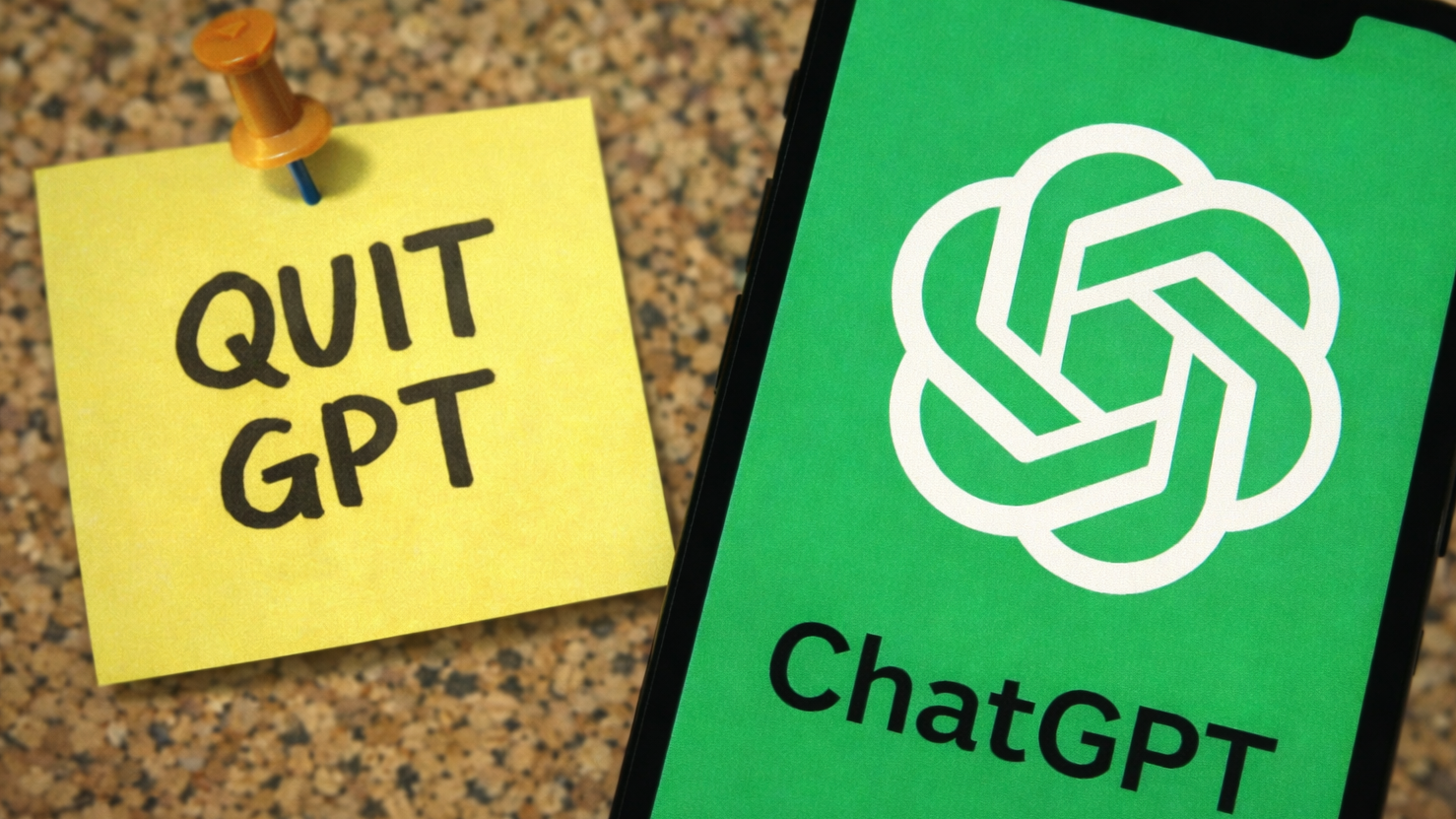
Branded “QuitGPT,” the campaign is urging users to cancel their ChatGPT subscriptions, delete the app and shift to alternative AI chatbots — and its momentum is raising hard questions about how AI intersects with politics, corporate behavior and consumer values.
What is QuitGPT?
(Image credit: Future)
QuitGPT is a decentralized campaign that has spread through Reddit, Instagram and dedicated websites where users pledge to drop ChatGPT Plus and other paid tiers. Organizers and participants cite several core grievances:
Political contributions by OpenAI leadership: A widely shared claim in the campaign alleges that OpenAI’s president made a major political donation to a pro-Trump super PAC — a move critics argue contradicts the activist values of many Silicon Valley users.AI use in government enforcement: QuitGPT supporters highlight that tools powered by ChatGPT-style models have been used in hiring or screening processes by agencies such as U.S. Immigration and Customs Enforcement, heightening concerns that AI is being deployed in controversial real-world systems.Ethical unease and corporate accountability: Beyond specific incidents, the movement reflects a broader uneasiness about who controls the technology users rely on daily and what those leaders’ values say about the tools themselves.
Organizers claim that tens of thousands of people have signed up to quit their subscriptions so far — a sign that the protest has moved beyond anonymous threads into organized activism. The QuitGPT site claims 700,000 users have already committed to the boycott.
Celebrity spotlight: Avengers star Mark Ruffalo amplifies the Message
Part of what has pushed QuitGPT into the cultural spotlight was support from actor-activist Mark Ruffalo, who shared the campaign on social media and urged his followers to consider the ethical implications of continuing to use and pay for ChatGPT.
In his posts, Ruffalo frames the boycott as a moral choice and suggests exploring alternative AI services that align better with users’ values.
You may like
His Instagram posts — which have garnered millions of likes and widespread engagement — is fueling broader awareness and brought QuitGPT into mainstream discussion beyond tech forums and activist circles.
What to know

(Image credit: Future)
From where I’m sitting, viral outrage rarely maps neatly onto real-world consequences. QuitGPT is loud — but loud doesn’t always equal large. ChatGPT still has an enormous free user base, and for millions of professionals, students and everyday users, it’s become embedded in how they work and think. That kind of utility doesn’t disappear overnight.
Regardless of political stance on this particular topic, it does raise an opportunity to reassess value: Is ChatGPT still worth paying for? Are other models better? Do alternatives offer stronger privacy or clearer guardrails?
Even QuitGPT organizers aren’t just saying “delete ChatGPT and log off.” They’re actively pointing people toward competitors like Gemini, Claude and open-source options. That tells me this isn’t an anti-AI movement — it’s about options in a rapidly expanding AI ecosystem.
In that sense, what QuitGPT represents may matter more than how many people actually cancel. It’s part of a broader wave of public scrutiny of big tech — a reminder that users are no longer treating platforms as neutral tools, but as companies whose values they’re implicitly supporting.
You may like
Final thoughts
As generative AI becomes woven into everything — writing, research, creativity, customer service and even hiring — we’re entering an era where convenience and conscience don’t always align.
What this moment really highlights is the tension between values and utility. It’s no longer enough for a product to be powerful; people increasingly want to know who built it, who profits from it and what they stand for. If movements like QuitGPT continue to gain traction, tech companies may need to be just as intentional about communicating their values as they are about shipping new features.
Whether you’re a ChatGPT loyalist, a skeptic or somewhere in between, QuitGPT suggests the era of apolitical tech consumption is over.

Follow Tom’s Guide on Google News and add us as a preferred source to get our up-to-date news, analysis, and reviews in your feeds.
More from Tom’s Guide