
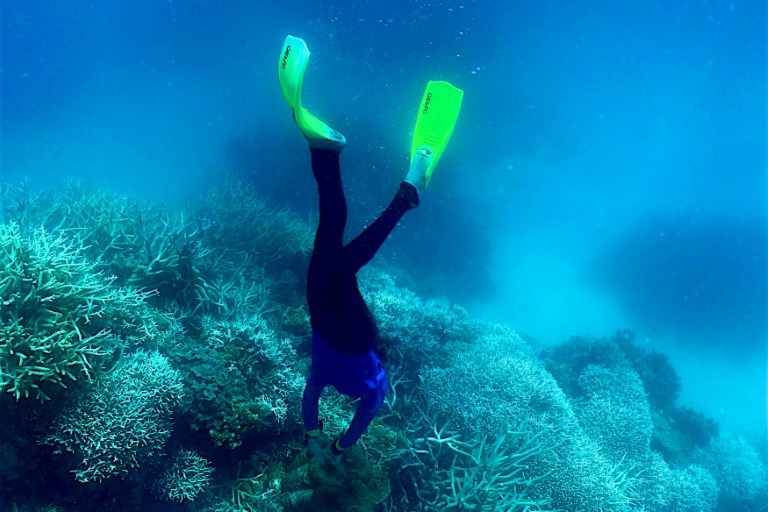
Parts of Australia’s beleaguered Great Barrier Reef now have the highest levels of coral cover seen in decades – Copyright AFP Glenn NICHOLLS
Coral reefs are in far worse shape than previously realised, following years of decline. A new international study found that during the 2014–2017 global marine heatwave, more than half of the world’s reefs suffered significant bleaching, and many experienced large-scale coral death.
The reefs are estimated to be worth $9.8 trillion a year to humanity. Reefs support fisheries, power tourism industries, protect coastlines from storms, and even help scientists discover new medicines.
It has previously been established, as Digital Journal has reported, that human-driven climate change is damaging the reefs; new data shows the extent of this. Researchers report that a global marine heatwave caused widespread coral bleaching, damaging roughly half of the world’s reefs.
The findings, led by scientists at the Smithsonian, mark the first time the global extent of bleaching during such an event has been carefully calculated. A new heatwave that began in 2023 is still unfolding.
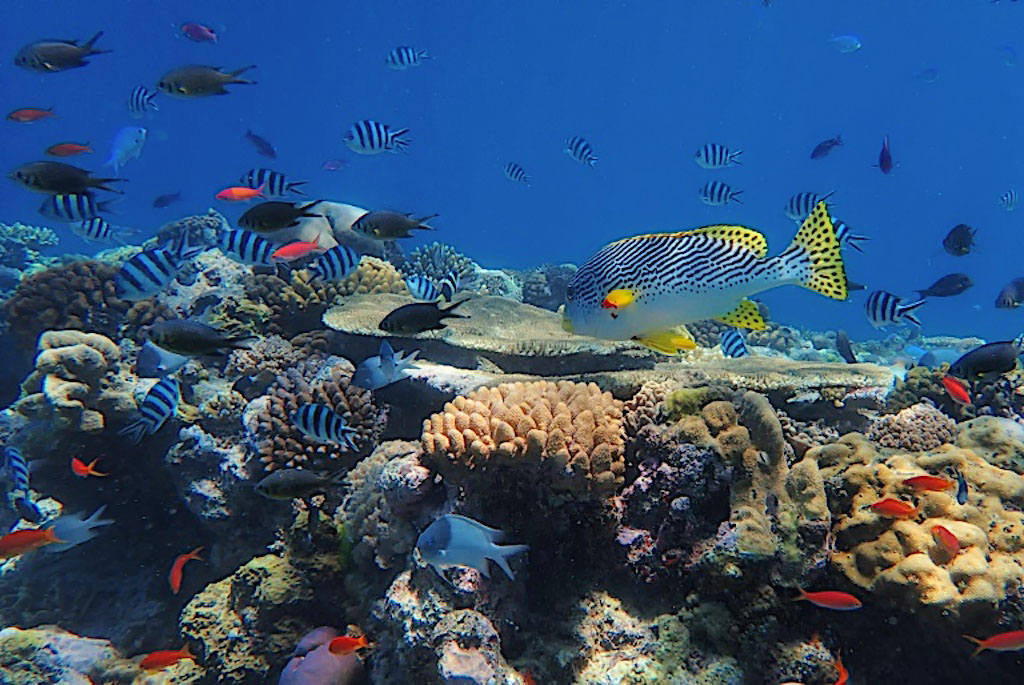 The Great Barrier Reef is the world’s largest living structure, visible from space – Copyright ARC Centre of Excellence for Coral Reef Studies/AFP MORGAN PRATCHETT, Handout
Coral bleaching
Coral is built on a close partnership between two living organisms. One is a tiny animal related to jellyfish that creates the hard reef structure. The other is microscopic algae that live inside the coral’s tissues and use sunlight to produce energy, which feeds the coral.
Elkhorn and staghorn corals, which take their names from the antler shapes they resemble and belong to the Acropora family, are fast-growing “reef builder” species that long dominated waters off Florida and in the Caribbean. The 2023 heat wave — which persisted for almost three months and brought record-high ocean temperatures off Florida — has proved a death knell for the two species in the Florida Coral Reef, the world’s third-largest barrier reef. Both species are now classed as ‘functionally extinct’.
When ocean temperatures rise too high, this partnership breaks down. The coral expels the algae that supply its energy and turns white, a condition known as bleaching. Without its algae, coral grows more slowly, reproduces less, and can die if the heat stress is intense or lasts too long.
Mapping the damage
To measure the scale of damage during what is commonly referred to as the “Third Global Coral Bleaching Event” (2014-2017), scientists from dozens of countries worked together. The project was led by researchers at the Smithsonian Tropical Research Institute (STRI), James Cook University in Australia, and the former director of Coral Reef Watch at the U.S. National Oceanic and Atmospheric Administration (NOAA).
The scientists combined satellite measurements of ocean surface temperatures from the Coral Reef Watch system with on site reef surveys and aerial observations collected worldwide. This approach allowed them to link heat exposure from space with real world reef conditions.
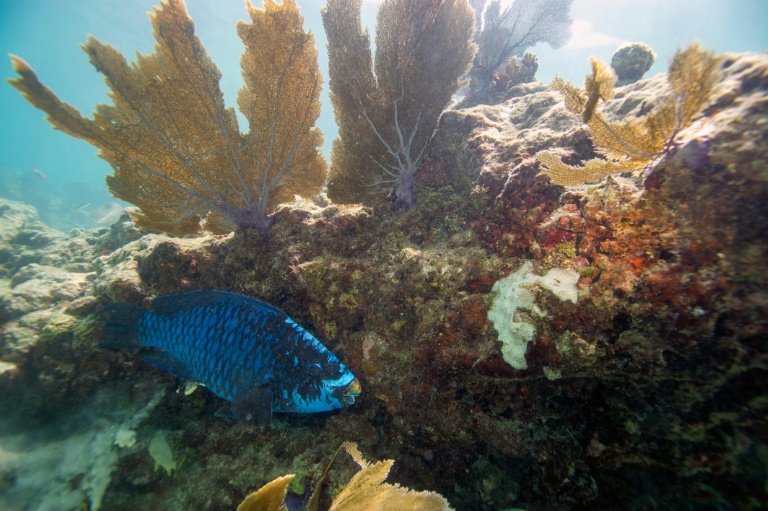 A parrotfish swims around a coral reef in Key West, Florida; About 25 percent of all marine species are found in or around these habitats. — © AFP Jung Yeon-je
Troublesome results
The researchers analysed more than 15,000 reef surveys. They found that 80 percent of reefs experienced moderate or worse bleaching, and 35 percent showed moderate or higher levels of coral death.
After establishing how heat stress corresponded to reef damage at surveyed sites, the team applied satellite based heat data to estimate impacts on reefs that were not directly studied. Their results suggest that more than 50% of coral reefs globally suffered significant bleaching, and 15% experienced significant mortality.
Fourth event
Data collected worldwide now show that Earth is in the midst of a Fourth Global Coral Bleaching Event.
The research features in Nature Communications, titled “Severe and widespread coral reef damage during the 2014-2017 Global Coral Bleaching Event.”