
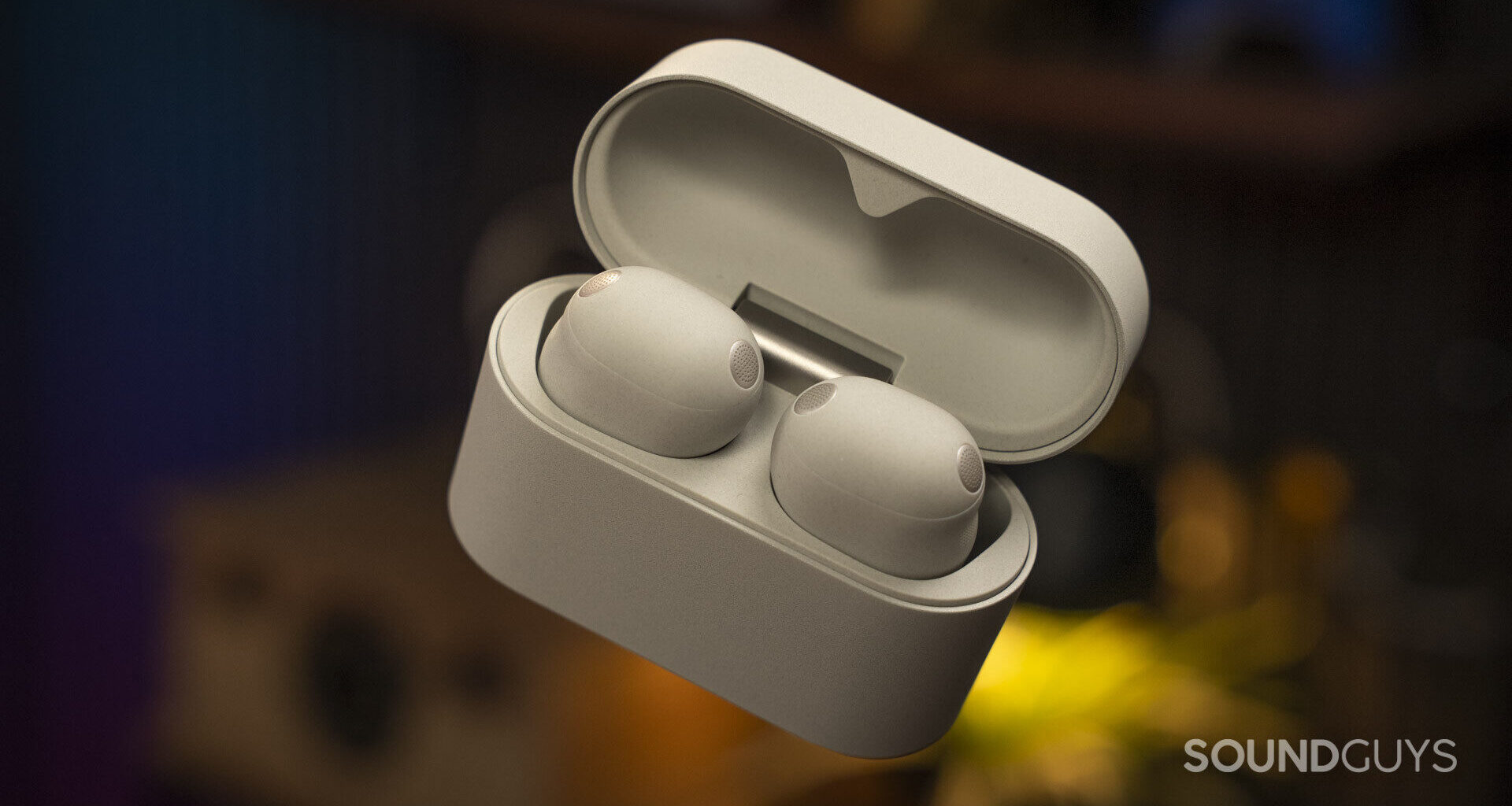
Last year, Sony released the WH-1000XM6 headphones, and it was only a matter of time before the WF-1000XM6 earbuds followed suit. Sony has built a reputation for delivering some of the best audio products on the market, but the competition hasn’t been sitting idle—Apple and Bose have both raised the bar with wireless earbuds.
But beneath a refreshed design, Sony is making some big promises about performance: “the best noise cancelation,” “higher call quality,” “enhanced comfort,” and what they claim is their most “ideal sound” yet. We took these to the lab to see whether the substance lives up to the hype, and the higher price tag.
Who are the Sony WF-1000XM6 for?
The Sony WF-1000XM6 are for anyone seeking flagship wireless earbuds with excellent active noise cancelation and sound quality. Commuters and frequent travelers will appreciate the outstanding ANC performance. Android users benefit from LDAC support for high-resolution audio. If you prioritize call quality, the significantly improved microphones with AI beamforming make these ideal for remote work or taking calls on the go.
About this Sony WF-1000XM6 review: We tested the Sony WF-1000XM6 over a period of two weeks. The earbuds were running version 1.1.0. Sony provided the unit for this review.
How has this article been updated?
This article was published on February 12, 2026, and this is the first version of the article. Updates will follow as the market changes.
What’s it like to use the Sony WF-1000XM6?
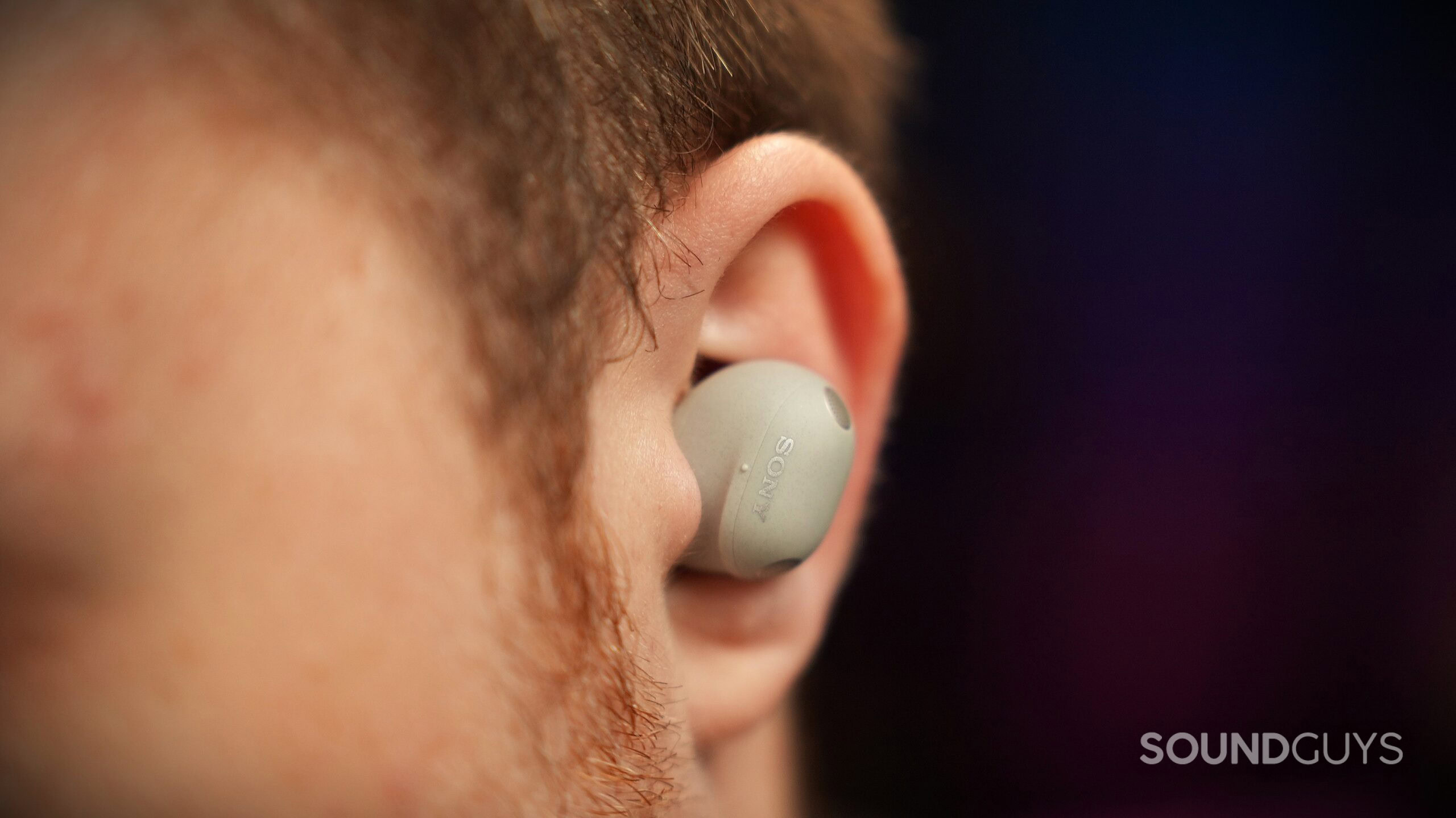
The larger earbuds feature a subtle indentation that tucks into the cavity of your conchae.
Looking at the WF-1000XM6, the most immediate difference from previous Sony earbuds is the design. Gone are the glossy, egg-shaped earbuds and rounded case from the WF-1000XM5. The XM6 earbuds have an elongated oval pill-shaped profile with a slightly taller charging case that now has flat top and bottom surfaces. I think the simpler geometry looks more modern and minimalist, but it might not be to everyone’s style. Looks aside, the earbuds now have a matte plastic surface, and the textured finish is far easier to grip than the XM5s glossy coating. The case also has a slightly chalkier texture than the XM5s, and the front-facing LED indicator is now concealed beneath the case surface, appearing only when active, rather than the XM5s visible pinhole cutout.
These are some of Sony’s chunkiest earbuds yet.
Though the case stands upright on a desk or a wireless charging pad, it remains just as pocketable as its predecessor. I could slide it into the watch pocket on a pair of jeans without issue. The back of the case still sports a pairing button and a USB-C port, and the lid flicks open via a metal hinge that should provide better long-term durability than the XM5s plastic one.
Sony claims the new shape of the earbuds improves fit consistency across different ear sizes. The idea is that there is less room for error when achieving a proper seal. In my testing, I found this to be true—I was able to get a good seal despite twisting the earbuds in at slightly different angles in a hurry. This should benefit those who’ve struggled with traditional earbud fits, especially the type of passersby I see sticking their AirPods in sideways. Simply put, the fit is harder to screw up.
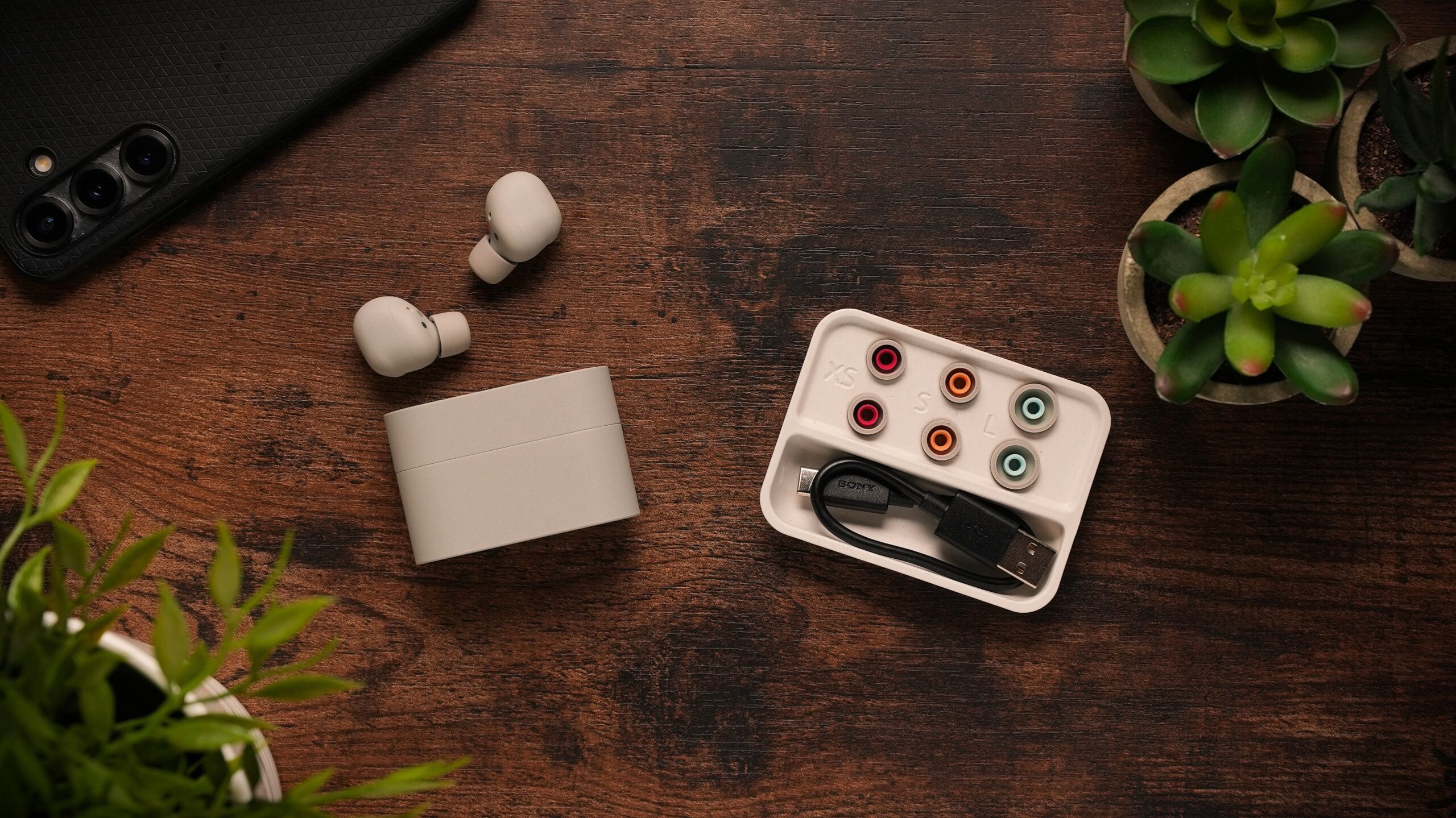
You get the same set of 4 memory foam ear tips as before.
In the box, you’ll find four sizes of memory foam ear tips (the same as with the XM5), a rather short USB-A to USB-C charging cable, and some documentation. Sony hasn’t reinvented the wheel with its accessories, but the foam tips remain among the better stock options compared to other wireless earbuds.
Despite the inclusion of extra small ear tips, if you have smaller ears, these might not be for you. The increased height will be noticeable to anyone familiar with Sony earbuds, and they also protrude too much in width to be comfortable lying against a pillow. But, there’s thoughtful design at work here: the earbud body features a subtle indentation that tucks into the cavity of your conchae, using your ear’s natural anatomy as an anchor point rather than relying purely on the ear tip seal.
That said, I can’t help but think slip-on ear wings—similar to what Bose includes with the QuietComfort Ultra Earbuds—would have made them feel even more secure and stable, especially for exercise. They can feel a tad top-heavy in-ear. Still, I found them comfortable to wear for hours, and the weight is distributed well enough that fatigue wasn’t an issue.
Is the Sony WF-1000XM6 waterproof?
The Sony WF-1000XM6 is not waterproof but carries an IPX4 water resistance rating, identical to the WF-1000XM5. The earbuds can handle light rain or sweaty gym sessions without issue, but keep them away from the pool or shower. This rating is pretty standard for premium wireless earbuds.
How do you control the Sony WF-1000XM6?
The larger surface area of the earbuds makes tap controls easier to register than on previous models. I found the touch sensors responsive and accurate throughout testing. By default, the controls are the same as the XM5s: the right earbud handles all playback controls while the left manages ambient sound modes, but you can reassign these functions in the Sony Sound Connect app.
Sony has also added optional head gesture controls, allowing you to accept calls with a nod or reject them with a head shake. While I found these worked reliably, I typically disabled them to avoid accidentally triggering actions during normal head movement.
What are the best features of the Sony WF-1000XM6?
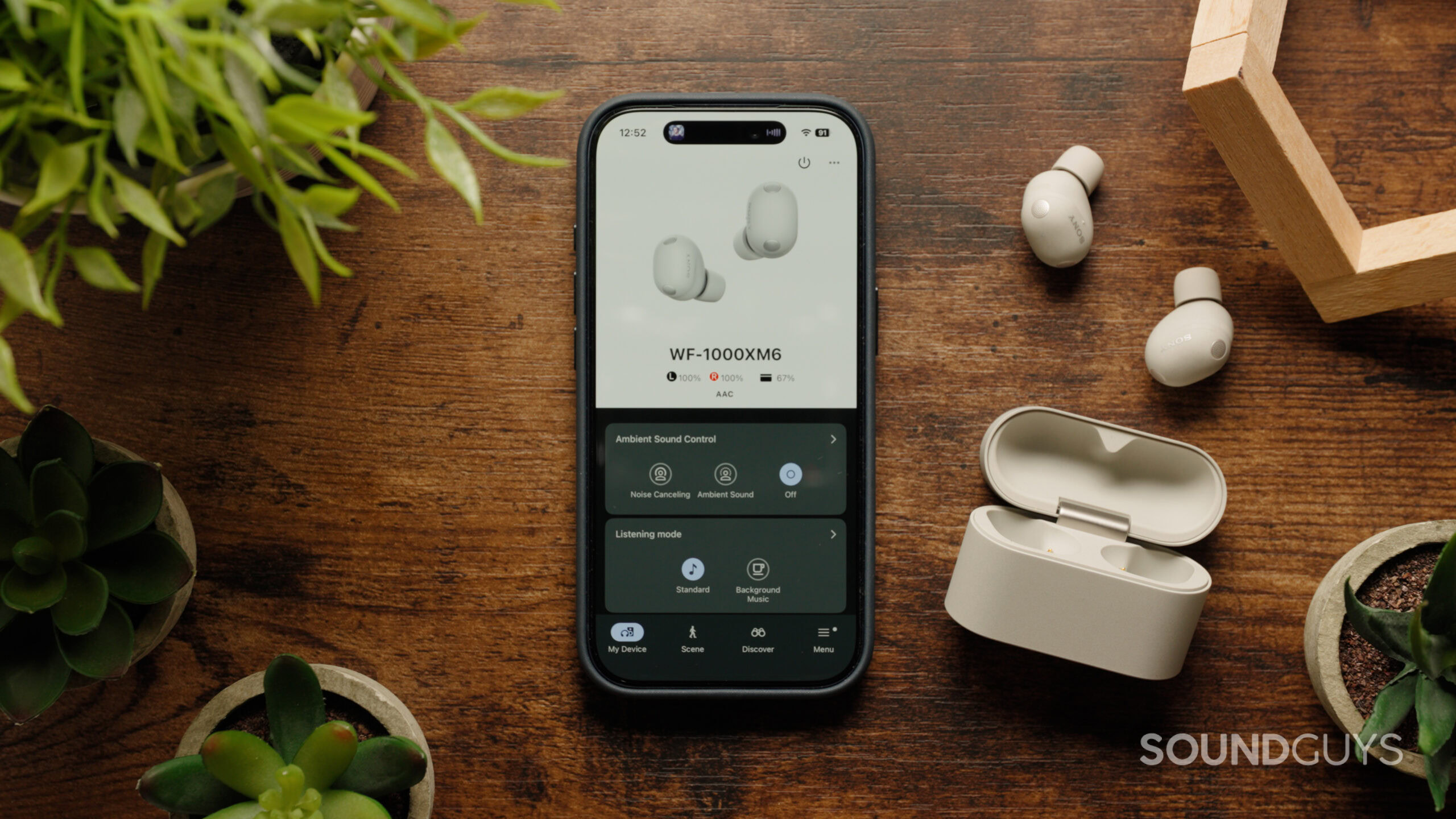
Quickly toggle ambient sound and listening modes from the homepage.
The WF-1000XM6 inherits much of the feature set Sony introduced with the WH-1000XM6 headphones, which means extensive customization through the Sony Sound Connect app. You get access to multiple listening modes, including Background Music mode (one of my favorite additions from the headphones), Adaptive Sound Control, Speak-to-chat, and a 10-band custom equalizer with ±6dB of adjustment per band, which is an improvement over the WF-1000XM5s 5-band EQ and bass slider. Sony also includes a handful of EQ presets for those who don’t want to tweak settings manually.
In the app, you can select what to prioritize when connected via Bluetooth: sound quality, stable connection, or low latency. Selecting sound quality will auto-select the highest codec supported by your device, while stability will reduce the frequency of sound cutting out. Low latency mode was still in beta for my use, but it is best suited for gaming on devices or PCs that support LE Audio.
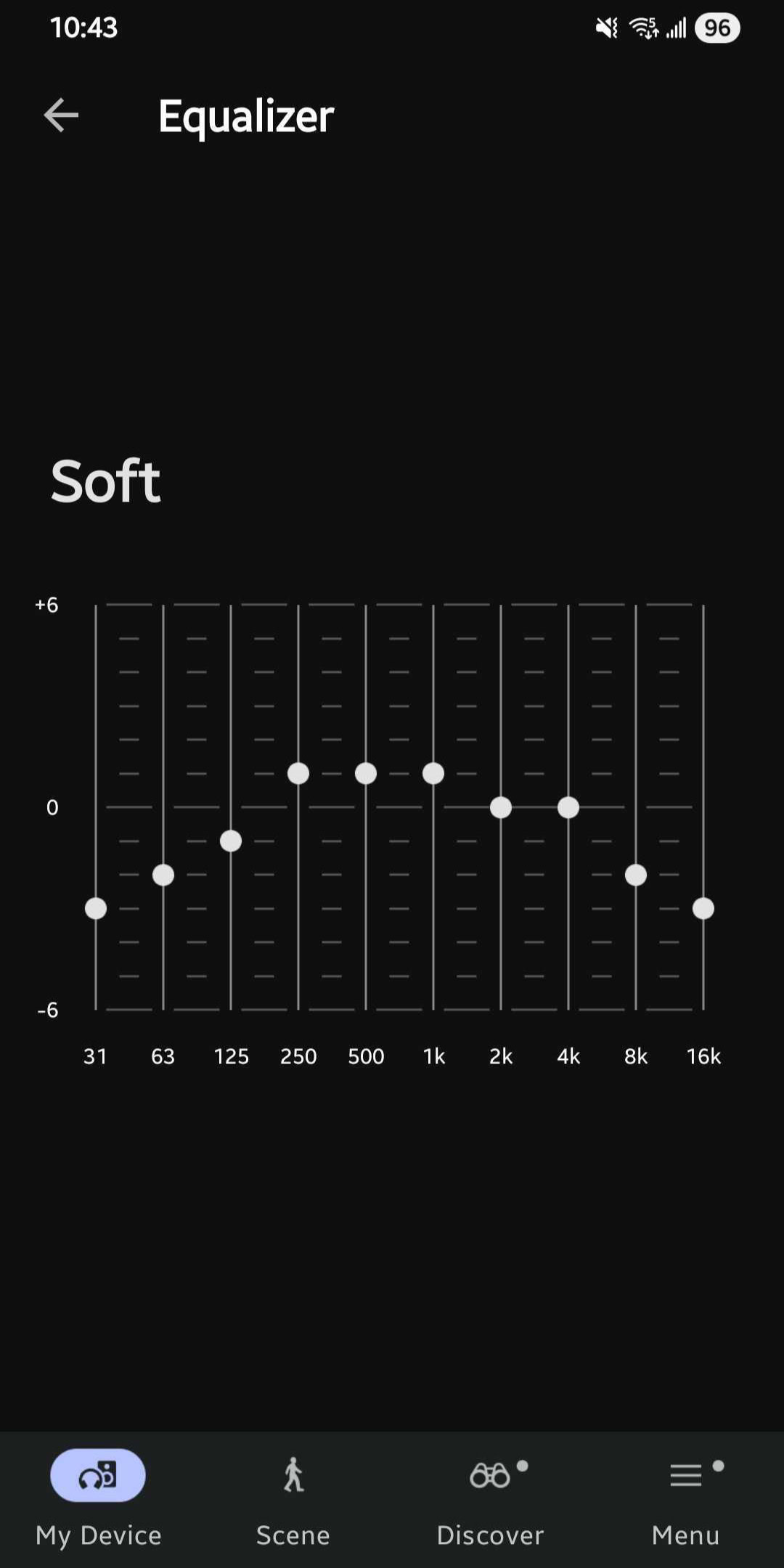 The 10-band equalizer lets you create a custom EQ or tweak any of the presets.
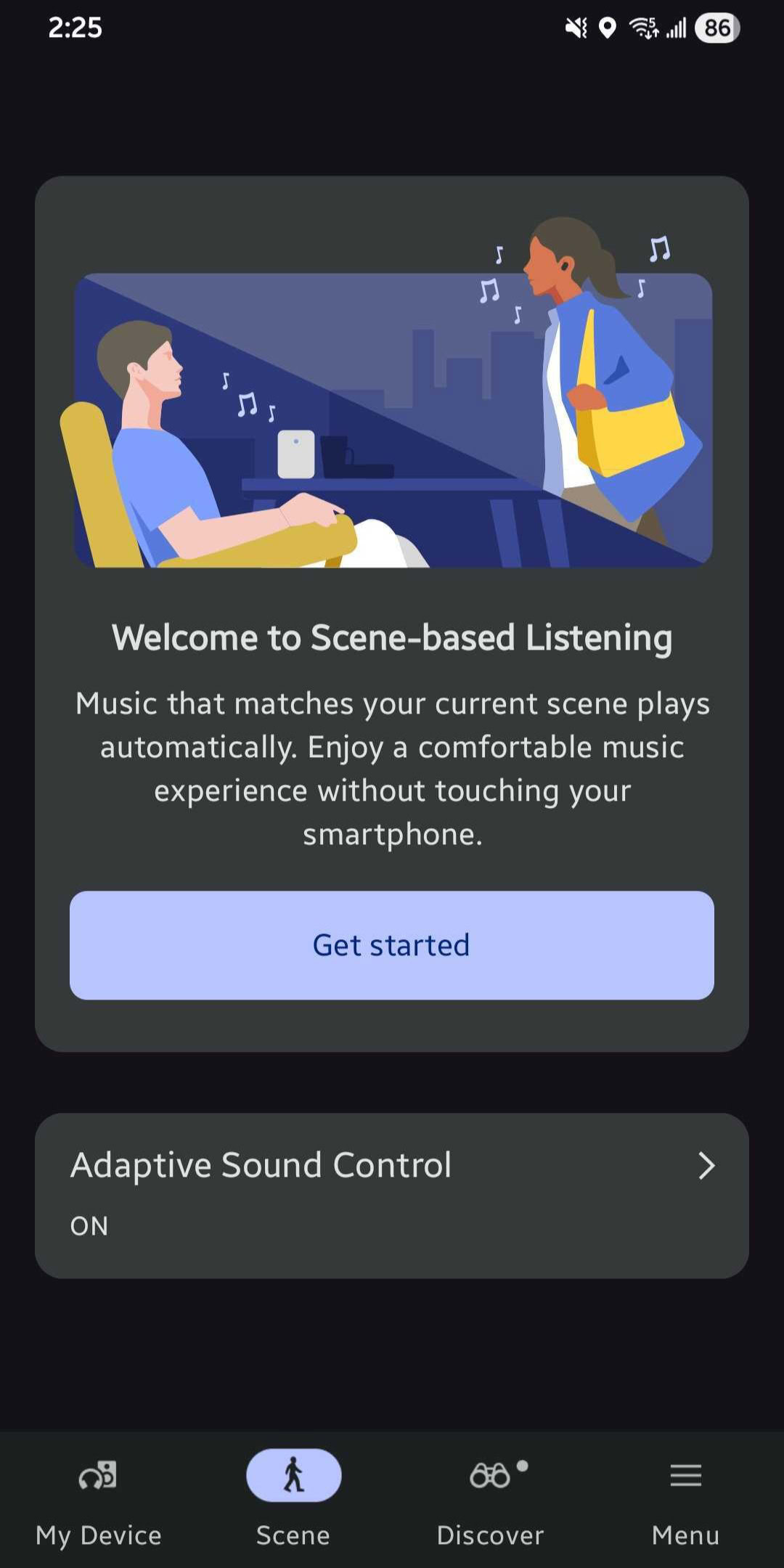 New features include Scene-based listening and Adaptive sound control.
Adaptive Sound Control is still one of the more useful automated features. The earbuds detect your activity and location, then adjust ambient sound settings accordingly—enabling noise cancelation when you’re seated, switching to ambient sound when you’re walking down the street. It’s the kind of feature that sounds gimmicky on paper but is actually pretty helpful in daily use.
Sony has also added Scene-Based Listening, which promises to select music from your streaming app of choice to match your current activity or environment. They also support Spatial Sound Optimization (formerly called 360 Reality Audio) with Head Tracking on Android. However, neither of these features was functional during my early access testing period, so I’ll update this review with impressions after using them once live.
Editor’s note: Some features were not fully enabled during our early access testing period. We’ll update this section with additional impressions as Sony rolls out full functionality.
How does the Sony WF-1000XM6 connect?
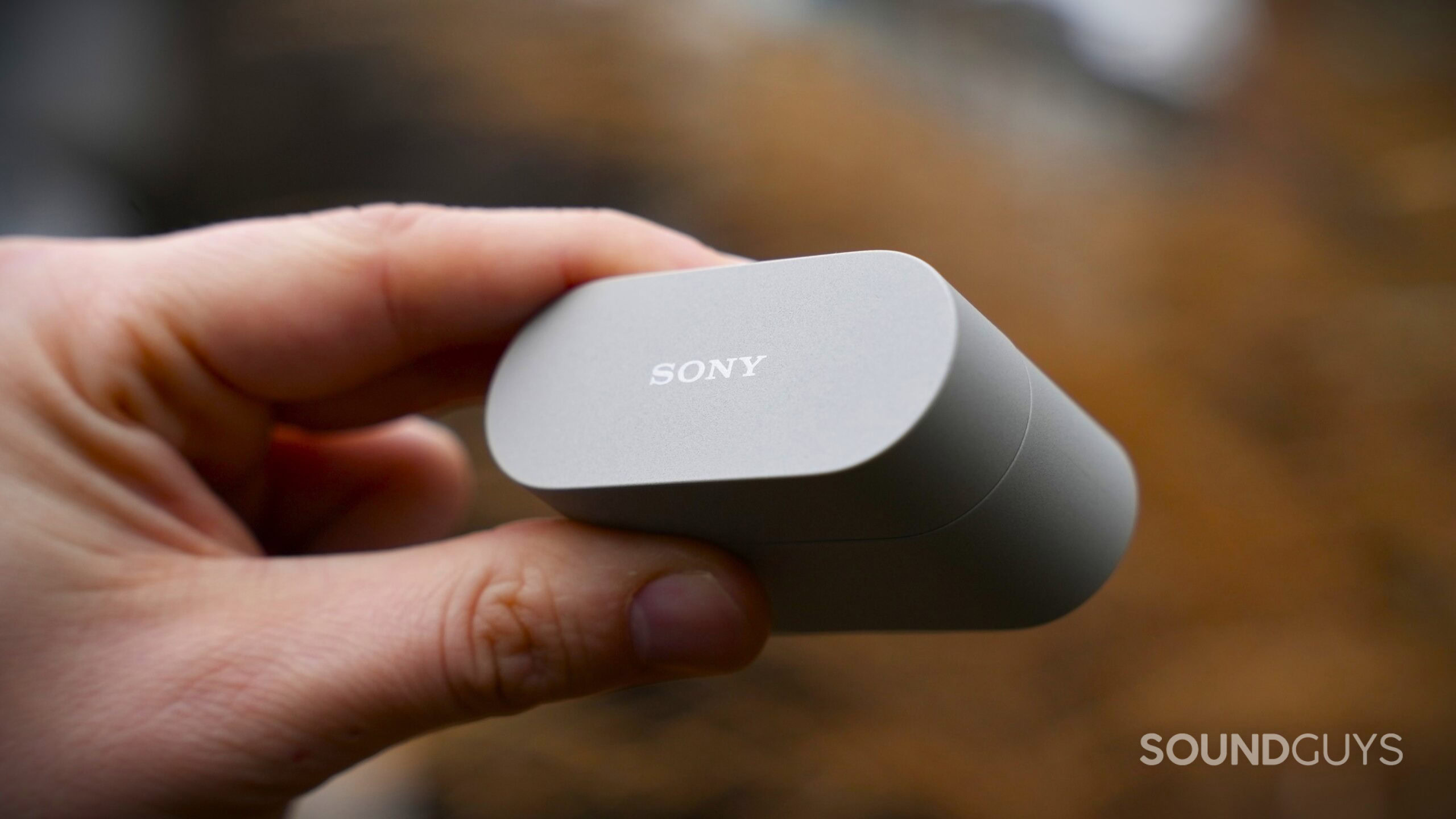
The charging case now has flat top and bottom surfaces.
The Sony WF-1000XM6 supports Bluetooth 5.3 and includes codec support for SBC, AAC, LDAC, and LC3 with LE Audio, maintaining the same codec lineup as the WF-1000XM5. That means high-resolution wireless audio up to 24-bit/96kHz for Android users via LDAC, while iPhone users are limited to AAC. While Bluetooth 5.3 is still perfectly capable for current use, Sony’s decision not to adopt the newer Bluetooth 6 standard means the WF-1000XM6 won’t support any exclusive features that emerge down the line. That is a future-proofing concern for a product at this price point.
The earbuds also support Auracast, allowing you to receive audio broadcasts in compatible venues like airports, stadiums, and other public spaces. While Auracast infrastructure is still rolling out, it’s a future-facing feature that should become more useful as adoption increases.
Bluetooth multipoint is supported, allowing you to connect to two devices simultaneously. In my testing, I didn’t have any pairing issues, and the earbuds switched between my phone and laptop without noticeable lag. However, I did experience occasional connection drops while walking downtown when the stable connection setting wasn’t selected in the app.
How do you pair and connect the Sony WF-1000XM6?
To pair the Sony WF-1000XM6 to your device:
Open the case lid with the earbuds inside.
Hold the pairing button on the back of the case until the light on the front turns blue and starts blinking.
Select the Sony WF-1000XM6 on your device to pair.
How long do the Sony WF-1000XM6’s battery last?
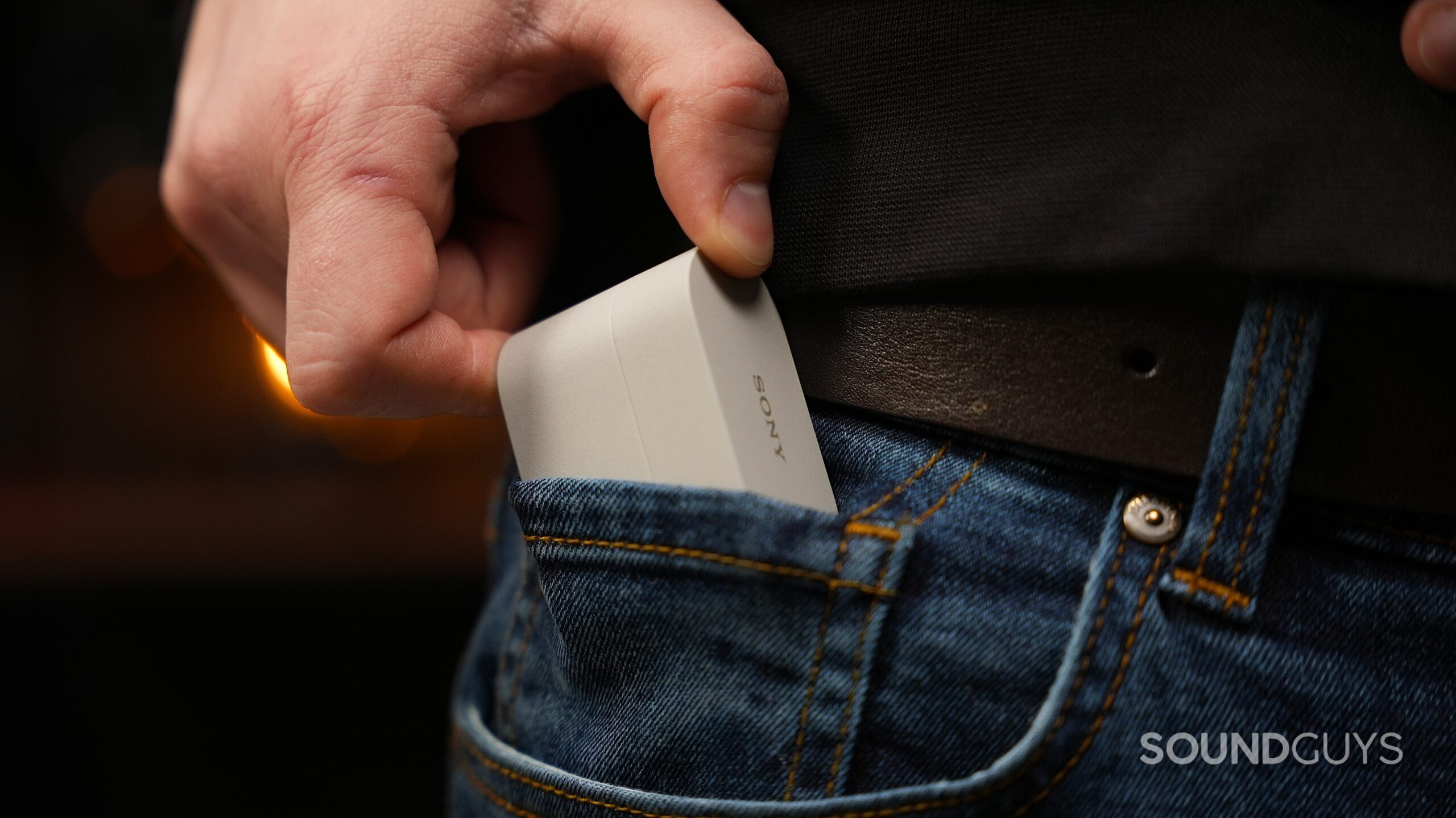
Despite the larger look, the WF-1000XM6 is pocketable.
Sony claims the WF-1000XM6 will last up to 8 hours of continuous playback on a single charge, for a total of 24 hours with the charging case. These spec claims are identical to those of both the WF-1000XM5 and the WF-1000XM4 before it. Sony may not have improved battery life across three generations, but 8 hours is still the average for flagship earbuds and comparable to the AirPods Pro 3 and Bose QuietComfort Ultra 2.
In our testing, the Sony WF-1000XM6 lasted 9 hours and 41 minutes on a single charge, surpassing Sony’s claim. You can charge the earbuds using the included USB-C cable or by placing the case on a Qi wireless charging pad.
Does the Sony WF-1000XM6 have fast charging?
Sony’s Quick Charge feature returns on the WF-1000XM6. According to Sony, just three minutes of charging should provide up to 60 minutes of playtime. In my testing, with ANC on, the earbuds lasted closer to 45 minutes with 3 minutes of charging, which was still enough for a day of commuting to and from work.
How well do the Sony WF-1000XM6 cancel noise?
The Sony WF-1000XM6 delivers excellent active noise cancelation performance, achieving an 88% average reduction in loudness across all frequencies. That’s an improvement over the WF-1000XM5’s 87% average attenuation, though it still trails behind the Apple AirPods Pro 3’s 90% average attenuation, which is the highest we’ve ever measured. Still, the passive isolation measures better than Apple’s, and most people likely won’t notice a 2 percentage-point difference in everyday use. These are among the best noise canceling earbuds on the market.
Sony has upgraded the ANC hardware. The earbuds now feature eight microphones (up from six on the XM5). This expanded mic array gives the earbuds more data to work with when analyzing and canceling outside noise. The most dramatic improvement over the XM5 appears around 100Hz and 2kHz, where the WF-1000XM6 attenuates over 40dB and 50dB, respectively. That means low-end noise like air conditioners and incidental sounds like keyboard clatter are nearly completely eliminated. However, the ANC is less effective in the 400Hz-2kHz midrange, so you may still hear some voices and office chatter breaking through.
The WF-1000XM6 also features a new processor chipset, enabling an Adaptive NC Optimizer. This feature analyzes external noise and wearing conditions in real time to optimize noise cancelation performance. I found the earbuds adapted quickly to changing environments—like moving from a quiet office to a noisy subway platform. However, if I did choose to manually toggle ambient mode with a tap, the earbuds would at times protest and revert to ANC with this feature enabled.
How is the transparency mode on the Sony WF-1000XM6?
I found the transparency mode on the WF-1000XM6 very effective for staying aware of my surroundings. Voices come through clearly and naturally, though amplified in volume.
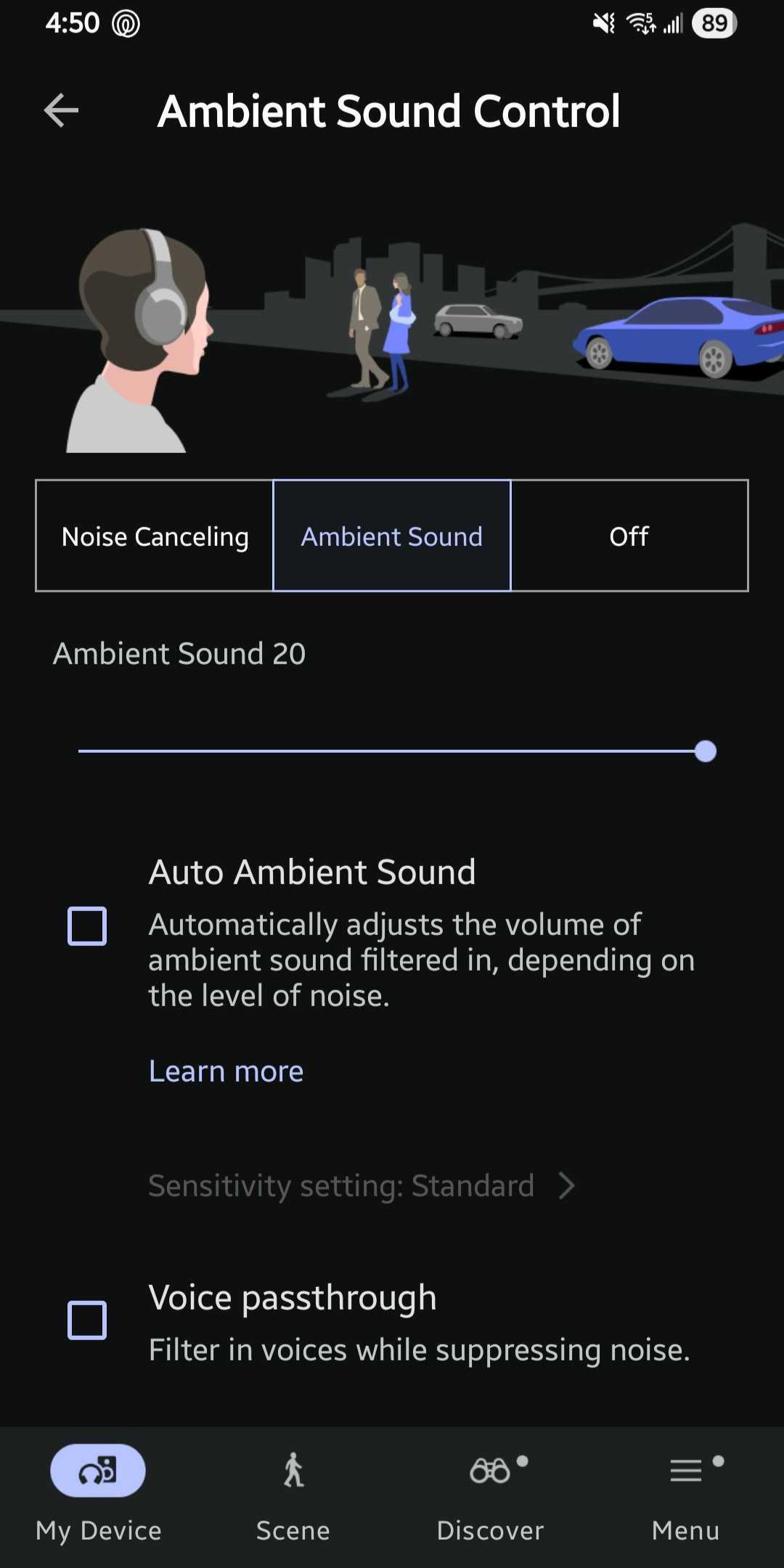
You can adjust your Ambient sound mode to personal preference.
In the Sony Sound Connect app, you can manually adjust the level of ambient sound across 20 levels to fine-tune exactly how much you let through. There’s also an auto ambient mode that automatically adjusts the volume of ambient sound filtered in depending on the noise level around you. Additionally, Sony includes a voice passthrough option that filters in voices while suppressing background noise—useful for quick conversations without removing the earbuds.
How do the Sony WF-1000XM6 sound?
Put simply, these are Sony’s best-sounding earbuds to date. The WF-1000XM6’s stock tuning is likely to please most people without any major gripes.
Reviewer’s notes

The large size might not fit everyone’s ears, but the sound quality should be a crowd-pleaser.
Editor’s note: this review uses a hover-enabled glossary to describe sound quality based on a consensus vocabulary. You can read about it here.
Can you use the Sony WF-1000XM6 for phone calls?
Yes, the Sony WF-1000XM6 deliver excellent microphone performance that represents a significant improvement over the WF-1000XM5. Sony has upgraded the microphone system with AI-powered beamforming that better directs audio pickup toward your mouth, an improved bone conduction sensor, and AI noise rejection trained on 500 million voice samples.
In quiet indoor environments, the WF-1000XM6 microphones sound excellent. My voice came through clearly with good articulation and minimal reverberation. Overall, the WF-1000XM6 microphones are among the best earbuds for everyday calls, video conferences, and voice recordings in most real-world conditions.
Sony WF-1000XM6 microphone demo (Ideal conditions):
How does the microphone sound to you?
154 votes
1 (Awful)
3%
2 (Bad)
8%
3 (Okay)
31%
4 (Good)
43%
5 (Perfect)
16%
What does the Sony WF-1000XM6 microphone sound like in the real world?
Sony WF-1000XM6 microphone demo (Office conditions):
Sony WF-1000XM6 microphone demo (Street conditions):
Sony WF-1000XM6 microphone demo (Windy conditions):
Sony WF-1000XM6 microphone demo (Reverberant space):
Outdoors at the beach, the microphones handled wind and ambient noise impressively well. My voice remained clear and intelligible with minimal distortion, even with wind hitting the microphones. This is a substantial improvement over the WF-1000XM5, which struggled in similar conditions.
On a busy street, noise rejection was less consistent. While my voice remained intelligible throughout testing, occasional loud vehicles—like bus screeches or passing trucks—broke through the noise suppression. However, the microphones maintained voice clarity better than the WF-1000XM5, which produced noticeable artifacts and a synthetic quality in similar environments.
Should you buy the Sony WF-1000XM6?
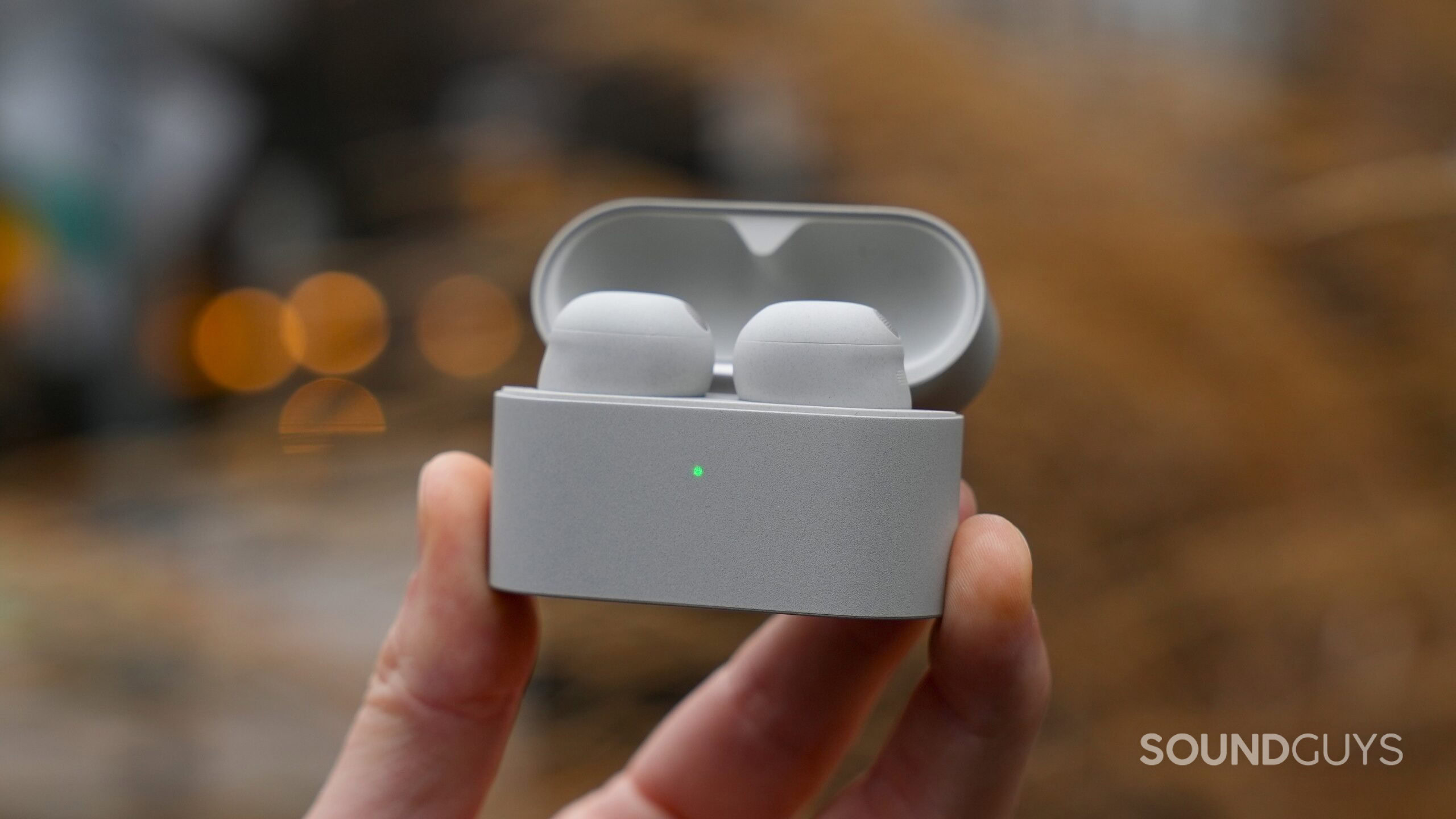
If your current earbuds are several generations old, it might be time to upgrade.
The Sony WF-1000XM6 are excellent flagship earbuds with meaningful improvements over the WF-1000XM5: a redesigned fit that’s more forgiving (though the increased size may not work for smaller ears), marginally better sound quality, modestly improved ANC, significantly better microphone performance, and a handful of new useful features. However, battery life and codecs remain unchanged, and at $329.99, you’re paying $30 more than the XM5’s launch price for the privilege.
If you already own the WF-1000XM5, these improvements probably aren’t enough to justify an upgrade. However, if you’re several generations behind or switching from another brand entirely, the WF-1000XM6 deliver flagship performance across the board. Sony focused on getting the important things right, and they succeeded.
Would you buy the Sony WF-1000XM6?
114 votes
What should you get instead of the Sony WF-1000XM6?
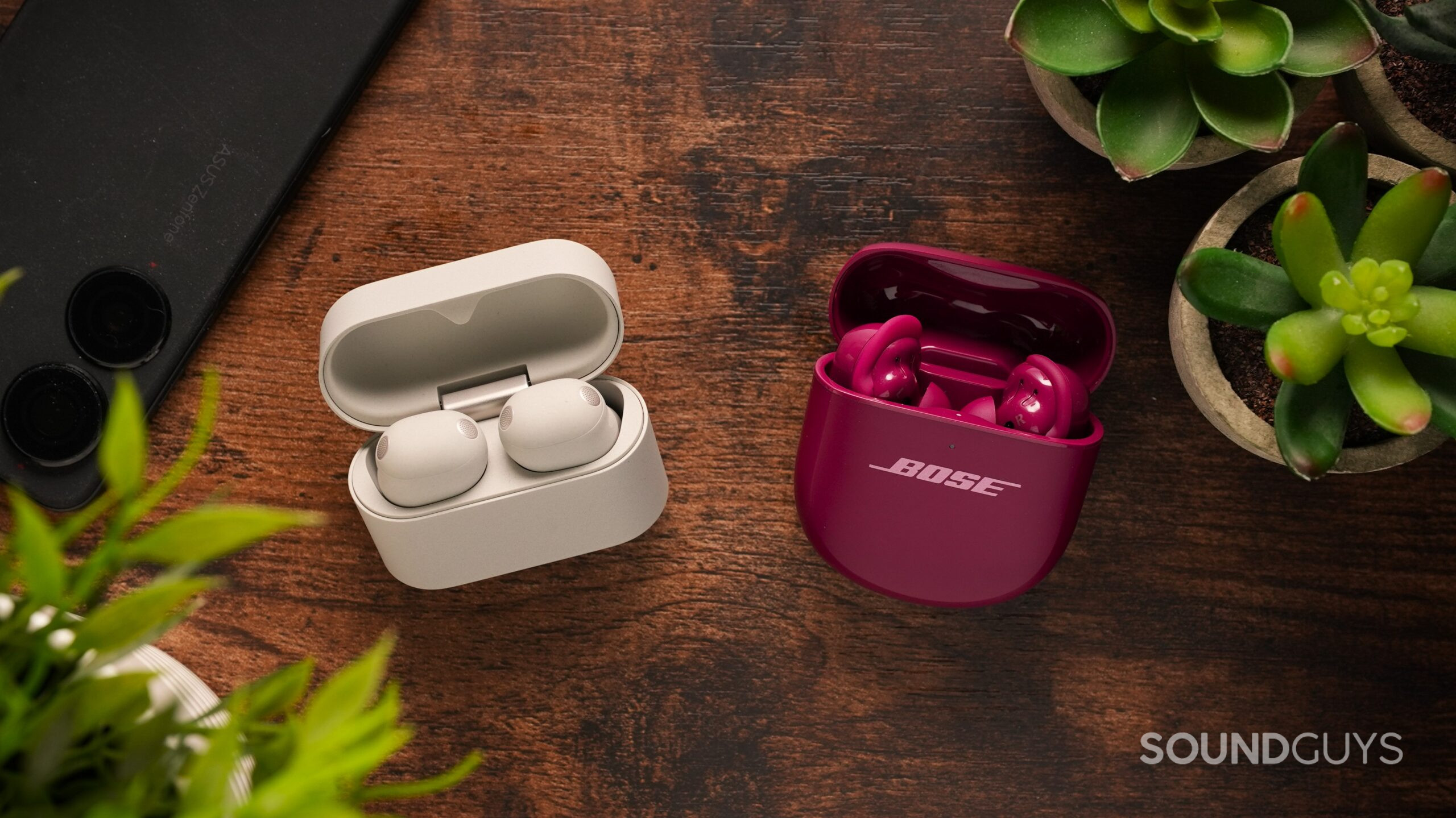
The Bose QuietComfort Ultra (2nd gen) earbuds are similar in size but fit more securely.
The flagship earbud market is crowded with excellent options, and the WF-1000XM6 faces stiff competition from several compelling alternatives. Here are a few top recommendations:
Technics EAH-AZ100 ($299.99 at Amazon): If you want good ANC performance and longer battery life (10+ hours) with a retro aesthetic, the Technics are a solid alternative that’s $30 cheaper. However, you’ll need to tinker with the EQ to get the sound dialed in—the stock tuning is oddly bass-heavy with weak treble.
Bose QuietComfort Ultra Earbuds 2 ($279 at Amazon): If comfort is your top priority and you have larger ears, the Bose deliver excellent ANC with a supremely comfortable fit thanks to stability bands and ovoid nozzles. However, the sound is very bass- and treble-heavy, and the limited 3-band EQ makes it difficult to fix. Battery life is also weaker at just over 5.5 hours.
Sennheiser MOMENTUM True Wireless 4 ($269.95 at Amazon): The best-sounding alternative with aptX Lossless support and high MDAQS scores, plus better dust/water protection (IP54) and Auracast support like the Sony XM6. However, ANC is slightly weaker, battery life is shorter, and microphone performance is notably worse.
Apple AirPods Pro 3 ($249 at Amazon): For iPhone users, the AirPods Pro 3 offer the best ANC we’ve ever tested, unique health features like heart rate monitoring and clinical-grade hearing aids, long battery life, and Apple ecosystem integration—all for $80 less. However, they lack any EQ controls, sound changes dramatically at different volume levels due to LDEQ, and offer zero functionality on Android beyond basic playback.
Sony WF-1000XM6 review: FAQs
Are the Sony WF-1000XM6 good for running and working out?
Yes, the WF-1000XM6 are suitable for workouts thanks to their IPX4 water resistance rating, which protects against sweat and light rain. However, the lack of ear wings means they may not feel as locked-in as some sport-focused earbuds during high-intensity activities like sprinting or burpees.
Do the Sony WF-1000XM6 have lossless audio?
No. While LDAC can transmit high-resolution audio up to 24-bit/96kHz, it still uses lossy compression. True lossless audio is not possible over Bluetooth.
Do the Sony WF-1000XM6 work with Siri?
Yes, you can access Siri by tapping and holding the right earbud (default setting), or you can customize which voice assistant the gesture activates in the Sony Sound Connect app.
Do the Sony WF-1000XM6 have Swift Pair/Fast Pair?
Yes, the WF-1000XM6 supports both Google Fast Pair for Android devices and Microsoft Swift Pair for Windows 11 PCs. This allows for quick, streamlined pairing when you first open the case near a compatible device. You’ll see a pop-up notification prompting you to connect without having to dig through Bluetooth settings.
Thank you for being part of our community. Read our Comment Policy before posting.