
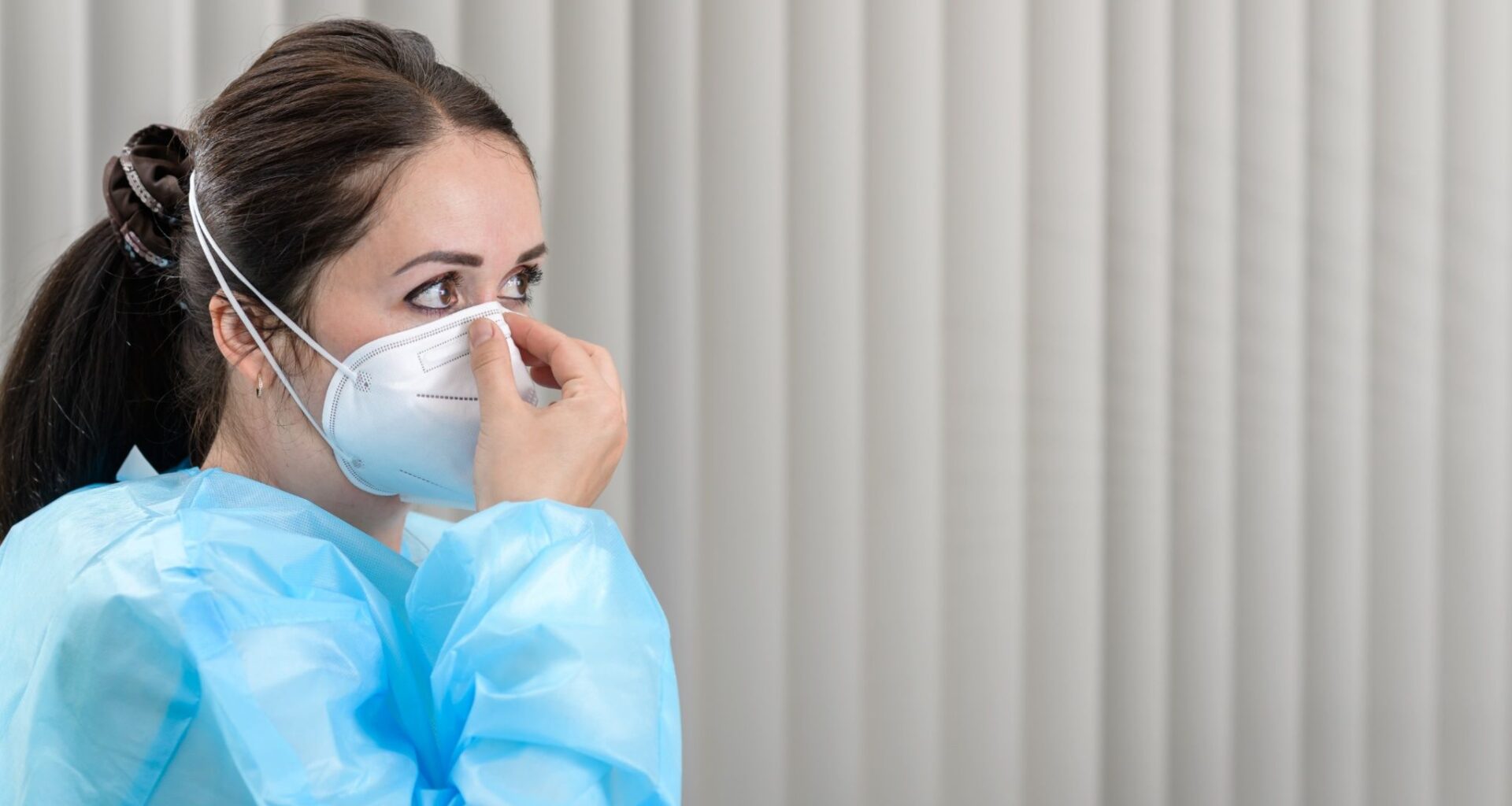
A local health group is calling on B.C. to reinstate and improve health-care mask protections in medical settings.
In March 2025, the Province dropped its health-care mask requirement. DoNoHarm BC, an organization advocating for it to be reinstated, had been hoping that they would do so once respiratory illness season started last fall.
“We watched other provinces reenact these seasonal mask mandates, and waited and waited,” Beth Campbell Duke, a science educator, told Daily Hive. “We had a letter-writing campaign, and still there was no response.”
While people who are immunocompromised or immunosuppressed are most at risk, she said that it poses a risk to everyone because no one knows how COVID-19 infection could impact them.
Campbell Duke’s husband is a lung transplant recipient and now a cancer patient, so she directly deals with the consequences of the Province’s decision to remove the mandate and not reinstate it.
When the BC Ministry of Health dropped the mandate, they said they still encourage people to wear medical masks in health-care settings. But Campbell Duke said that without a mandate, she doesn’t see this happening.
“People within health care, they seem to require a mandate in order to wear a mask,” she said. “It’s really upsetting to me to see other people who, in theory, have more background in biology than I do, who don’t seem to understand or grasp or take on board that there’s still an airborne issue.”
In the last month, 25 to 45 per cent of hospitalized COVID patients each week were infected in health care, according to Dr. Karina Zeidler, a family physician and co-founder of Protect Our Province BC.
“Even without hospitalization, many of these infections have long-term consequences, from organ damage and immune issues to increased risks of cancer and dementia. It’s unconscionable that we aren’t doing everything we can to reduce these risks,” Dr. Zeidler said in a press release.
Studies show that if staff started masking again, there could be a 33 per cent decrease in hospital-onset respiratory viral infections. N95-style masks can reduce exhaled viral load by 98 per cent and provide full protection for health-care workers.
DoNoHarm BC says that each preventable hospital stay costs the health-care system over $8,000 on average, and an average COVID hospitalization costs over $24,000.
It takes a personal toll, too. Duke Campbell is the caregiver for her husband, and she faces an extra burden in ensuring that a health-care setting is safe for them to enter.
“I phone ahead and ask about the ventilation and whether people will wear an N95.”
If a health-care provider won’t wear a mask, they’ll move the appointment to the phone. If an office doesn’t have good ventilation, she said they arrange “parking lot appointments.”
They also bring with them a carbon dioxide monitor to observe the air quality, which helps them determine how well ventilated a space is.
“We know of other patients who have contracted COVID during their checkups; it’s one of the reasons we’re super cautious. And they are alive, but they certainly aren’t okay,” she said.
Concerns about the former mask mandate
Campbell Duke stressed the importance of wearing N95 masks. The common blue medical masks don’t have the proper fit or filter to be effective, with gaps on the sides through which droplets can exit.
“They’re very leaky,” she said. “Those masks aren’t going to stop airborne transmission of pathogens.”
Even when the mask mandate in medical settings was in place, Campbell Duke said it was for the “poorly fitted medical masks.”
She said the mandate also had a loophole that “you could drive a truck through.” It required health-care staff to wear masks only in patient-facing areas, and she would observe medical staff and administrators without masks in places like hallways.
“You could drive a truck through the loopholes,” she said.