
Mushkegowuk Council is hoping new recommendations to “immediately” enact environmental monitoring in the Ring of Fire will see the light of day — even though construction on access roads is planned to begin in four months.
Lawrence Martin, the council’s director of lands and resources and a former Grand Chief, spoke to The Narwhal about a federal document released in January, part of a regional assessment of the consequences of industrial activity in the Ring of Fire. Mushkegowuk Council supported the creation of the document, which was co-written by 15 First Nations and a federal agency, and also included recommendations to help communities “urgently” access health care.
The Ontario government is hoping the environmentally sensitive Ring of Fire region that overlaps Indigenous ancestral homeland can be the centre of a burst of new mining activity. Ontario Premier Doug Ford has already said the province is on track to get “shovels in the ground this June.”
“Hopefully these regional assessment recommendations will actually happen,” Martin said. “I think it’s one of those situations where the train has already left the platform. … The project’s already started and these regional assessments, whatever they may be at this point, may not carry much weight.”
The portion of the assessment released was an executive summary, recommending that community-driven environmental monitoring should begin “before any development occurs.” It also highlights serious funding and capacity gaps in health care in the Far North, particularly mental health, and said this should be addressed “urgently, before any additional development can be considered.”
Ford has claimed that developing the region would create jobs and boost the economy, which he’s portrayed as a necessary counterweight to United States tariffs. According to the province, construction is set to begin on what will eventually be three new access roads to the Ring of Fire.
The roads were proposed by two Indigenous communities, Marten Falls First Nation and Webequie First Nation, which are also members of the group behind the report. The remote communities want to secure all-season access to Ontario’s highway network to drive down their cost of living. The roads will serve a dual purpose, as they will also provide a pathway for Ring of Fire mining development.
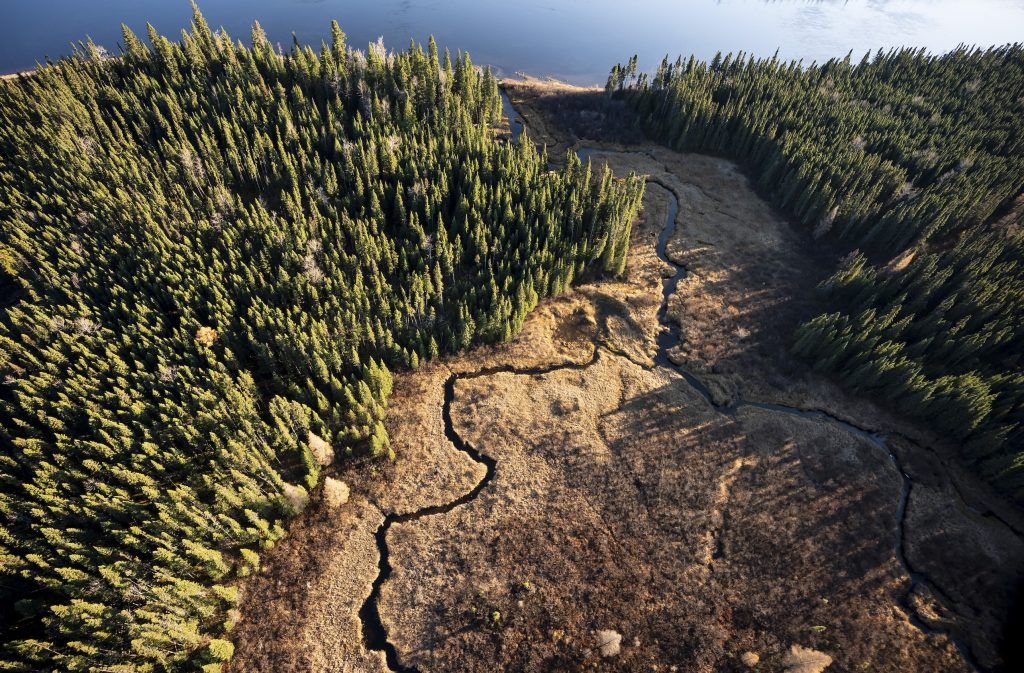 The James Bay Lowlands in northern Ontario are the ancestral home to many First Nations. The region’s vast expanse of peatlands are also a crucial carbon sink. Photo: Christopher Katsarov Luna / The Canadian Press
Martin told The Narwhal that Mushkegowuk communities want to see the all-season roads too, and he understands their potential to be environmentally disruptive, but he said the First Nations involved have assured the council they’re also concerned about the environment and are taking the issue seriously.
“We have to trust that our own people are very concerned, and they’ll do their best to protect these waters that flow down to our James Bay communities, and will protect the animals that live in those areas that migrate through there,” he said. “So, it’s a game of trust.”
Ford has already signed agreements with both First Nations to speed up the road building and provide them money to build community infrastructure, Martin noted.
The provincial government has also passed laws meant to speed up development, and signed a deal with Ottawa handing the province more control over the environmental assessment process. Prime Minister Mark Carney has said mining critical minerals is also a federal priority to grow Canada’s clean technology and defence industries.
It’s unclear what kind of efforts are being made to get environmental monitoring in place before June. Greg Rickford, the provincial minister responsible for Ring of Fire partnerships, did not respond to a request for comment by publication time.
Federal Environment Minister Julie Dabrusin’s press secretary Keean Nembhard said Ottawa recognizes the need for meaningful participation with Indigenous Peoples throughout the full Impact Assessment Act process “to promote responsible and inclusive resource development.”
The report, he wrote in emailed comments, represents “strong progress toward developing final recommendations that will ultimately promote responsible resource development in the region, which has First Nations consent and active participation.”
‘Too little’ known about Ring of Fire’s environmental conditions: report
The regional assessment will examine what kind of big-picture, long-term impacts might occur if several mines, roads and other projects in the Ring of Fire are built. These cumulative effects could be related to the environment, health, culture, social or economic conditions or Indigenous Rights.
Ford has claimed the Ring of Fire area contains a “vast” reserve of critical minerals such as chromite and nickel that are needed for solar panels, batteries and weapons among other things.
But January’s report said too little was known about past and present environmental conditions in the Ring of Fire. It said “previous and ongoing” programs were “sparse, short-term and underfunded” and based on Western science, not Indigenous Knowledge, and that scientific data must be paired with expertise from Elders and others.
Access to health care and social services are also “profoundly inadequate,” the working group found. It wrote that “travel to obtain health care is a major barrier to well-being,” and First Nations need Elder-guided ceremonies and cultural practices to heal.
“We’re all suffering from the same symptoms of colonization and the same symptoms of being an isolated community with all of those conditions within,” Martin said.
The group itself has faced difficulty being able to move forward on its study, it noted, due to emergency conditions faced by several First Nations in northern Ontario including evacuations due to wildfire and a lack of clean drinking water.
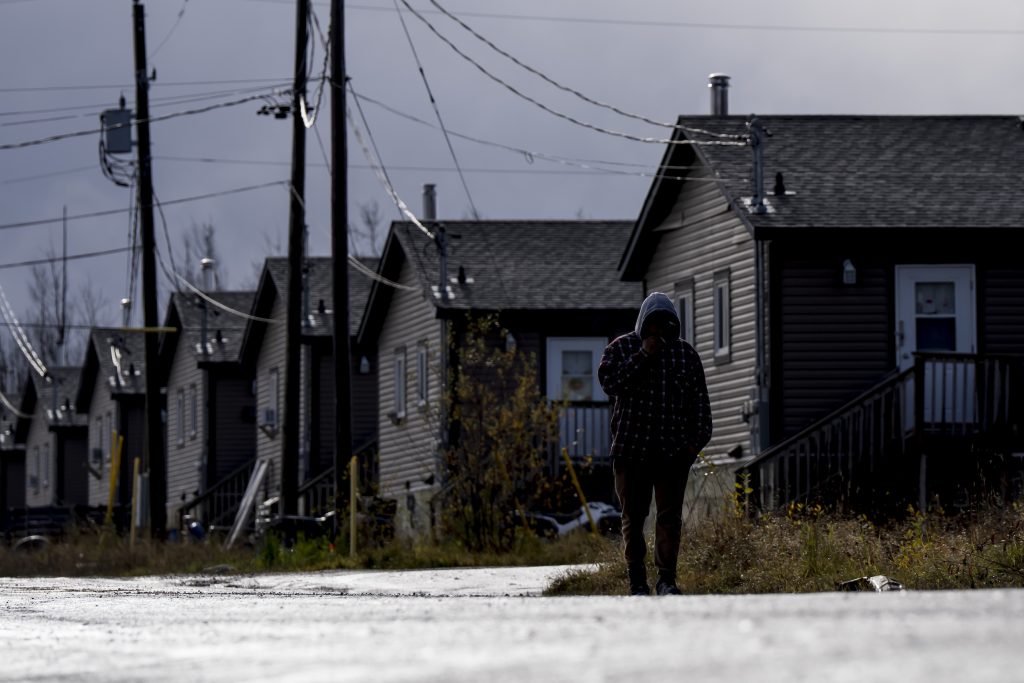 Webequie First Nation, seen here in October 2025, is one of 15 northern Ontario First Nations contributing to an impact assessment of the proposed Ring of Fire road network. A recent report says health and social inequities in some of the communities are holding the assessment process up, and must be addressed before new development in the Ring of Fire region moves forward. Photo: Christopher Katsarov Luna / The Canadian Press
The document warned “the bulk of the work lies ahead.” It said while discussions over the last year involved all First Nations at “key times,” not all of them were able to contribute equally because some were facing serious conditions.
The regional assessment working group’s terms of reference were finalized last year following criticism that the previous approach had tokenized Indigenous participation. Their study is supposed to continue until mid-2027.
An “important next step,” the group added, was coming together “in unity” to map out community values, like a “shared understanding of First Nations’ relationship with the land and what must be preserved and protected.” That will help target possible impacts on Treaty Rights, it said.