
Ever wondered how animals show their love in the wild? This Valentine’s week, while the entire world is celebrating love in softer ways lets explore how animals showcase their love.
 Let’s explore how animals show love in the wild, often in ways that are brave, protective, and extraordinary. (Moodville Dreamstime and Paul Nicklen/Nat Geo Wild)
In nature, love is not gentle; it is brave, protective, and sometimes can be life-threatening.
From frozen ice fields and forests to open savannas, animals highlight the importance of family bonds for survival.
Parents and groups work tirelessly to feed, protect, and guide their young, demonstrating courage, teamwork, and sacrifice in the harshest conditions.
Let’s explore how animals show love in the wild, often in ways that are brave, protective, and extraordinary.
Here are some remarkable pictures from Nat Geo Wild showing these incredible acts of animal love and devotion.
Emperor penguins and the power of survival
Emperor penguins survive months of freezing Antarctic temperatures to keep their eggs safe, showing one of the strongest acts of love in the animal kingdom.
According to Nat Geo Wild, male emperor penguins balance a single egg on their feet and cover it with a brood pouch while fasting for around 65 days.
They survive temperatures as low as -60°C, strong winds, and storms. When the chick hatches, the female returns from long hunting trips to feed it, showing remarkable endurance.
This powerful picture shows a family of emperor penguins with their chicks, capturing the remarkable bond and protective care.
Wolves raise pups as a family team
Wolves are the biggest members of the dog family. The adaptable grey wolf is the most common and is found across the entire Northern Hemisphere.
Wolves do not raise their young alone. Parents and older siblings work together to feed, guard, and teach the pups. This pack system gives the young the best chance to survive and grow strong.
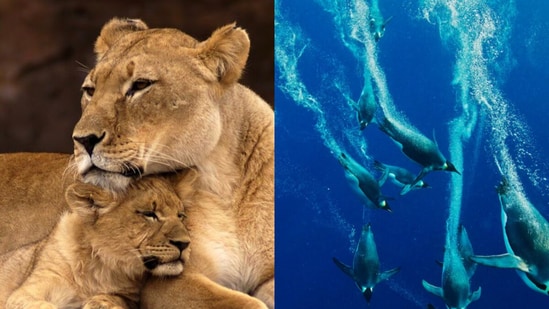
This powerful picture of a cub nestled close to a lioness captures the protective and nurturing side of wildlife.
Penguins recognise each other’s calls
Male penguins can recognise their partner’s unique call among thousands in noisy colonies. This helps parents reunite after long separations and continue caring for their chick.
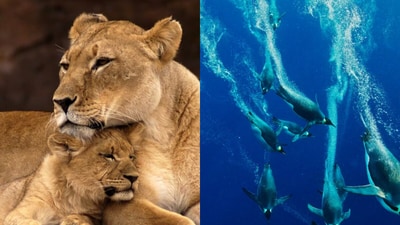
This picture shows emperor penguins swimming as they dive in the Ross Sea, off Antarctica, showcasing their agility and survival skills.
Crocodile mothers show gentle care
Crocodile mothers carefully carry their hatchlings in their mouths to the water and protect them for up to two years, showing surprising tenderness.
These remarkable pictures remind us that in the wild, love is more than emotion; it is protection, sacrifice, and survival.
From freezing polar regions to hot savannas, every act of care and courage shows that parental love in nature is strong and necessary.