
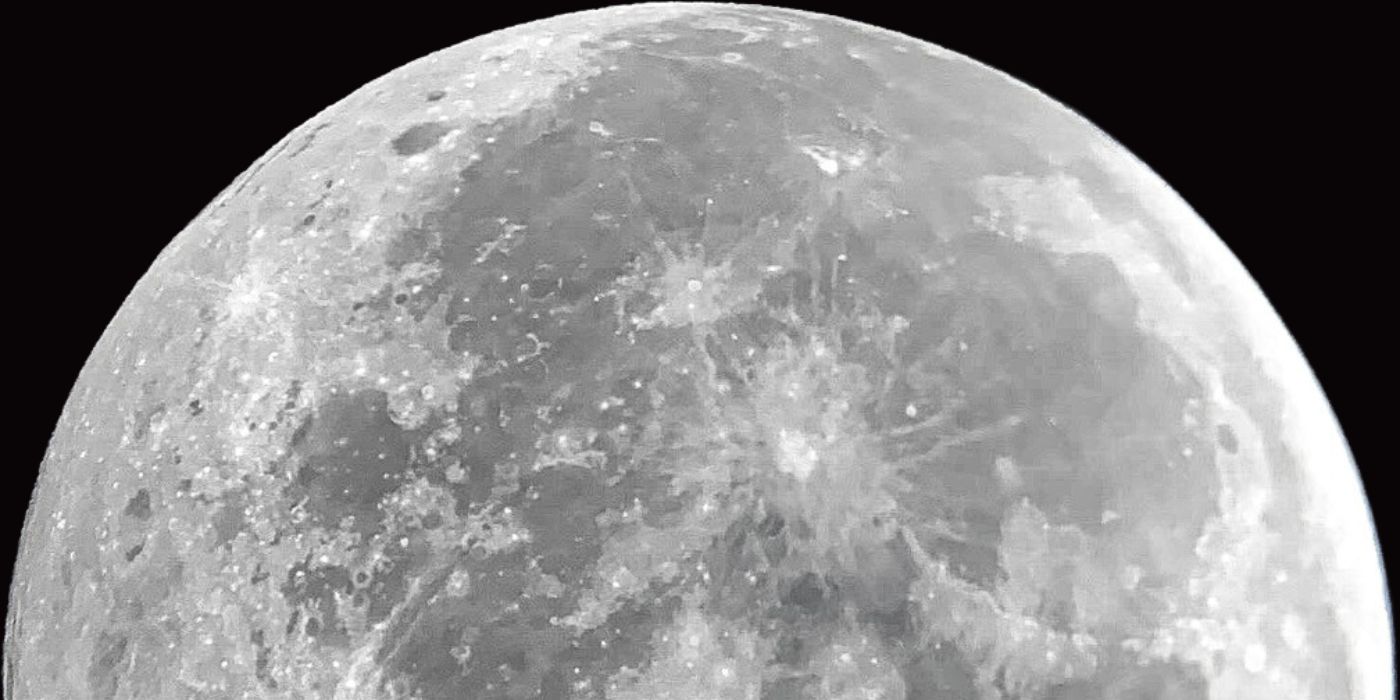
Although the Moon is Earth’s closest planetary neighbor, it remains one of the most scientifically consequential destinations in space exploration. Its surface preserves a record of early solar system history, while its environment serves as a natural laboratory for testing how humans and technology perform beyond Earth’s protective atmosphere and magnetic field.
Unlike the Apollo missions, which emphasized rapid surface exploration during a brief historical window, the Artemis program is designed for continuity. Artemis II does not land astronauts on the Moon. Instead, it functions as a critical crewed systems test, validating spacecraft performance, operational procedures, and scientific strategies that will underpin long-duration human exploration.
In a recent SETI Live episode, Simon Steel, Deputy Director of the Carl Sagan Center at the SETI Institute, spoke with Dr. Caitlin Ahrens, an assistant research scientist at NASA Goddard Space Flight Center and the University of Maryland, about how Artemis II prepares the way for the next generation of lunar missions.
What Artemis II Will Do and Why It Matters
Artemis II will carry astronauts beyond low Earth orbit for the first time in more than 50 years. The mission will place the Orion spacecraft into a carefully designed trajectory that includes multiple Earth orbits followed by a single flyby of the Moon.
This flight path is intentional. Rather than approaching the Moon at close range, Orion will pass roughly 6,000 miles above the surface. From this vantage point, astronauts will directly observe large portions of the lunar far side while mission planners refine navigation, communications, and lighting conditions required for future polar orbits.
As Dr. Ahrens explained during the discussion, this “grand-scale rehearsal” is essential. Future Artemis missions will target the lunar south pole, a region characterized by extreme terrain, complex illumination geometry, and long-duration shadows. Artemis II allows engineers and scientists to test timing, angles, and operational decision-making before committing crews to surface operations.
Measuring the Human Cost of Deep Space
One of Artemis II’s most significant scientific objectives is understanding how prolonged exposure to deep space affects the human body. Beyond Earth’s atmosphere and magnetosphere, astronauts are exposed to elevated levels of galactic cosmic rays and solar radiation.
Two major investigations will address this risk:
Together, these studies move beyond generalized exposure models toward biologically informed risk assessments, an essential requirement for future lunar habitation and eventual missions to Mars.
A Global Effort in Lunar Science
Artemis II also highlights the international nature of modern space exploration. Small satellite payloads, known as CubeSats (compact, standardized research satellites), will be deployed to study how radiation varies across the Earth–Moon system.
By simultaneously sampling multiple regions, these instruments provide a spatially resolved picture of radiation intensity and variability. This data will help identify hazardous zones and inform shielding strategies for future spacecraft and surface habitats under the Artemis program.
Training Astronauts to See Like Geologists
Although Artemis II is not a landing mission, geology remains central to its scientific value. The astronaut crew has received targeted training to recognize key lunar features and make informed decisions about what to image during flight.
High-resolution observations of impact craters, volcanic plains, and far-side terrain will support future landing site selection. These data complement orbital datasets from missions such as the Lunar Reconnaissance Orbiter while adding a uniquely human element, real-time prioritization based on scientific context.
Why the South Pole Matters
Future Artemis missions will focus on the lunar south pole, home to permanently shadowed regions that never receive direct sunlight. These areas can reach temperatures comparable to Pluto and are known to contain water ice.
Determining the physical state, distribution, and accessibility of this ice is critical. Water could support life-support systems, propellant production, and long-term habitation. While Artemis II will not sample these regions directly, it establishes the orbital knowledge and operational confidence required to reach them safely.
The Moon as a Proving Ground
At its core, Artemis II is a mission of preparation. The Moon serves as a nearby test environment where engineers can refine technology, scientists can validate hypotheses, and astronauts can gain experience operating beyond Earth.
As Dr. Ahrens emphasized, reaching Mars is not primarily a challenge of celestial mechanics—it is a biological and operational problem. Artemis II represents a deliberate step toward solving that problem, using the Moon as a proving ground for humanity’s next phase of exploration.
Watch the full SETI Live conversation here.