
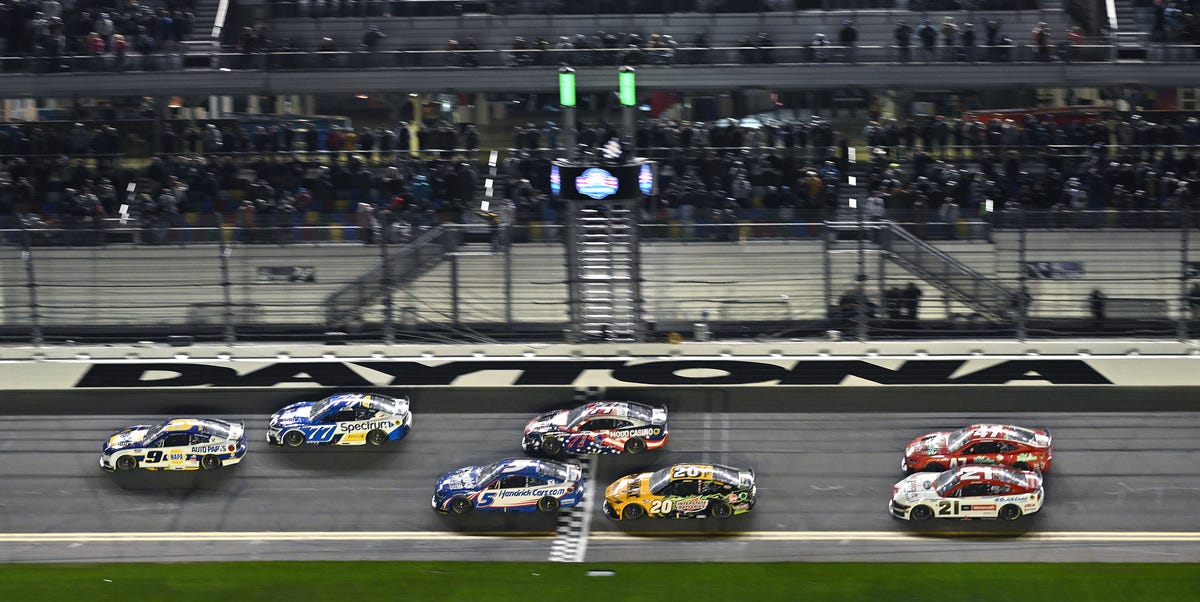
At the end of the Daytona 500, one thing is certain and another thing is likely. There will be a checkered flag, and there probably will be a big crash.
Checkers and wreckers. It’s an oft-told tale of the final laps of NASCAR’s biggest race.
Only two of the past 21 500s had a final green-flag run longer than six laps, and six of the past eight races have been pushed to overtime by crashes.
Related Story
Generally speaking, it’s the nature of this world. A lot is at stake—a Daytona 500 win can make a career and pad a wallet, and playing nice with competitors over the crucial closing miles isn’t a recommended strategy. Take what you can get and run with it.
It will be quite unusual if the final five laps of Sunday’s race are run without a major altercation at or near the front.
There is the thought in some circles that the deciding laps of this year’s 500 might be dampened to a degree by NASCAR’s decision to decrease the rewards of winning and add to the positives of season-long consistency. A finish in the top 10 will be much more rewarding than crashing a car in wild pursuit of the win and finishing 30th with a crumpled mess that used to be a race car.
 Icon Sportswire//Getty Images
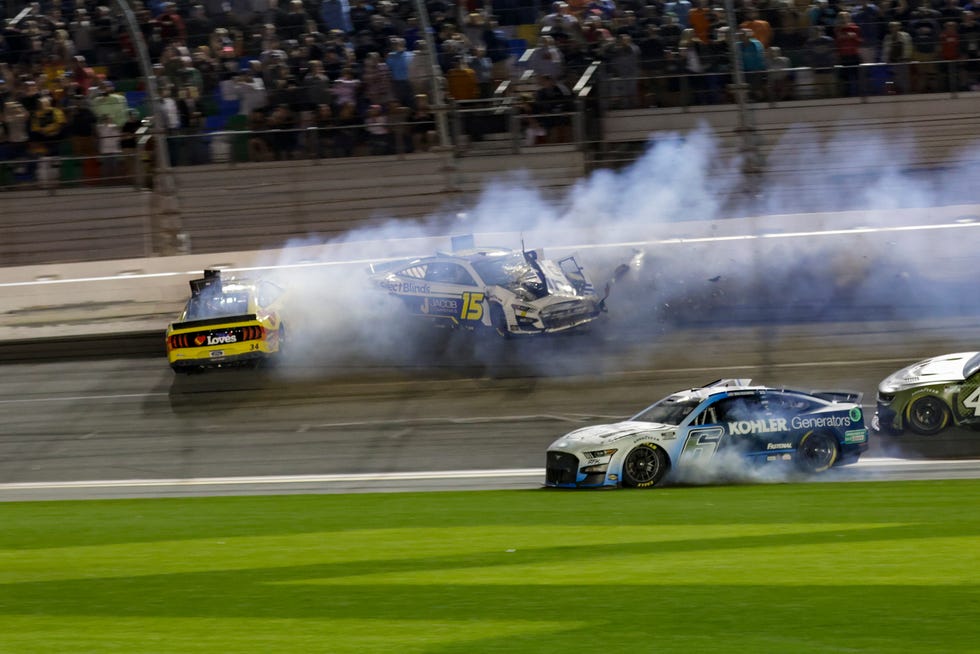
A crash at the finish of the Daytona 500 in 2022.
Others reject that thinking. It might be true for other races, they say, but every driver worthy of pulling on a helmet will drive toward the Daytona 500 checkered flag with every ounce of determination that can be mustered.
“The penalty for crashing versus the win, it’s a different ratio this year,” said Eric Warren, General Motors vice president of global motorsports. “I think there’s a little bit more thought process of, hey, second in the points for second, it’s a big gap if you try to get that win. Everybody is going to try to win the Daytona 500, but it’s different.
“I think some of that’s going to maybe calm some of that down, but some of it’s just the nature of it, and that’s what’s exciting when you’ve got all the cars and the skill of everyone and understanding the draft compared to 20 years ago where it was one or two or three or four. Now everyone is a student of it.”
“The penalty for crashing versus the win, it’s a different ratio this year.”
Pre-race conversations between vehicle manufacturer representatives and teams touch on these issues, particularly the concept of drivers cooperating with others in the same make of car in lining up in the superspeedway draft. But in the real world of the 500, such talk sometimes falls on deaf ears, particularly as the lap counter rolls on.
Under last year’s championship format, a race win automatically propelled the victor into the playoffs. That benefit is gone this season, and the race for the championship will feature the top 16 drivers in points for the final 10 races of the year. That reality will increase the importance of high finishes.
 Icon Sportswire//Getty Images
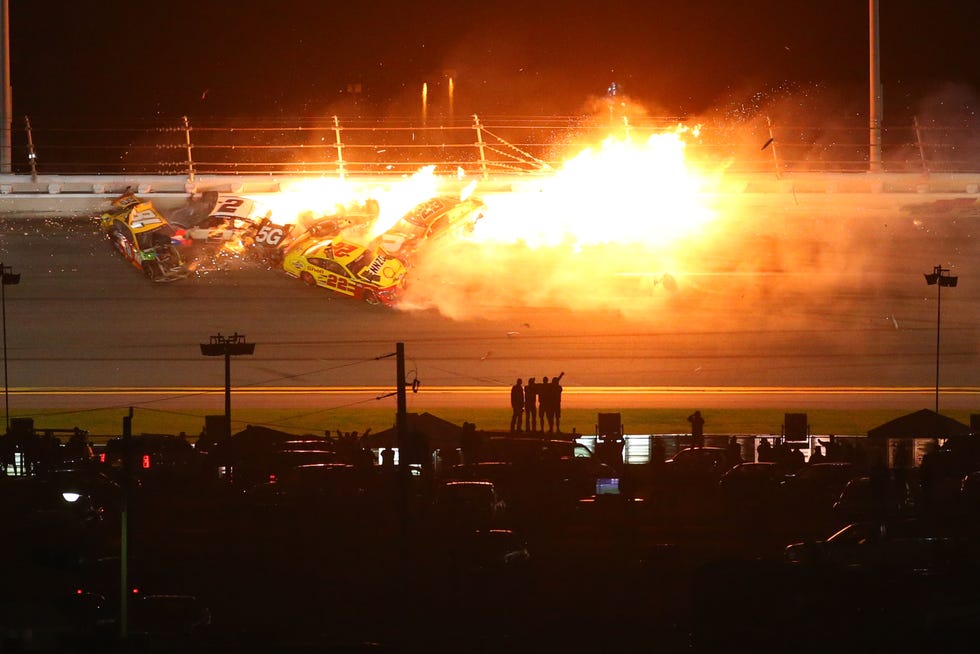
A crash at the finish of the Daytona 500 in 2021.
“For us, it’s going to be about finishing,” said Tyler Gibbs, Toyota Racing Development president. “You’ve got to finish every race this year to make that championship at the end. I think all the teams know that. How that plays out on a team-by-team basis, certainly, again, we’ve had those conversations with our drivers, but this is the Daytona 500, and you’re going to go for the Daytona 500 if you have a shot at it.
“I do think there will be a little bit of caution as it goes through, but coming to the end of the race, it’s going to be that balance. I think you’ll see certain people take more risk than others, but overall, all the drivers really, I think, understand.”
Related Story
Kyle Busch, in search of his first Daytona 500 win, expects the normal last-laps scramble. “You just never know how it’s exactly gonna end,” he said. “So, to be out front, you feel like that’s the safest spot to be, but sometimes you see guys spun out of the lead and they’re not the ones to win. There are guys that win coming out of Turn 2 and they’re in seventh place or they’re in 11th place. It just depends, you never know.”
Pat DiMarco, Ford Racing’s NASCAR manager, said drivers are smart enough to figure out the dynamics. “The good ones know when to put themselves in a situation and when not to,” he said. “But, in the end, it’s the Daytona 500.”

Mike Hembree has covered auto racing for numerous media outlets, including USA Today, NASCAR Scene, NBC Sports, The Greenville News and the SPEED Channel. He has been roaming garage areas and pit roads for decades (although the persistent rumor that he covered the first Indianapolis 500 is not true). Winner of numerous motorsports and other media awards, he also has covered virtually every other major sport. He lives near Gaffney, South Carolina and can be convinced to attend Bruce Springsteen concerts if you have tickets.