
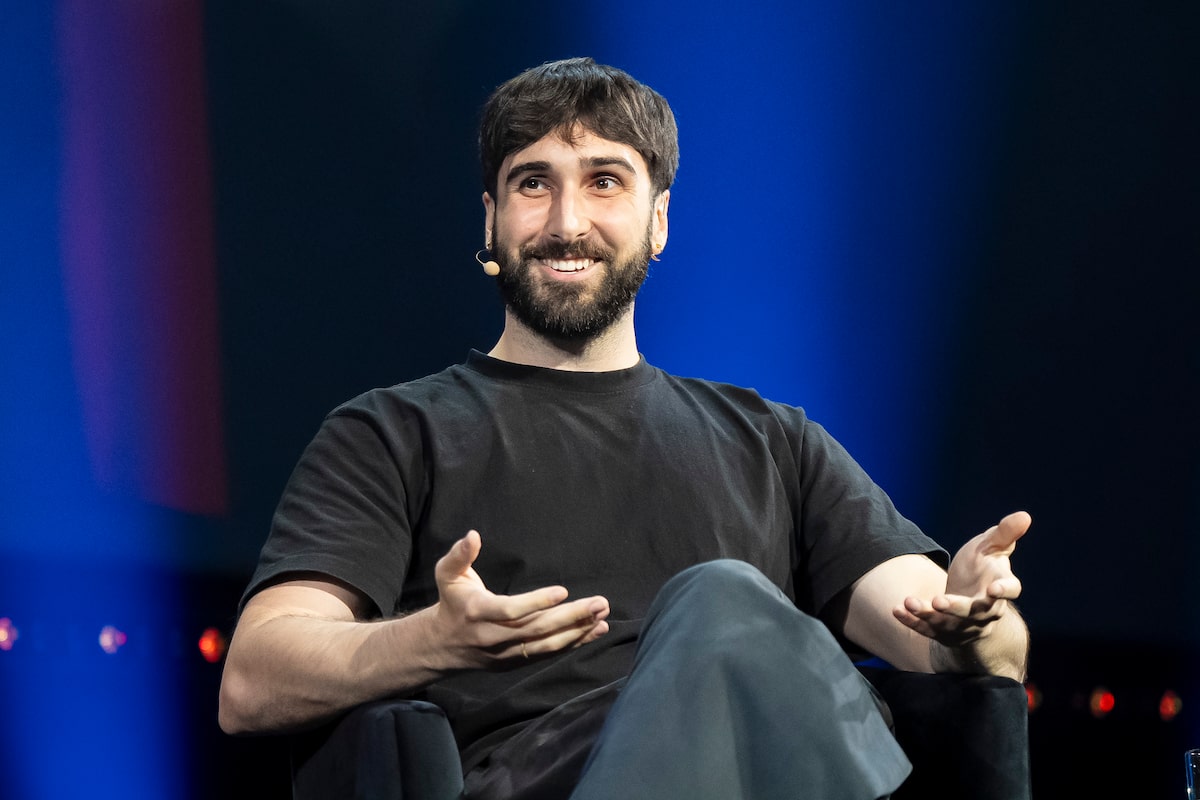
Cohere’s Aidan Gomez at the All In AI conference in Montreal in September, 2025. The Toronto-based AI company says its topped its recurring revenue forecast in a memo obtained by The Globe and Mail.Christopher Katsarov/The Canadian Press
Toronto-based artificial intelligence company Cohere Inc. earned US$240-million in annual recurring revenue last year, topping its own forecast, according to an investor memo obtained by The Globe and Mail.
The privately held company told investors in a letter that it had previously forecast US$200-million in revenue. Its gross margins, meanwhile, averaged 70 per cent in 2025 and grew year-over-year.
Founded in 2019, Cohere builds large language models (LLMs) for enterprise customers and competes with much bigger rivals such as OpenAI and Anthropic. The ability for AI developers to boost adoption, reduce expenses and make money is a pressing issue as investment dollars continue to flow into the sector and concerns about a financial bubble persist.
While the Cohere memo paints a rosy picture, the company still has to prove it can generate profits in the face of intense competition. CNBC first reported on the investor memo.
Bell and Cohere partner to sell AI tools to governments, businesses
Cohere, which was valued at US$7-billion in its latest fundraising round in September, has long touted how it differs from its peers, in part through its focus on security standards to meet the needs of large enterprises and regulated industries.
Cohere also does not have a consumer-facing chatbot, such as ChatGPT, and its customers run its AI models on computing infrastructure that they own or rent. That means Cohere spends less than its competitors on compute – the industry term for the advanced chips that power AI models and applications.
Co-founder and chief executive officer Aidan Gomez has said that Cohere’s gross margins are more akin to a traditional software-as-a-service company. Last fall, he said the company was looking to hold an initial public offering “soon.”
The company still incurs costs to build its AI models, however. The federal government announced in December, 2024, that it would give Cohere up to $240-million to help pay the expense of training models. (The funding was part of a $2-billion AI spending package.)
Anthropic is also making a play for business customers. Its AI-powered application for writing computer code is beloved by software engineers, while the company recently released a product called Cowork to automate other tasks that can be done on a computer. The Silicon Valley company said yesterday that it had raised US$30-billion at a US$380-billion valuation.
Last year, Cohere launched an AI software platform called North that uses its models to help automate office tasks, and has signed on RBC and Bell Canada as customers, among others. Cohere has also partnered with Fujitsu to build a Japanese-language LLM.
Canada’s federal government has become a strong Cohere champion as countries jockey for position for AI dominance and as sovereignty concerns have become paramount. Federal AI Minister Evan Solomon has emphasized that only a handful of companies build foundational LLMs, and that Cohere is the sole Canadian player.
Patrick Pichette, a partner at Inovia Capital and a member of the federal government’s AI task force, wrote in his submission last fall that Ottawa should declare Cohere a national champion and “fuel it with significant revenue contracts,” such as $1-billion each for civil service and defence applications. (Inovia is an investor in Cohere.)
Last year, Ottawa signed a non-binding deal with Cohere to look for ways to deploy AI across the federal public service.