
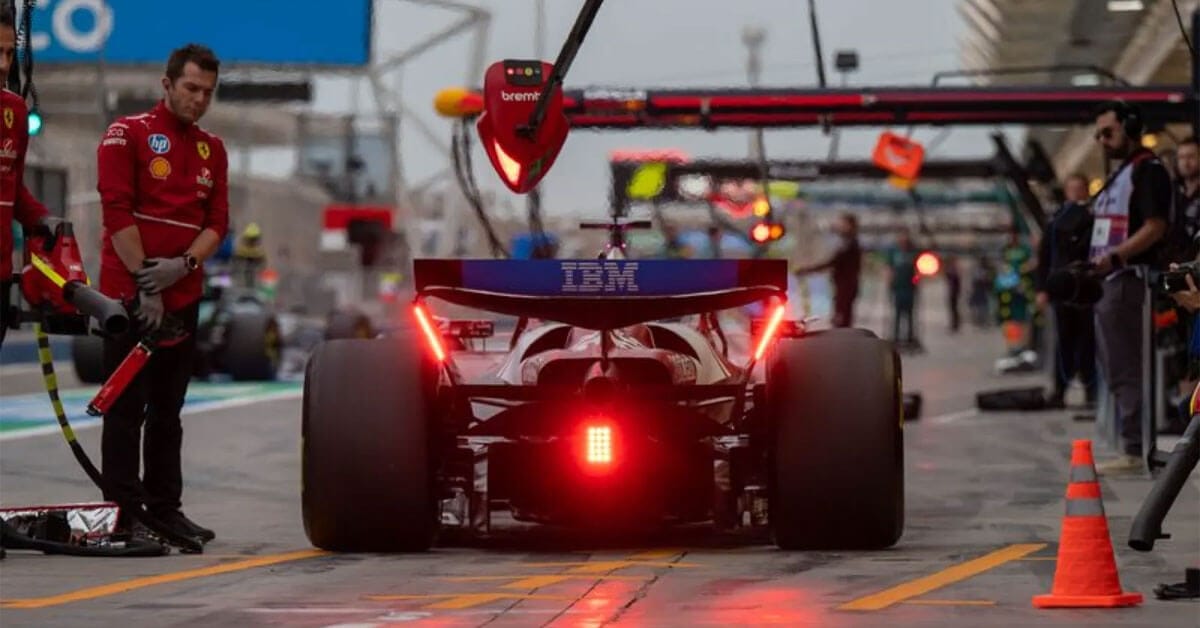
Ferrari have identified a new technical challenge with the SF-26 after analysing the data collected by Charles Leclerc during the first 2026 Formula 1 pre-season test in Bahrain. The Scuderia’s Monegasque driver enjoyed a productive second day in the Sakhir desert on Thursday, completing a total of 139 laps around the Bahrain International Circuit and topping the timesheets with a best lap of 1:34.273.
Charles Leclerc’s fastest effort was half a second quicker than McLaren driver Lando Norris’ best lap on day one, which had been 1:34.669. On that first day, Leclerc had been 0.521 seconds behind Norris in third place. Over the course of day two, Ferrari covered nearly two-and-a-half Grand Prix distances, signalling a strong reliability performance even as the team continues to refine the SF-26 under the new 2026 regulations.
Ferrari to investigate engine braking issues in low gears
Despite the encouraging lap times, Ferrari discovered a significant technical issue during Leclerc’s runs. The data revealed that the engine braking in low gears was overly aggressive, particularly when the drivers attempted to recover electrical energy through the car’s hybrid system. The Scuderia have now prioritised improving the linearity of their energy recovery system as a critical area for development.
Concerns about energy management had already emerged following the Barcelona shakedown at the end of January, which Ferrari had planned to address during the Bahrain tests. Motorsport.com reports that the team are now preparing a substantial investigation into the engine braking behaviour. Ferrari’s engineers have determined that both Leclerc and Lewis Hamilton need to use lower gears more effectively to recover energy into the battery, but the current system is too abrupt and could potentially destabilise the car if not addressed.
Addressing understeer and rear-end instability
In addition to engine braking concerns, Ferrari are still working to find the optimal set-up for the SF-26. The team observed understeer and rear-end instability during testing, issues that have been highlighted by rivals and could impact race performance. Mercedes junior driver Andrea Kimi Antonelli noted from trackside that Ferrari appear to have more understeer than teams like Red Bull and McLaren, emphasising that balance and handling remain a work in progress.

Ferrari engineers in Maranello are now focused on making the engine braking system more linear, using the extensive telemetry collected in Bahrain. Whether any adjustments will be ready for the final pre-season test in Sakhir remains uncertain, but the team are expected to use the next three-day test session from February 18-20 to trial potential solutions. These sessions will be crucial for evaluating whether improvements to the energy recovery system and overall set-up pay off ahead of the 2026 season opener in Melbourne from March 6-8.
The rear-end instability remains a significant concern, particularly for Hamilton, as the SF-26 has occasionally displayed a balance deficit compared to some rivals. Ferrari are continuing to refine the car’s aero and chassis package to ensure greater stability and better handling under race conditions. The combination of fine-tuning the engine braking system and addressing handling inconsistencies will be essential for Ferrari to extract maximum performance from the SF-26 before the season officially begins.
Feb 13, 2026Luca Marini
Let other Scuderia Fans know about us


