
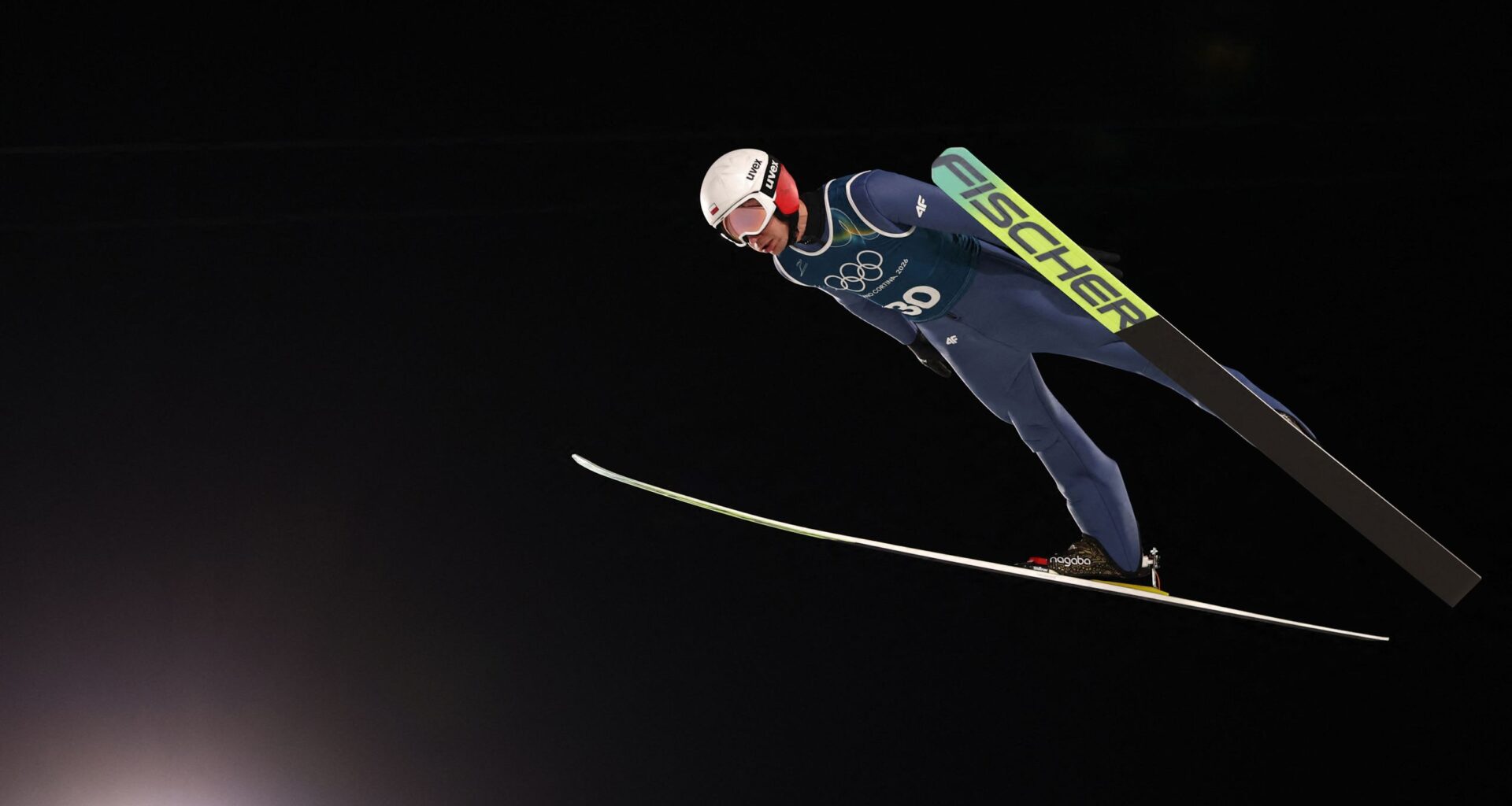
With the Winter Olympics ongoing right now, along with the argument about whether cyclocross should be included in future additions, many cycling fans might be recognising certain technologies and brand names on display. Oakley is a prominent one for glasses and helmets in skiing, but the likes of POC, Scott, and Rudy Project are also well represented.
Then we have Bioracer skinsuits being used and innovative aero fabrics that look right out of a time trial. That’s before we even get into aero helmet controversies, waxing, skiers in the wind tunnel, and bobsleds shooting down at 150+kph. There are plenty of interesting technologies, as well as controversies, on display.
You may like
Fabric and skinsuits
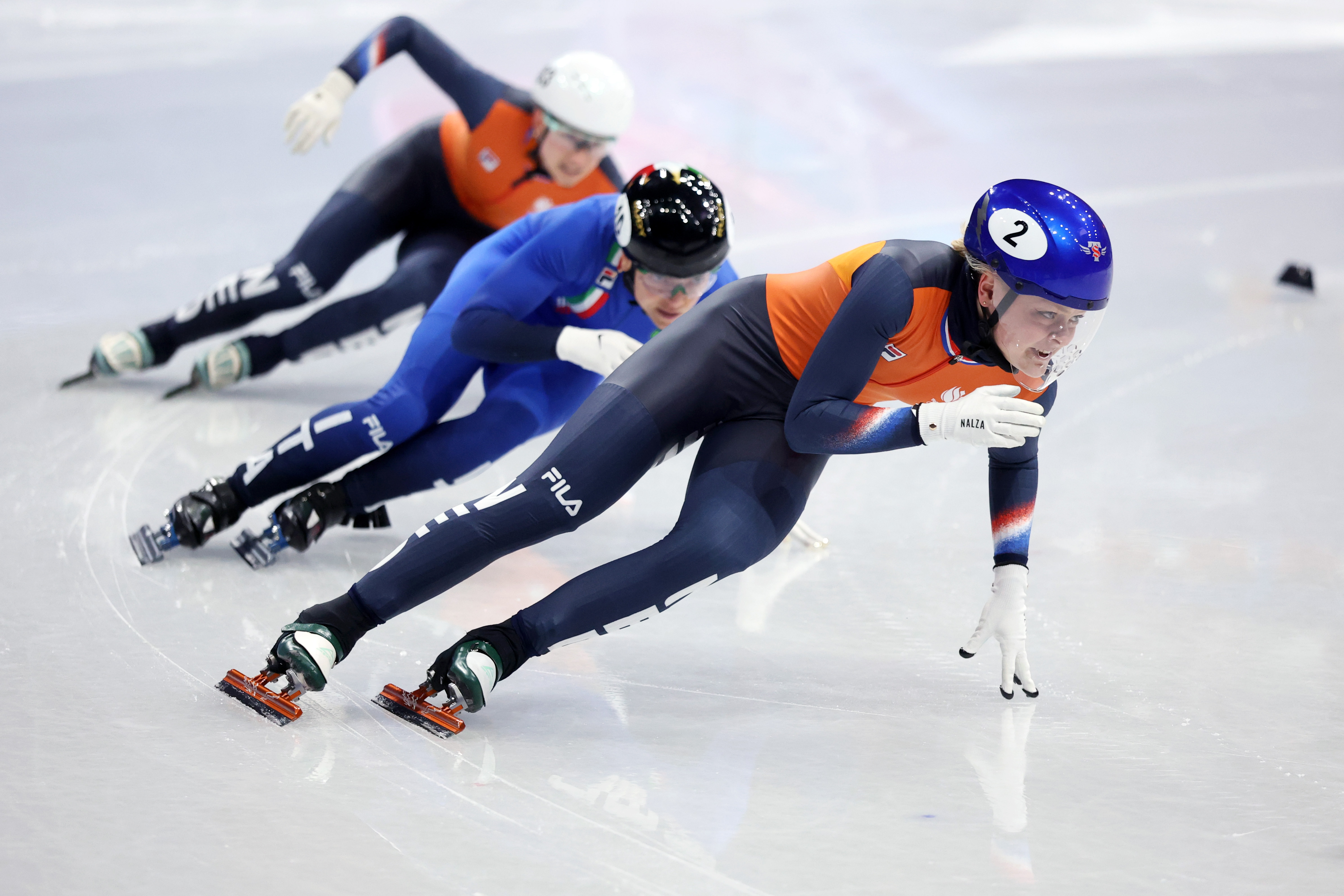
Trip strips on the sleeves will be familiar to cyclists, as will aero helmets, but full face visors and aero leg materials are a step further… good thing it’s cold! (Image credit: Getty Images)
One of my personal favourites is fabrics and skinsuit technology. This has been most present in Speed Skating, both long and short track, at least in terms of looking very similar to a cycling kit. This is mainly due to the speeds being comparable, as well as the body position being similar.
We have higher speed events such as Luge, Skeleton, Ski jumping, etc., but the speeds are in excess of 100kph, and the way the wind interacts with body parts is very different to speed skating and cycling speeds. Interestingly, the kit used for these events is quite different to cycling. With the speed that the athletes go, rough fabrics for flow management are not as necessary. It’s more a case of low friction materials so the air can travel smoothly over the ‘tubes’ (arms and legs) and then due to higher Reynolds Numbers (a measure of how turbulent the airflow is) can better reattach flow on the other side. There’s a lot more in-depth physics behind it, but in simple terms, you’ll notice the higher speed events in the Olympics use smooth fabrics, and the lower speed ones are more textured.
For speed skating, however, we are seeing brands such as Bioracer kitting out the Belgian and Dutch teams, the same as the National Cycling teams. For the long track, where competitors are travelling a little more upright and in straighter lines, the same trip strip materials are used on the sleeves, or even dual-layer systems, akin to what is used in time trials or road races in cycling. What is quite different are the legs. Whereas cyclists move their legs so that the thigh is not always perpendicular to the wind, skaters have them in the wind more. This has led to aero ribbed materials being used on the leg sections, similar to the Rule28 Aero Bib Tights.
Helmets
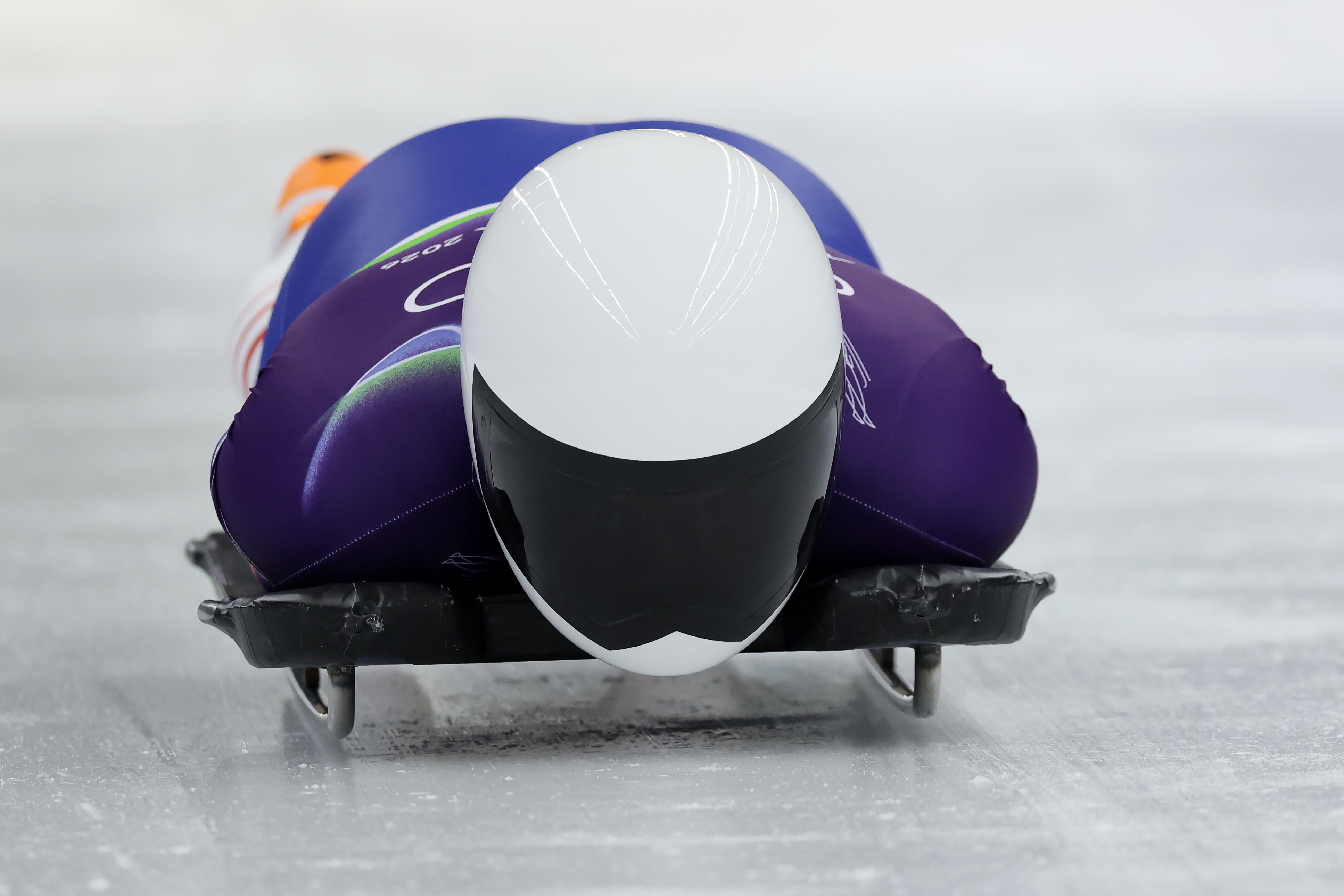
For the skeleton aerodynamics is key, but given the speeds the safety of helmets is paramount first and foremost. (Image credit: Getty Images)
Our first area of controversy is helmets. Team GB were actually banned from using a brand new aero Skeleton helmet, which looked more like something from a cycling time trial with its elongated rear section. However, aside from that, the helmets have predominantly been very different from those used within cycling. Chief among the differences are ventilation requirements; colder conditions mean that vents are somewhat superfluous.
Where there are some crossovers, however are the short track speed skating. Mostly, they are different, but Rudy Project Nytron helmets have been used by several teams, Belgium included, but using the special zero-vent model.
Outside of that, the speed differences of the sports compared to cycling changes the demands of the helmets for safety. Lightweight EPS foam doesn’t cut it for the super fast Winter Olympic events. However, it does raise the question about helmet safety in WorldTour cycling, as there have recently been 100kph crashes. If polycarbonate shells and foam isn’t enough for high speed Olympic events, should WorldTour cycling helmets be boosting the safety elements? We’ve seen discussion of airbags for cycling kit as speeds have increased, so perhaps new helmet safety tech with more integration of materials like carbon fibre and designed testing methods over higher speeds is worthwhile.
Materials

Ski suits are smooth, which is something of a surprise. Carbon is rife elsewhere, much like in cycling. (Image credit: Getty Images)
Cycling is a sport of Lycra, polycarbonate, and carbon fibre primarily, and a lot of Winter Olympic sports are not too different.
You may like
For Bobsleighs, Luge and Skeleton sleds, carbon fibre is often used in the body of the sleds, potentially fiberglass instead, mounted onto the steel sleighs. Bobsleighs are reinforced with a steel frame to add safety, but there’s a weight balancing act to weigh up. A lower weight means more acceleration at the start, but a higher overall weight can help pull you down the track.
Helmets are another area where there are similarities at times in materials, and also divergences. For slower events, relatively, such as speed skating, polycarbonate shell and EPS foam are used as they are in cycling. For the higher speed events, carbon fibre helmets become commonplace in conjunction with foam inner and some ventilation for cross country and downhill mixed use.
Meanwhile, the lycra fitted skinsuits are as commonplace in Winter Olympic sports as they are in cycling. One key difference, though, is the widespread use of Kevlar or Dyneema for abrasion and cut resistance. Essential when razor-sharp skate blades are present, and while turning left, abrasion-resistant material is required on the inner of the right leg. Likewise, the downhill skiers use cut-proof undergarments to protect themselves in the event they hit something sharp at warp-speed.
Waxing

Like bike chains, special waxes help reduce drag on skis. (Image credit: Getty Images)
Just as chain waxing has been used in cycling to reduce resistance, it is also commonly used in skiing for the same purpose. Whereas in the bike industry it is used to improve drivetrain efficiency and reduce the pickup of debris and contaminants in the chain, in skiing it is to reduce the resistance of the ski itself.
Wax is applied to fill any pores in the skis, reduce the friction against ice, and repel any moisture, which again assists in how well the skis glide over the snow. Both are a mix of synthetic and natural waxes tailored to acquire the desired effects. Fluorine was common in ski waxes to reduce wet friction, due to water repellent properties, but has been banned for the last 3 years, much like in cycling, waterproof construction. In fact, two athletes were banned from these Olympics for using Fluorinated wax substances, as they are still the benchmarks for water-resistant properties.
Wind tunnels
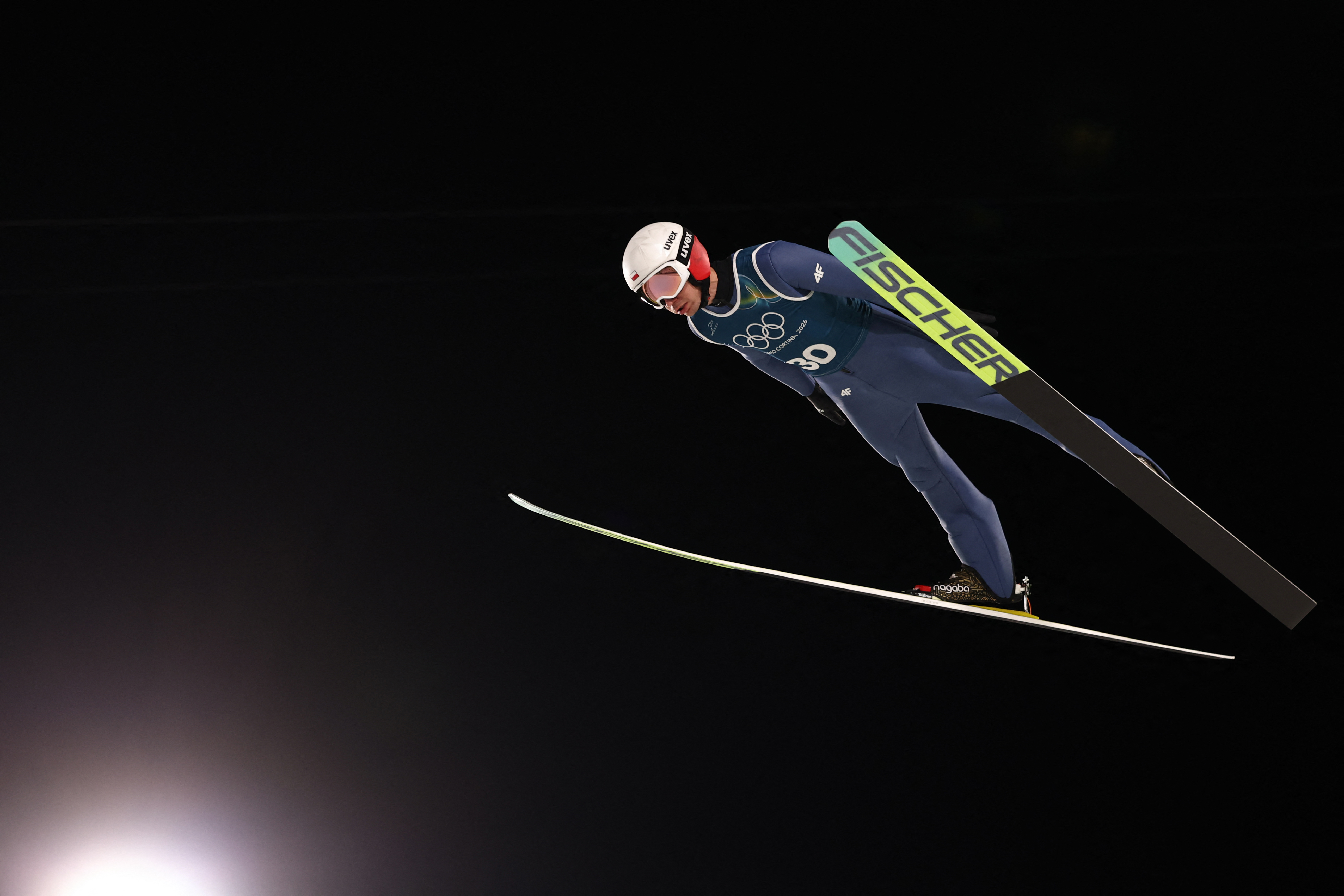
Aero data is key for cyclists, but it’s no less important for ski jumpers and other speed sports. (Image credit: Getty Images)
A common sight in cycling marketing, and indeed the subject of a lot of our Labs testing, is wind tunnels. Helmets, clothing, wheels, frames, and even tyres, are designed using wind tunnels to test at race speeds and determine what is going to be fastest. It’s part of the contributing factor as to why bike racing has gotten faster and faster. But the winter Olympics has its fair share of wind tunnel use.
Over at the Silverstone wind tunnel in fact, for specific blocks of the year, they switch out the stanchions that allow bikes to be fitted, and equip it for winter sports such as bobsleighs and skiing. Given the speeds of these events, aerodynamic optimization is essential as much of the force being overcome is air resistance, although assisted with a fair amount of gravity. For context, however, the fastest bike racers tend to go downhill is 80-90kph on average, 100-110kph when really pushing it on steeper, straighter downhills. Ski jumps are routinely over 100kph, while bobsleighs can reach in excess of 140kph. Aerodynamic performance is vital for how fast the competitors can go, and so wind tunnel usage is just as rife for winter Olympians as it is for pro cyclists.
You can see on the bobsleighs they actually have front and rear wings to help generate downforce as well as maintain better airflow, along with the long bullet shaped design that works well at higher Reynolds Numbers experienced at higher speeds. Even the skis used in cross country now feature bladed designs to minimise drag across the duration of the course.
Fitness
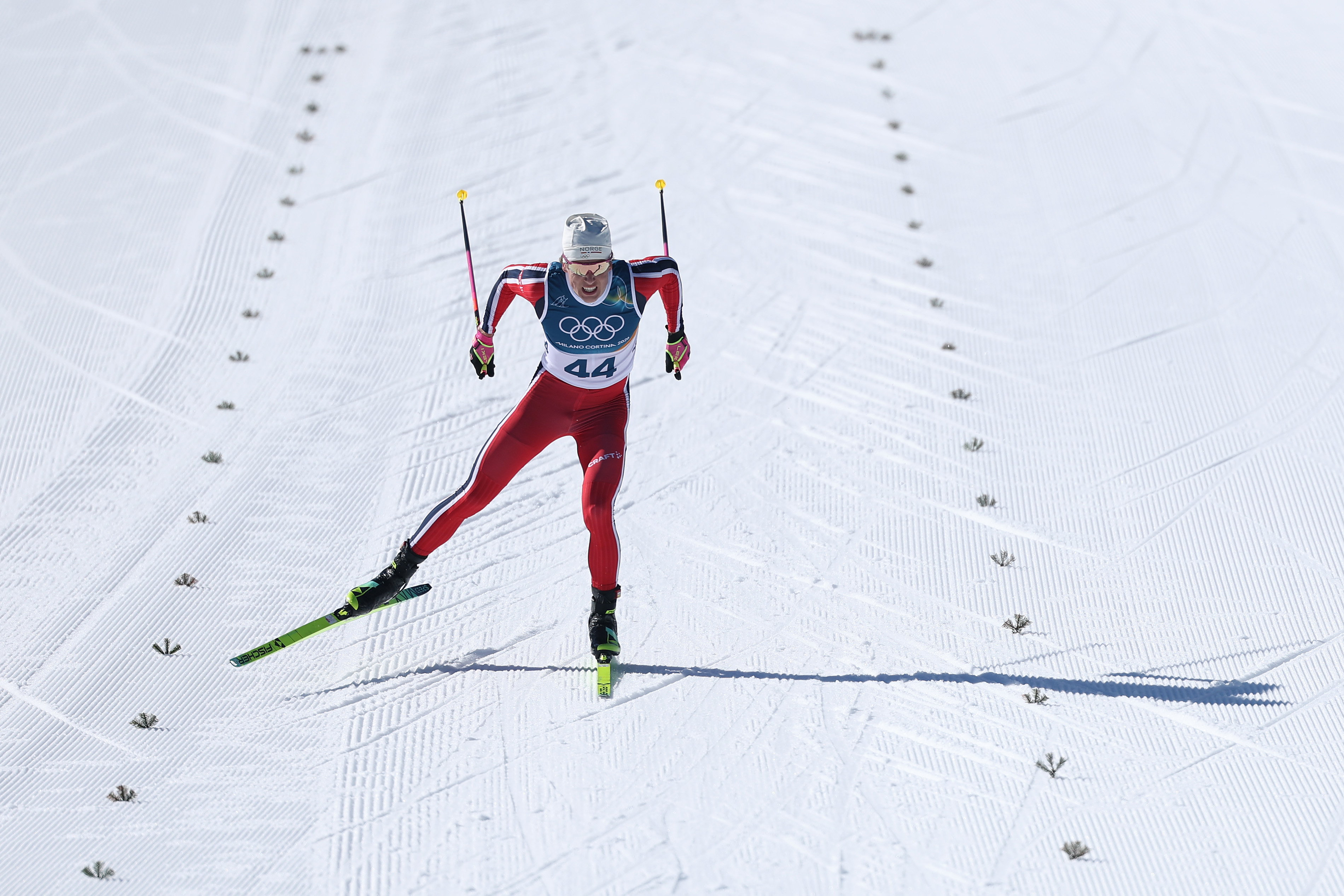
Cross-country skiing is a full body workout, and the fitness here is by some metrics higher than needed for cycling. (Image credit: Getty Images)
We may think of ski jumpers and downhill skiers perhaps as not being as fit as cyclists. VO2max readings of 80 or above are not uncommon in the world of professional cycling. However, as commentators like to remind us, Primoz Roglič started his athletic career ski jumping, and he isn’t the only skier turned cyclist. But the highest recorded VO2max numbers in lab testing tend to be achieved by cross country skiers.
There is an element of skiing that increases how high the VO2max can be, and that is the use of arms as well as legs. More muscle mass is using oxygen and therefore the total body usage of oxygen tends to be higher than just cycling. There have been recordings of VO2max readings of 96ml/kg/min for Bjørn Dæhlie. Although this still lags behind cyclist Oskar Svendsen aged 18 in 2012 with a reading of 97.5ml/kg/min while the highest recorded reading is Kristian Blummenfelt while running with 101.1ml/kg/min. Footage of the superhuman Johannes Høsflot Klæbo running a sub-6 minute mile pace, uphill, in skis has had even the most ardent cycling fans acknowledging that Tadej Pogacar may not in fact be the fittest man on the planet.
Cheating
Where there is investment in sport, there are always those looking to breach the boundaries of what might be considered legal or not. Quite often, it’s grey zones that are entered, rather than explicit cheating such as doping. However, it’s only cheating if you are caught, at least from a sanctions perspective. Cycling has long had doping scandals, with riders still being caught for the use of illegal substances; at least the testing works. Meanwhile, the biological passport is set to be complemented by power profiling and monitoring to determine the realism of performances as well as progression. But doping and cheating, or any attempt to get the advantage over a competitor via dubious means, is still rife in other sports.
With certain Winter Olympic sports also requiring high aerobic performances and thousands of hours of training, similar benefits can be achieved via similar doping methods. However, there have been some fresh new controversies in the pursuit of naturally enhanced aerodynamics, to put it less crudely. The exact cheating method here has been the claims of hyaluronic acid being injected into the male genital region so as to increase the size. No, this isn’t for vanity reasons, it’s to increase the effective size of the ‘wing’ that is the ski jumper as they fly through the air. Increasing the size of this wing by increasing the size of appendages encased by Lycra can have a sizable impact on the flight distance that can be achieved. Although not explicitly banned, it has raised some eyebrows, and the IOC is investigating the use and looking to crack down on it.
Conclusion
There isn’t really a way to say if Cycling or the Winter Olympics is more advanced in the technologies and training. They both tackle different aspects in very different ways. Meanwhile, the professionalism of many sports has increased by vast amounts in the last few years, as investments and interest increases. Curlers spend much of the year in the gym refining power and muscle control, while skill work is constant. Downhill skiing requires immense body and mass control to maintain maximum speeds, not to mention a psychological edge over the competition to throw themselves down a mountain at those speeds.
Both represent the pinnacle of technology and training sciences in their respective fields, and personally, this goes a long way to making both incredibly entertaining to watch, as we see the fruits of the labours of not just the athletes but every developmental process that goes into making them as good as possible at what they do.