
Canada’s economy is deeply connected to the United States, making it vulnerable to shifts in policy and trade decisions that can affect exports, supply chains, investment flows and tourism, experts say.
Canada has been doing business with the U.S. for over a century, but according to an international policy expert, the relationship between the two countries is changing amid evolving trade policies.
“What has changed is the players, the intensity and the leverage between two countries,” Carlo Dade, director of international policy at the University of Calgary told BNN Bloomberg in an interview.
Dade says Canada has developed a belief that the U.S. is necessary for Canada to prosper but that’s not the case.
“Dependency has kept us from seeing the U.S. as it’s changed, and it’s also prevented us from really taking a cold, hard look at the changes in the U.S. and the relationship,” says Dade.
Trade dependence
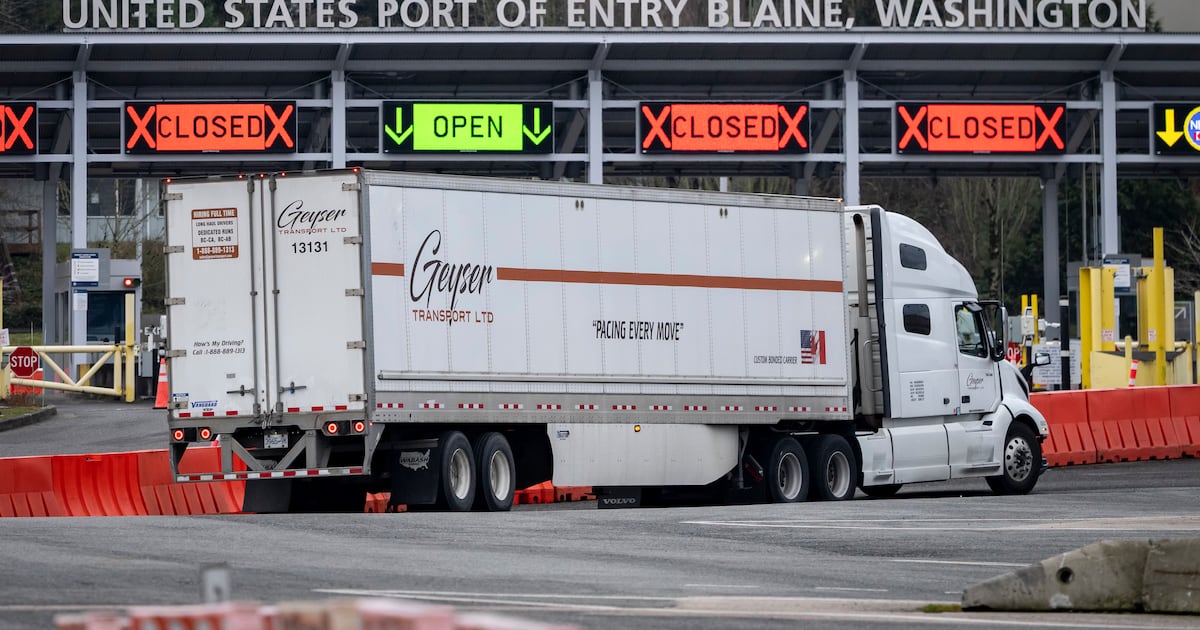
Nearly $3.6 billion worth of goods and services crossed the border each day in 2024, according to Statistics Canada.
“We’re next door to the richest, easiest market in the world. The U.S. market is that attractive and it is that easy,” says Dade.
Dade says Canada’s overreliance on the U.S. market was always a considerable risk, as U.S. policies become more protectionist and inward-focused.
“We will continue to trade with the U.S. It’s just that the cost and difficulty of that trade will increase,“ says Dade. ”We had a trade agreement that was supposed to give us certainty but that hasn’t happened.”
Andrew Grantham, senior economist at CIBC Capital Markets has studied how dependent Canada is on its neighbour. He says Canada’s trade dependency with the U.S. partly reflects a high level of concentration in two areas; energy and automotive sectors.
Grantham says energy exports will continue to flow south unless new oil pipelines are approved and implemented and more investment is needed in new infrastructure, but it takes time.
“That’s not going to happen overnight. It never does,” says Grantham.
Vehicle parts cross the border multiple times at different stages of construction and Grantham says those supply lines are heavily integrated, which makes it difficult to reduce Canada’s dependency on the U.S. when it comes to the auto industry.
“The supply chains are so intertwined that we may send a part to the U.S., and then it comes back, semi-manufactured, and then we finish it off here, and it goes back to the U.S.,” says Grantham.
Mitch Villeneuve, director of economic policy at Scotiabank says that the U.S. is “simply the cheapest place to send out goods because of proximity”. He highlighted several key areas that are vulnerable to shifts in policy and trade decisions.
“Virtually all of our energy exports have gone to the U.S., autos to the extent we don’t buy vehicles, they’re typically shipped to the U.S. because of the design of the industry. A lot of machinery and forestry goes to the U.S.,” Villeneuve told BNN Bloomberg in an interview.
He says the U.S. has traditionally been an important market and will continue to be.
Investment dependence
U.S. investments in energy, mining and manufacturing accounted for 68 per cent of total investment flows in 2023, according to Scotiabank.
Villeneuve says the U.S. is a “powerful economy” and “big source of investment in Canada” and a reduction in investment from the U.S. would have an impact here.
He says because Canada has traditionally relied “on a lot of our investment from the U.S.”, it reduces the urgency to diversify investment partners.
“I think that’s exactly why the government is so focused on unleashing new investment within Canada and pursuing new investment from other international partners,” says Villeneuve.
“The Prime Minister has been like an Energizer Bunny going overseas, trying to expand relationships and deepen engagement with new economic partners, to diversify our trade relationships and find some new investment for the country.”
Tourism dependence
Economic interdependence between the two countries extends beyond goods and investment flows.
Amy Butcher, vice-president of Public Affairs for the Tourism Industry Association of Canada, says one in 10 Canadians is employed in the tourism sector.
“The sector employs two million Canadians and is a $130 billion spend in Canada,” says Butcher.
She says fewer Americans are visiting Canada and border towns are losing money because fewer U.S. visitors are making day trips.
She says 70 per cent of international visits to Canada in 2024 were from the U.S.
“It’s a really important market for Canada in terms of international visitors,” says Butcher. “What we’re seeing is the demand is softening with U.S. visitors.”
Why the dependency happened
Similar foundations, legal systems and language make the economic relationship easier for the two countries to do business and Dade says that has contributed to Canada’s dependency on the U.S. for many things.
“What makes it easy? Language. What makes it easy? Culture. What makes it easy? Distance,” says Dade.
Grantham agrees that history and geography make the trade relationship easier but only to a certain extent.
“There is only going to be so far that we can diversify away from the U.S., just because it is such a big economy, and it is so close,” says Grantham.
He says European and Asian economies have also grown slower, but says Canada is trying to diversify to overseas markets to broaden Canada’s trade portfolio.
“We’re definitely trying to seek investments from those other countries,” says Grantham. “It’s not just selling goods to them, it’s having them potentially invest directly within our economy.”